
Headlines
INEC is Independent, Cannot Be Subjected to the Say So of NASS – Moghalu


- /home/rhoncare/pointblank.ng/wp-content/plugins/mvp-social-buttons/mvp-social-buttons.php on line 27
https://pointblank.ng/wp-content/uploads/2019/11/Moghalu.jpeg&description=INEC is Independent, Cannot Be Subjected to the Say So of NASS – Moghalu', 'pinterestShare', 'width=750,height=350'); return false;" title="Pin This Post">
- Share
- Tweet /home/rhoncare/pointblank.ng/wp-content/plugins/mvp-social-buttons/mvp-social-buttons.php on line 69
https://pointblank.ng/wp-content/uploads/2019/11/Moghalu.jpeg&description=INEC is Independent, Cannot Be Subjected to the Say So of NASS – Moghalu', 'pinterestShare', 'width=750,height=350'); return false;" title="Pin This Post">
A former presidential candidate, Professor Kingsley Moghalu, has said that Nigeria does not need the National Assembly to guide or direct some operations of the Independent National Electoral Commission (INEC).
Professor Moghalu’s statement was in response to a recent vote at the Senate which establishes that INEC may consider the electronic transmission of results provided the national network coverage is adjudged to be adequate and secure by the Nigerian Communications Commission (NCC) and approved by the National Assembly.
Reacting to the development, Moghalu who was a guest on Channels Television’s Sunday Politics, said “we don’t need the National Assembly trying to micromanage INEC or trying to subject INEC to yet another body of government”.
According to the former Deputy Governor of the Central Bank, the Upper Chamber’s legislation on the matter of electronic transmission “is not a sensible one and does not promote good faith”.
Moghalu further argued that INEC is an independent electoral body and as such, it cannot be subjected to the say-so of another body of government, adding that it is absurd that the Senate seeks to be a referee in a match which it is also a player.


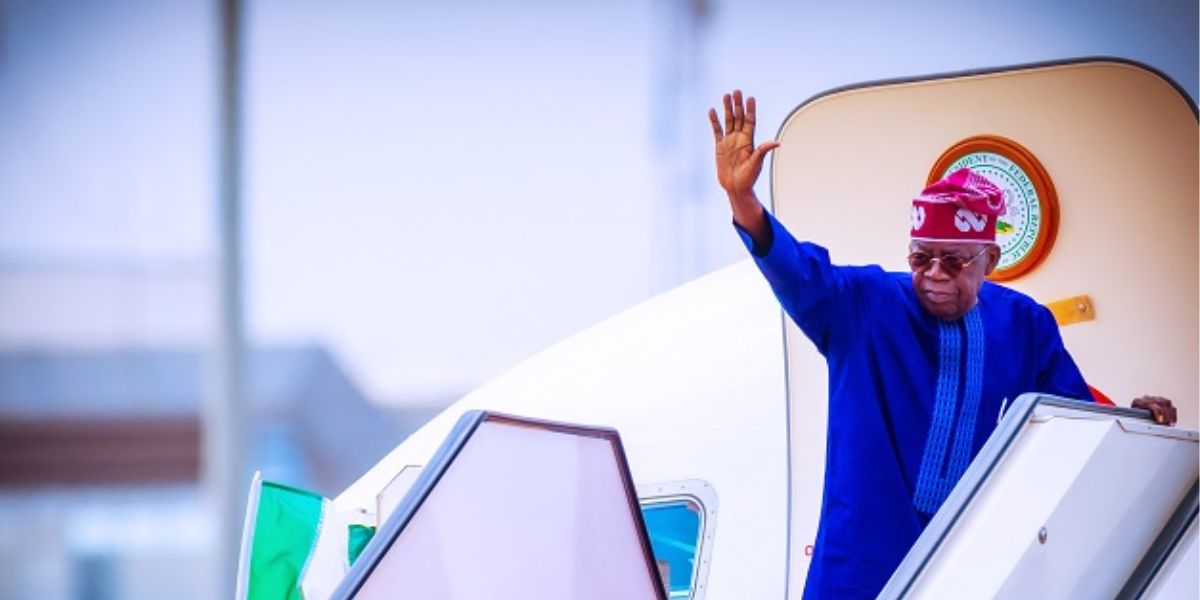
President Bola Tinubu departed Abuja, the nation’s capital on Sunday for Europe to begin a three-week vacation as part of his annual leave.
Presidential spokesperson, Bayo Onanuga, in a release disclosed that Tinubu’s first stop will be London, United Kingdom.
The President is expected to return home after the working vacation to join the hectic campaign for the January 2027 election.
Vice President Kashim Shettima had earlier this month went on two-week leave, his first since the Tinubu government assumed office over three years ago. He has since returned.
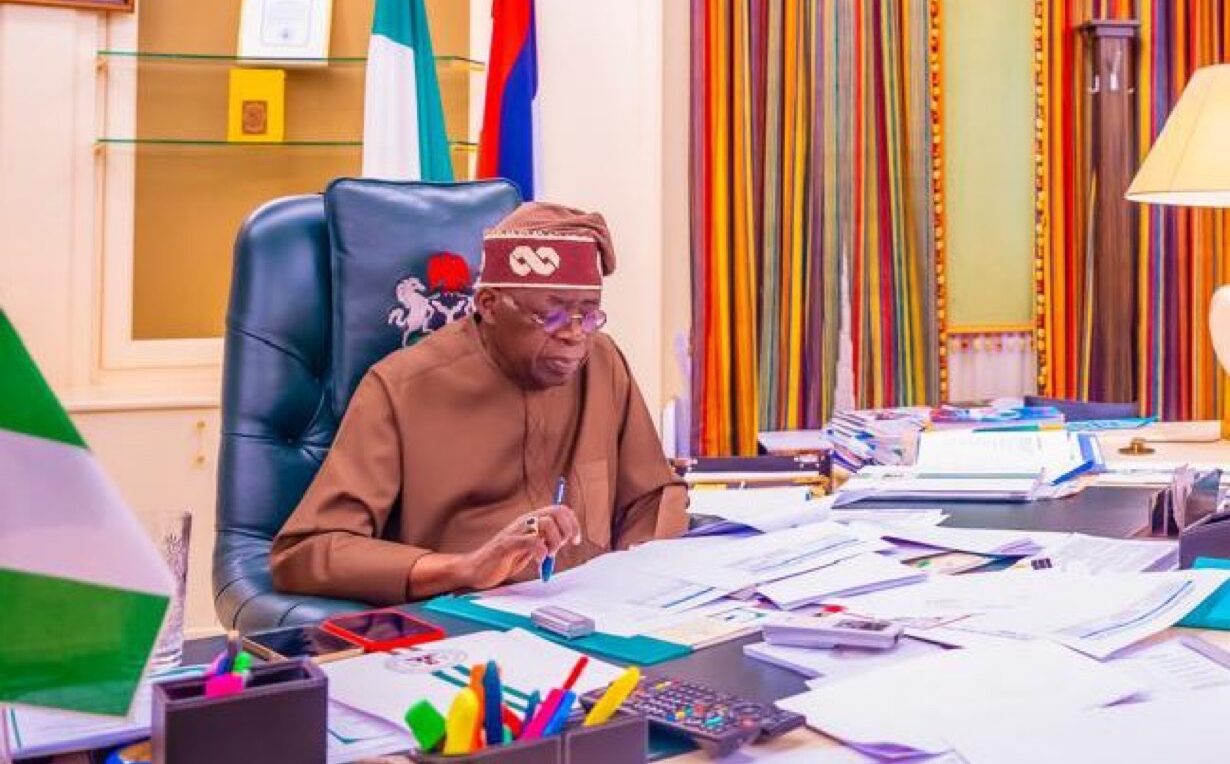
President Bola Tinubu has raised concerns with the African Union (AU) over repeated xenophobic and Afrophobic attacks against Africans and other foreign nationals in South Africa.
Tinubu urged African leaders to take collective action and include the issue on the agenda of the AU’s 40th Ordinary Session, scheduled for January 2027.
The president’s position was presented by Vice President Kashim Shettima at the 21st Extraordinary Session of the AU Assembly in Luanda, Angola.
Tinubu called on African leaders to renew their commitment to protecting the safety, dignity and rights of all Africans across the continent.
He said: “Nigeria wishes to express its concern over the recurring xenophobic and Afrophobic attacks against Africans and other nationals in South Africa.
“While recognising South Africa’s sovereign right to enforce its immigration laws and acknowledging its contributions to the continent, Nigeria stresses that such attacks undermine African solidarity, unity and peaceful coexistence, and require urgent collective attention.”
He added: “It is on this note that Nigeria calls on this august Assembly to place the matter on the agenda of the upcoming 40th Ordinary Session of the AU Assembly, scheduled for January 2027, for consideration and appropriate action.”
The president also urged the AU to strengthen efforts to tackle xenophobia and Afrophobia across the continent.
He stressed that “dialogue, preventive diplomacy, and collective action remained essential to preserving African unity.”
On Africa’s broader security challenges, Nigeria supported the adoption of the Luanda Action Plan as a way to improve conflict prevention.
Tinubu argued that preventing conflicts would be more sustainable and less expensive than dealing with them after they have started.
“For Nigeria, conflict prevention remains more cost-effective and sustainable than conflict management,” President Tinubu said.
He also warned that separate and uncoordinated peace efforts, as well as growing foreign involvement through military forces, mercenaries and private defence companies, could weaken Africa’s ability to manage its own conflicts.
Tinubu further called on countries that manufacture and export weapons to work more closely with African governments to prevent weapons and ammunition from being diverted to terrorists and other armed groups.
The president said the AU already has strong systems for preventing and resolving conflicts, but limited trust and poor implementation have continued to reduce their effectiveness.

Key leaders of Nigeria’s opposition, including former Vice President Atiku Abubakar and former Governor of Anambra State, Peter Obi, are expected to attend the First Summit of Nigeria’s Opposition Political Parties, convened by the G100, on Monday, August 31, 2026, at the Yar’Adua Centre, Abuja.
The summit, under the theme, “A Framework for Opposition Cooperation and Coordination,” will bring together the leadership of six major opposition parties to begin structured negotiations on the terms, institutions and principles upon which they may cooperate ahead of the 2027 general election.
In a statement signed by G100 Convener, Salihu Moh. Lukman, the group said the meeting is not meant to decide presidential candidacy in one sitting, but to establish a formal architecture for transparent and collective negotiations.
“The first question before party leaders is not who leads the ticket. It is what we are, together, prepared to do for this country,” the statement said.
The summit follows the G100’s publication on 2 August 2026 of the Doctrine of a Necessary Democratic Opposition, and weeks of consultations with the African Democratic Congress (ADC), Allied Peoples Movement (APM), Nigeria Democratic Congress (NDC), Peoples Democratic Party (PDP), Peoples Redemption Party (PRP) and Social Democratic Party (SDP).
Those talks produced a shared briefing document that identified areas of convergence while acknowledging the parties’ distinct histories and interests.
“At the centre of the consultations was a common recognition of the need for a credible, organised and competitive democratic opposition, and a willingness to engage the difficult questions that meaningful cooperation ahead of 2027 will require,” Lukman stated.
Among the proposals before the summit is the creation of five specialised Working Groups.
If approved, the groups will have four weeks to develop the principal documents and agreements needed to give institutional form to opposition cooperation.
“Cooperation does not require any party to disappear into another. The first question before party leaders is not who leads the ticket. It is what we are, together, prepared to do for this country.
“The First Summit is not intended to determine, in a single sitting, questions of presidential candidacy or the final form that opposition cooperation may take. Its immediate purpose is more fundamental, to establish and authorise a formal architecture through which those questions can be negotiated collectively, transparently and in good faith.
“Each participating political party is expected to attend with a delegation of leaders and key stakeholders, drawn from its national leadership and other relevant constituencies within the party. These delegations will participate fully in the deliberations of the Summit, ensuring that the process extends beyond the principal party leaders and draws upon a broader representation of political experience, perspectives and interests.
“Among the proposals before the Summit will be the establishment of structures that will facilitate negotiations and cooperation and five specialised Working Groups. Subject to the decisions of the participating parties, these bodies will be mandated to develop, within four weeks, the principal documents and agreements required to give institutional form to opposition cooperation,” the statement added.
Each party is expected to attend with a delegation drawn from its National Working Committee (NWC) and other key constituencies.
Expected participants at the summit are national chairmen and NWC members of ADC, APM, NDC, PDP, PRP, SDP; presidential candidates and running mates of the participating parties; and G100 signatories and members of the Minority Caucus of the House of Representatives.
The G100 said it is convening the summit as a facilitator and observer, not as a substitute for the constitutional authority of the parties.
“The decisions arising from this process will remain the responsibility of the parties themselves,” the statement added.


