
News
INEC is Wrong: We Need More Digital Democracy to Build Trust in Our Political Process


- /home/rhoncare/pointblank.ng/wp-content/plugins/mvp-social-buttons/mvp-social-buttons.php on line 27
https://pointblank.ng/wp-content/uploads/2019/06/INEC.png&description=INEC is Wrong: We Need More Digital Democracy to Build Trust in Our Political Process', 'pinterestShare', 'width=750,height=350'); return false;" title="Pin This Post">
- Share
- Tweet /home/rhoncare/pointblank.ng/wp-content/plugins/mvp-social-buttons/mvp-social-buttons.php on line 69
https://pointblank.ng/wp-content/uploads/2019/06/INEC.png&description=INEC is Wrong: We Need More Digital Democracy to Build Trust in Our Political Process', 'pinterestShare', 'width=750,height=350'); return false;" title="Pin This Post">
By Joel Popoola
The Independent National Electoral Commission has apparently turned its nose up at electronic voting, claiming Nigerians don’t trust our democracy enough for it to work.
They are quite right that Nigerians simply do not trust our political leaders or institutions.
But this is a classic example of “what came first, the chicken or the egg”. And I think INEC is wrong. It is not the case that a lack of trust makes digital democracy impossible. In fact, digital democracy like electronic voting is exactly what Nigeria needs to build trust in our democracy.
Speaking at an event in Ondo State, INEC director Nick Dazang argued:
“The main issue in our election is that of trust. Once we continue to do things transparently and stakeholders, including politicians, media, political parties, observers and civil societies trust INEC, you don’t even need to use sophisticated technology for election”
Dazang claimed that electronic voting is too easily hacked to be trusted by voters.
This of course implies that putting bits of paper in a box and trusting the person watching the box to deliver it to the right place and then trusting the person counting it to count it correctly – or at all – is a foolproof and incorruptible system! If that was true, perhaps Nigerians would trust our democratic processes!
On his main point, Dazang is quite right. What Nigerian democracy needs most is urgent practical steps to address our trust crisis.
72% of Nigerians believe the statement “most politicians are corrupt” describes our country well – and six-in-ten say it describes Nigeria “very well”.
Only 39% of Nigerians are satisfied with the way democracy is working in our country, while 60% say they are not satisfied.
And – probably as a result – our voter turnout is the worst in West Africa, 34.8% at the last presidential election compared to 68.6% in Ghana.
Electronic voting can guarantee confidentiality, ensure that only eligible – and living! – voters vote and that the votes they cast actually reflect their choices, and are counted.
And as a year of remote working as a result of COVID-19 has demonstrated, software solutions allowing the secure digital transfer of confidential information are widely available and easy to use, with a year’s worth of relentless international testing to prove it!
A central element of the trust crisis in Nigeria, and across Africa in general, is an absence of credible elections.
Using new technology to address the practical problems which detract from the credibility of our democracy is an opportunity we need to seize.
Other advantages of an electronic system include the faster delivery of election results, increased trust in elections through minimisation of human error and even long-term cost savings.
This is just one of the ways we can take advantage of technology to improve the transparency of and trust in our political process – while making our democracy work faster and more efficiently.
At the digital democracy campaign I lead, we are also working to bring electors and elected closer together.
We’ve developed a free smartphone app – Rate Your Leader – to use smartphone technology to allow elected officials to interact directly with confirmed voters in the divisions they serve – and to do so in a way which makes insulting communication difficult, and dishonest communication undesirable.
This way politicians and people can use Rate Your Leader to engage person-to-person, and understanding each other’s needs and positions. This way, leaders can find out rapidly what matters most to the people who elect them, and collaborate to address those issues. And voters can even rate their politicians for their transparency and accessibility.
And that in turn builds transparency and trust, which are such scarce commodities in our political process.
For INEC to be publicly spurning electronic voting is particularly disappointing following its announcement that in May 2020 that it intended to “pilot the use of Electronic Voting Machines at the earliest possible time, (and) work towards the full introduction of electronic voting in major elections starting from 2021.”
Universal electronic voting is clearly not viable in a country where many still lack access to reliable and secure internet. But there is nothing stopping us from starting down the path towards becoming Africa’s first truly digital democracy.
Because in 2021, democracy is digital.
More Nigerians own a smartphone than Permanent Voters Card (PVC). And as our experience of Rate Your Leader proves, it isn’t just the most effective and efficient way of conducting political activities, it’s the way that the electorate wants to carry out those activities.
Joel Popoola is a Nigerian tech entrepreneur, digital democracy campaigner and creator of the Rate Your Leader app. You can follow Joel on Twitter @JOPopoola


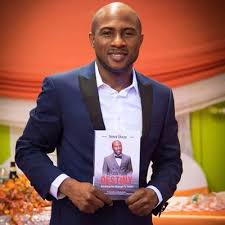
By Henry Ukazu
Dear Destiny Friends,
Wing means different things to different entities. To a bird, it means the ability to fly; to an angel, it means a medium of delivering goodwill messages; to a bat, it’s seen as a form of movement from one spot to another, and many more. The million dollar question, therefore, is what’s the purpose of a wing to you as an individual? To fly, to jump, or have fun with?
We all have wings, no doubt, but most people are not in the habit of using their wings well. Some even use their wings for the wrong reasons. But your wings can serve as an asset to your personal and professional development if properly activated.
To drive home how wings can serve as a tool for enhancement, I will explain using a bird. As we all know, a bird’s wing is for flying. The eagle is considered the king of the sky or king of the air because its ability to fly far above the earth and reach great altitudes represents untethered freedom, liberation from bondage, and a perspective that rises above worldly troubles.
The reason the eagle can fly is simply because of its wings. The wing does not depend on the eyes to fly; no, the eye serves a unique purpose that enables the eagle to see what other birds can’t see. The eagle’s eye gives it clarity, hyper-focus, heightened awareness, and the ability to see the bigger picture beyond immediate distractions.
The birds are not an exception. Do you know that if a bird lands on a branch, the branch does not break; even if it breaks, the bird is not scared of falling because it trusts its ability to fly because of its wings. Let me ask you a question: when a bird lands on a branch of a tree, does it trust the branch not to break, or does it trust its ability to fly? One may say both to an extent; however, I will say the bird will trust its wings more because the bird ought to have common sense to know what can protect and sustain it, and that is its wings.
The main reason the bird won’t be scared is simply because of its wings. The bird knows that even if the branch breaks or falls apart, it won’t fall; rather, it will fly away to safety. This is how simple life works: most times, we depend on people, money, and other things to succeed, but the main person we ought to depend on is God, as well as believe in ourselves. And to believe in ourselves, we must have self-confidence.
One of the greatest limiting factors preventing us from succeeding in life is lack of confidence. Many people don’t believe in themselves; even those who believe in themselves sometimes have doubts. In some cases, they lack the confidence to take the bold step. If you have confidence like a bird, you won’t be scared if anyone leaves you. Even if you are fired from your job or experience challenges in life, you will know it’s for a short period of time and that you can bounce back.
Still on the story of the bird, the birds trust their wings to fly and not the branch. The birds know that anything can happen to the branch. For instance, a hunter may try to shoot the tree, and the force can affect the branch; a big animal with weight may try to attack the bird, and the weight may break the branch. It could be any reason.
So, in real life, we’ll be tested; life is going to test the branches we are relying on or standing on. These branches can be our friends, family members, our health, religion, business, money, relationship, academics, jobs, etc. All these branches will shake; some will disappear without warning. Question: What will you do when your “branch” falls apart? Do you cry over spilt milk, or will you activate your wings of perseverance? Let me tell you, your wings belong to you. Your wings are your power. They cannot be taken away from you no matter what, unless you give them up.
As mentioned earlier, your wings can be your confidence, perseverance, character, knowledge, skill, or even gift/talent. All these virtues don’t come from what you are standing on. They should come from inside of you. So, don’t give up that inherent power in you. Remember, if the whole world is telling you you can do something, and you know you can’t do it, you will fail, but if the whole world is telling you you can’t do something, and you know you can do it, you will succeed because 1 John 4:4 says, he that is in you is greater and strong than he that is in the world.
In my journey through life, I discovered that many people trust their branch for approval, comfort, and sustenance; they forget that they are born to fly.
It’s instructive to note that life doesn’t offer us a straight road. Life is not tested when everything is stable around us; rather, it is tested when there’s chaos and when everything around us begins to shake. And, as such, it does not punish you when your branch breaks; rather, it reminds you who you are, and it instructs you to remember what’s always yours from the start. All you need is the key to activate your wings so you can fly. Don’t allow failure to define you. Do you see why it’s important to trust your wings?
I need you to understand that if you learn to trust yourself by trusting your wings, you won’t be afraid of failing. Trust me, your wings are not safe because the world is safe. The world is not safe and will never be safe, so trust your wings because you can overcome any storm or challenges that come to you when everything falls apart
As I begin to wrap up, I need you to look into yourself and ask yourself, what’s the wing inside of me? What’s the wing I’m yet to activate? If you find it, please activate it and trust it. Remember, you’ll experience challenges and setbacks, but that’s part of the process of trusting your wings. So, my final message to you today is: Stop trying to fix the branch when it’s time to fly. Fly, because it’s your heritage.
Henry Ukazu writes from New York. He works with the New York City Department of Correction as the Legal Coordinator. He’s the founder of Gloemi. He’s a Transformative Human Capacity and Mindset coach. He is also a public speaker, youth advocate, creative writer, and author of Design Your Destiny- Actualizing Your Birthright to Success, Unleash Your Destiny, and The Six Pillars of Success. He can be reached via info@gloemi.com
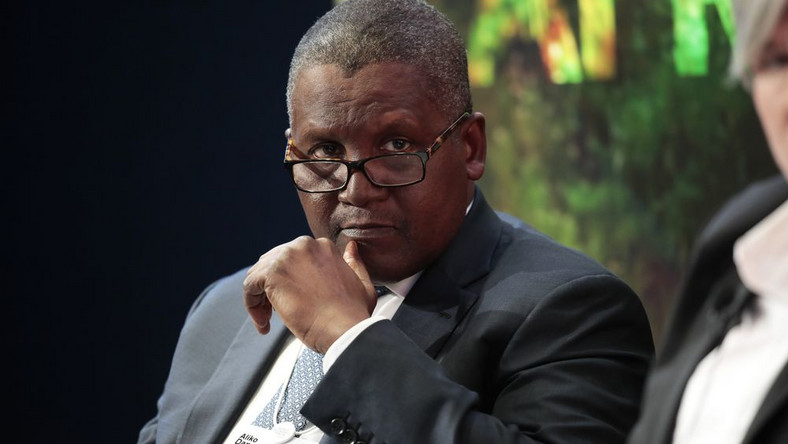
President and Chief Executive of Dangote Industries Limited (DIL), Aliko Dangote, has commended the Federal government for implementing what he described as bold and transformative economic reforms aimed at repositioning Nigeria for sustainable growth.
Dangote, in a statement issued by Sunday Esan, Media Relations Group Branding and Communications, said the reforms are strengthening investor confidence, improving economic activity and accelerating the country’s recovery.
According to him, the ongoing fiscal, monetary and regulatory reforms have contributed to improved macroeconomic stability and productivity across key sectors while making Nigeria more attractive to investors.
He said the emerging gains from the reform agenda underscore the importance of consistent, market-driven policies in promoting national development and long-term economic prosperity.
“The economic reforms being implemented by the Federal government are beginning to yield tangible results. We are witnessing improved economic activity, stronger investor confidence, increased industrial productivity, and a more resilient business environment.
“These measures are laying a solid foundation for sustainable economic growth and long-term prosperity for Nigeria,” Dangote said.
He added that the reforms have created a more enabling operating environment for businesses, particularly large-scale manufacturing and industrial enterprises.
According to him, such enterprises remain critical to economic diversification, job creation, foreign exchange generation and Nigeria’s competitiveness.
Dangote also said government initiatives aimed at improving efficiency, promoting investment, enhancing transparency and supporting domestic production are providing a solid framework for industrial expansion.
“We commend the Federal government for its courage and determination in implementing reforms that are essential for economic transformation. While every reform process comes with initial challenges, the benefits are increasingly evident in stronger economic indicators, improved business confidence, and renewed investor interest in Nigeria,” he said.
Dangote further observed that the government’s favourable policy environment has supported the continued growth and efficient operation of the Dangote Petroleum Refinery and Petrochemicals complex, Africa’s largest integrated refining and petrochemical facility. He noted that policy measures designed to strengthen local refining capacity, reduce import dependence, improve energy security, and encourage value addition have contributed meaningfully to the refinery’s success and Nigeria’s broader economic development objectives.
“The progress being recorded at the Dangote Petroleum Refinery and Petrochemicals complex is closely linked to a policy environment that encourages investment, supports domestic industrialisation, and promotes self-sufficiency. These reforms are helping Nigerian businesses to plan with greater certainty, invest with confidence, and compete effectively on the global stage,” he added.
He stated that the refinery’s increasing production capacity and expanding export footprint are contributing significantly to Nigeria’s economic resurgence by generating foreign exchange earnings, creating employment opportunities, strengthening local supply chains, and positioning the country as a leading energy and manufacturing hub
Reaffirming the Group’s commitment to supporting the Federal government’s economic agenda, Dangote said Dangote Industries Limited would continue to invest in strategic sectors, drive innovation, promote industrial development, and create sustainable employment opportunities.
“Our vision has always been to support Nigeria’s economic development through transformative investments. Today, we are witnessing how the combination of private-sector commitment and decisive government policies can unlock unprecedented opportunities for national growth. The refinery, petrochemical operations, fertilizer production, and our other industrial investments are helping to build a more self-reliant, competitive, and prosperous economy,” he said.
He expressed confidence that sustained reforms, policy consistency, and stronger collaboration between the public and private sectors would further stimulate economic growth, attract increased foreign direct investment, and reinforce Nigeria’s position as one of Africa’s most attractive investment destinations.
“Nigeria is on the path to becoming one of the world’s leading industrial and economic powers. With continued policy consistency, robust private-sector participation, and investment-led growth, the future of our economy is exceptionally bright,” Dangote concluded.
Ahead of the 2027 general elections, the Nigeria Democratic Congress (NDC) has accused the Independent National Electoral Commission (INEC) of removing some of its nominated candidates from the commission’s list and replacing them with names allegedly unknown to the party.
The National Chairman of the party, Senator Moses Cleopas Zuwoghe, made the allegation in a statement on Sunday, following INEC’s publication of candidates for the 2027 State Houses of Assembly elections.
Cleopas said the names published by INEC, particularly in Anambra State, suggested an attempt to undermine the party ahead of the elections and create disaffection among its supporters.
The NDC chairman specifically alleged that nine persons whose names were not authorised or submitted by the party had been listed as its candidates in various constituencies in Anambra State, the home state of the party’s presidential candidate, Peter Obi.
He called on the INEC Chairman to immediately investigate the development and determine how the names got onto the commission’s list.
Cleopas also urged INEC to extend the investigation to other states, including Benue and Imo, where he said the party had observed a similar pattern.
According to him, the development had embarrassed the party, its leadership and its genuine candidates, while creating disaffection among its supporters in Nigeria and the Diaspora.
“We, as a party, are also carrying out our own independent investigation, the preliminary findings of which are already pointing to the complicity of INEC officials in foisting names purporting to be our candidates, but who are not from us,” he alleged.
He said the party’s investigation indicated that the uploading process was being used to intimidate and embarrass the NDC.
The party listed the following persons as names allegedly published by INEC as its candidates in Anambra:
Onitsha South 1 — Umennaajiego Jude Ezenwa
Onitsha South 2 — Akpotue Obinna Chibuike
Orumba North — Nwankwo Chiemerie
Anaocha 1 — Maduagwu Eric K
Idemili North — Ngoebisi Obinna
Njikoka 1 — Isintume Charles
Nnewi South — Nwachukwu Nonso
Nnewi South 2 — Okeke Ifeanyi Akunne
Ayamelum — Nnonyelu Samson E
Dunukofia — Azotani Chuks Francis
Cleopas, however, said the party is particularly concerned about the process through which the names were uploaded and published.
He said after the conclusion of the party’s primaries and appeal process, stakeholders from Anambra, the party leadership, representatives of Obi and the appeals panel agreed on a final list of candidates.
According to him, the list was signed off by the relevant stakeholders before being uploaded to the INEC portal using the code provided to the party by the electoral commission.
He alleged that INEC officials subsequently kept nine of the names on “Pending” status, claiming that the names were already in the commission’s system based on submissions by officials who monitored the party’s primaries.
Cleopas said the NDC formally challenged the names and submitted the identities of candidates it said were legitimately nominated by the party, but INEC allegedly declined to replace the disputed names.
He further alleged that INEC subsequently collected Form EC-9 directly from the persons whose names were in dispute and uploaded the forms without going through the party.
“To further confirm that there was a predetermined effort on the part of INEC to impose the said nine candidates on the party, and embarrass both NDC and Mr. Peter Obi, INEC went behind the NDC to collect the Form EC-9 directly from the candidates, bypassing the party, and uploading same,” he alleged.
Cleopas argued that where there was a discrepancy between names submitted by a political party and information received by INEC from its monitoring teams, the commission should have left the affected positions vacant pending clarification, rather than publish names the party said it did not nominate.
“At the very worst, INEC could have left us with no candidates for those positions, if they knew they were unwilling to engage us in addressing any perceived anomaly,” he said.
The NDC chairman accused INEC of creating a pattern in which opposition parties were allegedly prevented from uploading their preferred candidates while other names were introduced into their candidate lists.
He vowed that the party would pursue the matter through all available legal channels and seek to have what it described as its authentic candidates restored.
“We are moving to approach the court of competent jurisdiction to seek redress and restore our authentic candidates. The general public and our millions of supporters should note that these are not our candidates,” he said.


