
Personality in Focus
Insecurity, Aftermath of Craze for Money – Ojora of Ijora


- /home/rhoncare/pointblank.ng/wp-content/plugins/mvp-social-buttons/mvp-social-buttons.php on line 27
https://pointblank.ng/wp-content/uploads/2022/01/IMG-20220130-WA0020-1000x600.jpg&description=Insecurity, Aftermath of Craze for Money – Ojora of Ijora', 'pinterestShare', 'width=750,height=350'); return false;" title="Pin This Post">
- Share
- Tweet /home/rhoncare/pointblank.ng/wp-content/plugins/mvp-social-buttons/mvp-social-buttons.php on line 69
https://pointblank.ng/wp-content/uploads/2022/01/IMG-20220130-WA0020-1000x600.jpg&description=Insecurity, Aftermath of Craze for Money – Ojora of Ijora', 'pinterestShare', 'width=750,height=350'); return false;" title="Pin This Post">
The Ojora of Ijora, HRM Oba Abdulfatai Aremu Oyeyinka Aromire has hinted that the root of insecurity in Nigeria is the craze for money. Noting that there is a departure from the past in which there is peaceful coexistence, the royal father wants Nigerians to embrace unity. The former warder who regards himself as a no-nonsense man also complained bitterly about how young Nigerians in the South are not applying for roles in the Nigeria Police.
In his exclusive interview chat with the National President, National Association of Online Security News Publishers, NAOSNP, Mr. Oki Samson at the prestigious Ojora Palace, the royal father shared his thoughts.
NAOSNP: What was Nigeria like while growing up?
Oba Aromire: During the time of our forefathers, there is peaceful coexistence among Hausa, Igbo, Yoruba, and other tribes and even, non-Nigerians. We lived together as brothers and sisters and also intermarried. What is wrong today is the craze for money. Before the oil boom, we don’t even hear millions, only the Federal Government budget millions. Now, we hear trillions.
NAOSNP: What is different today?
Oba Aromire: The young ones of today don’t want to work. They want to make money and it has to be now. Everywhere now, it is Yahoo internet fraud. They complain ‘no employment’ but when you employ them, they say the money is too small. The police job is currently open but our children in the Southwest and Southeast are not applying. They have seen job in Yahoo. Even students who are still in school are involved.
NAOSNP: What do you think caused it?
Oba Aromire: Parents should blame themselves. We can’t put the blame of not caring for your children on government. If you see that your child is not following the footsteps, you call him to order. How many parents sit their children to talk to them, they say there is no time. Parents have to be very careful. Your child is still in school and is driving cars and you didn’t arrest him.
If your son or daughter misbehaves in Ijora and I can’t get him, I will arrest you and hand you over to the Police. The policeman that releases you is in trouble. I don’t take nonsense. I didn’t spoil my father’s name, I worked at it. I was once a warder here in Lagos. I didn’t say because my father is from a royal home, I will st and not work. One incident happened in which the parent hid the boy under the bed. When I got the information, I entered and dragged the boy out. If my son misbehaves, I will call the police to arrest him because I won’t allow him spoil my father’s name. How many people can do that?
NAOSNP: What role should traditional rulers play?
Oba Aromire: My advice is that traditional rulers have a work to do. Federal Government should involve traditional rulers because we are the grassroots. If anything happens, I have people that will inform me by which I can tell the LGA chairman and from there to the Governor. But as it is, I don’t think the traditional rulers have a role to play and it is affecting us. Traditional rulers should be empowered and included in the system.
Government should call traditional rulers to a meeting. I will tell you that before armed robbery happens, it will be hard because landlords will know the ones that go out in the morning and those who go out at night. Myself and late Seriki Mustapha used that strategy when we always see big cars parked every night. I asked people that when do the boys come back, they said it is around 4.30am. That’s how I monitored them and contacted the landlord. He said he doesn’t know where they work and I challenged him how he could get people into his house without knowing their source of income.
NAOSNP: What do you have to say to security officers?
Oba Aromire: Don’t compromise security. Don’t compromise your job. If you do, it may be your family tomorrow.


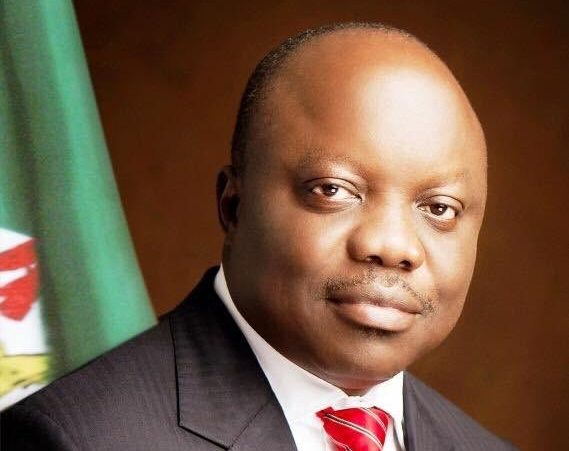
A former Governor of Delta State, Dr. Emmanuel Uduaghan is dead.
He died after a brief illness at the age of 71.
The Uduaghan family announced his death in a statement signed by Toju Andre Uduaghan, on Monday.
The statement, titled, ‘ANNOUNCEMENT OF THE PASSING OF HIS EXCELLENCY, DR. CHIEF EMMANUEL EWETA UDUAGHAN’, read:
“It is with hearts weighed down by immeasurable grief and profound sorrow that we announce the passing to glory of our beloved Father, Brother, Uncle, and Patriarch, His Excellency, Dr. Chief Emmanuel Eweta Uduaghan, former Governor of Delta State, who departed this world on the morning of 19th October 2026.
“His passing has left us devastated. Words can hardly express the depth of our sorrow at the loss of a man who meant so much to our family and whose life and service touched countless others across Delta State and Nigeria.
“He was a source of strength, a father figure, a beloved brother and uncle, and a respected elder. We will deeply miss his presence and forever cherish the memories and legacy he leaves behind.
“He served as Commissioner for Health from 1999 to 2003, Secretary to the Delta State Government from 2003 to 2007, and Governor of Delta State from 2007 to 2015. Throughout his years in public service, he demonstrated a commitment to the human and infrastructural development of Delta State.
“His passing is a profound loss to our family, the people of Delta State, and Nigeria at large. We are grateful to Almighty God for his life, his service, and the legacy he leaves behind.
“We pray that Almighty God, in His infinite mercy, will grant his soul eternal rest and comfort our family, friends, associates, former colleagues, and all who mourn this painful loss.
“Rest well, our beloved Father, Brother, and Uncle. Your memory will forever remain in our hearts, and your legacy will endure in the lives of those you touched.
“May your gentle soul rest in perfect peace. Amen.”
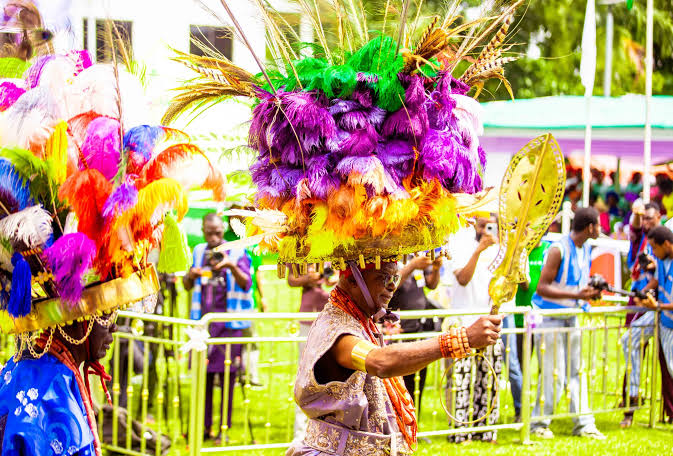
The Obi of Onitsha, His Majesty Igwe Alfred Nnaemeka Achebe, has commended Globacom for its unwavering commitment to the preservation and promotion of Nigeria’s cultural heritage, noting that the telecommunications company’s sustained support has helped transform the Ofala Festival into a world-renowned cultural celebration.
Speaking on the 2026 edition of the festival, held at Ime Obi, Onitsha, Anambra State, on Friday, the monarch paid a glowing tribute to Globacom for its longstanding role as the principal sponsor of the festival, a partnership that has spanned fifteen consecutive years since 2011.
According to the monarch, “Their partnership has transformed the festival from a palace ritual to a world-renowned cultural festival owes a great deal to purposeful partnership. Since 2011, Globacom has stood with us as our principal partner – now fifteen consecutive years of unwavering commitment.” He added that “In good times and challenging times, Globacom has helped us preserve the authenticity of Ofala while enhancing its presentation, documentation, broadcast and global reach. They have helped take a living heritage to the global stage”.
Igwe Achebe also applauded the vision of Globacom’s Chairman, Dr Mike Adenuga Jr., whose commitment to cultural preservation, he noted, reflects a profound appreciation of the role of indigenous traditions in strengthening national identity and social cohesion.
“I thank Globacom and its Chairman, Otunba (Dr) Mike Adenuga Jr., GCON, a true man of culture, for his vision and belief that culture is not a luxury but a foundation for unity,” the monarch said.
Commenting on the theme of this year’s festival, “Igba Mbo, Iga N’Iru” — Strive and Advance — Igwe Achebe described it as a compelling call to diligence, excellence, self-improvement and collective progress. He explained that the theme embodied the enduring spirit of the forebears who built the Onitsha kingdom on the banks of the Niger, while challenging younger generations to preserve that legacy through enterprise, purposeful endeavour and a commitment to progress.
In his goodwill message to the monarch and the people of Onitsha, Dr Adenuga described Globacom’s association with the Ofala Festival “since 2011 has been much more than a corporate partnership. It has been a relationship which we cherish deeply and regard as a privilege”. He expressed profound appreciation to Igwe Achebe for the opportunity afforded Globacom to contribute to the preservation, celebration and wider projection of the community’s priceless cultural heritage.
He noted that the annual festival provides a valuable platform for showcasing the rich cultural traditions, dignity and enduring values of the Onitsha people to audiences across Nigeria, Africa and the wider world.
Through its longstanding partnership with Ofala, Globacom continues to demonstrate that corporate citizenship extends beyond commercial enterprise to the preservation of the cultural foundations that give communities their identity, strengthen their unity and connect generations.
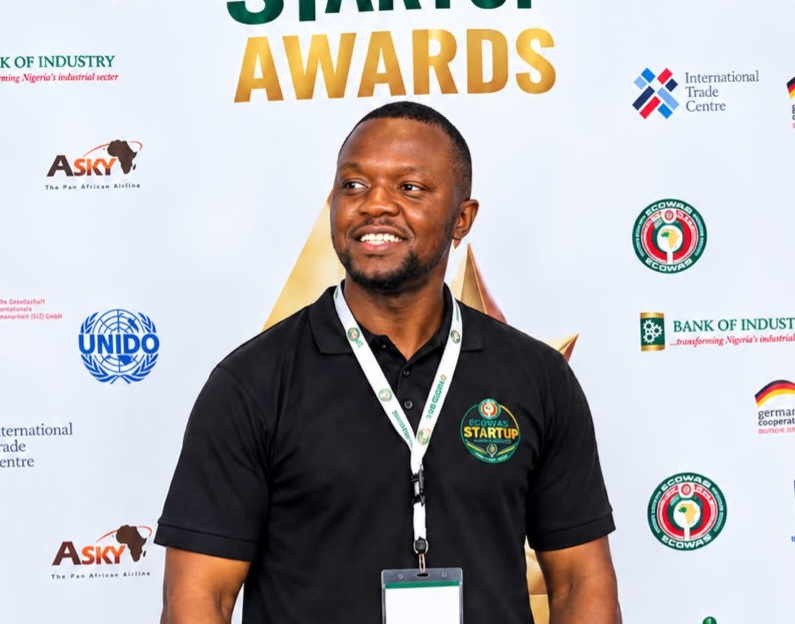
Kardinal Business Travel, a travel technology company with African and global focus, was among 60 startups that pitched at the 2nd edition of the Economic Community of West African States (ECOWAS) Startup Awards, held at the ECOWAS Commission headquarters in Abuja recently.
The company’s Chief Executive Officer and Founder, Cornelius Ugwunwa, presented the company’s case at the three-day event. The awards was part of an ECOWAS initiative to help West African businesses and startups scale through digital transformation, regional integration and sustainable value chains, with the aim of widening access to global markets.
Temitope Kareem, founder of Nigerian healthtech firm HubPharm Africa, won the top prize of $30,000. Senegal’s Gaynako took home $20,000 as first runner-up, while Steve Bah Blesson’s MyOpinion from Côte d’Ivoire won $15,000 as second runner-up.
Speaking during his pitch, Ugwunwa said Africa needs a new system for business travel. He cited a market with $75 billion in inbound travel spending and a strong business travel component in 2025, while travel and tourism as a whole contributed $228 billion to the regional economy.
“When a company sends its employees across Africa for a business engagement, we at Kardinal noticed the challenges of countless inboxes, spreadsheets and emails, mostly after the trip.
Businesses keep asking: How much did we spend? Who did we spend it on? Was it above or below budget? Can we reconcile everything on one platform?” he said.
He described African business travel as a $30 billion market that is largely fragmented and overly dependent on manual processes.
According to him, many businesses lose over $1 billion to manual travel processing and cannot track spending in real time. “That is why Kardinal exists: to solve this entrenched problem,” he said.
Ugwunwa said GoKardinal is an artificial intelligence-driven platform built to track expenses for African businesses. It brings the entire business travel lifecycle (planning, budgeting, booking, financing and expense tracking) onto one platform, in real time.
“GoKardinal is not another travel platform. It is an infrastructure for business travel, powered by AI for expense management,” he said, adding that the idea is to help businesses move without delay from one location to another to do their best work, expand and make profit.
On the company’s performance, he said the platform serves over 51 businesses in Nigeria and across Africa, with estimated weekly profit of $10,000 and gross merchandise value of over $1 million, growing at 65 per cent annually. he added.
He noted that about 80 per cent of African businesses still run their business travel manually, without any form of expense tracking, in a market worth over $30 billion annually. “African business travel is not just travelling for the fun of it.
It is an ecosystem with the potential to generate over $70 billion when digitalised,” Ugwunwa said.


