
Headlines
Insecurity: Military Vows Not to Allow Foreigners Overrun Nigeria

- /home/rhoncare/pointblank.ng/wp-content/plugins/mvp-social-buttons/mvp-social-buttons.php on line 27
https://pointblank.ng/wp-content/uploads/2021/07/Yahaya.jpeg&description=Insecurity: Military Vows Not to Allow Foreigners Overrun Nigeria', 'pinterestShare', 'width=750,height=350'); return false;" title="Pin This Post">
- Share
- Tweet /home/rhoncare/pointblank.ng/wp-content/plugins/mvp-social-buttons/mvp-social-buttons.php on line 69
https://pointblank.ng/wp-content/uploads/2021/07/Yahaya.jpeg&description=Insecurity: Military Vows Not to Allow Foreigners Overrun Nigeria', 'pinterestShare', 'width=750,height=350'); return false;" title="Pin This Post">
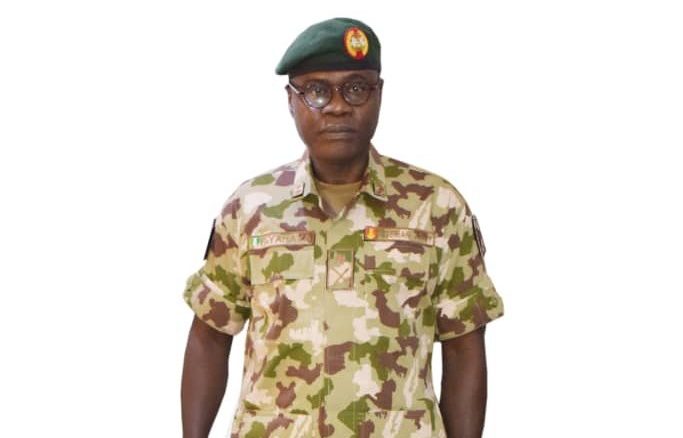
The Theatre Commander, Operation Hadin Kai, Maj.-Gen. Christopher Musa, says the Nigerian military will not allow the Islamic States West African Province, a foreign terrorist group, to have strong footing in Nigeria
Musa stated this in an interview with newsmen on Wednesday, in Maiduguri
He said that ISWAP terrorist group was a foreign terrorist organisation being sponsored by foreigners with some local collaborations, adding that the terrorists that were refusing to surrender belonged to ISWAP.
According to him, ISWAP is a foreign terrorist organisation that is funded by foreign individuals and probably some locals but mostly foreign and then they have foreign leadership which means they have not stake in Nigeria.
“It is very clear that ISWAP are foreigners coming to invade our country which we will never allow to happen.
“That is why I want to encourage those of them, especially those members that are with them to pull out and understand that they have no stake in what those guys are doing.
“They don’t wish the country well they don’t wish themselves well and we will never allow any foreigner step an inch on ground in Nigeria,” he said.
The theatre commander stated that the military had advised the governments on the need to adopt the system of involving the victims in dialogue on the handling of the surrendered terrorists.
He added that the government must ensure that the victims were not left out, saying that people should be assured that the proper processes would be followed without compromise.
According to him, some of the victims are military men, as the military has lost wonderful officers and soldiers.
“So, for us to even accept them has been very difficult but professionally we are meant to do that.
“Once we have those windows and they are working we are meant to ensure that we arrest them bring them in and then the nation will take its proper cause through constitution and that is what is going to happen.
“We want them to agree to understand fully that Operation Hadin Kai is just doing its own bit and the military operation is just one line of operation which is about 20 per cent while the remaining 80 per cent has to do with diplomacy, humanitarian, justice, rule of law and all these things.
“So, that is the stage we are in now,” he said.
Musa disclosed that the terrorists were being secured separately, adding that they were not going to be released just like that.
He said that the profiling of the surrendered terrorists was being carried out by the Defence Intelligence Agency, DSS and other security agencies.
According to him, everybody that has anything to do is also checking, we have also invited the National Identity Management Agency who are taking the profiles of everybody.
“They take the thumb and pictures and so, even after this, we know what they are doing, we know where they are and know where he goes to.
“This goes to show you that we are taking the proper procedure and nobody is going to be compromised,” he said.
(NAN)


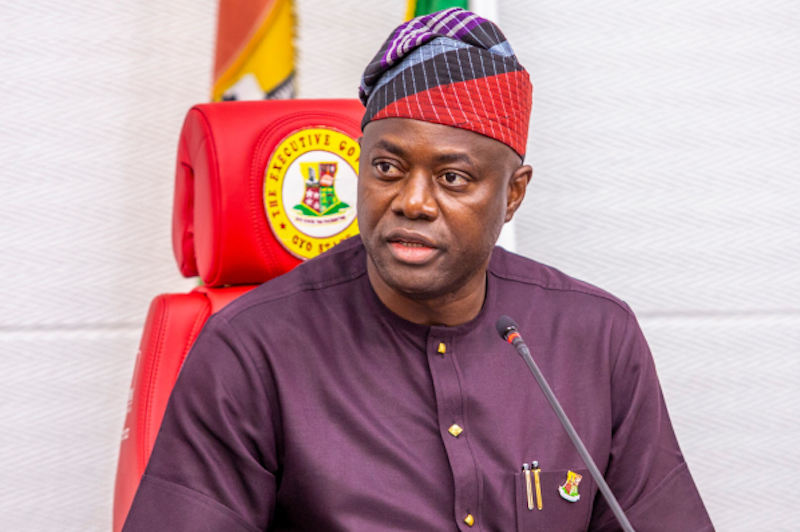
The Allied Peoples Movement (APM) presidential candidate, Seyi Makinde, on Thursday, criticised President Bola Tinubu’s “Emi Lokan” slogan ahead of the 2027 presidential election.
Makinde said Nigerians do not need “turn-by-turn nepotism”, arguing that voters should be free to decide who becomes the country’s next president in 2027.
The Oyo State governor spoke during the APM’s town hall meeting in Akure, Ondo State.
Makinde asked: “How can someone say ‘Eemi lokan’ in a country like Nigeria? You were given the opportunity. If you recall the 1999 presidential election, the South-West voted massively for Baba Olu Falae, but the rest of Nigerians voted for Baba Obasanjo. So, this is not an issue that only the South-West can resolve; it is an issue we must address collectively as Nigerians.
“We do not want ‘turn-by-turn nepotism’, nor do we want a situation where people say, ‘I will vote for projects because it is my turn’. You will not finish those projects, and when it becomes someone else’s turn, they will do the same thing. We will end up with a Nigeria where we cannot get value for the resources belonging to Nigerians.
“The Reset Nigeria agenda is about building a country where infrastructure development supports economic growth and addresses the concerns of young people and women.
“Once we fix our economy, no zone will be left behind, and no demographic group will be left behind.”
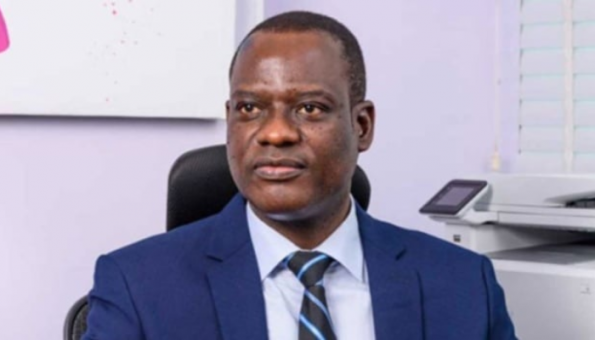
Minister of Finance and Coordinating Minister of the Economy, Taiwo Oyedele, has denied saying the Federal government will introduce a fuel tax when the economy stabilises and income levels improve.
In a post on X on Tuesday, Oyedele said his remarks during an interview with ARISE News was misrepresented, insisting that a “fuel tax is not on the table.”
However, during the interview with Rotus Odiri, ARISE News Business Correspondent, on the sidelines of the 2026 International Monetary Fund and World Bank annual meetings in Bangkok, Thailand, Oyedele said the tax would come when income levels improve enough for Nigerians to accommodate it.
He said taxes account for between 20 and 80 percent of pump prices in some countries, while many African countries impose between six and 10 different taxes on fuel products.
He said introducing fuel tax while petrol was still subsidised would have been counterproductive because government would effectively be paying the tax itself.
According to him, imposing the tax immediately after removal of petrol subsidy would be insensitive to Nigerians.
“The objective should be that instead of trying to suppress prices, which hasn’t worked for us, it hasn’t worked for any country in the world, not one. Instead of trying to suppress prices, think about how to grow income faster than prices rise,” Oyedele said.
“That’s how you bring prosperity and grow the middle class and that is exactly what we are doing as led by Mr. President himself.
“At the appropriate time, when the economy has stabilizes and income level will be able to accommodate it, those taxes will come. Not because we want to impose taxes,” he added.
In his Tuesday post, the minister reiterated that introducing a fuel tax at this time would be insensitive following removal of petrol subsidy, describing reports that government will introduce the levy when the economy stabilises as “fake news.”
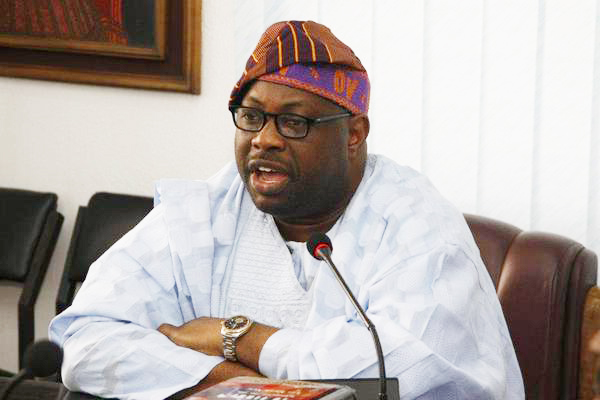
A chieftain of the African Democratic Congress (ADC), and Deputy Director of the Presidential Campaign Council, Chief Dele Momodu, has described former Vice-President Atiku Abubakar as the most nationally formidable and experienced among the leading contenders for the 2027 presidential election.
Momodu said Atiku’s experience at the national level distinguishes him from President Bola Tinubu and former Anambra State Governor, Peter Obi.
He stated this on Wednesday during an interview on Eagle 102.5 FM, Ilese-Ijebu, in Abeokuta.
“If you look at the antecedents of the three major candidates, between Atiku Abubakar and Peter Obi, you will see that Atiku is the most experienced. He has managed our country at the highest level,” he said.
Momodu traced Atiku’s political journey to the 1992 Social Democratic Party (SDP), presidential primary where he contested against late MKO Abiola and stepped down for him.
He said Atiku accepted the outcome without crisis even after he was not picked as Abiola’s running mate, describing it as a mark of true democratic temperament.
“He is the only one who started from around 1992, contested the SDP primary against Abiola and stepped down with uncommon equanimity. He did not make any noise,” Momodu said.
He noted that Atiku was among the founders of the Peoples Democratic Party, PDP, and served as Vice-President from 1999 to 2007.
Comparing Atiku with Obi, Momodu argued that while Obi’s best was demonstrated in Anambra, Atiku’s was at the presidency level managing the national economy.
“Peter Obi has tried his best in Anambra, while Atiku’s best is at the level of vice president controlling the economy of Nigeria. The difference is clear. He has matured in experience and exposure,” he said.
Momodu also said President Tinubu’s experience was largely limited to Lagos.
“What I’m trying to say is that Tinubu’s experience was limited to Lagos, and that is why when he became president, he thought Nigeria was Lagos. And he has found out now that Nigeria is not Lagos,” he said.
He argued that the current economic hardship under the present administration did not show prosperity, insisting Atiku remained better positioned to lead the country.
“Well, we are yet to see that prosperity, and if yesterday would determine today and tomorrow, it is obvious that Tinubu should retire now and let someone else do it,” Momodu added.
DailyPost


