
News
Insecurity: Security News Publishers Challenge FG to Action


- /home/rhoncare/pointblank.ng/wp-content/plugins/mvp-social-buttons/mvp-social-buttons.php on line 27
https://pointblank.ng/wp-content/uploads/2021/01/IMG-20210102-WA0010-1000x600.jpg&description=Insecurity: Security News Publishers Challenge FG to Action', 'pinterestShare', 'width=750,height=350'); return false;" title="Pin This Post">
- Share
- Tweet /home/rhoncare/pointblank.ng/wp-content/plugins/mvp-social-buttons/mvp-social-buttons.php on line 69
https://pointblank.ng/wp-content/uploads/2021/01/IMG-20210102-WA0010-1000x600.jpg&description=Insecurity: Security News Publishers Challenge FG to Action', 'pinterestShare', 'width=750,height=350'); return false;" title="Pin This Post">
The National Association of Online Security News Publishers (NAOSNP) has challenged the Federal Government to provide adequate security for Nigerians as the 21st year of new millennium gets underway.
The Association, in a statement signed by it’s president, Samson Oki, frowned at the increasing level of killings, terrorism, kidnapping and banditry prevalent in the country, and called on all relevant agencies to buckle up.
The Association’s statement in details:
Nigeria is beset with plethora of insecurities ranging from kidnapping, banditary and terrorism, inter-cult rivalries, attacks by herdsmen and armed robbery incidences.
These, apart from the Covid-19 that struck the country in February 28, 2020, have infested the country like a behemoth, emasculating people and depleting their economic prosperity.
In the last few months, most Nigerians have developed lack of interest in embarking on interstate travels, not because of lack of what to do in those states but afraid that they might not arrive their destinations for fear of been kidnapped, abducted by bandits and herdsmen, who brazenly block expressway and seize vehicles or the entire passengers.
Kidnapping for ransom has become one of the biggest organised crime in Nigeria and this has posed a huge national security problem in the country, sending countless victims to their early graves as any resistance always result in death of victims.
In extreme cases, some have had their lives terminated while those that are lucky enough, either forced to pay millions to regain their freedom or had the women gang raped by the bandits.
Sadly, despite been rescued, the kidnapping of over 334 students from Kankara Government Science Secondary School, Katsina on the 11th December, 2020 was a slap on the collective sensibility and sensitivity of Nigerians having had cases of students abductions at Chibok and Dapchi with some many of them still not released by the terrorists till now.
We, at the National Association of Online Security News Publishers (NAOSNP) wish to use this opportunity to call on all the security apparatuses to redouble their efforts and extricate our country from this mess we have found ourselves.
Nigeria used to be a reference point in terms of peace and security in its ambience but such enviable status cannot be held at the moment – as one of the most secured country in Africa. Unfortunately, due to self distrust, political manipulation and flagrant disregards for the sanctity of human lives, have descended to such a level that we are made a laughing stock in Africa.
As it is hitherto, nowhere seems safe in Nigeria. Even Churches and Mosques have been inflitrated by terrorist gangs and bombed them or clergymen kidnapped. Every geopolitical zone is either contending with one insecurities problem or the other leading to; in recent times, the formation by some states of regional or ethnic security Organisations. Aren’t these indexes of failed efforts of the Government to provide security and protect properties of citizens?
Pathetically, it has been observed with disdain that men of the Nigerian Police have lowered the guide at providing required security since the aftermath of #EndSARS protest. No matter what has happened, the Nigerian Police cannot shy away from its primary responsibilities.
Despite the hijack of #EndSARS protest, which was unfortunate and condemnable in its ramifications, NAOSNP urge the police to take the challenge as a bold step to change the negative narratives and prove all the doubting Thomases WRONG. It would also be an expression of their strongness, doggedness to live above their shortcomings by providing robust security to the citizenry.
As the Federal government has reassured Nigerians of robust security as espoused in President Mohammadu Buhari New Year broadcast, we, at NAOSNP appeal to the Government to invest heavily on the military by procuring necessary equipment to deal with the terrorists terrorising lives in the NorthEast and North Central with a reminder that any country that politicises security matters would bleed.
Similarly, other Paramilitary organizations need massive investment in the area of Equipment, Training and Welfare of officers to meet contemporary security hiatus. Based on those premise, the welfare of officers cannot be compromised and as such, will serve as added motivational factor that would challenge them to do more to secure the rest of us.
Lastly, 2021 holds so much in trust for all and sundry. Everyone needs to assist in intelligence gathering to aid our security agencies and the Government must begin to reevaluate its security architecture, make necessary changes at the top hierrachy, appropriate more funds and monitor its disbursement with a view to getting results but not the uncouth narratives that have kept us in this unfortunate insecurity problems.
It is only when adequate security of lives and properties are guaranteed that both foreign and local investments would be attracted. The moment this is done, the reflection on Gross National Domestic Product (GDP) would climb to the roof and by extension, Internally Generated Revenue (IGR) and infrastructural development will accelerate.
As a country, nation and people, we deserve more than this. NAOSNP declares 2021 a year of peace and hope; a year where auguish and lack will be relegated; where plenty food will replace starvation; where peace and love will replace nepotism and tribal division and where slaughtering of people will no longer become a daily identity but hopes of progress and developments for all and sundry.


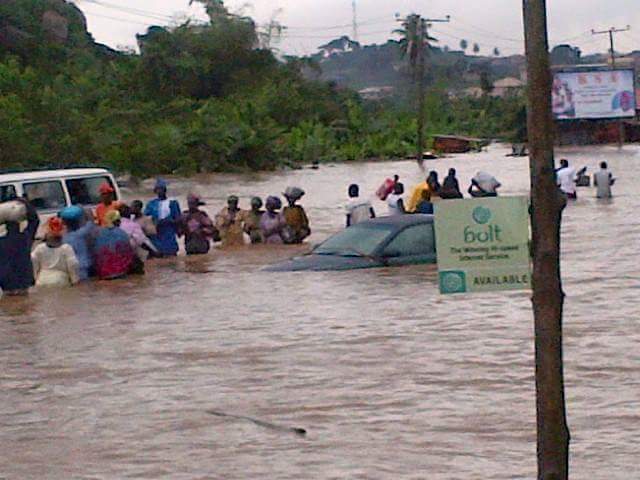
Nepal said Sunday it had begun burying some of the hundreds of bodies recovered after devastating floods, after taking DNA samples and marking them so families can later retrieve them.
The dead are traditionally cremated on funeral pyres in Hindu-majority Nepal, so the burials are viewed as long-term storage until families can retrieve them.
Foreign Secretary Amrit Bahadur Rai told reporters that all those buried were carefully recorded, but also appealed for international support, saying Nepal needed “more than a thousand” freezer units to store bodies.
The announcement of the burials came as Nepal’s disaster ministry increased its toll again on Sunday to 752 bodies recovered and 2,502 people missing.
That list includes 589 foreigners unaccounted for.
Chinese state media earlier confirmed 16 dead in Tibet and 546 people missing following Wednesday’s disaster, taking the overall toll to 768 dead and 3,048 unaccounted for.
“Following standard and accepted protocols, such as those of ICRC (Red Cross), the mortal remains of the dead, especially those not recognisable… have been temporarily buried,” Rai told reporters.
“Medical teams took DNA samples from every victim prior to the burial so that families can match-reference later, and would be allowed to exhume for necessary rituals.”
Nepal has called for freezer storage units and DNA testing kits, as it is overwhelmed with the number of bodies to store safely.
“We have requested different countries for freezers; we will need more than a thousand,” Rai added.
“Many dead bodies have been collected, and they have started decomposing. To preserve public health, we had to bury the decomposing bodies,” he added.
AFP
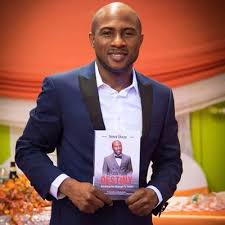
By Henry Ukazu
Dear Destiny Friends,
Everyone loves influence. Everyone wants to be a person of influence. Everyone wants to be relevant. Everyone wants to be celebrated. Everyone likes attention, appreciation, approval, and admiration. All these are products of influence.
The question I need you to ask yourself is, are you a person of influence? Are you influencing anyone? Do you have a positive or negative influence on your children, spouse, friends, mentors/mentee, or even strangers? Take a minute to listen to yourself.
When we talk about influence, uninformed minds just think influence is only about money, power, authority, or even being a mentor. Influence is far from it. We are all influencers in one way or another. Many people have influenced us in different ways, some positive, some negative. Similarly, we have also influenced many people in good and bad ways.
But today, I’m here to share with you what influence is about and the positive ways one can be a person of influence. Influence comes in different ways: as a politician, you are influencing people; as a leader, you are influencing policy; as a youth advocate, mentor, teacher, pastor, and employee, you are influencing somebody in one way or the other.
Do you know you can influence someone with your lifestyle? Yes, the way you talk, write, lead, dress, eat, exercise, preach the word of God, do your job, serve people, train your children, etc., are all part of influence. Influence is powerful. It has a way of permeating someone without them knowing. I believe that’s why my late mother would always say, if you are hanging out with a friend, only take the good part and leave the bad part.
We currently live in the 21st century, where the internet leads. The internet is regarded as the fifth estate for a reason, because it empowers networked individuals and alternative media to hold traditional institutions, governments, and mainstream media accountable. Everyone and almost everything is on the internet; however, sometimes, the information we get on the internet is regarded as fake because it’s unverified.
In some quarters, the internet has been regarded as a bad influence on the younger generation because of the limited restrictions and the negative information it has exposed their minds to think in a particular way. Some other schools of thought have opined that the internet has done more good than harm due to the knowledge it has exposed their minds to, as opposed to the information being peddled by some other schools of thought. Regardless of the aisle one belongs to, the internet truly has its pros and cons, especially as it relates to influence.
The big question one needs to answer is what influence is. According to Nosakhare Tune Oni – A Pan-African Strategist, leadership and business coach, “influence is when people trust your judgment enough to act on it. It is when someone calls you before making an important decision. When your recommendation opens a door. When your name carries weight in a room, you’re not even in. When people are willing to put their reputation behind yours. That’s influence.
Let’s take a minute to dwell on those lines again. Has anyone played any of such roles in your life? If yes, that’s the best definition of influence in a nutshell. Influence is not about quantity, but quality. The quality of people in your life is more valuable than the quantity of people one’s life. Do you know we don’t really need battalions of friends, whether online or in person, but just one person of influence can be a game-changer. According to Les Brown, a leadership coach, we need only quality people.
Do you know we are everywhere and nowhere at the same time? Do you also know that we can be everywhere and still have very little influence? Influence is about knowing your value and the right people who appreciate the value you bring. Do you know one can be a person of value to the wrong person or audience?
Influence is about having followers who believe and follow your teaching. We can have visibility with little or no influence. One may have 100,000 followers. We may trend on Facebook, Instagram, X, TikTok, LinkedIn, or even WhatsApp. Your name is a household name. That is visibility.
Let me give you a practical example. If you have a large crowd of people following you online or in person. The critical question one must ask oneself is: why are they following me? Are they following me because of my ideology, my talent/gift, academic process, position, profession, vocation, skill, or jokes? If they follow you because of the ideology you represent, you are a person of influence. If they are following you because of your jokes, you may be a content creator or comedian with little or no value in influencing them to do or not do certain things. Real influence provokes action.
According to Nosakhare Tune Oni, influence is built differently from attention. Attention can be bought. Influence must be earned. You can manufacture visibility with advertising, controversy, or constant posting. But you cannot manufacture trust that easily. It comes from consistently being useful. Keeping your word. Knowing what you’re talking about. Showing up when it matters. Building relationships before you need them.
And creating value for people without constantly asking, “What’s in it for me?”
Do you know a person with 1,000 followers and deep trust within a particular industry may have more real influence than someone with 100,000 followers who nobody listens to. So, I don’t think the goal should simply be: “How many people know me?” A better question is: “How much does my presence actually change things?” Because visibility gets you noticed. Value gets you remembered. Trust gets you listened to, but influence is what happens when people trust your value enough to move.
As I prepare to conclude, please take a minute to ask yourself: are you a person of influence? Do you have influence? What positive influence have you had on people or anyone? Today, I want you to be a man/lady of influence like Martin Luther King Jnr, Mother Theresea, Evangelist Ebuka Obi, President Nelson Mandela, Elon Musk, Bill Gates, Mark Zuckerberg, Dr. Kola Adesina, Dr. Joe Abah, Dr. Dele Momodu, Barr. Henry Ukazu and Miss Ginika Dike.
Henry Ukazu writes from New York. He works with the New York City Department of Correction as the Legal Coordinator. He’s the founder of Gloemi. He’s a Transformative Human Capacity and Mindset coach. He is also a public speaker, youth advocate, creative writer, and author of Design Your Destiny- Actualizing Your Birthright to Success, Unleash Your Destiny, and The Six Pillars of Success. He can be reached via info@gloemi.com

The Director-General (D-G) of World Trade Organisation (WTO), Dr. Ngozi Okonjo-Iweala, has commended Governor Alex Otti for the reforms she said are strengthening Abia State’s financial sustainability and driving economic transformation.
Okonjo-Iweala, who spoke in a virtual goodwill message at the 35th anniversary lecture marking the creation of Abia State, also urged the government to develop the “Made in Aba” label into a globally recognised brand.
The anniversary lecture under the theme, “The Rise of a New Abia,” was held on Wednesday at the International Conference Centre, Umuahia.
The WTO D-G said the Otti administration has increased internally generated revenue (IGR), reduced the State’s dependence on Federation Account allocations and prioritised capital expenditure.
She also noted the State’s investments in infrastructure and improved electricity supply, as well as the settlement of inherited salary and pension arrears and reduction of its debt burden.
While acknowledging that more work remains to be done, Okonjo-Iweala expressed optimism that Abia could harness its potential to create jobs, prosperity and dignity for its people.
She said improved infrastructure, supportive policies and strategic investments in high-potential sectors could position the state within national, regional and global value chains.
Okonjo-Iweala specifically urged the government to build “Made in Aba” into a globally recognised brand while strengthening Umuahia as a light manufacturing and administrative centre.
Also speaking, the keynote speaker and former Minister of Aviation, Chief Osita Chidoka, said there was visible evidence of development in Abia since Otti assumed office in 2023.
Chidoka, however, said the ultimate test of the administration would be whether it could move Abia from having a capable governor to building a capable and sustainable state.
He said Otti’s emphasis on education is consistent with convictions he had expressed long before becoming governor, particularly in his 2014 book, Saving the Future.
Chidoka commended the consistent appropriation of 20 per cent of the State’s annual budget to education and expressed optimism that Abia could eventually become a reference point for good governance.
Meanwhile, Otti apologised to the Abia State University, Uturu (ABSU), community over the delayed implementation of approved demands by the Academic Staff Union of Universities (ASUU), which resulted in the union’s recent strike.
The governor described the strike as avoidable and warned that “heads will roll” if such bureaucratic lapses recur.
Otti said the demands presented by ASUU-ABSU were legitimate and had been approved by him months earlier, but expressed concern that the approval had not been implemented.
“ASUU went on strike about a week or two ago in Abia State University, Uturu. Their requests came to me. I looked at those requests, and they were legitimate requests, and I approved them.
“But months later, I’m not saying weeks, months later, I was to be told that, yes, you have approved. But it had not been implemented.
“So, I want to, on this podium, apologise to Abia State University as well. That strike was avoidable. And I’ve told my people, if it happens again, heads will roll,” Otti said.
The governor congratulated Abians on the state’s 35th anniversary, stressing that governance was not about an individual but about building sustainable institutions and improving on existing foundations.
He reiterated his commitment to education, explaining that his administration’s decision to abolish school fees, including in the state’s smart schools, was driven by his long-standing belief in the transformative power of education.
In a vote of thanks, the Commissioner for Information, Prince Okey Kanu, called for the cooperation and support of Abians in sustaining what he described as the “rise of a New Abia.”
The event attracted members of the National Assembly, members of the State Executive Council, traditional rulers, members of the clergy and other dignitaries.


