
Featured
It’s Characteristic of Buhari to Blame Others for His Failures, Dogara Fires Back

- /home/rhoncare/pointblank.ng/wp-content/plugins/mvp-social-buttons/mvp-social-buttons.php on line 27
https://pointblank.ng/wp-content/uploads/2019/04/Dogara-1000x587.jpg&description=It’s Characteristic of Buhari to Blame Others for His Failures, Dogara Fires Back', 'pinterestShare', 'width=750,height=350'); return false;" title="Pin This Post">
- Share
- Tweet /home/rhoncare/pointblank.ng/wp-content/plugins/mvp-social-buttons/mvp-social-buttons.php on line 69
https://pointblank.ng/wp-content/uploads/2019/04/Dogara-1000x587.jpg&description=It’s Characteristic of Buhari to Blame Others for His Failures, Dogara Fires Back', 'pinterestShare', 'width=750,height=350'); return false;" title="Pin This Post">
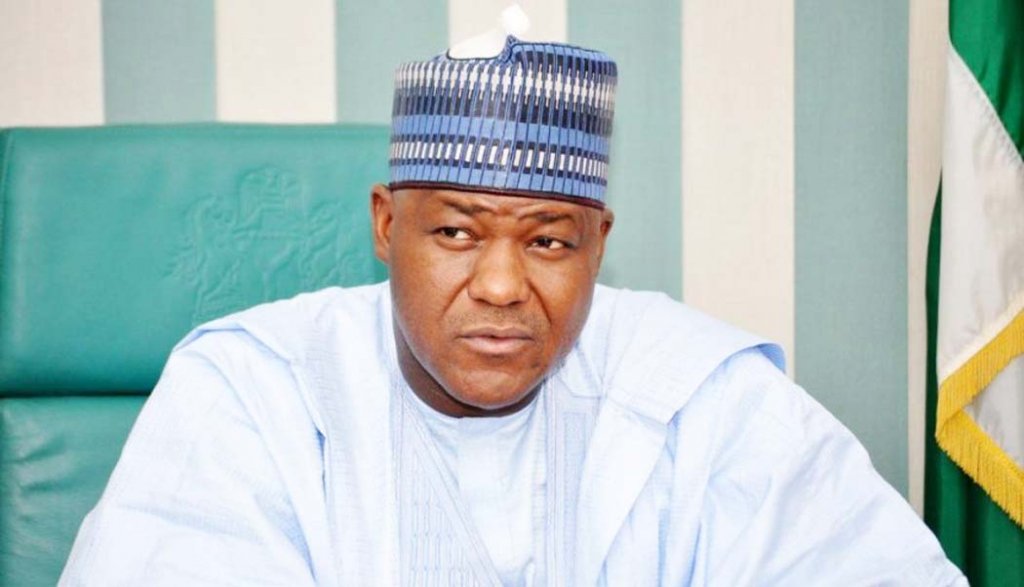
Yakubu Dogara, the Speaker of the House of Representatives, has blasted President Muhammadu Buhari for always blaming people for his personal failings.
Buhari, while speaking, on Monday in an interview broadcast on the Nigerian Television Authority, NTA said “I asked them how they felt to hold the country at ransom for seven months without passing a budget. Unfortunately, they were not hurting me; they were hurting the country. So, really, in terms of patriotism, I think I rated them very low indeed.”
Reacting to the allegations in a statement on Tuesday, Dogara said: “His first budget was the 2016 budget, which was submitted on December 22, 2015, exactly nine days to the end of the fiscal year.
“The minimum time the National Assembly requires to pass a budget is three months. But he presented it just nine days to 2016’ and that ‘what Nigerians didn’t know and the President won’t say is that the Executive through the various ministries continued to propose additional projects to be included in the 2018 budget even as at April and May which further delayed the passage of the 2018 budget. These were communicated officially and if anyone is in doubt, the letters are there with the dates they were written and received. But here’s Buhari blaming the National Assembly.’
“President Muhammadu Buhari a few days ago, in his usual characteristics of self-righteousness, and buck-passing blamed tardiness in the passage of budgets by the National Assembly for the delay in the completion of projects across the country by his government.
“To be precise, the president said, ‘If the National Assembly takes seven months to pass a budget, then we should be commended for the much that we have achieved, and can still achieve. I personally feel very disappointed. I spoke with the leaders of the National Assembly on the issue that seven months is a long time to work on a budget.”
“Even though buck passing and blame game is not new to Buhari as it is now his stock in trade; in the past few days and weeks, there is no day that passes without the President blaming others in a desperate move to exonerate himself from any blame or failure of the Executive under his leadership to execute projects across the country.
“In fact, very recently, Buhari blamed all his predecessors for failing to build infrastructure. And I wonder why? It was the general consensus that the former employees didn’t perform as expected and that was why Nigerians hired him for a job he has sought for four conservative times but here he is blaming the same people he replaced. If you are the boss of ” Nigeria limited”, what will you do this employee?
“Some weeks ago, he even blamed the media for failing to showcase his achievements.
“I’m very disappointed with the Nigerian press. They didn’t give this government the credit of the go back to the land programme,” he said on 26 October. Time and space would not permit me to list all his “blaming”.
“However, it is disingenuous for President Muhammad Buhari to blame the National Assembly for his government’s inability to implement budget and execute projects that affect the lives of Nigerians in the last three years.
“To set the record straight, this is a President who, from the inception of his government didn’t show any sign that he was well prepared and ready for the job he sought for four times in 16 years and for which we voted for him.
“For instance, it took him six months, yes six months not six weeks to form his cabinet. It also took him two years to appoint board chairmen for most government agencies. This was his greatest undoing and was principally responsible for plunging Nigeria into recession because activities in Ministries, Departments, and Agencies of government were brought to a half for the period since civil servants could not take decisions due to the absence of political heads in a country where public sector spending drives the economy. At a point, he even said he was happily working with civil servants because ministers or politicians were noisemakers because “they are only there to make a lot of noises”, he told a French television station in September 2015.
“Now, after three years, with the election in three months, the President is at it again, exonerating himself from the apparent failure of his government thereby throwing the blame right at the doorstep of the legislature. But facts don’t lie and they could be stubborn and here are the facts.
“Since his assuming office, the president has been unable to present the budget on time. His first budget was the 2016 budget which was submitted on December 22, 2015, exactly nine days to the end of the fiscal year.
“The minimum the National Assembly requires to pass a budget is three months. But he presented it just nine days to 2016.
“Again, the 2017 budget was presented on December 14, 2016, just 17 days to the end of 2016. ‘The earliest he presented budget was on November 7, 2017, which was the 2018 appropriations bill. It was less than two months to the end of the year.
“However, his ministers refused to appear before National Assembly committees to defend the budget for five months thereby delaying the passage.
“It was after the leadership of the National Assembly sought the President’s intervention on March 16, 2018, that the ministers reluctantly appeared before the committees, an exercise that takes at least one month to complete.
“In fact, some of them who felt they were super ministers sent in their permanent secretaries.
“What Nigerians didn’t know and the President won’t say is that the Executive through the various ministries continued to propose additional projects to be included in the 2018 budget even as at April and May which further delayed the passage of the 2018 budget. These were communicated officially and if anyone is in doubt the letters are there with the dates they were written and received. But here’s Buhari blaming the National Assembly.
“Violation of Fiscal Responsibility Act 2007 ‘Since the inception of the Buhari administration, it has been in constant violation of the Fiscal Responsibility Act which stipulates that budgets should be presented in early September. The wisdom or import of the FRA is that the National Assembly will have at least three full months to work on the budget bill.
“Intact, the Executive admitted its failure and inability to abide by the law on August 24,2018 when former minister of Budget and National Planning, now minister of finance, Zainab Ahmed disclosed that the Federal government will present the 2019 budget in September in a bid to restore the budget circle from January to December but here we are in November without the budget estimates before the lawmakers.
SaharaReporters


A member of the Nigeria Union of Petroleum and Natural Gas Workers (NUPENG), Comrade Tope Ajagbe, has described as lies reports been circulated by the National Union of Edible Oil Tanker Drivers of Nigeria (NUEOTDN).
According to a statement, the member said “their baseless allegations, seen in the online edition of The Nation newspaper of Wednesday, September 16, 2026, are malicious, misleading, and deliberately intended to create panic within Nigeria’s product supply and distribution chain.”
He further wrote:
We strongly urge the Federal Government, law enforcement agencies, regulatory authorities, and other critical stakeholders to treat this orchestrated falsehood as an act of economic sabotage. NUEOTDN must be cautioned to desist from overheating the polity and maligning the reputation of NUPENG.
It is important to note that NUPENG leadership has consistently sought peaceful resolution of disputes between NUEOTDN and the Amalgamated Union of Wharf Truck Owners of Nigeria/Wharf 302 Products and Beverages Association of Tanker Drivers, who operate dedicated food-grade trucks. Unfortunately, NUEOTDN has repeatedly rejected conciliation efforts and continues to spread misinformation.
NUPENG operations are conducted with strict compliance to all relevant safety, environmental, and regulatory frameworks. We work closely with Federal Road Safety Corps (FRSC), Nigerian Midstream and Downstream Petroleum Regulatory Authority (NMDPRA), and other statutory agencies to ensure our practices meet the highest standards of public safety and consumer protection.
Our drivers undergo regular training, inspections, and certification to guarantee adherence to national and international best practices.
We categorically condemn NUEOTDN’s falsehoods and reaffirm that NUPENG remains a legally recognized and responsible union committed to professionalism, integrity, and the welfare of Nigerians.
We call on the Federal Government, regulators, law endorsement agencies and the public to disregard these unfounded claims and recognize NUPENG as a union that stands for responsibility, compliance, and national development.
It is also important to emphasize that any dedicated petroleum tanker found engaging in illegal activities, particularly in the lifting or distribution of edible products, must be apprehended by law enforcement agencies and made to face the full weight of the law. NUPENG remains a law-abiding union and will not condone any member involved in acts of illegality.

President Bola Ahmed Tinubu has been projected to emerge victorious in the 2027 presidential election, with a new political forecast giving him 20 states against nine for former Vice President Atiku Abubakar and eight for NDC candidate Peter Obi.
The projection was made by the Political Intelligence Group (PIG) of Politico.ng, which assessed the current political landscape and projected how the three major political figures could perform if the presidential election were conducted under the circumstances prevailing at the moment.
According to the projection, Tinubu would have a clear advantage over his major rivals, although the group acknowledged that the political situation could change significantly before the actual election.
The forecast places Tinubu strongly in the South-West while also giving him important victories outside the region. Atiku is projected to maintain considerable strength across parts of Northern Nigeria, while Obi is expected to retain support in selected areas where he performed strongly during the 2023 presidential election.
Tinubu Projected to Win 20 States
According to PIG, Tinubu is currently projected to win 20 states, making him the leading candidate in the forecast.
The president is expected to dominate the South-West, with all six states in the region projected to fall into his column. The region remains politically significant because of its voting strength and Tinubu’s long-standing political influence there.
Tinubu is also projected to win Lagos State in the 2027 presidential election. This would mark a change from the 2023 presidential election, when Tinubu lost Lagos State to Peter Obi.
The latest projection says that Tinubu would regain the state in 2027. Lagos has been central to his political career and remains one of the country’s most important electoral territories.
The inclusion of Kano among the states projected to go to Tinubu is one of the more striking aspects of the forecast. Kano is one of Nigeria’s largest states by voting population and has traditionally been an important battleground during presidential elections.
A victory in Kano would provide Tinubu with a major northern foothold and could strengthen his ability to build a broad national coalition beyond his traditional South-West base.
Tinubu’s eventual performance, however, could depend heavily on how Nigerians assess his administration by 2027.
Economic conditions, inflation, employment, security, infrastructure and the cost of living could influence voters’ decisions. The administration’s policies and its ability to communicate its achievements may also become important campaign issues.
Religion and ethnicity could also play a role in the political calculations. Nigeria’s voting patterns are sometimes influenced by regional, ethnic and religious considerations, although these factors compete with economic and political issues.
Atiku Projected to Win 9 States
PIG projects that Atiku Abubakar would win nine states in the 2027 presidential election.
The former vice president is expected to perform strongly in Northern Nigeria, with Kaduna State projected to go to him alongside several states in the North-East and North-West.
Atiku’s strength in the region could be connected to his established political network and his previous presidential campaigns. His ability to mobilise support across northern states could make him one of Tinubu’s strongest competitors in the region.
Another issue that could influence Atiku’s support is his position on fuel subsidy.
Atiku has advocated a review of the current fuel subsidy policy and has spoken about measures aimed at reducing the burden of petrol prices on Nigerians. If the high cost of transportation and living remains a major concern by 2027, such a promise could appeal to voters who want immediate relief from rising household expenses.
However, the fuel subsidy debate is likely to be more complicated than simply promising cheaper petrol.
Voters may want to know where the money required to fund the subsidy would come from and whether restoring or expanding the policy would be financially sustainable. Questions surrounding government revenue, public spending and the opportunity cost of subsidy payments could therefore become major campaign issues.
Religion and ethnicity may also influence Atiku’s support in some areas, particularly where regional identity remains politically important. However, these factors cannot be assumed to determine how every voter will behave.
The strength of Atiku’s campaign could ultimately depend on whether he can combine his northern support with meaningful backing from other parts of the country.
Obi Projected to Win 8 States
Peter Obi is projected to win eight states, according to the Politico.ng forecast.
The projection also places the Federal Capital Territory in Obi’s column. Edo State is another state where the Labour Party candidate is expected to emerge victorious.
Obi’s projected support reflects the political base he developed during the 2023 presidential election, when he performed strongly in several parts of the country.
His campaign has continued to appeal particularly to voters seeking political change and a different approach to governance. Economic management, accountability, public spending and the need for greater efficiency in government are likely to remain central to his political message.
However, Obi’s challenge could be expanding his support beyond the areas where he has historically performed strongly.
The 2027 election is expected to be highly competitive, and the emergence of new political alliances could significantly change the distribution of votes.
If opposition parties eventually cooperate or form a coalition, the calculations surrounding Tinubu, Atiku and Obi could change dramatically. Likewise, defections, the choice of running mates and the strength of party structures could influence the final outcome.
Religion and ethnicity could also feature in the contest, particularly as politicians seek to build geographically and demographically balanced tickets. Nevertheless, voters could also prioritise issues such as economic hardship, security, employment and government performance.
Projection Could Still Change
PIG’s forecast should not be interpreted as the final result of the 2027 presidential election.
The group reportedly indicated that if the election were held in September under the political circumstances currently prevailing, the APC would win.
Under that scenario, Tinubu would secure 20 states, Atiku would win nine, while Obi would take eight.
However, the actual election is still ahead, giving the major political players considerable time to change the current political equation.
The economy could improve or deteriorate. Petrol prices could become a bigger or smaller issue. New alliances could emerge, and candidates could gain or lose popularity.
The debate over fuel subsidy could become particularly important if Nigerians continue to struggle with transportation costs and the broader cost of living. Atiku’s position could therefore become a significant campaign talking point, while Tinubu would likely defend the economic direction of his administration.
Beyond economic issues, regional interests, religion, ethnicity and political identity are likely to remain part of the broader electoral calculations.
For now, however, the Politico.ng projection places Tinubu in the strongest position with 20 states, followed by Atiku with nine and Obi with eight.
The coming months and eventual campaign season will determine whether those numbers remain intact or whether Nigeria’s political landscape produces another major realignment before voters finally head to the polls in 2027.
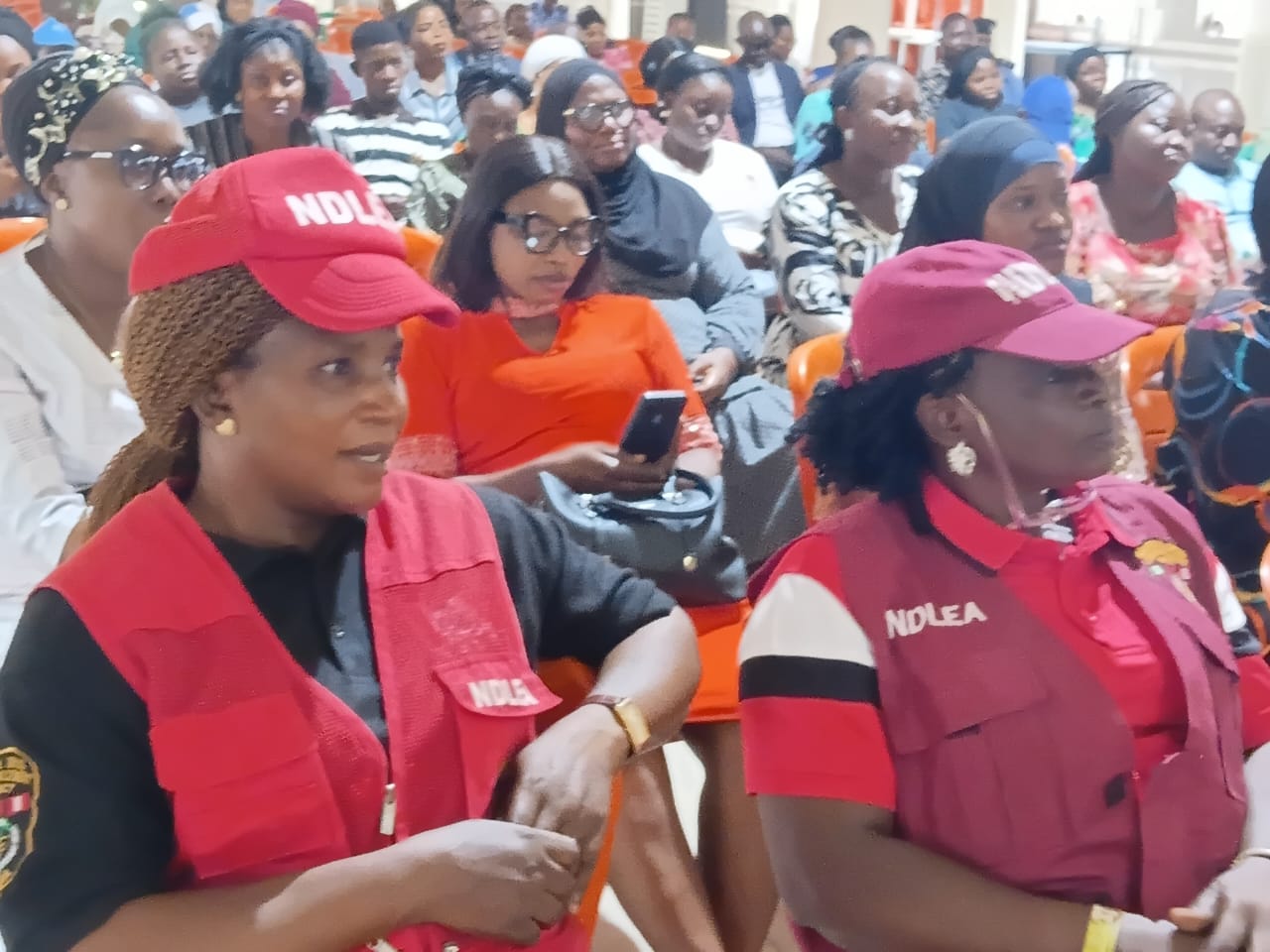
The Homat Megalite Event Centre, Igbogbo Road, Ikorodu, was filled to capacity penultimate Friday as Bottomline Media hosted the 2nd edition of the Ikorodu School Summit & Awards
With the theme, “Combating the Menace of Poor Orientation and Moral Decadence in Society,” the summit brought together students, teachers, school owners, parents, faith leaders, and security chiefs for a day of truth-telling, awards, and renewed commitment to rebuilding values in the society.
Supported by Education District II and LASUBEB, the summit has quickly become one of Ikorodu’s most important platforms for education, character, and community security.
The event recorded a strong presence from Nigeria’s security institutions. The Lagos State Commissioner of Police, CP Fatai Taiwo, was represented by the Area N Area Commander, Ijede, with the DPO, Igbogbo Police Station, CSP Akinola Clement who deployed full police security for summit also in attendance.
Speaking on behalf of the CP, the Area Commander commended Bottomline Media for the initiative and said there is an urgent need to “start early in educating the younger ones on moral uprightness.”
“An intelligent student without purpose and character will become an intelligent criminal,” he warned. He challenged society to pay more attention to values than to criminal success. “We celebrate criminal success at the expense of values. That must change if we want a safer Nigeria.”
The National Drug Law Enforcement Agency, NDLEA, Ikorodu Area Command, led by DCN Jonax David, delivered a hard-hitting lecture on the dangers of illegal and abusive drugs. The agency linked drug abuse directly to moral decadence and rising crime rates across the country.
NDLEA called on parents, schools, religious leaders, and teachers to do more in prevention and early intervention. The session left students asking questions and teachers requesting follow-up sensitization in schools.
Guest Speaker, Pastor Lanre Temenu, Pastor, Chapel of Transfiguration, COT Solution Centre, LASUTECH, anchored the moral conversation. His message on discipline, purpose, and right orientation resonated with audience who filled the hall from various discipline.
Dr. Henry Obidi anchored the programme with professionalism and energy, ensuring the day ran seamlessly from opening to the final award.
Proprietor of Homat Schools, Alhaji Olawale Amusa, hosted the summit at the Homat Megalite Event Centre, providing the venue that made the large turnout possible.
The awards segment was the emotional high point. Seven Prominent individuals and institutions were honoured and received a full 60-second standing ovation from the audience.
60-Second Standing Ovation Honorees
1. CP Fatai Tijani: Commissioner of Police, Lagos State Command
2. Lagos State Ministry of Education
3. Lagos State Ministry of Information & Strategy
4. Femi Falana, SAN , Legal luminary
5. Hon. Jimi Benson Member, House of Representatives, Ikorodu Federal Constituency
6. Senator Mukhail Adetokunbo Abiru, Senator, Lagos East Senatorial District
7. Ikorodu Division Peace & Security Initiative, Ikorodu
Champion of Moral Excellence & Societal Values Award
1. Lawrence Obilana: Proprietor, Meaning Resources School
2. Owenaze Blessing Ella: Managing Director, Unique Prella Schools
3. Pastor Lanre Temenu: Pastor, Chapel of Transfiguration, COT Solution Centre, LASUTECH
4. Princess Mulikat Fehintola Sanni, CEO, Mulifelong Motors
Excellence Recognition Award
Hon. Deen Sanwola, Mrs. Eyitayo Mojisola Olawunmi, Alhaji Taiwo Abiodun Odumbo, Dr. Henry Obidi, Alhaji Olawale Amusa.
Dr. Hakeem Babatunde Shittu: Executive Chairman, LASUBEB, Mr. Adesegun Ogundeji – Director of Public Affairs, Ministry of Information & Strategy, Dr. Bishop Joseph Edoro, Mr. Omotayo Layemo Sanni – Tutor-General/Permanent Secretary, Education District II, Hon. Mobolaji Abubakre Ogunlende, DCN Jonax David – Area Commander, NDLEA Ikorodu, and Engr. Mukadas Opeodu.
Education & School Excellence Awards
1. Miss Oyebode Sekinat Kofoworola, Civil Service Senior Model College, Igbogbo – _Outstanding Teacher of the Year_
2. Government Senior Model College, Owutu – _Outstanding Secondary School in Output_
3. Miss Alabi Taiwo Patience, Ikorodu Junior Grammar School – _Best Innovative School_
4. Lagos State Girls Junior Model College, Agunfoye – _Outstanding School with Best Learning Environment_
5. Mrs. Bolanle Moronkola Esho, Lagos State Civil Service Junior Model College, Igbogbo – _Best Education Administrator_
From the packed hall to the interactive Q&A, the summit achieved its goal: to confront poor orientation head-on and equip the next generation with character to match their intelligence.
Arthur Igbolaju Richard, Convener, Ikorodu School Summit & Awards 2.0 and CEO, Bottomline Media, said the goal is to make the summit an annual movement. “When students hear from the Police, NDLEA, Lawyers, teachers, and faith leaders in one room, the message is clear: society is watching, and society cares. We will keep building this table.”
With Education District II, LASUBEB, NDLEA, and the Nigeria Police on board, Ikorodu School Summit & Awards 2.0 ends as more than an event. It ends as a call to action.
#IkoroduSummit2.0 #ValuesFirst #BottomlineMedia


