
Headlines
It’s Sad When Nigerian Politicians Praise Themselves

- /home/rhoncare/pointblank.ng/wp-content/plugins/mvp-social-buttons/mvp-social-buttons.php on line 27
https://pointblank.ng/wp-content/uploads/2019/08/Senate-1000x600.jpg&description=It’s Sad When Nigerian Politicians Praise Themselves', 'pinterestShare', 'width=750,height=350'); return false;" title="Pin This Post">
- Share
- Tweet /home/rhoncare/pointblank.ng/wp-content/plugins/mvp-social-buttons/mvp-social-buttons.php on line 69
https://pointblank.ng/wp-content/uploads/2019/08/Senate-1000x600.jpg&description=It’s Sad When Nigerian Politicians Praise Themselves', 'pinterestShare', 'width=750,height=350'); return false;" title="Pin This Post">
By Joel Popoola
Real leaders know that self praise is no praise, but why has no-one told our politicians?
Imagine you heard that someone you knew was paying people to go around saying nice things about them. You’d think they were pretty pathetic, right?
Sadly, this kind of behaviour is becoming all-too-common in Nigerian politics.
Abubakar Malami, this week, became the latest political figure to be accused of hiring paid social media influencers to publish countless posts praising the Justice Minister for reforming the Nigerian judicial system and promoting accountability in government.
The hastag #achievementsofMalami even trended on Twitter.
I have no proof at all that these allegations are true – indeed given Nigeria’s problem with fake news being spread on social media, we all need to be savvy enough to consider that they are utterly untrue, and I welcome any effort to increase transparency and accountability amongst our political class.
But as a leading Nigerian tech entrepreneur I can certainly confirm that such behaviour is becoming endemic in Nigerian politics.
Regrettably, building an army of online mercenaries to relentlessly sing your praises online whilst simultaneously belittling and mocking your opponents has become an established electioneering tactic in Nigeria.
And it is bad for our democracy. It erodes trust and corrodes people’s willingness to engage in a political process where it appears that every politician either too good to be true, or too bad to be believed.
For politicians, the ability to pay people to broadcast your good works is a dangerous disincentive to actually having to do any good works in the first place. Real leaders know that self-praise is no praise at all especially when it is coming from rented mouths.
For voters, a well-functioning democracy depends upon a knowledgeable electorate. If voters cannot distinguish easily between fact and fiction, and are unable to trust what they read about candidates they are unable to make informed choices at the ballot box.
And the fact that so many young Nigerians are so jaded about our democracy, which in many cases, is younger than they are – that their political support, online at least, can be bought for a handful of Naira shames our nation.
At the digital democracy campaign I lead, we have a solution.
We have developed a free app called Rate Your Leader, which lets confirmed voters speak directly to their local leaders straight from their smartphone.
The app lets people ask direct questions to local decision makers as well as letting politicians know what matters most to the people who elected them.
And if the voters don’t think that the information they receive is believable or is excessively partisan, they can leave their leader a rating, letting their neighbours know how reliable their peers believe this source of information to be – a permanent visual mark of credibility.
The app also keeps communication courteous by blocking any offensive messages from being sent. Our goal is a new era of political engagement and accountability.
Distinguishing between fact and fiction online has never been more difficult. Just this week one of Nigeria’s major newspapers – traditionally and correctly seen as information source with the most credibility and integrity – was forced to take action to distance itself from a Facebook group trying to pass itself of as the paper’s official page and posting fake news as if it had come from the newspaper itself.
Then there is the case of Nigerian football hero, Victor Oshimen, who following his record move to Napoli in Italy was quoted online as saying:
“I am proud to join a club, who have seen great players like Maradona… I also want to go into the club’s history”.
It’s not controversial to say that Oshimen must aspire to follow in the footsteps as such a Napoli icon – one of the football greats, a World Cup winner who led the club to two league championships.
But Oshimen this week tweeted “I never said such a thing”.
When we cannot even trust a statement as uncontroversial as a footballer wanting to be as successful at his new club as one of their greatest ever players, what can we trust on the internet?
That is why a platform for verified voters to get information direct from verified politicians – and publically highlight to their neighbours the value of that information – is so vital.
Joel Popoola is a Nigerian tech entrepreneur and digital democracy campaigner and is creator of the free Rate Your Leader app. Joel can be reached on Twitter @JOpopoola or joel@rateyourleader.com


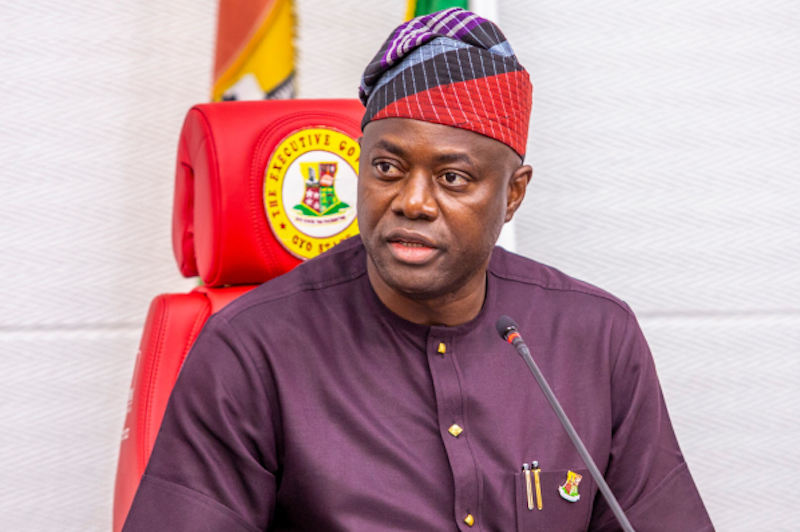
The Allied Peoples Movement (APM) presidential candidate, Seyi Makinde, on Thursday, criticised President Bola Tinubu’s “Emi Lokan” slogan ahead of the 2027 presidential election.
Makinde said Nigerians do not need “turn-by-turn nepotism”, arguing that voters should be free to decide who becomes the country’s next president in 2027.
The Oyo State governor spoke during the APM’s town hall meeting in Akure, Ondo State.
Makinde asked: “How can someone say ‘Eemi lokan’ in a country like Nigeria? You were given the opportunity. If you recall the 1999 presidential election, the South-West voted massively for Baba Olu Falae, but the rest of Nigerians voted for Baba Obasanjo. So, this is not an issue that only the South-West can resolve; it is an issue we must address collectively as Nigerians.
“We do not want ‘turn-by-turn nepotism’, nor do we want a situation where people say, ‘I will vote for projects because it is my turn’. You will not finish those projects, and when it becomes someone else’s turn, they will do the same thing. We will end up with a Nigeria where we cannot get value for the resources belonging to Nigerians.
“The Reset Nigeria agenda is about building a country where infrastructure development supports economic growth and addresses the concerns of young people and women.
“Once we fix our economy, no zone will be left behind, and no demographic group will be left behind.”
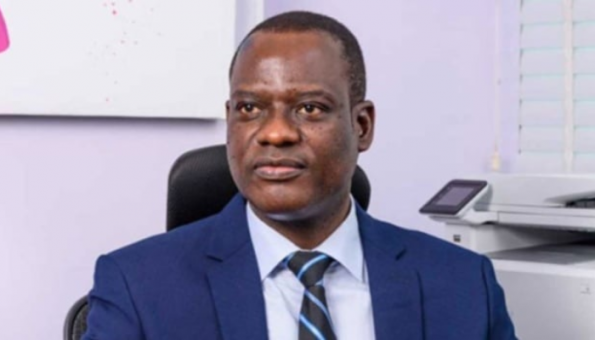
Minister of Finance and Coordinating Minister of the Economy, Taiwo Oyedele, has denied saying the Federal government will introduce a fuel tax when the economy stabilises and income levels improve.
In a post on X on Tuesday, Oyedele said his remarks during an interview with ARISE News was misrepresented, insisting that a “fuel tax is not on the table.”
However, during the interview with Rotus Odiri, ARISE News Business Correspondent, on the sidelines of the 2026 International Monetary Fund and World Bank annual meetings in Bangkok, Thailand, Oyedele said the tax would come when income levels improve enough for Nigerians to accommodate it.
He said taxes account for between 20 and 80 percent of pump prices in some countries, while many African countries impose between six and 10 different taxes on fuel products.
He said introducing fuel tax while petrol was still subsidised would have been counterproductive because government would effectively be paying the tax itself.
According to him, imposing the tax immediately after removal of petrol subsidy would be insensitive to Nigerians.
“The objective should be that instead of trying to suppress prices, which hasn’t worked for us, it hasn’t worked for any country in the world, not one. Instead of trying to suppress prices, think about how to grow income faster than prices rise,” Oyedele said.
“That’s how you bring prosperity and grow the middle class and that is exactly what we are doing as led by Mr. President himself.
“At the appropriate time, when the economy has stabilizes and income level will be able to accommodate it, those taxes will come. Not because we want to impose taxes,” he added.
In his Tuesday post, the minister reiterated that introducing a fuel tax at this time would be insensitive following removal of petrol subsidy, describing reports that government will introduce the levy when the economy stabilises as “fake news.”
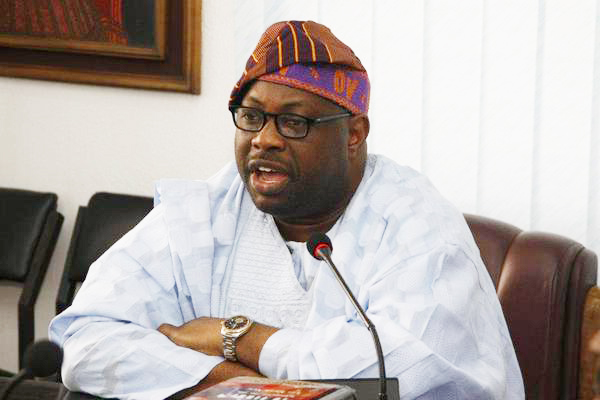
A chieftain of the African Democratic Congress (ADC), and Deputy Director of the Presidential Campaign Council, Chief Dele Momodu, has described former Vice-President Atiku Abubakar as the most nationally formidable and experienced among the leading contenders for the 2027 presidential election.
Momodu said Atiku’s experience at the national level distinguishes him from President Bola Tinubu and former Anambra State Governor, Peter Obi.
He stated this on Wednesday during an interview on Eagle 102.5 FM, Ilese-Ijebu, in Abeokuta.
“If you look at the antecedents of the three major candidates, between Atiku Abubakar and Peter Obi, you will see that Atiku is the most experienced. He has managed our country at the highest level,” he said.
Momodu traced Atiku’s political journey to the 1992 Social Democratic Party (SDP), presidential primary where he contested against late MKO Abiola and stepped down for him.
He said Atiku accepted the outcome without crisis even after he was not picked as Abiola’s running mate, describing it as a mark of true democratic temperament.
“He is the only one who started from around 1992, contested the SDP primary against Abiola and stepped down with uncommon equanimity. He did not make any noise,” Momodu said.
He noted that Atiku was among the founders of the Peoples Democratic Party, PDP, and served as Vice-President from 1999 to 2007.
Comparing Atiku with Obi, Momodu argued that while Obi’s best was demonstrated in Anambra, Atiku’s was at the presidency level managing the national economy.
“Peter Obi has tried his best in Anambra, while Atiku’s best is at the level of vice president controlling the economy of Nigeria. The difference is clear. He has matured in experience and exposure,” he said.
Momodu also said President Tinubu’s experience was largely limited to Lagos.
“What I’m trying to say is that Tinubu’s experience was limited to Lagos, and that is why when he became president, he thought Nigeria was Lagos. And he has found out now that Nigeria is not Lagos,” he said.
He argued that the current economic hardship under the present administration did not show prosperity, insisting Atiku remained better positioned to lead the country.
“Well, we are yet to see that prosperity, and if yesterday would determine today and tomorrow, it is obvious that Tinubu should retire now and let someone else do it,” Momodu added.
DailyPost


