
News
IYD: Alliance Trains 1331 Youths in Vocational, Technical Skills


- /home/rhoncare/pointblank.ng/wp-content/plugins/mvp-social-buttons/mvp-social-buttons.php on line 27
https://pointblank.ng/wp-content/uploads/2024/08/IMG-20240821-WA0044-1000x600.jpg&description=IYD: Alliance Trains 1331 Youths in Vocational, Technical Skills', 'pinterestShare', 'width=750,height=350'); return false;" title="Pin This Post">
- Share
- Tweet /home/rhoncare/pointblank.ng/wp-content/plugins/mvp-social-buttons/mvp-social-buttons.php on line 69
https://pointblank.ng/wp-content/uploads/2024/08/IMG-20240821-WA0044-1000x600.jpg&description=IYD: Alliance Trains 1331 Youths in Vocational, Technical Skills', 'pinterestShare', 'width=750,height=350'); return false;" title="Pin This Post">
In response to the growing challenge of Nigeria’s youth unemployment, a group, the Alliance for Youth Nigeria, has taken up the initiative to bridge the gap by developing innovative solutions that create sustainable earning opportunities for young people across the country. This is in offering vocational and technical training for the young ones, an effort that has produced about 1331 graduates since inception, according to a statement by the management of Nestlé.
This year’s exercise alone produced 372 trained youths, which swell the numbers of trainees so far produced.
It’s worthy of note that according to the Nigerian Bureau of Statistics, Nigeria’s youth unemployment rate among individuals aged 15-24 rose to 8.6% in Q3 2023, reflecting an increase of 1.4% from Q2 2023.
Launched in August 2021, the Alliance for Youth is a business-driven movement comprising organizations dedicated to empowering young Nigerians with the skills they need to thrive in today’s job market or create their own businesses.
The Alliance includes organizations such as Nestlé Nigeria, a founding member, Jobberman Nigeria, Big Bottling Company, the United Nations Global Compact Network Nigeria, and U-Connect HR Limited. They are supported by the Federal Ministry of Youth, Lagos State Employment Trust Fund, and Activate Success International, with the aim to reach 250,000 young Nigerians with employability and entrepreneurial skills.
The Vocational Skills Training, delivered in collaboration with the Whitefield Foundation, is a flagship initiative designed to help achieve this objective. The training covers four key skill areas: solar panel installation, graphic design (including social media and web design), CCTV and cable installation, and beauty care, including makeup, aromatherapy, and massage.
A standout success story from the 2023 cohort is that of Mustapha Fasasi, a 34-year-old from Oyo State in South-West Nigeria. Mustapha had always been interested in solar and renewable energy but lacked the skills to pursue a career in this field. The Alliance for Youth’s upskilling program came at just the right time for him. After hearing about the opportunity on a radio program, Mustapha eagerly signed up for the training. Today, he is on his way to building a successful business in solar energy, equipped with the knowledge and skills he needs to support himself and his family.
This year, the vocational training in commemoration of International Youth Day 2024 culminated in the graduation of 372 participants at St John Anglican College, Kuto Abeokuta. Alliance for Youth Nigeria members encouraged the graduates to pursue their dreams, utilizing their acquired skills. Highflyers from each vocational skill set were rewarded with start-up kits and capital to facilitate the immediate launch of their businesses. Graduates from the graphic design training received laptops; those from the beauty, massage, and aromatherapy training received makeup tool kits and massage beds; high-flyers from the solar installation class were also awarded complete toolboxes.
Beneficiaries from each skill set also had the chance to demonstrate what they learned through real-time practical projects, showing the tangible impact the training had on their lives.
Reflecting on the broader impact of the Alliance for Youth Nigeria initiatives, Tumi Onamade, Chief Operating Officer of the United Nations Global Compact Network Nigeria, stated, “As we celebrate International Youth Day and the 3rd Anniversary of the Alliance for Youth, we are reminded of the immense potential within our young people to drive transformative change. The dedication, creativity, and resilience they have shown, especially those who traveled from various states to participate in the vocational skills training held in Ogun State, highlight their commitment to personal growth and community development. These young individuals are not just the leaders of tomorrow; they are the change-makers of today, shaping a more sustainable and inclusive future with their innovative ideas and bold actions.”
“At the United Nations Global Compact Network Nigeria, we are committed to supporting the Alliance and our youth by providing them with the skills to realize their potential. By investing in their education, skills development, and leadership, we empower them to create a future where everyone can thrive.”
Shakiru Lawal, Country Human Resources Manager at Nestlé Nigeria, also emphasized the significance of these efforts: “Investing in today’s youth is crucial because the actions we take now will shape our nation’s future prosperity. At Nestlé, we understand that the well-being of our communities depends on the opportunities we create for the next generation. This is why we are committed to working with like-minded organizations to ensure that young people are equipped with the skills necessary to secure meaningful employment or start their own businesses. The 372 beneficiaries of this year’s training have now joined the 805 youth we have previously trained in technical and vocational skills.”
Since 2021, Alliance for Youth Nigeria has collaborated with federal platforms such as NYSC, career fairs, and mutual goal-oriented organizations to provide 35,499 youth with vocational training, employability, and soft skill enhancements. This effort aligns with the organization’s objective to empower 250,000 young people.
Other representatives from the Alliance for Youth Initiative present at the event were Adewole Adesete, HR Manager Nestlé Nigeria; Toritseju Egbebi, Corporate Affairs Manager Nestlé Nigeria; Funmi Johnson, COO of Whitefield Foundation; Oladoyin Kolawole, Senior Strategy Consultant; Atom Lim, Activate Success International and Edidiong Peters, Regulatory Affairs Manager for Nestlé Nigeria.
Beyond the Alliance for Youth, Nestlé’s commitment to empowering young people extends to its broader youth engagement platform, Nestlé Needs YOUth. Launched in 2013, this initiative helps young people access economic opportunities through four key pillars: employment, skills development, support, and creating more opportunities. Through these programs, Nestlé reaches an average of 25,000 youths annually, making a difference in their lives and the future of Nigeria.
International Youth Day, celebrated annually on August 12, aims to bring youth issues to the forefront of international and national communities. It raises awareness of significant health, education, and employment concerns impacting young people. This year’s theme, “From Clicks to Progress: Youth Digital Pathways for Sustainable Development,” highlights digital technology’s critical role in advancing sustainable development goals.
Nestlé Nigeria and the other corporate members of the Alliance for Youth Nigeria remain committed to ensuring that young people are prepared for today’s challenges and equipped to lead with innovative solutions in the digital-driven future.



The Court of Appeal, Abuja Division, has dismissed the EFCC’s appeal and affirmed the ₦12 million compensation awarded to Dr. Monday Ubani, SAN, for his unlawful 21-day detention in 2019. The court also awarded ₦300,000 in costs against the Commission.
Ubani was detained after securing administrative bail for a client accused of jumping bail. Despite a court order directing the EFCC to release him conditionally or charge him with any alleged offence, the Commission failed to comply, prompting his lawyer, Chief Professor Mike Ozekhome, to institute a fundamental rights action in his favour.
On January 5, 2022, the Abuja High Court, presided over by Justice Sylvanus Oriji, ruled in Ubani’s favour. The EFCC appealed, challenging the trial court’s jurisdiction and the amount of compensation awarded.
In dismissing the appeal, the Court of Appeal rejected both arguments, holding that the compensation was justified and that the EFCC’s investigative powers do not permit arbitrary detention or disobedience of court orders.
The judgment reaffirms that law enforcement agencies remain subject to the Constitution and judicial authority. It also underscores the protection of fundamental rights, the limits of law enforcement powers and the consequences of unlawful detention.
Beyond the financial award, the decision highlights the responsibilities of sureties and the obligation of security agencies to obey court orders, making it a potentially significant reference in future fundamental rights litigation.
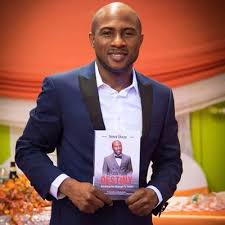
By Henry Ukazu
Dear Destiny Friends,
One of life’s most misunderstood concepts is the relationship between process and failure. When some people fail, they think they have done something wrong, but it could be that the person is experiencing the process, or their season has not yet come.
To understand this concept, let’s explain the two terms. A process is a series of structured actions, steps, or decisions taken in a specific order to transform input into a desired output or goal. Here are the key elements of a process
- Inputs: The raw materials, data, or starting requirements (such as ingredients, customer requests, or raw code).
- Activities/Steps: The specific tasks or decisions performed by people, tools, or machines.
- Trigger: An event or demand that kicks off the process (like submitting an order or launching an app).
- Output: The result, product, or delivered service.
- Owner: The person or role accountable for the outcome.
Failure, on the other hand, is the state or condition of not meeting a desirable, required, or intended objective. According to the Cambridge Dictionary, failure can result from any of the following:
- Omission or Neglect: Failing to perform an action that was promised, owed, or expected (such as a failure to pay on time or submit a report).
- System or Organ Malfunction: A situation where a machine, computer, engine, or bodily organ stops working properly (such as engine failure or kidney failure).
- Insolvency: A financial state of bankruptcy, such as the failure of a business or bank.
Having stated the above terms, one can decipher that process is a necessary tool for success. When a process is lacking, failure is inevitable.
I recently listened to a sermon by a Nigerian Pastor. According to the pastor, there’s something that looks like failure, but in a real sense, it is not failure; it is process. Sometimes in life, when we fail in business, examinations, careers, marriage, or even when our health fails us, the reason why they all happen is that we have failed to do the needful, or we need to go through a process.
Let me explain. Let’s say one has a business; if one has not taken the time to learn the trade very well, the person might fail for not learning a necessary skill required for the business, acquiring formal or informal education, or having a form of apprenticeship from a mentor, which might be all that’s necessary for the entrepreneur to succeed. This is what is called a process.
Also, a student will need to read, research, and do assignments to pass an examination. An employee will have to learn a job as an entry-level employee and work his way through to become the Chief Executive Officer. All this involves a process.
Marriage is not an exception. There’s no successful marriage without a form of mentoring or training. A man/woman must undergo a process of marriage counseling to learn about how to win in marriage. In this training, they will learn about communication in marriage, money in marriage, sex in marriage, money in marriage, and personalities in marriage
I strongly believe that there’s time for everything. There is an appointed time for everything. When something is not in its season, don’t expect to deliver. When one puts pressure, it’s bound to fail.
I can vividly remember what my most revered mentor, Dr. Yomi Garnett, counseled me on the importance of patience. A little background about the case: at that time, I had no job. I was working as a security officer. I tried to use my connections to secure a decent job, but it was very challenging. I reached out to Dr. Yomi, whom I call the sage because of his scintillating and rational wisdom. After ranting to him about my litany of problems, he said to me, “Henry, if you like, meet President Obama, Trump, etc.; if God is not ready to give you a job, you won’t get a job”. He went further to say, you can’t rush God. When the time is ready, God will align everything for you.
According to my mentors, there’s something God and the universe want me to learn. I must go through some process of refining for the task ahead. These refining processes might be preparing for the greater task by learning what needs to be learned, or it could be a case of God teaching me wisdom or something of value that will be useful to me in the near future which I may not be able to see now.
When I look back in retrospect, I can authoritatively say my mentor was right.
Sometimes in life, we prepare for the opportunities, while sometimes, we don’t prepare. We just learn on the job. But I honestly think it’s good to prepare before one embarks on any journey. That preparation is called a process.
To understand how the process works, do you know that if you plant corn in the season that is not the rainy season, you will believe it’s a bad seed, but no, that’s not the case because you planted the corn in the wrong season. Even the bible says there’s a time for everything.
Also, someone might finish university and become frustrated because he doesn’t have a job. What the person might not know is that their season is yet to manifest. It could also be that the student might need refinement, which comes with the process.
It’s instructive to note that when your season comes, nothing can stop it; there will be alignment, and the universe will work for you. What you did many years ago that failed to attract attention will begin to attract attention and draw you in.
Today, I pray, may you command attention in your season, not after your season.
Henry Ukazu writes from New York. He works with the New York City Department of Correction as the Legal Coordinator. He’s the founder of Gloemi. He’s a Transformative Human Capacity and Mindset coach. He is also a public speaker, youth advocate, creative writer and author of Design Your Destiny- Actualizing Your Birthright to Success, Unleash Your Destiny and The Six Pillars of Success . He can be reached via info@gloemi.com

Accomplished media entrepreneur and chieftain of the African Democratic Congress (ADC), Chief Dele Momodu, has said that nobody trusts President Bola Tinubu to conduct a free and fair election, including the President’s own supporters.
Momodu also noted that there is a belief that if the President does not win in 2027, he will not want to relinquish power.
He added that if Tinubu refuses to step down, he would be chased out of the Presidential Villa.
Momodu made the revelations while speaking on Arise News Prime Time belt.
“If you ask an average Nigerian today about Tinubu, ‘Do you trust Tinubu to conduct a free and fair election?’ I can tell you, 90 per cent of them will say no.
“Look, nobody trusts Tinubu to run a free and fair election, including his own supporters. They will tell you, ‘Oh, we are going to win. There is no way we won’t win.’ Ask them why, and they will say, ‘Oh, you know our oga now.’
“In fact, some people are even suggesting that if Tinubu loses the election, he will not agree to step down. I say, why won’t he agree? We will chase him away.
“Look, you do not know the determination of Nigerians. And now, I’m not resting my confidence on just my party. I’m talking about the ordinary man on the street who cannot imagine Tinubu coming back again. They just can’t.
“I can’t tell you our strategy in public. What we know is that, once upon a time, Tinubu fought for himself to secure a second term as governor of Lagos State.
“So, others are also working very hard behind the scenes. We are not going to come out in public and say this, but we know what to do to make sure that he does not get that second term. We also know that some of the people pretending to support him today—and I’m not trying to trivialise this thing.
“I know some of them. They are praying fervently that they will not have to go through this situation where governors become like houseboys. Governors are scared. Judges are scared. Legislators are scared.
“So, Tinubu has become a god whom nobody is ready to confront and say, ‘Oga, you’ve done your best. Please, go home.’”


