
News
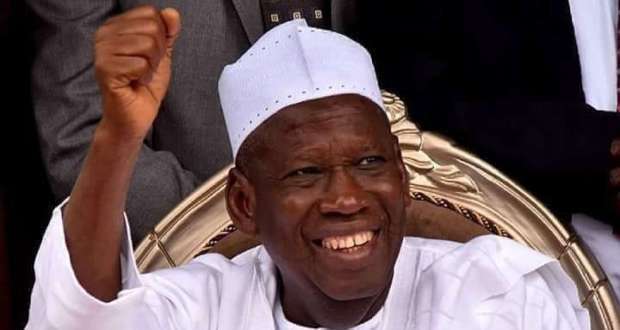
Kano Trains 5,504 Police Constabulary to Aid Community Policing

- /home/rhoncare/pointblank.ng/wp-content/plugins/mvp-social-buttons/mvp-social-buttons.php on line 27
https://pointblank.ng/wp-content/uploads/2019/05/Ganduje.jpg&description=Kano Trains 5,504 Police Constabulary to Aid Community Policing', 'pinterestShare', 'width=750,height=350'); return false;" title="Pin This Post">
- Share
- Tweet /home/rhoncare/pointblank.ng/wp-content/plugins/mvp-social-buttons/mvp-social-buttons.php on line 69
https://pointblank.ng/wp-content/uploads/2019/05/Ganduje.jpg&description=Kano Trains 5,504 Police Constabulary to Aid Community Policing', 'pinterestShare', 'width=750,height=350'); return false;" title="Pin This Post">
Determined to improve the security of the state through improved security architecture, the Kano state governor, Dr Abdullahi Umar Ganduje disclosed how community policing strategy goes deeply into the fabric of Kano society, as a political entity.
While enumerating reasons behind the recorded achievements in the security of the state, governor Ganduje, during the inauguration of the Rano Emirate Council Community Policing Committees, in Doguwa local government area, Sunday, said, “Our administration found it necessary to support community participation in the security of our state.”
He enlisted, amongst other things that, “We have gone further by recruiting Police Constabulary, who are assisting the security agencies. And also we are assisting the various community policing committees.
We trained in Kaduna 704 graduates of Police Constabulary. Also for each of the rural local governments, the 36 local governments, we are training 100 Police Constabulary. Making a total of 3,600 Police Constabulary.”
Adding that, “For the 8 metropolitan, local governments we are training 150 in each of the 8 local governments. Giving rise to 1,200 Police Constabulary. Having a total of 4,800 Police Constabulary in addition to 704 that have already been trained. Which all stands at 5,504 Police Constabulary now at hand.”
To further strengthen the strategy, he urged that, his administration has to embrace community policing in the maintenance of security situation in the state.
That, “Community participation, apart from community policing is necessary for us to achieve a desirable situation from all ramifications. As such, we are also inviting corporate social responsibility in the management of security situation in Kano state.”
Part of the factors that played an important role in the security situation in the state, he acknowledged and appreciated that, “Our security agencies have succeeded in building full synergy among themselves. And we have extended coordination in order to get security information and action in Kano state.
We have to thank the Police, the Department for State Security (DSS), the Air Force, the Army, the Civil Defence (NSCDC), Immigration, Customs and Excise, Corrcetional Homes, traditional institutions, Agency for the Fight Against Human Trafficking (NAPTIP), the Vigilante Groups, representatives of various communities, we have to thank them all. They are all contributing to the security situation in Kano state.”
During the inauguration of the Rano Emirate Council Community Policing Committees, he stressed that, “There is no doubt security is an issue of topical nature in Nigeria. Is an issue that bothers almost everybody, all governments in Nigeria. And is an issue that we must come altogether in order to solve it.
Appreciating further that, “We can see the effort of our security agencies that are working round the clock in order to keep Nigeria safe. In Kano state we are also conscious of the security of our state. Therefore we developed various strategies in order to secure Kano state.”
He listed, amongst other things, that, “First of all we examined the issue of metropolitan, Kano being a metropolitan city and a mega city, we have taken necessary steps in order to ensure the security of our own mega city.”
Explaining that, “We built what we call Security Dormitories on the major entrance of metropolitan Kano. That each of the dormitories houses 600 policemen. And also we have developed CCTV programme.
Which is working very well. While the control room is with our security agencies. We have other technology employed in order to check security issues.”
In his brief remarks, the Emir of Rano, Kabiru Inuwa Muhammad, commended the effort being put by governor Ganduje in securing all parts of the state, with the Divine help from Almighty Allah.
He said, “Today is a historic day that we cannot forget. All our people are happy with this special event taking place in our Emirate, Rano Emirate. We are always ready to cooperate with your policies and programmes Your Excellency Sir. Especially this issue of community policing.”
The programme was attended by the House Leader, House of Representatives, Alhassan Ado Doguwa, alongside other members of the National Assembly, Secretary to the State Government, Alhaji Usman Alhaji, Commissioners and other members of the State Executive Council, heads of security agencies, community leaders among many other dignitaries.


News
ADC Unveils Presidential Campaign Council, Names Ibrahim-Imam As Chairman, Dele Momodu As Head, Media/Publicity
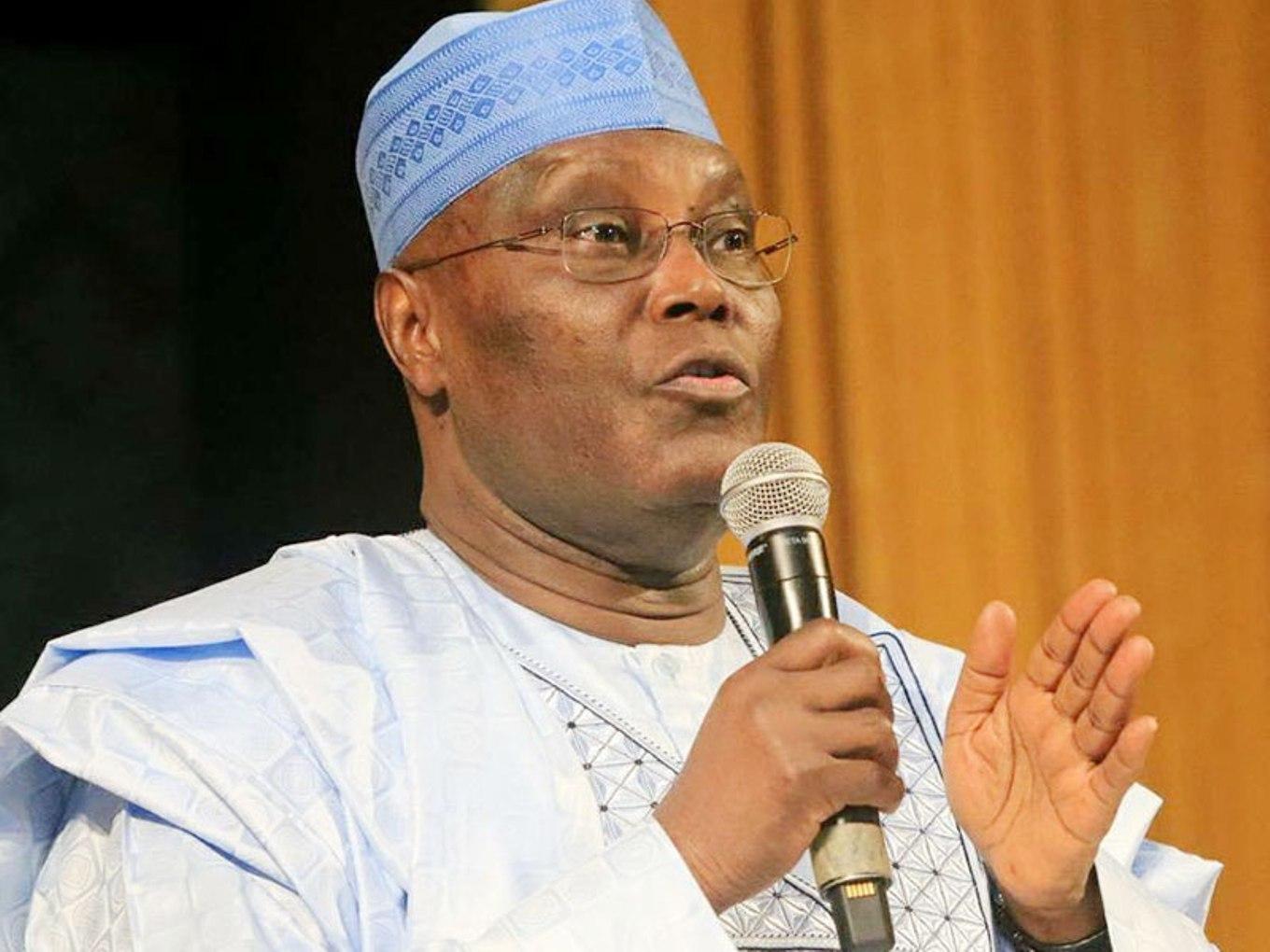
The African Democratic Congress (ADC), has unveiled its Presidential Campaign Council for the 2027 election, describing the structure as “lean” in response to the economic realities facing Nigerians.
The council, approved by the party’s presidential candidate, former Vice President Atiku Abubakar, will be chaired by Kashim Ibrahim-Imam, with former Kaduna State Governor, Nasir El-Rufai, serving as Deputy Chairman.
Senator Austin Akobundu will serve as Director-General and Campaign Manager, with responsibility for translating the campaign’s strategy into coordinated action.
The council will have six Deputy Directors-General overseeing various operational directorates, while 30 directors have been assigned specific responsibilities.
In a statement on Thursday, Phrank Shaibu, Director of Strategic Communication of the ADC Presidential Campaign Council and Senior Special Assistant on Public Communication to Atiku, said the structure was deliberately kept “lean” to reflect the economic circumstances confronting Nigerians.
“When families are struggling with food prices, transport costs and shrinking incomes, a campaign asking for their trust must show discipline in how it operates,” Shaibu said.
Dele Momodu will head the Media and Communications Directorate, while Dino Melaye will lead Contact and Mobilisation.
Mohammed Hayatudeen will chair the Policy Team, working with Professor Mohammed Sagagi and other members, including Professor Kingsley Moghalu, while Chief John Oyegun will chair the Campaign Advisory Board.
Shaibu said the campaign structure was designed to be focused on work, with clearly defined responsibilities for every directorate and assignment for every director.
“Our measure of success will be how clearly we address the cost of living, unemployment, insecurity and declining purchasing power—and how effectively we organise to make Nigeria affordable again,” he said.
The council is expected to coordinate the ADC’s presidential campaign activities ahead of the 2027 general election.
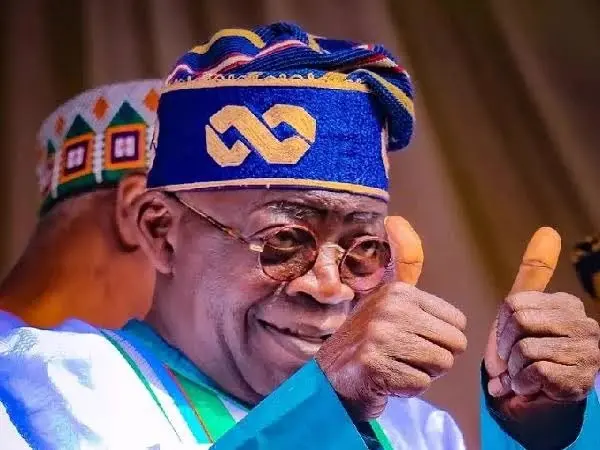
President Bola Tinubu has extended his “working vacation” in Europe by a few days and is expected to return to Nigeria at the weekend, the Presidency said on Monday.
The announcement came as Vice President Kashim Shettima represents the President at the 81st United Nations General Assembly in New York, where he is scheduled to deliver Nigeria’s national statement.
Tinubu departed Nigeria on August 30 to begin his working vacation in London. After spending one week in the United Kingdom, he proceeded to Paris, France, where he held meetings with French President Emmanuel Macron and businessman Vincent Bolloré.
Bolloré’s media interests include Canal+, MultiChoice and Universal Music Group.
A statement signed on Monday by Bayo Onanuga, Special Adviser to the President on Information and Strategy, said Tinubu has remains in touch with developments at home and continued to direct the affairs of government despite being away from Nigeria.
One of the major decisions taken by the President during the period was his directive for an independent investigation into the deaths of 37 suspected illegal miners in Minna following their detention by the Nigeria Security and Civil Defence Corps.
The deaths had raised concerns over the circumstances surrounding the detention and treatment of the miners, prompting the President to order an independent probe.
Tinubu’s decision to extend his stay abroad means he will not personally attend the opening of the high-level segment of the UN General Assembly in New York. Shettima, who departed Abuja on September 20, is representing the President at the global gathering and will present Nigeria’s national statement.
The Presidency said the Vice President’s representation was part of the arrangements for Tinubu’s absence from the country.
With Shettima now in New York, the Secretary to the Government of the Federation, Senator George Akume, will continue to represent the President at some official functions.
The Presidency said Tinubu had also delegated the Vice President to represent him at official functions while he was away, while Akume had similarly stepped in at other engagements.
The President’s extended stay in Europe also comes amid increased political activities at home ahead of the 2027 general elections.
According to the Presidency, the Director-General of the Presidential Campaign Council, Senator Abubakar Yari, has been leading notable leaders of the ruling party in consultations with prominent traditional rulers across the country.
The consultations form part of ongoing political engagements as the administration moves towards the next electoral cycle.
The Presidency also reacted strongly to criticism over Tinubu’s decision not to attend the UN General Assembly personally.
It described as irresponsible what it called a “baseless insinuation” by former Vice President Atiku Abubakar and a United States-based lobbying firm headed by an ex-convict regarding the President’s non-attendance at the global gathering.
The Presidency maintained that Nigeria would be adequately represented by Shettima, who will deliver the country’s national statement.
Tinubu’s latest trip began as an official working vacation, during which the President combined his leave with selected diplomatic, business and governmental engagements.
His meeting with Macron in Paris provided an opportunity for discussions on bilateral relations, while his engagement with Bolloré focused on business and investment interests involving Nigeria.
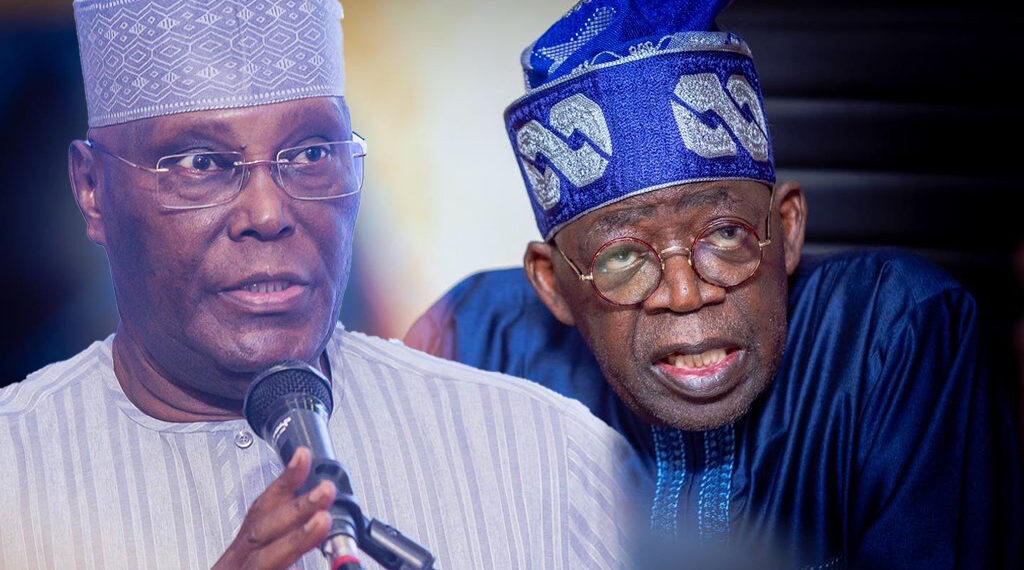
Former Vice President Atiku Abubakar has urged President Bola Tinubu to take immediate steps to reduce the cost of petrol, saying Nigerians are struggling with the combined impact of high energy, transportation and food prices.
Atiku made the call on Friday in Abuja during a press briefing on fuel prices, palliatives and the rising cost of living. His comments came amid renewed concerns over the effect of higher petrol prices on households and businesses.
The African Democratic Congress (ADC) presidential candidate said the removal of petrol subsidy in May 2023 placed additional pressure on families, workers, farmers and businesses.
He said the effect of higher petrol prices was not limited to motorists, as increased transportation and logistics costs had also pushed up the prices of food and other essential goods.
“When government makes energy expensive, it makes life expensive,” Atiku said.
The former vice president recalled that he had previously called for government intervention to reduce petrol prices, but said Tinubu had dismissed the proposal as showing “serious ignorance” of governance and the economy.
Atiku questioned whether the Nigeria Labour Congress (NLC), petroleum marketers, manufacturers and ordinary Nigerians who had raised concerns about rising costs could all be described as ignorant.
“When workers, producers, marketers and ordinary families are all raising the alarm, government must listen,” he said.
He said the government should be prepared to review its policies when their consequences become difficult for citizens to bear, adding that rising production costs were putting further pressure on manufacturers while families were finding it harder to afford basic goods.
Atiku also argued that government revenue and GDP figures did not necessarily reflect the economic reality facing ordinary Nigerians.
“If government receives more Naira while the citizen’s naira buys less food, less fuel, less electricity and less transportation, then bigger government revenues mean little to the family struggling to survive,” he said.
The ADC candidate urged Tinubu to use the remaining eight months of his first term to reduce the burden on Nigerians and consider any measure capable of lowering petrol prices, even if the proposal came from a political opponent.
“What matters to me is that Nigerians pay less,” Atiku said. “A sensible idea does not become a bad idea because it came from your opponent.”
He also offered to make his policy framework available to the Tinubu administration, saying Nigerians should not have to wait for a new government before benefiting from policies that could provide relief.
“If you need the framework, I will provide it. Implement it under your government. Give it whatever name you choose. Take the credit,” he said.
“I ask for only one thing: Let Nigerians breathe.”


