
Headlines
Lagos Convicts 189 Persons for Violating Lockdown Rules


A mobile court sitting at the Lagos State Criminal Investigation and Intelligence Department, Panti, Yaba, on Thursday, convicted 189 out of the 202 persons arraigned for violating the lockdown order of the government to curb the spread of the coronavirus pandemic in the state.
Sixty juvenile violators, including some with hearing and speech impairment, were also ordered to do community service.
PUNCH Metro gathered during a visit to the SCIID that the violators were arrested while playing football, jogging and partaking in different forms of physical exercise in different parts of the state.
Policemen from the Alapere, Anthony, Ogudu, Ikotun, Isolo, Maroko, Itire, Ikeja, Iju, Orile, Owode-Onirin and Ilemba-Hausa police divisions arrested the violators and transferred them to the SCIID.
The Officer-in-Charge of the SCIID, DCP Yetunde Longe, said the violators were immediately taken to the mobile court for arraignment after their statements had been taken.
During the court proceedings, the defendants stood in queues and took turns before magistrates Lateef Layeni and Bimbo Oshodi-Makanju.
While some pleaded guilty for violating the lockdown order, others protested their arrests, claiming that they observed social distancing while exercising.
The state Police Public Relations Officer, Bala Elkana, told journalists that the 202 persons were arrested while playing football and exercising on major streets, adding that they were arraigned on one count of violating the social distancing directive of the Lagos State Government.
The PPRO stated, “On Thursday, April 9, 2020, police officers on enforcement of the restriction of movement arrested 202 suspects for violating the stay-at-home directive of the government. The suspects were arrested playing football on major streets and having group exercise in large numbers, which negated the principles of social distancing.
“The suspects were arraigned before the Lagos State Special Offences Mobile Court on one count of violating the social distancing directive of the government and contrary to Regulation 8(1) ( a) & (b) and 17 (1) (i) of the Lagos State Infectious Disease (Emergency Prevention) Regulations, 2020. It is an offence punishable under Section 58 of the Public Health Law, Cap P16, Laws of Lagos State, 2015.
“Among the charged suspects, 189 pleaded guilty, while 13 pleaded not guilty. At the end of the trial, the suspects, who pleaded guilty, were ordered to pay fines ranging from N5,000 to N10,000. They were also sentenced to two hours of community service, which was supervised by officials of the Social Welfare Unit.”
The Coordinator of the Mobile Court, Lagos State Ministry of Justice, Arinola Ogbara-Banjoko, said the 60 juvenile violators, including those with hearing and speech impairment, were asked to do community service because of their ages and condition.
She added that those among the convicts, who could not afford to pay the fine, were asked to do community service for a day and sent home with a warning that they should stay at home for their safety.
Ogbara-Banjoko stated, “We started the mobile court today (Thursday) because of the low compliance with the lockdown order and 202 persons were arraigned before the court; in addition, 60 juveniles, including people with hearing and speech impairment, were also brought.
“About 80 per cent pleaded guilty and have been asked to do community service for some hours and also to pay a fine of N10,000. For the few, who pleaded not guilty, their trial will take place later on and if they are found not guilty, they will be released.”
One of the violators, Oluchukwu Okafor, said she was the only one jogging at the time of her arrest, adding that she had to exercise based on her doctor’s advice.
The 20-year-old explained, “I was arrested around 6am in Bariga. I left my house around 5am to jog and while returning home, policemen accosted me. I initially thought that they wanted to ask me for something, but they told me to sit on the floor and I was brought here. I pleaded with them that I have a heart problem and that I was jogging on my doctor’s advice.
“I went to hospital in early January and my doctor said I am obese. I told the magistrate that I had a prescription and a clinic that I attend every Monday at LUTH, but she said there was no proof. I told her that all my documents and appointment card were at home. But I was told to do community service for a day and pay a fine of N10,000. But I am unemployed and I don’t have the money.”
Another violator, who identified himself simply as Abudu, said, “I am bearing the consequences of my action. I believe that if I had stayed indoors, this would not have happened. I am waiting for my trial; it is when I meet the magistrate that I will know if I will be fined or asked to do community service and from there go into isolation.”
One Emmanuel Williams said it was wrong to sentence the violators to community service and still fine them.
Williams stated, “I know the importance of observing social distancing and I was moving alone. I was just trekking as there is no outright restriction on movement. I was told to do community service by cleaning the environment and still pay N5,000.
“This is very wrong; how can we be punished twice? It is either we do community service or we make the payment. But the two are applicable to me and it is not right.”
The Punch


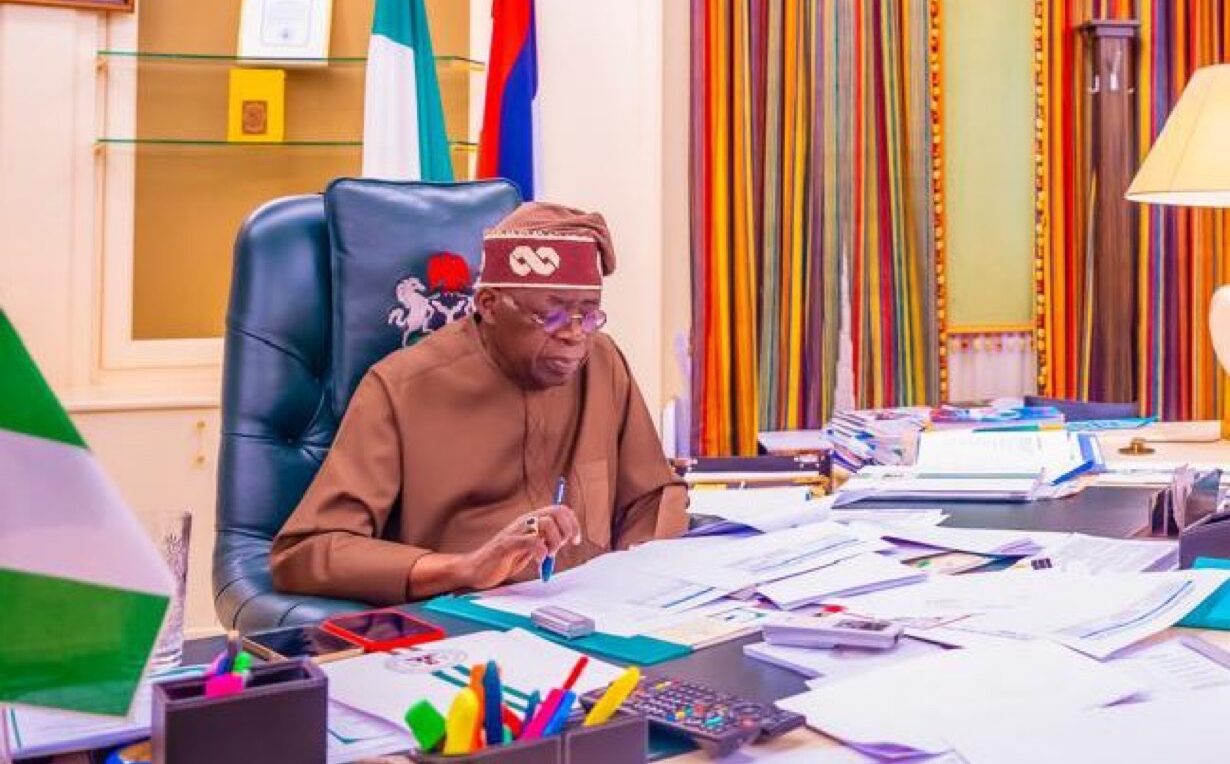
An Abuja High Court has cleared the way for the implementation of Nigeria’s new tax regime scheduled to commence on January 1, 2026, dismissing a suit seeking to halt the programme.
The ruling gives the Federal government, the Federal Inland Revenue Service (FIRS) and the National Assembly full legal backing to proceed with the take-off of the new tax laws.
The suit was filed by the Incorporated Trustees of African Initiative for Abuse of Public Trustees, which dragged the Federal Republic of Nigeria, the President, the Attorney-General of the Federation, the President of the Senate, Speaker of the House of Representatives and the National Assembly before the court over alleged discrepancies in the recently enacted tax laws.
In an ex-parte motion, the plaintiff sought an interim injunction restraining the Federal Government, FIRS, the National Assembly and related agencies from implementing or enforcing the provisions of the Nigeria Tax Act, 2025; Nigeria Tax Administration Act, 2025; Nigeria Revenue Service (Establishment) Act, 2025; and the Joint Revenue Board of Nigeria (Establishment) Act, 2025, pending the determination of the substantive suit.
The group also asked the court to restrain the President from implementing the laws in any part of the federation pending the hearing of its motion on notice.
However, in a ruling delivered on Tuesday, Justice Kawu struck out the application, holding that it lacked merit and failed to establish sufficient legal grounds to warrant the grant of the reliefs sought.
The court ruled that the plaintiffs did not demonstrate how the implementation of the new tax laws would occasion irreparable harm or violate any provision of the Constitution, stressing that matters of fiscal policy and economic reforms fall squarely within the powers of government.
Justice Kawu further held that once a law has been duly enacted and gazetted, any alleged errors or controversies can only be addressed through legislative amendment or a substantive court order, noting that disagreements over tax laws cannot stop the implementation of an existing law.
Consequently, the court affirmed that there was no legal impediment to the commencement of the new tax regime and directed that implementation should proceed as scheduled from January 1, 2026.
The new tax regime is anchored on four landmark tax reform bills signed into law in 2025 as part of the Federal Government’s broader fiscal and economic reform agenda aimed at boosting revenue, simplifying the tax system and reducing leakages.
The laws — the Nigeria Tax Act, 2025, Nigeria Tax Administration Act, 2025, Nigeria Revenue Service (Establishment) Act, 2025, and the Joint Revenue Board of Nigeria (Establishment) Act, 2025 — consolidate and replace several existing tax statutes, including laws governing companies income tax, personal income tax, value added tax, capital gains tax and stamp duties.
Key elements of the reforms include the harmonisation of multiple taxes into a more streamlined framework, expansion of the tax base, protection for low-income earners and small businesses, and the introduction of modern, technology-driven tax administration systems such as digital filing and electronic compliance monitoring.
The reforms also provide for the restructuring of federal tax administration, including the creation of the Nigeria Revenue Service, to strengthen efficiency, coordination and revenue collection across government levels.
While the Federal government has described the reforms as critical to stabilising public finances and funding infrastructure and social services, the laws have generated intense public debate, with some civil society groups and political actors alleging discrepancies between the versions passed by the National Assembly and those later gazetted.
These concerns sparked calls for suspension, re-gazetting and legal action, culminating in the suit dismissed by the Abuja High Court.
Reacting to the judgment, stakeholders described the ruling as a major boost for the reforms, saying it has removed all legal obstacles that could have delayed the implementation of the new tax framework.
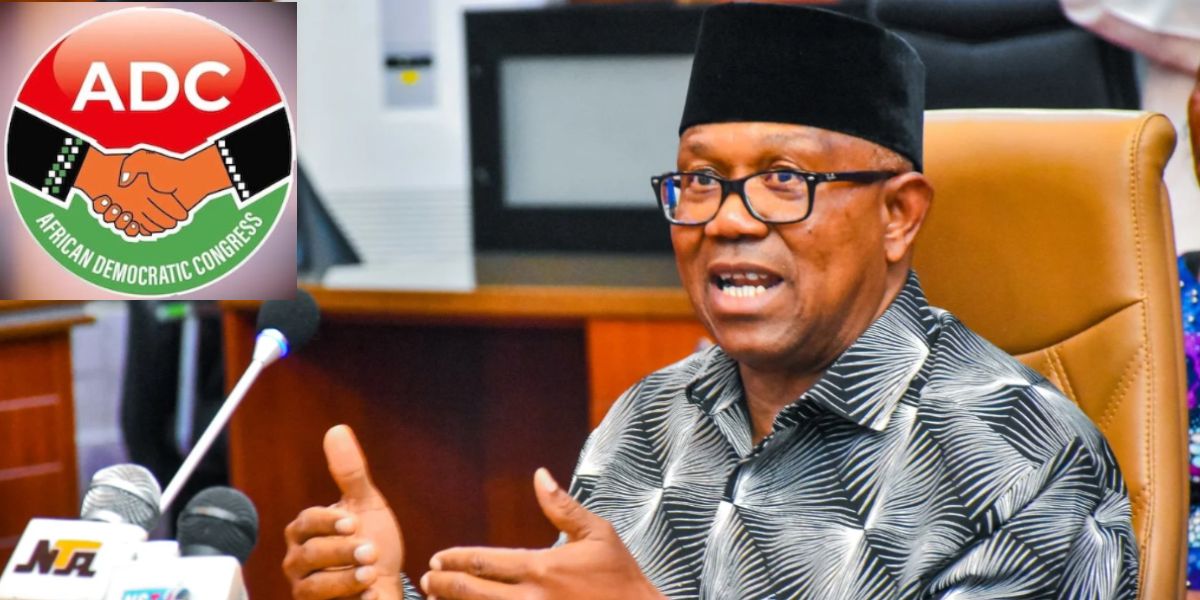
Former governor of Anambra State, presidential candidate of the Labour Party (LP) in the 2023 election, Mr. Peter Obi, has officially defected to the coalition-backed African Democratic Congress (ADC).
Obi announced the decision on Tuesday at an event held at the Nike Lake Resort, Enugu.
“We are ending this year with the hope that in 2026 we will begin a rescue journey,” Obi said.
The National Chairman of the ADC, David Mark, was among the attendees.

United States Representative Riley Moors has said further military strikes against Islamic State-linked militants in Nigeria could follow recent operations ordered by President Donald Trump, describing the actions as aimed at improving security and protecting Christian communities facing violence.
Moore made the remarks during a televised interview in which he addressed U.S. military strikes carried out on Christmas Day against militant targets in North-west Nigeria.
The strikes were conducted in coordination with the Nigerian government, according to U.S. and Nigerian officials.
“President Trump is not trying to bring war to Nigeria, he’s bringing peace and security to Nigeria and to the thousands of Christians who face horrific violence and death,” Moore said.
He said the Christmas Day strikes against Islamic State affiliates had provided hope to Christians in Nigeria, particularly in areas affected by repeated attacks during past festive periods.
According to U.S. authorities, the strikes targeted camps used by Islamic State-linked groups operating in parts of north-west Nigeria.
Nigerian officials confirmed that the operation was carried out with intelligence support from Nigerian security agencies as part of ongoing counter-terrorism cooperation between both countries.
The United States Africa Command said the operation was intended to degrade the operational capacity of extremist groups responsible for attacks on civilians and security forces.
Nigerian authorities have described the targeted groups as a threat to national security, noting their involvement in killings, kidnappings and raids on rural communities.
Moore said the strikes marked a shift from previous years in which attacks were carried out against civilians during the Christmas period. He said the U.S. administration was focused on preventing further violence by targeting militant groups before they could launch attacks.
U.S. officials have said the military action was carried out with the consent of the Nigerian government and formed part of broader security cooperation between the two countries. Nigeria has received intelligence, training and logistical support from international partners as it seeks to contain militant activity.
Moore had previously called for stronger international attention to attacks on Christian communities in Nigeria and has urged continued U.S. engagement in addressing extremist violence. He said further action would depend on developments on the ground and continued coordination with Nigerian authorities.
Nigerian officials have maintained that counter-terrorism operations are directed at armed groups threatening civilians, regardless of religion, and have reiterated their commitment to restoring security across affected regions.


