
Headlines
Lagos Convicts 189 Persons for Violating Lockdown Rules


- /home/rhoncare/pointblank.ng/wp-content/plugins/mvp-social-buttons/mvp-social-buttons.php on line 27
https://pointblank.ng/wp-content/uploads/2019/05/Sanwo.jpg&description=Lagos Convicts 189 Persons for Violating Lockdown Rules', 'pinterestShare', 'width=750,height=350'); return false;" title="Pin This Post">
- Share
- Tweet /home/rhoncare/pointblank.ng/wp-content/plugins/mvp-social-buttons/mvp-social-buttons.php on line 69
https://pointblank.ng/wp-content/uploads/2019/05/Sanwo.jpg&description=Lagos Convicts 189 Persons for Violating Lockdown Rules', 'pinterestShare', 'width=750,height=350'); return false;" title="Pin This Post">
A mobile court sitting at the Lagos State Criminal Investigation and Intelligence Department, Panti, Yaba, on Thursday, convicted 189 out of the 202 persons arraigned for violating the lockdown order of the government to curb the spread of the coronavirus pandemic in the state.
Sixty juvenile violators, including some with hearing and speech impairment, were also ordered to do community service.
PUNCH Metro gathered during a visit to the SCIID that the violators were arrested while playing football, jogging and partaking in different forms of physical exercise in different parts of the state.
Policemen from the Alapere, Anthony, Ogudu, Ikotun, Isolo, Maroko, Itire, Ikeja, Iju, Orile, Owode-Onirin and Ilemba-Hausa police divisions arrested the violators and transferred them to the SCIID.
The Officer-in-Charge of the SCIID, DCP Yetunde Longe, said the violators were immediately taken to the mobile court for arraignment after their statements had been taken.
During the court proceedings, the defendants stood in queues and took turns before magistrates Lateef Layeni and Bimbo Oshodi-Makanju.
While some pleaded guilty for violating the lockdown order, others protested their arrests, claiming that they observed social distancing while exercising.
The state Police Public Relations Officer, Bala Elkana, told journalists that the 202 persons were arrested while playing football and exercising on major streets, adding that they were arraigned on one count of violating the social distancing directive of the Lagos State Government.
The PPRO stated, “On Thursday, April 9, 2020, police officers on enforcement of the restriction of movement arrested 202 suspects for violating the stay-at-home directive of the government. The suspects were arrested playing football on major streets and having group exercise in large numbers, which negated the principles of social distancing.
“The suspects were arraigned before the Lagos State Special Offences Mobile Court on one count of violating the social distancing directive of the government and contrary to Regulation 8(1) ( a) & (b) and 17 (1) (i) of the Lagos State Infectious Disease (Emergency Prevention) Regulations, 2020. It is an offence punishable under Section 58 of the Public Health Law, Cap P16, Laws of Lagos State, 2015.
“Among the charged suspects, 189 pleaded guilty, while 13 pleaded not guilty. At the end of the trial, the suspects, who pleaded guilty, were ordered to pay fines ranging from N5,000 to N10,000. They were also sentenced to two hours of community service, which was supervised by officials of the Social Welfare Unit.”
The Coordinator of the Mobile Court, Lagos State Ministry of Justice, Arinola Ogbara-Banjoko, said the 60 juvenile violators, including those with hearing and speech impairment, were asked to do community service because of their ages and condition.
She added that those among the convicts, who could not afford to pay the fine, were asked to do community service for a day and sent home with a warning that they should stay at home for their safety.
Ogbara-Banjoko stated, “We started the mobile court today (Thursday) because of the low compliance with the lockdown order and 202 persons were arraigned before the court; in addition, 60 juveniles, including people with hearing and speech impairment, were also brought.
“About 80 per cent pleaded guilty and have been asked to do community service for some hours and also to pay a fine of N10,000. For the few, who pleaded not guilty, their trial will take place later on and if they are found not guilty, they will be released.”
One of the violators, Oluchukwu Okafor, said she was the only one jogging at the time of her arrest, adding that she had to exercise based on her doctor’s advice.
The 20-year-old explained, “I was arrested around 6am in Bariga. I left my house around 5am to jog and while returning home, policemen accosted me. I initially thought that they wanted to ask me for something, but they told me to sit on the floor and I was brought here. I pleaded with them that I have a heart problem and that I was jogging on my doctor’s advice.
“I went to hospital in early January and my doctor said I am obese. I told the magistrate that I had a prescription and a clinic that I attend every Monday at LUTH, but she said there was no proof. I told her that all my documents and appointment card were at home. But I was told to do community service for a day and pay a fine of N10,000. But I am unemployed and I don’t have the money.”
Another violator, who identified himself simply as Abudu, said, “I am bearing the consequences of my action. I believe that if I had stayed indoors, this would not have happened. I am waiting for my trial; it is when I meet the magistrate that I will know if I will be fined or asked to do community service and from there go into isolation.”
One Emmanuel Williams said it was wrong to sentence the violators to community service and still fine them.
Williams stated, “I know the importance of observing social distancing and I was moving alone. I was just trekking as there is no outright restriction on movement. I was told to do community service by cleaning the environment and still pay N5,000.
“This is very wrong; how can we be punished twice? It is either we do community service or we make the payment. But the two are applicable to me and it is not right.”
The Punch


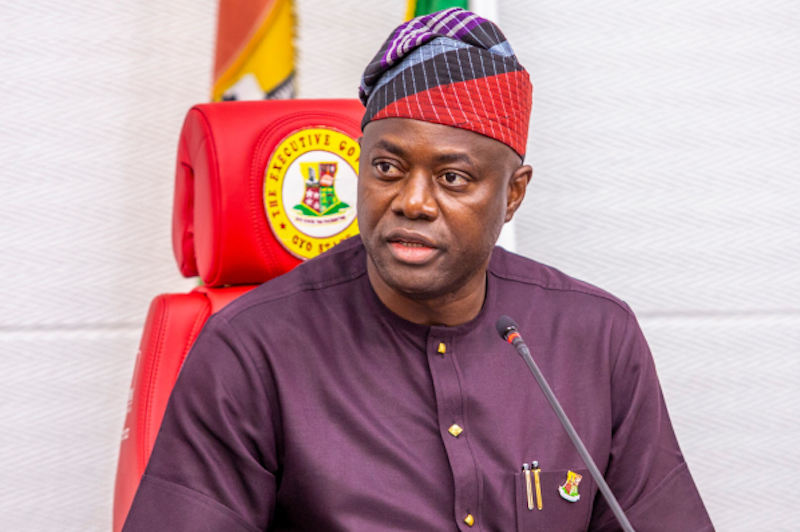
The Allied Peoples Movement (APM) presidential candidate, Seyi Makinde, on Thursday, criticised President Bola Tinubu’s “Emi Lokan” slogan ahead of the 2027 presidential election.
Makinde said Nigerians do not need “turn-by-turn nepotism”, arguing that voters should be free to decide who becomes the country’s next president in 2027.
The Oyo State governor spoke during the APM’s town hall meeting in Akure, Ondo State.
Makinde asked: “How can someone say ‘Eemi lokan’ in a country like Nigeria? You were given the opportunity. If you recall the 1999 presidential election, the South-West voted massively for Baba Olu Falae, but the rest of Nigerians voted for Baba Obasanjo. So, this is not an issue that only the South-West can resolve; it is an issue we must address collectively as Nigerians.
“We do not want ‘turn-by-turn nepotism’, nor do we want a situation where people say, ‘I will vote for projects because it is my turn’. You will not finish those projects, and when it becomes someone else’s turn, they will do the same thing. We will end up with a Nigeria where we cannot get value for the resources belonging to Nigerians.
“The Reset Nigeria agenda is about building a country where infrastructure development supports economic growth and addresses the concerns of young people and women.
“Once we fix our economy, no zone will be left behind, and no demographic group will be left behind.”
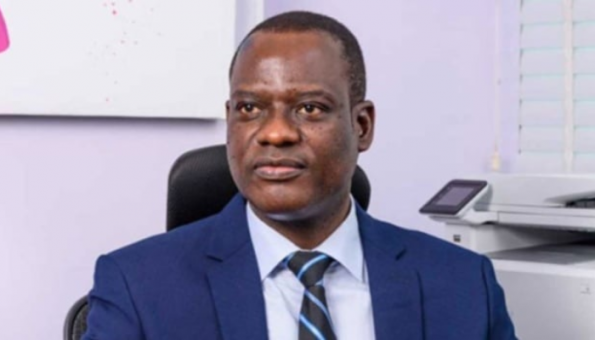
Minister of Finance and Coordinating Minister of the Economy, Taiwo Oyedele, has denied saying the Federal government will introduce a fuel tax when the economy stabilises and income levels improve.
In a post on X on Tuesday, Oyedele said his remarks during an interview with ARISE News was misrepresented, insisting that a “fuel tax is not on the table.”
However, during the interview with Rotus Odiri, ARISE News Business Correspondent, on the sidelines of the 2026 International Monetary Fund and World Bank annual meetings in Bangkok, Thailand, Oyedele said the tax would come when income levels improve enough for Nigerians to accommodate it.
He said taxes account for between 20 and 80 percent of pump prices in some countries, while many African countries impose between six and 10 different taxes on fuel products.
He said introducing fuel tax while petrol was still subsidised would have been counterproductive because government would effectively be paying the tax itself.
According to him, imposing the tax immediately after removal of petrol subsidy would be insensitive to Nigerians.
“The objective should be that instead of trying to suppress prices, which hasn’t worked for us, it hasn’t worked for any country in the world, not one. Instead of trying to suppress prices, think about how to grow income faster than prices rise,” Oyedele said.
“That’s how you bring prosperity and grow the middle class and that is exactly what we are doing as led by Mr. President himself.
“At the appropriate time, when the economy has stabilizes and income level will be able to accommodate it, those taxes will come. Not because we want to impose taxes,” he added.
In his Tuesday post, the minister reiterated that introducing a fuel tax at this time would be insensitive following removal of petrol subsidy, describing reports that government will introduce the levy when the economy stabilises as “fake news.”
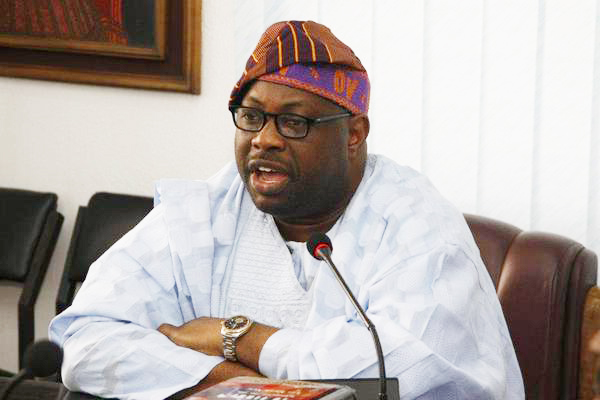
A chieftain of the African Democratic Congress (ADC), and Deputy Director of the Presidential Campaign Council, Chief Dele Momodu, has described former Vice-President Atiku Abubakar as the most nationally formidable and experienced among the leading contenders for the 2027 presidential election.
Momodu said Atiku’s experience at the national level distinguishes him from President Bola Tinubu and former Anambra State Governor, Peter Obi.
He stated this on Wednesday during an interview on Eagle 102.5 FM, Ilese-Ijebu, in Abeokuta.
“If you look at the antecedents of the three major candidates, between Atiku Abubakar and Peter Obi, you will see that Atiku is the most experienced. He has managed our country at the highest level,” he said.
Momodu traced Atiku’s political journey to the 1992 Social Democratic Party (SDP), presidential primary where he contested against late MKO Abiola and stepped down for him.
He said Atiku accepted the outcome without crisis even after he was not picked as Abiola’s running mate, describing it as a mark of true democratic temperament.
“He is the only one who started from around 1992, contested the SDP primary against Abiola and stepped down with uncommon equanimity. He did not make any noise,” Momodu said.
He noted that Atiku was among the founders of the Peoples Democratic Party, PDP, and served as Vice-President from 1999 to 2007.
Comparing Atiku with Obi, Momodu argued that while Obi’s best was demonstrated in Anambra, Atiku’s was at the presidency level managing the national economy.
“Peter Obi has tried his best in Anambra, while Atiku’s best is at the level of vice president controlling the economy of Nigeria. The difference is clear. He has matured in experience and exposure,” he said.
Momodu also said President Tinubu’s experience was largely limited to Lagos.
“What I’m trying to say is that Tinubu’s experience was limited to Lagos, and that is why when he became president, he thought Nigeria was Lagos. And he has found out now that Nigeria is not Lagos,” he said.
He argued that the current economic hardship under the present administration did not show prosperity, insisting Atiku remained better positioned to lead the country.
“Well, we are yet to see that prosperity, and if yesterday would determine today and tomorrow, it is obvious that Tinubu should retire now and let someone else do it,” Momodu added.
DailyPost


