
Metro
LASPOTECH Undergraduate Narrates Ordeal with Human Body Parts Merchants

An undergraduate of the Lagos State Polytechnic, Marvelous Omobobola, who was abducted by a kidnap syndicate in the state, has been released after his family members paid N200,000 ransom.
PUNCH Metro gathered that Omobobola went to school on Saturday to sign a SIWES form.
After he was done, the undergraduate boarded a tricycle to his hostel in the Odogunyan area of Ikorodu, Lagos State.
The 28-year-old said the tricycle operator was conveying him and other passengers to their destinations in Odogunyan when he suddenly veered onto a street to avoid the traffic ahead.
Omobobola said the tricycle operator was navigating the street to link the expressway when he suddenly parked beside a bus located near a bush.
He said he and other passengers were lamenting the abrupt stop beside a bush around 5pm when some armed men stepped out of the bus, pounced on them and whisked them away.
Narrating his ordeal to our correspondent, Omobobola said, “I went to school on Saturday to sign my SIWES form because we were to start exams on Monday.
“When I was done around 5pm, I boarded a tricycle from my school to my hostel in Odogunyan. There was traffic along the way so the tricycle operator diverted into a street.
“We were three at the back of the tricycle and one man sat beside the tricycle operator at the front. We asked why he left the road and he told us it was because of the traffic.
“Suddenly, the tricycle operator parked beside a bus and some men with guns pounced on us and ordered us into the bus that was parked near a bush. We met some people on the bus when we entered it.”
Omobobola said the tricycle operator left to bring more victims, adding that the kidnappers seized their phones to keep them incommunicado.
The undergraduate said, “They drove us into the bush where some people visited to price us like goats. Some people among my group were taken away into a room where they were killed and well-dressed people came with coolers for their body parts.
“When we were told to take off our clothes, one of the kidnappers saw the Celestial Church crucifix on my waist and he put me aside. He asked me what the crucifix was for and I told him I am from a celestial family.
“He then returned my phone and told me to call my people to pay a ransom for me before their leader, one Alhaji, comes. He said when their leader returns, he would not be able to help me because Alhaji procures human parts for politicians and other people. He said I would be killed if he found me there.”
Using Omobobola’s phone, the kidnappers contacted his mother, Ronke, and demanded N700,000 ransom.
Our correspondent who was with Ronke when she commenced negotiation with the suspects heard them telling her to choose between purchasing a coffin to bury her son and raising the money to secure his release.
The kidnappers later agreed to collect N200,000 and after ending the call, the aggrieved mother was seen begging people including church members for money and was able to raise N100,000.
Speaking with our correspondent, Ronke said, “I am not myself as I am speaking to you. I heard the sound of people crying on the phone and my son said the kidnappers cut two people’s throats like cows in an abattoir. I have been told to send the N100,000 into my son’s account for his release.”
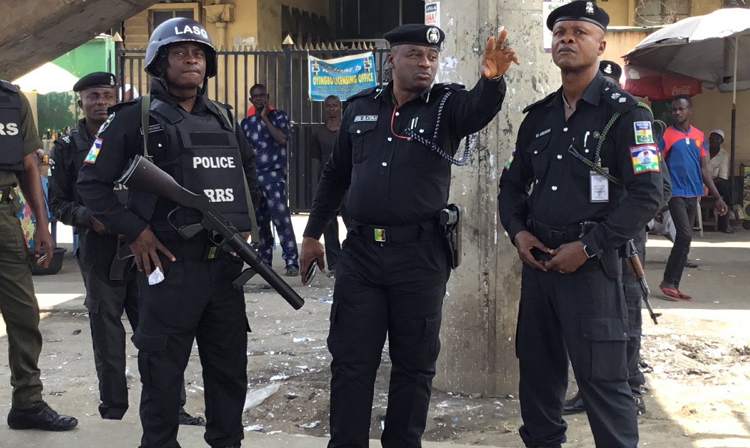
Our correspondent quickly contacted the state Commissioner of Police, Abiodun Alabi, and he detailed the Divisional Police Officer, Odogunyan Police Station, to investigate the case.
Omobobola’s phone number was sent to the DPO who traced calls made to the number.
However, after the mother of the undergraduate paid the N100,000, the kidnappers, after using his ATM card to withdraw the money from a Point-of-Sale operator, used Omobobola’s phone number to borrow N100,000 from online credit companies.
It was learnt that the borrowed money was also withdrawn and the victim was released around 2am on Sunday.
Contacted, the Director of Information and Public Relations, Lagos State Polytechnic, Lanre Kuye, told our correspondent that the institution just got wind of the case.
He added, “We would make a case to the Lagos State Police Command to prevent future occurrences against staff and students.”
The state Police Public Relations Officer, SP Benjamin Hundeyin, when contacted, said the command was on the matter, adding that the culprits would be arrested soon.
The Punch


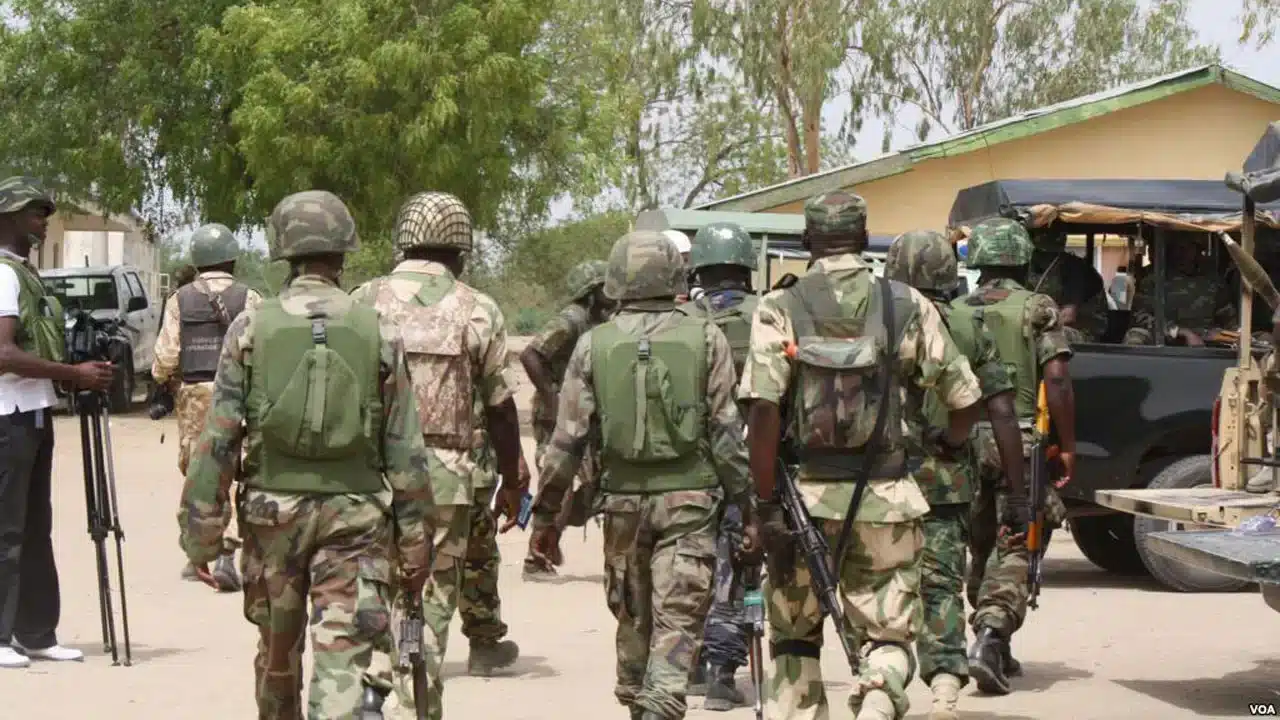
Troops of Operation Hadin Kai have uncovered an underground Boko Haram logistics storage facility stocked with medical supplies, fuel and other critical materials after overrunning several terrorist enclaves in the Timbuktu Triangle area of Borno State.
The discovery followed a series of coordinated, intelligence-led offensives conducted on Sunday across Chilaria, Garin Faruk and Abirma, during which the troops also repelled multiple drone attacks launched by the terrorists.
The Media Information Officer of the Joint Task Force North-East, Operation Hadin Kai, Lt. Col. Uba Sani, disclosed this in a statement issued on Monday.
According to Sani, the operation, carried out under Operation Desert Sanity, resulted in the destruction of several terrorist camps and significantly degraded the logistical and operational capabilities of Boko Haram and ISWAP elements operating in the axis.
“Troops of the Joint Task Force (North-East), Operation HADIN KAI, have recorded further operational successes in the ongoing Operation DESERT SANITY, destroying multiple terrorist camps, recovering arms and equipment, and repelling coordinated attacks by the insurgents in the Timbuktu Triangle,” the statement said.
It added that on Sunday, January 18, 2026, troops advanced from their harbour areas and conducted deliberate, intelligence-driven operations against identified terrorist enclaves in Chilaria, Garin Faruk and Abirma.
Sani explained that the operation was supported by the Air Component of Operation Hadin Kai, which provided persistent Intelligence, Surveillance and Reconnaissance coverage throughout the advance.
He said during the clearance operations, “troops recovered several items of military significance, including Baofeng radios, phones, five AK-47 magazines, several rounds of 7.62 × 39mm special ammunition and 7.62mm NATO belted ammunition.”
Others include “several Boko Haram/ISWAP flags, links of 12.7 × 108 mm ammunition, diesel powered grinding machines, large quantity of medical supplies, several bags of grains, pick-up truck, underground logistics storage and petroleum and oil lubricant dump, which all further degraded the operational and logistical capability of the terrorists.”
He said the “recoveries further degraded the operational and logistical capacity of the terrorists,”.
However, Sani revealed that at about midday, the advancing troops came under armed drone attacks launched by the terrorists.
“Despite this, the troops maintained momentum and continued the offensives. A second drone attack attempted in the evening was also decisively repelled, forcing the terrorists to withdraw and reaffirming the troops’ dominance of the area,” he said.
Sani added that despite sustained engagements, troop morale remains high and fighting efficiency continues to be maintained.
“The general security situation in the area is assessed as calm but unpredictable, with troops remaining vigilant and at a high state of readiness,” he stated.
He concluded that the military high command has reaffirmed its commitment to sustaining the operations, stressing that troops remain resolute in their mission to eliminate terrorist threats, protect civilians and restore lasting peace and stability to the North-East.
The Punch
Metro
FRSC Confirms No Lives Lost in Apapa Fuel Tanker Crash, Advises Residents Against Scooping Fuel

The Federal Road Safety Corps (FRSC) has confirmed a minor lone crash involving a NIPCO truck that occurred in the early hours of Monday on Liverpool Bridge, outward Apapa, saying that no casualties were recorded.
The incident, according to the Public Education Officer, SRC, Damilola Jayeola, occurred at about 0817hrs and was promptly reported and responded to by FRSC operatives. Three adult males were involved in the crash, with no injury or fatality recorded.
Preliminary findings attributed the crash to speeding and reckless driving, despite the road being smooth at the time of the incident.
FRSC operatives, in collaboration with the Nigeria Police Force, Lagos State Traffic Management Authority (LASTMA), the Nigerian Ports Authority (NPA), and the Federal Fire Service, are on ground managing traffic and securing the scene to prevent secondary incidents.
The Lagos State Sector Commander, Corps Commander Kehinde G. Hamzat, has advised members of the public to desist from scooping the spilled fuel and urged motorists to strictly adhere to speed limits and drive responsibly, particularly on bridges and other high-risk corridors, to prevent avoidable crashes.
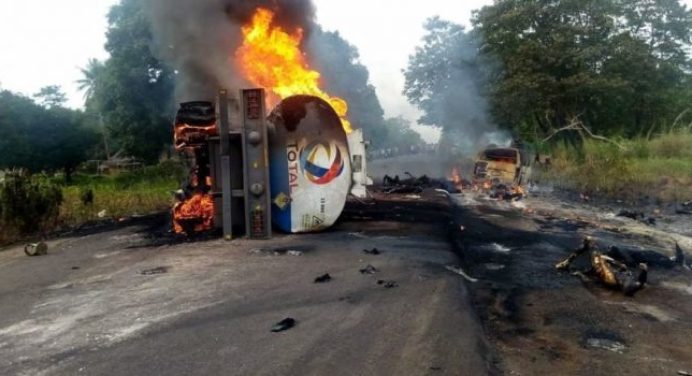
Governor Babajide Sanwo-Olu has described the scooping of fuel by residents at the Apapa Bridge as a “suicide mission,” warning that the Lagos State Government will intensify enforcement to prevent actions capable of triggering mass casualties.
Sanwo-Olu spoke on Monday at the signing of the 2026 Appropriation Bill at the Lagos House, Ikeja, shortly after reports emerged of residents rushing to scoop spilled fuel from a tanker incident at Apapa.
He expressed disappointment at the conduct, stressing that such behaviour places lives at grave risk.
The governor commended the swift intervention of Lagos first responders and the police, who cordoned off the area and brought the situation under control before any explosion or disaster could occur.
He cautioned residents to desist from reckless acts, noting that the State would “leave no stone unturned” in safeguarding lives and property.
Linking the incident to broader issues of indiscipline, Sanwo-Olu said the government would enforce tougher penalties against environmental and safety violations, including indiscriminate dumping of refuse on road medians.
He disclosed that the 2026 budget makes provisions to strengthen the capacity of the Lagos Waste Management Authority (LAWMA) and private sector participants, with plans to expand compactor truck fleets and deploy additional equipment.
“We have instructed LAWMA not only to apprehend offenders but also to ensure they are charged for environmental violations,” the governor said.


