
Metro
LAWMA Partners West Africa ENRG for Lagos Badagry Expressway Cleanup

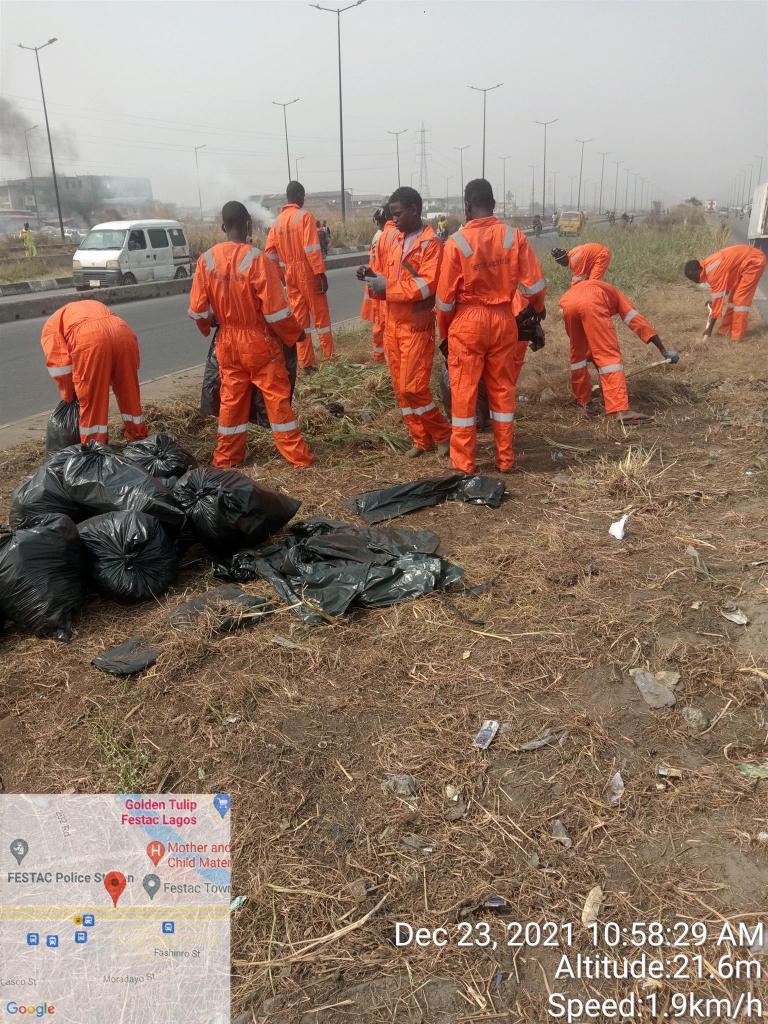
The Lagos Waste Management Authority (LAWMA) has partnered West Africa ENRG, an environmental services company, for a thorough cleanup of heaps of refuse in black spots along the Lagos Badagry expressway, stretching 19 kilometres, from Mile 2 to Iyana Iba.
A statement by the Authority’s Director, Public Affairs, Mrs Folashade Kadiri, quoted the Managing Director/CEO of LAWMA, Mr. Ibrahim Odumboni, as saying that the exercise would last for about three weeks, and will involve deep cleaning of the expressway, with particular focus on service lanes, dedicated bus lanes, tolled lanes, intersections, medians, and kerbs.
He said the move was meant to put a permanent stop to the menace of highway littering and indiscriminate dumping of waste along that corridor, adding that the agency would also focus on the sustainability of the work done.
Odumboni said, “The task of keeping Lagos clean is a collective responsibility and we are glad today to partner with West Africa ENRG, for the cleanup of the Lagos Badagry expressway, stretching from Mile 2 to Iyana Iba, which has experienced an upsurge of black spots, due to the activities of miscreants engaging in indiscriminate waste dumping”.
“We have a sustainability plan in place to ensure that the waste evacuated from such places as service lanes, dedicated bus lanes, tolled lanes, intersections, medians, and kerbs, etc, do not return after some time. This is because, sustaining the work done, is as important as starting it”, he stated.
Speaking further, he said that LAWMA remained totally committed to entrenching effective sanitation across all parts of the state, in line with the T.H.E.M.E.S. agenda of Mr. Governor, Babajide Sanwo-Olu, targeted at ensuring environmental cleanliness and sustainability.
Recall that the agency recently promised to tackle headlong the upsurge of black spots across the metropolis, especially on the Lagos Badagry expressway axis, and to ensure that the sanitation work done was sustained, by moving LAWMA police to monitor the cleared areas.
The LAWMA helmsman also urged residents to shun the act of patronising cart-pushers and all forms of improper waste disposal, during the forthcoming Christmas and New Year festivities, especially on road medians, canals and uncompleted buildings, saying that such condemnable act led to the spread of infectious diseases, as well as causing various environmental hazards, like flooding.
He implored residents to patronise assigned PSP operators, for prompt evacuation of their waste, and call LAWMA toll-free numbers: 07080601020/617, for inquiries and complaints on waste management issues in their areas.



By Tolulope A. Adegoke, PhD
…Mastering Kairos for Global Transformation
“Don’t just chase the clock. Learn to read the seasons. Mastery isn’t controlling time; it’s recognizing your moment within it.” – Tolulope A. Adegoke, PhD.
Introduction: The Hidden Skill of Perfect Timing
As we turn the page into a new year, most of us are focused on time management—juggling calendars and chasing deadlines. That’s chronos: the measurable, ticking clock.
But there’s another kind of time that truly changes things. The ancient Greeks called it kairos—the opportune moment. It’s not about how fast you go, but about recognizing the exact right time to act. It’s that instant when preparation meets an open door.
History gives us a fascinating example: the ancient tribe known as the sons of Issachar. In sacred texts, they’re singled out for one remarkable skill: they “understood the times and knew what Israel should do.” They weren’t just observers; they were interpreters. They could read the political, social, and military climate and translate that understanding into decisive, timely action. They mastered kairos.
Today, that skill is more valuable than ever. Let’s explore how you, your team, and your leaders can move beyond managing minutes to mastering moments.
The Core Idea: Read the Seasons, Then Act
The lesson from Issachar is simple but profound: insight without action is just trivia. True advantage comes from connecting the dots between what’s happening and what to do about it.
· Chronos is your schedule. It asks, “Did you get it done?”
· Kairos is your timing. It asks, “Did you do the right thing at the perfect time?”
· The Issachar Mindset bridges the two. It’s the practice of discerning the season—is this a time to plant seeds quietly, or to harvest aggressively?—and having the courage to act accordingly.
The New Year is itself a shared kairos moment. It’s a cultural pause button that gives us all permission to stop, assess, and choose our direction with intention.
For You: Becoming a Modern-Day Issachar in Your Own Life
How do you develop an eye for your own pivotal moments? It starts with shifting your focus.
1. Audit Your Personal Seasons. Four times a year, take an honest look at your energy, opportunities, and challenges. Are you in a personal “winter” (a better time for planning, learning, and rest) or a “summer” (ripe for launching projects and pushing hard)? Stop fighting your season. Work with it.
2. Become a Curator of Clues. The sons of Issachar read the landscape. You can, too. Diversify your information diet. Follow smart people outside your field. Don’t just collect data; look for the one or two trends where your unique skills could suddenly become incredibly valuable. That’s where your kairos awaits.
3. Build in a “Discernment Pause.” When a big “opportunity” lands, don’t jump from reflex. Pause. Ask yourself: “Is this truly urgent, or is it actually important? Is this just a demand on my time (chronos), or is it a legitimate, one-time window (kairos) that could change my trajectory?” Issachar’s skill was knowing the difference.
4. Set “Kairos Intentions,” Not Just Goals. Frame your year around timing. Instead of “network more,” try: “In Q1, I will identify and connect with three key people in the emerging X field, before the space becomes overcrowded.” You’re not just stating a goal; you’re strategically placing it in its most effective season.
For Your Organization: Building a Culture That Sees Around Corners
The most resilient companies aren’t just fast; they’re timely. They create an environment where people can sense a shift and respond intelligently.
1. Make Foresight a Real Function. Move beyond just quarterly reports. Dedicate time (a meeting, a task force) to asking: “What are the weak signals in our world? What might they mean for us in 18 months?” The goal isn’t prediction; it’s preparation. Like Issachar’s tribe, you’re interpreting the signs.
2. Resource for Agility, Not Just Efficiency. Rigid annual budgets often miss fleeting opportunities. Create a small, flexible “opportunity fund” that empowered teams can access when they credibly say, “We see a window, and here’s our plan to seize it.”
3. Reward Discernment, Not Just Hustle. Promote and celebrate leaders who show good judgment about when to act. Sometimes, the smartest move is to wait, prepare, and strike when the moment is ripe. Analyze missed signals as learning opportunities, not failures.
4. Align with the Cultural Moment. Understand the broader season your customers are in. Launching a product that solves a newly felt pain point, or taking a genuine stand on a societal issue at the right time, shows you’re not just selling—you’re understanding.
For Leaders and Nations: Governing with a Sense of Moment
The highest stakes for understanding times and seasons lie in leadership and policy.
1. Create “Adaptive” Policies. Build frameworks that can evolve. Instead of a static law, design policies with built-in review triggers (e.g., “If renewable adoption hits X%, incentive Y adjusts”). This is governing for the kairos of technological or social tipping points.
2. Recognize Diplomatic Windows. Geopolitical opportunities are often brief—after an election, during a shared crisis. Maintaining agile, prepared diplomacy allows a nation to engage productively when the moment is right, not just when it’s convenient.
3. Invest in Foresight. Support non-partisan offices or commissions tasked with looking ahead. Their job is to ask, “What’s coming?” so the nation isn’t blindsided but can lead in the kairos moments of the future, from AI to public health.
4. Articulate the “Why Now.” Great leaders frame a compelling sense of moment. A call like “This is the decade we rebuild our infrastructure” or “This generation will close the skills gap” does more than set a goal—it creates a shared understanding of the season and mobilizes action.
A Call for the New Year: Understand, Then Do.
The legacy of the sons of Issachar isn’t a secret intelligence. It’s a method: Observe. Interpret. Act.
As we enter this New Year, let’s all commit to that practice.
· For individuals, it means looking up from your to-do list to ask if you’re doing the right things.
· For organizations, it means valuing discernment as highly as execution.
· For societies/Nations, it means having the wisdom to prepare for tomorrow while acting decisively today.
And let’s anchor our timing in ethics. Seizing the moment should make things better—for our teams, our communities, and our world. The goal isn’t just to be successful; it’s to be significant.
In the end, mastery isn’t about controlling time. It’s about recognizing your moment within it—and having the clarity and courage to step through. Here’s to a year of perfect timing.
Remember the timeless skill: to understand the times and know what to do. It’s the bridge between insight and impact.
Dr. Tolulope A. Adegoke is a globally recognized scholar-practitioner and thought leader at the nexus of security, governance, and strategic leadership. His work addresses complex institutional challenges, with a specialized focus on West African security dynamics, conflict resolution, and sustainable development.
He holds a PhD in History and International Studies and is credentialed as both a Distinguished Fellow Certified Management Consultant and a Fellow Certified Human Resource Management Professional. This dual expertise in academic rigor and high-level practice enables him to diagnose systemic failures and architect actionable, reform-oriented solutions for institutions and nations.
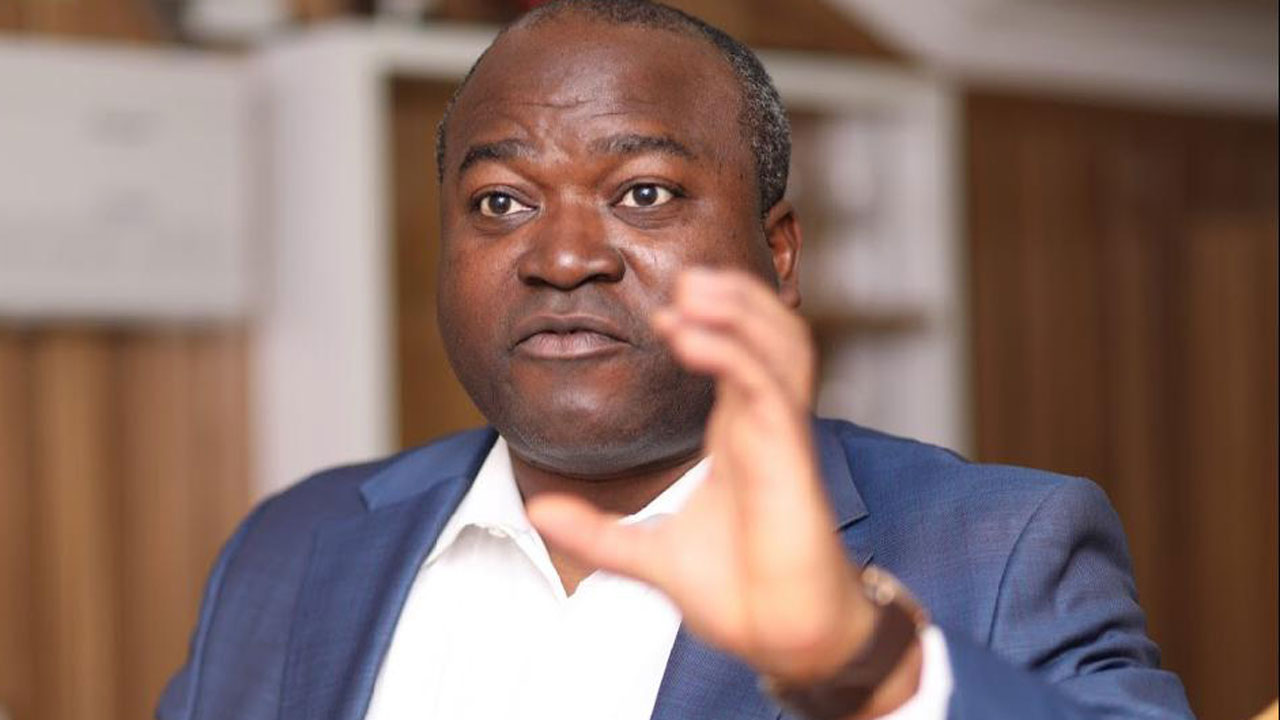
The Lagos State Security Trust Fund (LSSTF) has opened the year with a strong message of appreciation and renewed partnership, commending its donors and corporate partners for their extraordinary commitment to the security and stability of Lagos State throughout 2025, National Association of Online Security News Publishers (NAOSNP) can report.
In a New Year statement he personally signed and issued on behalf of Governor Babajide Olusola Sanwo-Olu, the Board of Trustees, Management, and staff of the Fund, the Executive Secretary/CEO of LSSTF, Dr. Ayodele Ogunsan, praised donors for going beyond financial contributions to demonstrate trust, shared responsibility, and a deep belief in collective security.
Your contributions, Ogunsan observed, ‘over the past year represented far more than financial support. They reflected trust, shared responsibility, and a collective commitment to safeguarding lives, property, and the economic vitality of Lagos State. With your partnership, the Fund was able to strengthen the capacity of security agencies, enhance operational effectiveness, and respond meaningfully to evolving security needs across the State.’
The Governor deeply values the enduring partnership between the public and private sectors as a model of how collaborative security funding can deliver measurable impact, not only for Lagos which is Nigeria’s commercial nerve centre and West Africa’s economic hub, but for the nation as a whole.
Looking ahead to 2026, the Fund expressed optimism about consolidating gains recorded in the past year, deepening strategic partnerships, and welcoming new donors who share its vision of a secure, resilient, and investor-friendly Lagos State. ‘As we step into 2026, we look forward with optimism – building on the progress achieved, deepening existing partnerships, and welcoming new donors and
partners who share our vision for a secure and resilient Lagos State.’
With emerging security realities demanding innovation and sustained support, LSSTF said continued collaboration will be key to staying ahead of threats. ‘We are confident that, together, we can sustain the gains recorded and respond effectively to emerging security challenges in the year ahead,’ Ogunsan concluded.
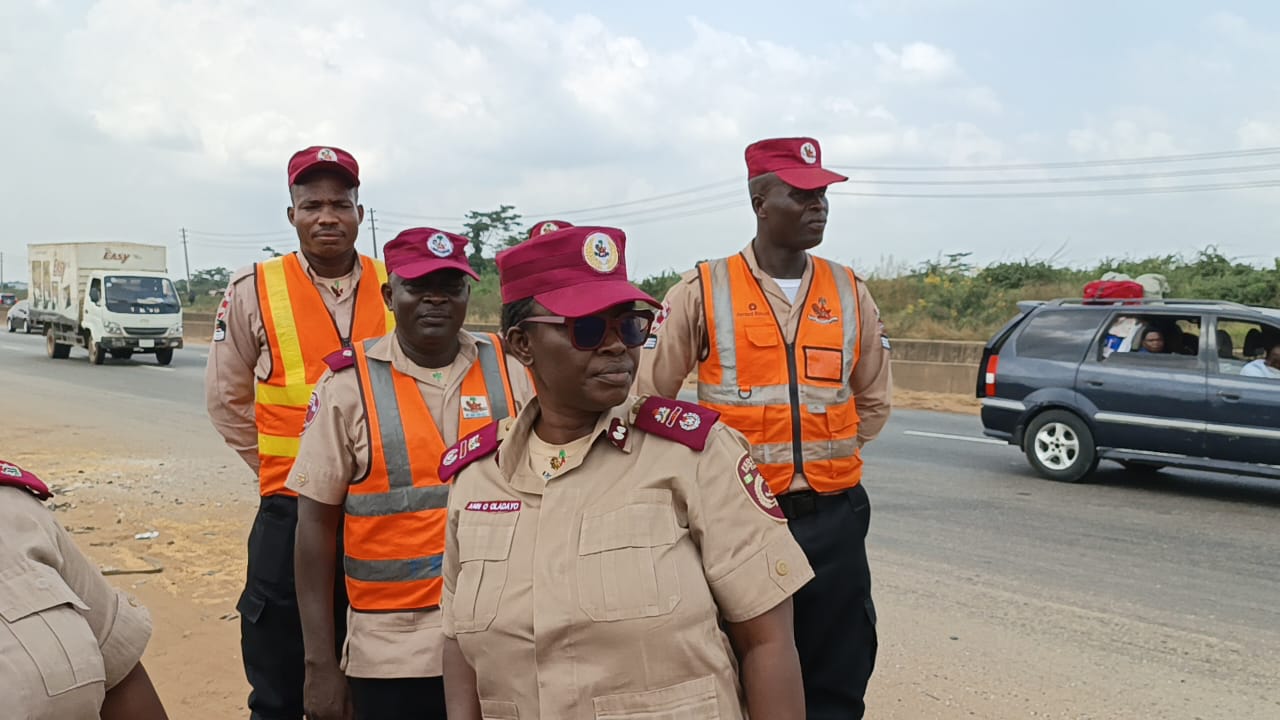
Following the fatal crash on the Lagos–Ibadan Expressway in Ogun State involving world-renowned boxer, Anthony Joshua and his team, the Zonal Commanding Officer (ZCO) of the FRSC RS2 Lagos Zone, Assistant Corps Marshal, ACM Ann O. Oladayo, on Tuesday conducted an on-the-spot assessment of the accident scene, even as the incident has generated widespread public interest and conflicting reports, the National Association of Online Security News Publishers (NAOSNP), can report
Speaking with pressmen during the assessment visit, ACM Oladayo said the inspection was necessary to establish the true facts, noting that some FRSC operatives were already present at the corridor when the crash occurred yesterday. “A lot of reports are out there, but we decided to come for an eyewitness account because some of our operatives were here when it happened. We needed to ascertain what actually occurred,” she said.
According to the FRSC, preliminary findings from eyewitnesses revealed that a trailer conveying soya beans was properly parked off the road, waiting to be offloaded, when a speeding vehicle conveying popular international boxing champion, Anthony Joshua and his friends ran into it. “From what we gathered, the truck was not on the road. It was waiting to be offloaded and was well off the carriageway when the vehicle ran into it,” Oladayo explained.
She dismissed claims that the FRSC failed to respond promptly, stressing that the Corps arrived at the scene within minutes. “Immediately we heard of the incident, we were here in under three minutes. Our priority was rescue. Unfortunately, we lost two lives, but the injured were rescued and taken for medical attention,” she said.
The Zonal Commander added that suspected over-speeding and possible wrongful overtaking were being investigated as likely causes of the crash, noting that the impact force which pulled out the trailer’s tyres suggested excessive speed. “On this highway, the speed limit is 100km/h. From the impact, it is likely that the vehicle exceeded that limit. Investigation is still ongoing,” she stated.
An eyewitness, Yusuf Ajala Oluwaseun, who was at the scene when the crash occurred, blamed persistent speeding along the highway. “We just heard a loud boom. At first, we thought it was a tyre burst. People overspeed a lot on this road. Just last week, an 18-seater bus speeding here hit a man and overturned. FRSC came and rescued the victims,” he said.
Another eyewitness, Sodiq Ayo, confirmed the swift arrival of emergency responders of FRSC and described the moments after the crash. “I heard a sound and came out. People were shouting that someone was still inside the Jeep. When we realised it was Anthony Joshua, everyone gathered, a lot of people were doing video of Anthony Joshua. But before people arrived fully, FRSC came and rescued them,” he recounted.
The FRSC Zonal Commander, Oladayo noted that the damaged trailer has been moved to its facility using a heavy-duty tow truck, while the SUV involved in the crash is currently in the custody of the Ogun State Police Command, as investigations continue. She used the opportunity to caution motorists to plan their journeys properly, avoid over-speeding and reckless overtaking, and ensure their vehicles are roadworthy before travelling.
The Corps reaffirmed its commitment to rapid emergency response and road safety enforcement.


