
News
Local Printers Set to Sue INEC over Printing of Ballot Papers


- /home/rhoncare/pointblank.ng/wp-content/plugins/mvp-social-buttons/mvp-social-buttons.php on line 27
https://pointblank.ng/wp-content/uploads/2019/06/INEC.png&description=Local Printers Set to Sue INEC over Printing of Ballot Papers', 'pinterestShare', 'width=750,height=350'); return false;" title="Pin This Post">
- Share
- Tweet /home/rhoncare/pointblank.ng/wp-content/plugins/mvp-social-buttons/mvp-social-buttons.php on line 69
https://pointblank.ng/wp-content/uploads/2019/06/INEC.png&description=Local Printers Set to Sue INEC over Printing of Ballot Papers', 'pinterestShare', 'width=750,height=350'); return false;" title="Pin This Post">
Nigerian printers under the Chartered Institute of Professional Printers of Nigeria have threatened to drag the Independent National Electoral Commission to court for allegedly printing a large chunk of its electoral materials overseas.
The agency said this was illegal and a violation of the CIPPON Act 24 of 2007 of the Federal Republic of Nigeria.
The council is charged with the duty of regulating, controlling, managing and administration of printers, the business of printing and other printing related-matters in Nigeria.
Speaking in an interview with The PUNCH on Thursday, the President of CIPPON, Mr Olugbemi Malomo, admitted that the electoral body had been awarding printing jobs to local printers, but he insisted that outsourcing contracting printing contracts to foreign firms was a violation of the law.
Malomo explained that by law, INEC was obligated to award the printing of all electoral materials, including ballot papers to local printers through CIPPON.
He cited Section 23b of the CIPPON Act, which states, “In regulating the registration of printing practitioners, the council ensures that no firm or partnership shall practise as printers in Nigeria unless it is registered by the council.’’
Malomo stated that there was an improvement in the awards of contracts to Nigerian printers after the CIPPON council visited the INEC Chairman, Mahmood Yakubu, in Abuja last year.
The CIPPON President said, “There was an increase in patronage of our members. To that extent, that advocacy was meaningful. The second point is what percentage were we able to get? We have not been able to collate that.
“Was there any percentage (in INEC printing jobs) that was taken out? Certainly, but we don’t know what percentage that was taken out. The next level of advocacy, we are thinking of doing and I want you to quote me on this; is that we need to approach a court to interpret the law because the Act that established us says, ‘If you are not our member, you can’t get a printing job in Nigeria.’
“But we are aware that they patronise people who are not our members, so, we will eventually seek an interpretation of that (in court). But by and large, more people are patronised but we can’t say at what level or how many people were patronised.
“But with the help of the fourth estate of the realm (the media) and for the benefit of all Nigerians, we all need to work together. People are taking the jobs out of the country and I can tell you it is not because of lack of capacity, it is because of other interests.’’
Responding to insinuations that Nigerian firms may not possess the capacity to deliver the job on time at the required time, Malomo argued that ballot papers had been demystified by the transition to electronic voting.
Stressing that no single company could deliver the quantum of ballot papers and other material needed for the election, he said the excuse of lack of capacity usually levelled against Nigerian printers had also been eliminated by the amended Electoral Act, which had given INEC adequate time to prepare for elections.
He noted, “About four, five elections we have had. I’m not talking about presidential elections; election has moved away from ballot papers to card readers and electronic voting. The election is now one man, one vote.
“In other words, people who were compromising ballot papers, even if you give them a million ballot papers now, it doesn’t count anymore. So, when you talk about capacity, there is no single printing company in the world that can take up this (INEC) job at the required time.
“Capacity is also a function of time. The Electoral Act was also amended to give more time for printing. So, the excuse of lack of capacity has also been reduced or eliminated.
“INEC is one of the biggest users of paper, in particular, this election. We held a paper conference so that the issues of paper can be addressed so that we can use locally produced paper. How can we talk about capacity when the biggest spender is not even interested in an Olympic solution to the challenges it is having? Rather, it is taking the easy way out by going abroad because somebody is going to make more dollars.’’
The council president said money should be spent to develop local capacity as is the practice in developed countries.
“The American government will give you some grants and ask you to spend them on your company because they know what they are doing. That is why we have this post-election session a few years ago to talk about the future and learn a lot of lessons,’’ he submitted.
When contacted, the Chief Press Secretary to the INEC Chairman, Rotimi Oyekanmi, declined comment.
The Punch


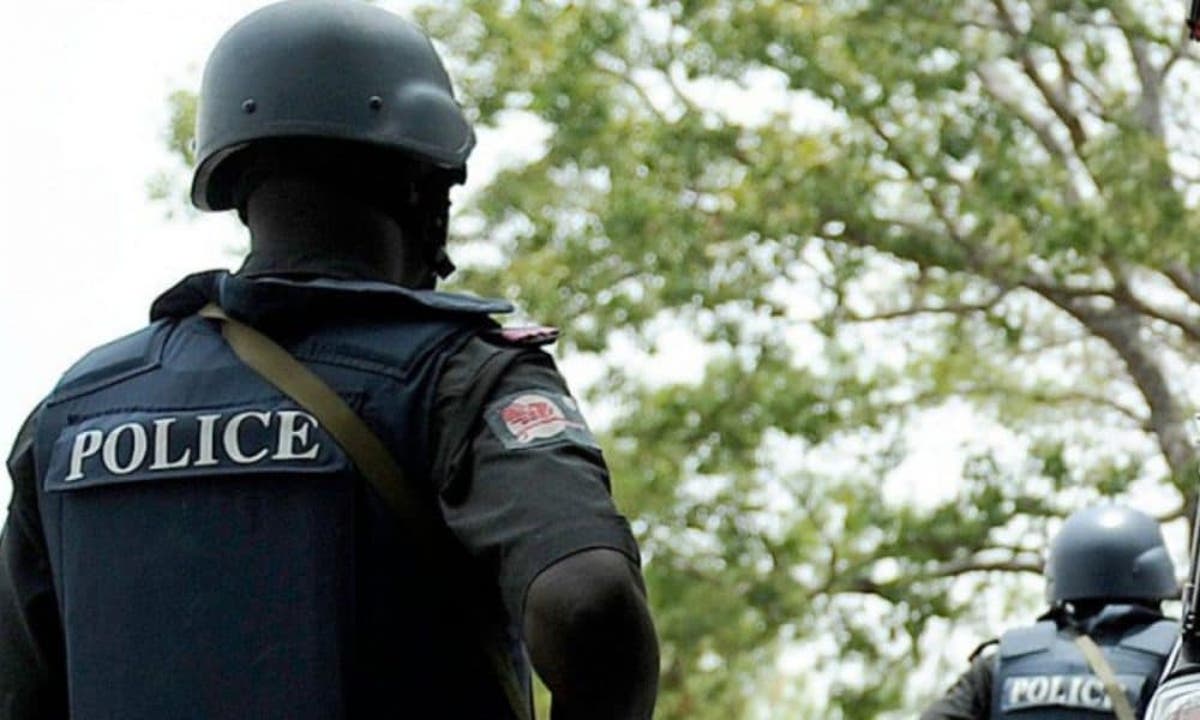
The Lagos State Police Command has commenced disciplinary action against an inspector following a viral video in which he was seen making disparaging ethnic remarks while travelling in a public vehicle.
The officer, identified as Inspector Osumah Frank, made what the Command described as “careless, inappropriate and uncultured remarks,” according to a statement issued on Friday, September 25, 2026, and signed by the Command’s Police Public Relations Officer, SP Abimbola Adebisi.
In the video, Frank, who was in police uniform, was heard making remarks about Igbo people and discussing the political ambitions of a former Governor of Anambra State, Peter Obi. He also made comments involving President Bola Tinubu and former Vice President Atiku Abubakar.
The inspector was further heard suggesting that police officers could collect money to frustrate a political candidate’s chances of succeeding.
Reacting to the video, the Command said the officer’s remarks were made in his personal capacity and did not represent the position or views of either the Lagos State Police Command or the Nigeria Police Force.
“The Command has commenced appropriate disciplinary action against the officer in line with established regulations of the Nigeria Police Force,” the statement said.
“It also wishes to make it clear that the statements made by the officer were made in his personal capacity and do not represent the position, views or official disposition of the Lagos State Police Command or the Nigeria Police Force,” it added.
The Commissioner of Police (CP) Tijani Fatai, said police personnel are required to maintain professionalism and respect for members of the public at all times.
“All personnel are expected to maintain professionalism, civility, discipline and respect for members of the public at all times,” the statement quoted Fatai as saying.
He said wearing the police uniform came with a responsibility to uphold the dignity and integrity of the Force, adding that the Command would not condone any conduct capable of bringing the police into disrepute or undermining public confidence in the Force.
The Command reaffirmed its commitment to transparency, accountability and “policing with humility and integrity.”
The video, which circulated widely on social media from around September 23, had drawn criticism over the officer’s remarks, particularly those concerning Igbo people and his comments about police officers collecting money to frustrate a political candidate.
The police did not state the specific disciplinary measures being taken against Frank.
News
ADC Unveils Presidential Campaign Council, Names Ibrahim-Imam As Chairman, Dele Momodu As Head, Media/Publicity
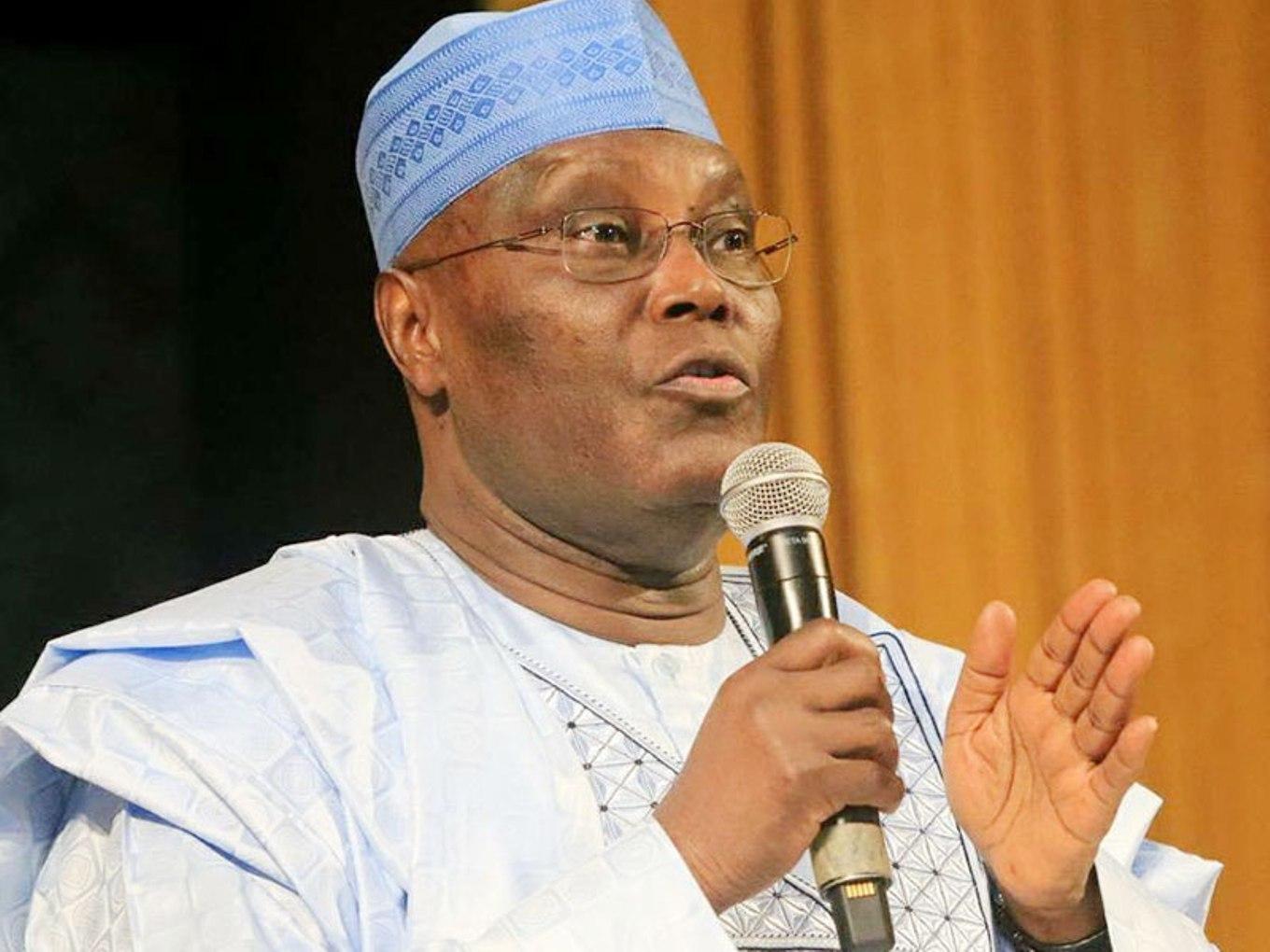
The African Democratic Congress (ADC), has unveiled its Presidential Campaign Council for the 2027 election, describing the structure as “lean” in response to the economic realities facing Nigerians.
The council, approved by the party’s presidential candidate, former Vice President Atiku Abubakar, will be chaired by Kashim Ibrahim-Imam, with former Kaduna State Governor, Nasir El-Rufai, serving as Deputy Chairman.
Senator Austin Akobundu will serve as Director-General and Campaign Manager, with responsibility for translating the campaign’s strategy into coordinated action.
The council will have six Deputy Directors-General overseeing various operational directorates, while 30 directors have been assigned specific responsibilities.
In a statement on Thursday, Phrank Shaibu, Director of Strategic Communication of the ADC Presidential Campaign Council and Senior Special Assistant on Public Communication to Atiku, said the structure was deliberately kept “lean” to reflect the economic circumstances confronting Nigerians.
“When families are struggling with food prices, transport costs and shrinking incomes, a campaign asking for their trust must show discipline in how it operates,” Shaibu said.
Dele Momodu will head the Media and Communications Directorate, while Dino Melaye will lead Contact and Mobilisation.
Mohammed Hayatudeen will chair the Policy Team, working with Professor Mohammed Sagagi and other members, including Professor Kingsley Moghalu, while Chief John Oyegun will chair the Campaign Advisory Board.
Shaibu said the campaign structure was designed to be focused on work, with clearly defined responsibilities for every directorate and assignment for every director.
“Our measure of success will be how clearly we address the cost of living, unemployment, insecurity and declining purchasing power—and how effectively we organise to make Nigeria affordable again,” he said.
The council is expected to coordinate the ADC’s presidential campaign activities ahead of the 2027 general election.
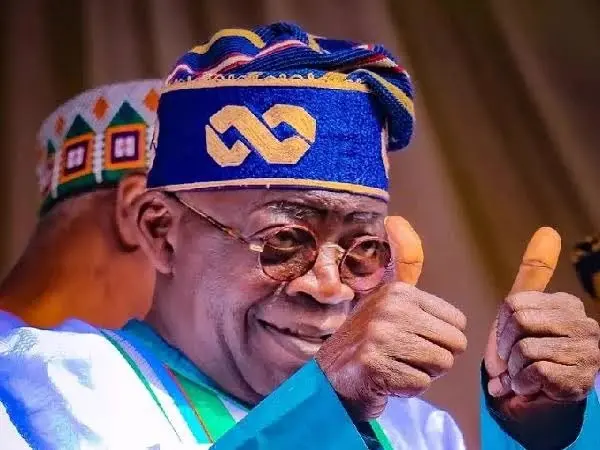
President Bola Tinubu has extended his “working vacation” in Europe by a few days and is expected to return to Nigeria at the weekend, the Presidency said on Monday.
The announcement came as Vice President Kashim Shettima represents the President at the 81st United Nations General Assembly in New York, where he is scheduled to deliver Nigeria’s national statement.
Tinubu departed Nigeria on August 30 to begin his working vacation in London. After spending one week in the United Kingdom, he proceeded to Paris, France, where he held meetings with French President Emmanuel Macron and businessman Vincent Bolloré.
Bolloré’s media interests include Canal+, MultiChoice and Universal Music Group.
A statement signed on Monday by Bayo Onanuga, Special Adviser to the President on Information and Strategy, said Tinubu has remains in touch with developments at home and continued to direct the affairs of government despite being away from Nigeria.
One of the major decisions taken by the President during the period was his directive for an independent investigation into the deaths of 37 suspected illegal miners in Minna following their detention by the Nigeria Security and Civil Defence Corps.
The deaths had raised concerns over the circumstances surrounding the detention and treatment of the miners, prompting the President to order an independent probe.
Tinubu’s decision to extend his stay abroad means he will not personally attend the opening of the high-level segment of the UN General Assembly in New York. Shettima, who departed Abuja on September 20, is representing the President at the global gathering and will present Nigeria’s national statement.
The Presidency said the Vice President’s representation was part of the arrangements for Tinubu’s absence from the country.
With Shettima now in New York, the Secretary to the Government of the Federation, Senator George Akume, will continue to represent the President at some official functions.
The Presidency said Tinubu had also delegated the Vice President to represent him at official functions while he was away, while Akume had similarly stepped in at other engagements.
The President’s extended stay in Europe also comes amid increased political activities at home ahead of the 2027 general elections.
According to the Presidency, the Director-General of the Presidential Campaign Council, Senator Abubakar Yari, has been leading notable leaders of the ruling party in consultations with prominent traditional rulers across the country.
The consultations form part of ongoing political engagements as the administration moves towards the next electoral cycle.
The Presidency also reacted strongly to criticism over Tinubu’s decision not to attend the UN General Assembly personally.
It described as irresponsible what it called a “baseless insinuation” by former Vice President Atiku Abubakar and a United States-based lobbying firm headed by an ex-convict regarding the President’s non-attendance at the global gathering.
The Presidency maintained that Nigeria would be adequately represented by Shettima, who will deliver the country’s national statement.
Tinubu’s latest trip began as an official working vacation, during which the President combined his leave with selected diplomatic, business and governmental engagements.
His meeting with Macron in Paris provided an opportunity for discussions on bilateral relations, while his engagement with Bolloré focused on business and investment interests involving Nigeria.


