
Entertainment
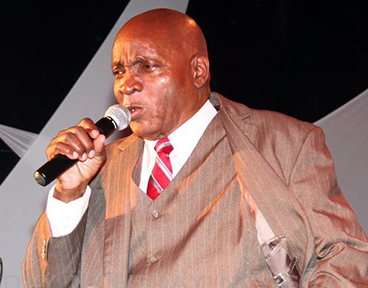
Majek Fashek (1963-2020): The Triumphs, the Storm, the Travails


- /home/rhoncare/pointblank.ng/wp-content/plugins/mvp-social-buttons/mvp-social-buttons.php on line 27
https://pointblank.ng/wp-content/uploads/2020/06/Majek.jpg&description=Majek Fashek (1963-2020): The Triumphs, the Storm, the Travails', 'pinterestShare', 'width=750,height=350'); return false;" title="Pin This Post">
- Share
- Tweet /home/rhoncare/pointblank.ng/wp-content/plugins/mvp-social-buttons/mvp-social-buttons.php on line 69
https://pointblank.ng/wp-content/uploads/2020/06/Majek.jpg&description=Majek Fashek (1963-2020): The Triumphs, the Storm, the Travails', 'pinterestShare', 'width=750,height=350'); return false;" title="Pin This Post">
By Eric Elezuo
Could you believe that even age mates of late Majek Fashek believed he was 71 years, and was born in 1949. They claimed that was what the official record said…such naivety. One day, someone would tell them something different from their names, and they will believe because one supposedly ‘impeccable’ source has erroneously written it. I still wonder what we do with our brains, even with claims that we have been to school. Well, that is a story for another day!
He was only 25 years in 1988 when his glory filled not only the airwaves but the nook and crannies of the Nigerian music and entertainment circle. It didn’t stop there, Majekodunmi Fasheke, known as Majek Fashek for short, took his epic arrival into stardom more than a niche further, covering the world with his own form of ‘Righteousness’. He dished out hits after hits, making him the epicentre of Reggae music in Nigeria, competing favourably with the likes of Alpha Blonde and Lucky Dube in the Africa continent, and world icons like Robert Nester Marley, Peter Tosh, Gregory Isaac and many more. New York Daily News hailed him as the spiritual heir to Bob Marley.
Majek Fashek occupied the late 80s and early 90s like a colossus, as his hit album, Prisoner of Conscience with the track ‘Send Down the Rain’, became a national anthem of some sort. Every child could sing the song; it was on the lips of every adult. And of course, it was interwoven with childlike chorus which heralds the arrival of mothers after a long absence. It was made for all ages; a product of long term planing. More so, its prophetic orientation and spiritual undertone made it a toast for all season.
In a 2013, when Fashek’s former bandmate and cousin, Amos McRoy, granted an interview with now defunct Entertainment Express Newspaper, he claimed that the singer told him the song ‘Send Down The Rain’ had a spiritual force behind it.
“That was one of the things he told me in Cote d’Ivoire. Based on what he told me, I think he ‘crossed the line’ before he released the album,” McRoy said in that interview.
“In Cote d’Ivoire, I asked him certain questions. His reply was: ‘Amos, are you that naive? I released Send Down The Rain, everywhere that song was played, rain must fall. Even in summer while we were on US tour, I played Send Down The Rain and rain fell. I released Free Mandela and that month Mandela was released. I did fire (Majek Beware) the week that record was released was the week the Rodney King incident happened. That song, Fire o! Fire o! was played for almost two months in all the TV and radio stations in Los Angeles during that Rodney King episode. So, are you that naive? Don’t you reason?
He practically started a musical revolution in 1988, and by 1989, he carted away six awards at the PMAN Awards including two of the most important nominations; the prestigious Album of the Year and Song of the Year categories. His Send Down the Rain competed in the category of millennial hits such as Nico Mbago’s Sweet Mother and Onyeka Onwenu’s One Love in not only national, but international appeals.
One thing is obvious, no Nigerian song has been so mythologized as ‘Send Down the Rain’ and by extension, Holy Spirit. He composed every song personally, and gave Bob Marley’s ‘Redemption Song’ a touch of excellence when he remixed it. No one can deny that Fashek was a legend. A typical example of one who came during his time, saw and conquered. Many believed he had room for more conquest if not for the self-destructive mode he put himself. Reports had it that he dabbled into spiritism, not drug use, and ruined a God-given career.
This as much was confirmed by McRoy thus:
“Truth is Majek’s problem is spiritual. Majek strayed into spiritism.
“Majek’s problem is not drug-related. He took to alcoholism to get over his real problem. Failing to keep the rules of whatever he delved into, he started to hallucinate. He started seeing things. For instance, if he was in a room, he would tell you ‘open the door, open the window’. If you tell him the air condition is on, he would say “Can’t you see them spirits; you want to trap the spirits. Men, let the spirits move around.”
In the peak of his career in 1991, Fashek visited New York for the first time, and that was when he released the track ‘Mashek Fashek Inna New York’. The excited attached to the song would reveal his clear human nature, as he x-rayed life in the city that never sleeps in comparison to what is obtainable in other cities of the world. He was practically surprised to see that there were homeless people, beggars and destitute in New York.


Entertainment
‘Bulaba Never Renew Him Subscription’, Charly Mocks Asari Dokubo for Calling for Tinubu’s ‘Surrender’

A former leader of the Movement for the Emancipation of the Niger Delta, MEND, Asari Dokubo, has asked President Bola Tinubu to surrender, saying that the economic situation in Nigeria is unbearable.
Singing a war song, Asari said it was obvious that the President cannot fight and so should step aside.
Meanwhile, a frontline Nigerian entertainer, Charly Boy, also known as the Area Father, has mocked the former militant leader, saying his outcry might be because the presidency has not ‘renewed his subscription.’
Brandishing a sword in a video on social media, Asari says in Pidgin English, “Tinubu, na me dey tell you, you no go fit fight. Tinubu surrender. The country too hard. This country is too hard. We dey vex. Look, out fuel, everything is too expensive in this country.
“Everything is too expensive. We have refineries but they’re not working in this country. Nothing is working in this country and we’ll not continue in this situation. We’re hungry. We’re hungry. We’re hungry and this must stop. It must stop.”
Reposting the video on X, Charly Boy wrote, “Asari say make Tinubu surrender.
Say country too hard. Bulaba never renew him subscription.”
Source: DailyPost
Family, friends and admirers of Calypso King of the World, Slinger Francisco, better known as the Mighty Sparrow, have celebrated the man behind the legend at a memorial service in New York.
His daughter, Gina Francisco, reflected on her father’s final years, recalling how the man who once travelled the globe eventually relied on others to carry him, yet never complained.
The service at Linden Seventh-day Adventist Church drew fellow musicians, politicians, diplomats, clerics and supporters from across the Caribbean diaspora.
Francisco said her father treated those around him warmly and deeply valued his family. She joked that, with 14 children, she could not remember all their names. One of his greatest lessons, she said, was humility.
“The greatest thing that I think that he did, because it was a very humbling experience to watch my father being carried. He couldn’t walk. He had to be carried, and he was very uncomplaining.”
She added: “I’ve seen my father change over the years. He was very uncomplaining, and his world became smaller and smaller and smaller. You’re looking at a man who travelled the world, and then he’s kind of limited to where he is, and he never complained.”
Francisco said sharing her father with the world sometimes frustrated her and her siblings, but she eventually came to appreciate his impact on generations of people.
“He taught me how to be at peace with whatever God gives you,” she said.
Among those paying tribute was New York City Public Advocate Jumaane Williams, who described Sparrow as a giant of Caribbean culture whose influence extended far beyond Trinidad and Tobago.
“This is obviously a sad occasion,” Williams said, adding that Sparrow’s death at 91 also provided an opportunity to celebrate a remarkable life.
“I just want to thank the family because I’m honoured to come to speak about a 91-year-old who lived an amazing life.”
He invited mourners to applaud the late calypsonian.
“The Calypso Monarch Emeritus, no one can beat him. What he did for our culture is simply amazing and cannot be overstated.”
Williams recalled that Sparrow’s name was regarded as “royalty” in his household and in countless others across the Caribbean diaspora.
Yves Abel of Haiti’s legendary band Tabou Combo also paid tribute, recalling Sparrow’s support for Caribbean artistes and his commitment to regional unity.
“It is an honour for me to be invited to the celebration of the life of Mr Mighty Sparrow, one of the greatest calypso men in the world,” Abel said.
He recalled that Sparrow had helped the group in its early years by securing performances at major New York venues.
“When we were 22 years old, 19 years old, playing music in Brooklyn, Mighty Sparrow invited us to some of the greatest venues in New York. He took us to Madison Square Garden, he took us to the Lincoln Center, he took us to Carnegie Hall.”
Abel said Sparrow understood that Caribbean people were united by culture despite their linguistic differences.
“Sparrow knew that although we speak different languages based on our colonial backgrounds, we carry one music, and it’s from Africa where we all come from.”
During the service, Brother Don Enoch Mohammed of the Nation of Islam played an audio recording of a conversation between Sparrow and the organisation’s leader, Louis Farrakhan.
In the recording, the two men prayed for each other and exchanged jokes. Farrakhan urged Sparrow to write a song for him, and Sparrow suggested that Farrakhan provide the melody. Farrakhan replied that it would become “the biggest calypso ever”.
“I recall telling my mother that if there is no calypso in heaven, then I don’t want to go,” Farrakhan said in the recording.
Sparrow will be accorded a State-assisted funeral. A date for the ceremony has not yet been announced.

By Eric Elezuo
Temi Nkem, whose real names are Temitope Nkemdirim Chigbue, has emerged winner of the Big Brother Naija reality tevision show contest, season 11, with the tag, Show ya sef.
Temi Nkem beat the duo of Aikou and Sheba, who made the top three finalist list.
The 21-year old Financ and Accounting student, who though of Delta State origin, was born and bred in London, carts away a total of N160 million in both cash and prize gifts.
The season 11 of the BBN show started on July 26, 2026, with 20 housemates. While most housemates were eliminated, one or two were disqualified from the competition while another housemate made a personal decision to discontinue her stay in the house.


