
Metro
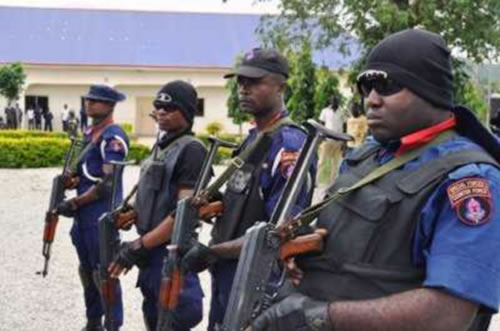
Mob Lynches NSCDC Official, Another for Killing Nine Boys’ Brigade Members

- /home/rhoncare/pointblank.ng/wp-content/plugins/mvp-social-buttons/mvp-social-buttons.php on line 27
https://pointblank.ng/wp-content/uploads/2019/04/NSCDC.jpg&description=Mob Lynches NSCDC Official, Another for Killing Nine Boys’ Brigade Members', 'pinterestShare', 'width=750,height=350'); return false;" title="Pin This Post">
- Share
- Tweet /home/rhoncare/pointblank.ng/wp-content/plugins/mvp-social-buttons/mvp-social-buttons.php on line 69
https://pointblank.ng/wp-content/uploads/2019/04/NSCDC.jpg&description=Mob Lynches NSCDC Official, Another for Killing Nine Boys’ Brigade Members', 'pinterestShare', 'width=750,height=350'); return false;" title="Pin This Post">
Pandemonium broke out on Monday at the Sabonline area, Gombe, after an official of the Nigeria Security and Civil Defence Corps, Adamu Abdullahi, and a yet-to-be-identified man were reportedly lynched for the killing of nine Boys’ Brigade members.
PUNCH Metro learnt that the Boys’ Brigade members were drawn from the St. Peter’s Anglican Church, Madaki, and two parishes of the Evangelical Church Winning All in Bamusa and Barunde, Gombe State.
The Boys’ Brigade members were said to be having an Easter procession when the incident happened around 1am.
Our correspondent gathered that the NSCDC official had wanted to drive through the procession, but was prevented by the brigade, which had blocked a lane on the road.
After some altercation, Abdullahi was said to have had his way.
The official, who was said to be unhappy with the initial action of the group, reportedly drove to his house and dropped off some occupants in his car.
He was alleged to have returned to the procession in his car.
Abdullahi allegedly switched off the headlamps of the vehicle and rammed into the group, killing nine people on the spot.
About 30 others were said to have sustained varying degrees of injury.
A member of the ECWA Boys’ Brigade, Michael Adeniran, said Abdullahi, a corps assistant, drove an official car of the NSCDC.
He said, “The incident happened around 1am. A salon car with the logo of civil defence was prevented from passing the road because of our procession.
“However, when our pastor prevailed on us, we allowed him to pass. After dropping off his girlfriends in his house, he drove back with his car and cleared our members. There was one other person with him in the car.”
Another eyewitness, Meshach Michael, said a mob pounced on the two men and beat them to death.
He said, “Immediately we saw what happened, we held the driver and the man with him and beat them up in anger. We wanted to burn the car, but we were stopped.”
The second occupant of the car was reported to be a policeman.
Our correspondent visited some of the survivors at the male surgical ward of the state specialist hospital.
One of them, who identified himself only as Godwin, wondered why the NSCDC official took the decision.
“This is not the first time that we would embark on this procession at the wee hours of the night,” he said.
Another survivor, Zakaria Ibrahim, said the action was premeditated.
The Gombe State Commissioner of Health, Dr Kennedy Ishaya, described the incident as unfortunate.
“The survivors have different degrees of injury; some have head injuries, and others lacerations,” he added.
The ECWA Secretary, Elias Tstakis, said the church was mourning the loss of its members.
“We discovered that the two men were deployed in the government house, but they chose to kill innocent teenagers,” he said.
The spokesperson for the NSCDC, Gombe command, ASC Sajid Saad, declined comment.
“I am on the road now; I can’t talk. If you are in Gombe, come to my office,” he said.
The state Police Public Relations Officer, SP Mary Malum, said 10 people died.
She said, “There were 10 deaths and 30 injured victims are receiving treatment at the state specialist hospital and other private health institutions.”
The state Commissioner of Police, Bello Makwashi, who was said to have visited the scene of the incident, denied that the second occupant of the car was a policeman.
The Force spokesperson, Frank Mba, who confirmed 11 deaths in a statement on Monday, said the Inspector-General of Police, Adamu Mohammed, had ordered a thorough investigation into the incident.
He, however, said the accident was caused by brake failure, adding that the driver was on Gadan Malale Road and heading for the Central Roundabout in the area when tragedy struck.
The Punch


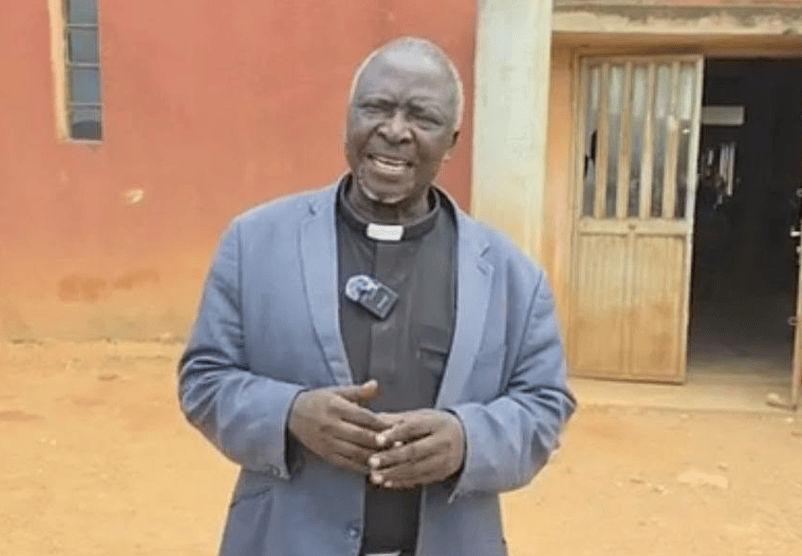
The Regional Chairman of Church of Christ in Nations (COCIN), Barkin Ladi Local Government Area of Plateau State, Rev. Ezekiel Dachomo, has denied reports that he prayed for the re-election of President Bola Tinubu and Vice President Kashim Shettima in the 2027 presidential election.
Dachomo, who is currently in Israel on what he described as his first International Christian Advocacy Tour, said his visit was aimed at drawing the attention of world leaders to the plight of Christians in Plateau.
The cleric made the clarification in a social media post on Monday night following reports that he had prayed for the success of the All Progressives Congress (APC) presidential ticket and expressed support for the Muslim-Muslim ticket.
Dachomo said his earlier post, in which he prayed for Nigeria, had been misconstrued as an endorsement of Tinubu and Shettima ahead of the 2027 election.
According to him, there was nowhere in the post where he prayed for the President and Vice-President to win the election.
“People are trying to frame me, saying I prayed for a Muslim-Muslim ticket. But I did not, and I will never pray for a Muslim-Muslim ticket because Nigeria belongs to both Muslims and Christians,” he said.
Dachomo said his prayers were for the well-being and success of Nigeria and its citizens, irrespective of their religious affiliations.
“I pray for both Muslims and Christians in Nigeria. I pray for Nigeria to succeed. If you truly want to come to God, come with a clean heart,” he added.
The cleric further stated, “I did not pray for President Tinubu and Vice President Shettima to win in 2027. My prayers have always been for Nigeria to succeed.”
Dachomo’s clarification came amid reactions to his ongoing advocacy tour in Israel, where he is seeking international attention to security challenges and what he described as the persecution of Christians in Plateau.
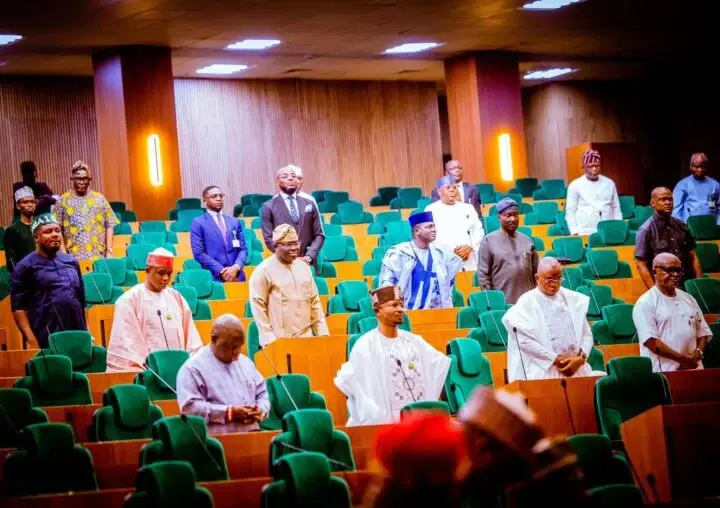
Ahead of the 2027 election, the House of Representatives Committee on Electoral Matters has urged the Independent National Electoral Commission (INEC) to disqualify candidates whose names are not contained in political party registers, as stipulated by the Electoral Act 2026.
In a statement on Tuesday, the Chairman of the committee, Bayo Balogun, drew the commission’s attention to a Supreme Court ruling on Sections 77(5), 77(6) and 77(7) and called for their full enforcement across all political parties.
Balogun, a member of the All Progressives Congress, APC, said that pending legal proceedings concerning the interpretation, constitutionality and enforceability of the sections had been resolved by virtue of the Supreme Court judgment.
The lawmaker recalled that the Supreme Court, on September 24, 2026, restored the provisions after setting aside the Court of Appeal judgment that had declared them unconstitutional.
According to him, the apex court held that the provisions were not inconsistent with the 1999 Constitution.
Balogun explained that Section 77(5) provides that only members whose names are contained in the membership register submitted to INEC are eligible to vote or be voted for at party primaries, congresses and conventions.
He said that Section 77(6) requires political parties to use the register submitted to the electoral umpire for such exercises.
Balogun urged INEC to proceed without further delay to enforce Sections 77(4) to 77(6) in the administration and monitoring of political parties and their electoral activities.
He further urged the commission to audit the membership registers and candidates submitted by political parties to establish whether the names of the candidates are contained in the registers earlier submitted to INEC in compliance with Section 77(5).
“This will be a litmus test for the commission – any culpable political party and candidates should be disqualified.
“Diligent enforcement of the provision would help prevent disputes and reduce the volume of litigation that could arise from alleged irregularities or non-compliance with Sections 77(4) to 77(6) of the Electoral Act,” Balogun said.
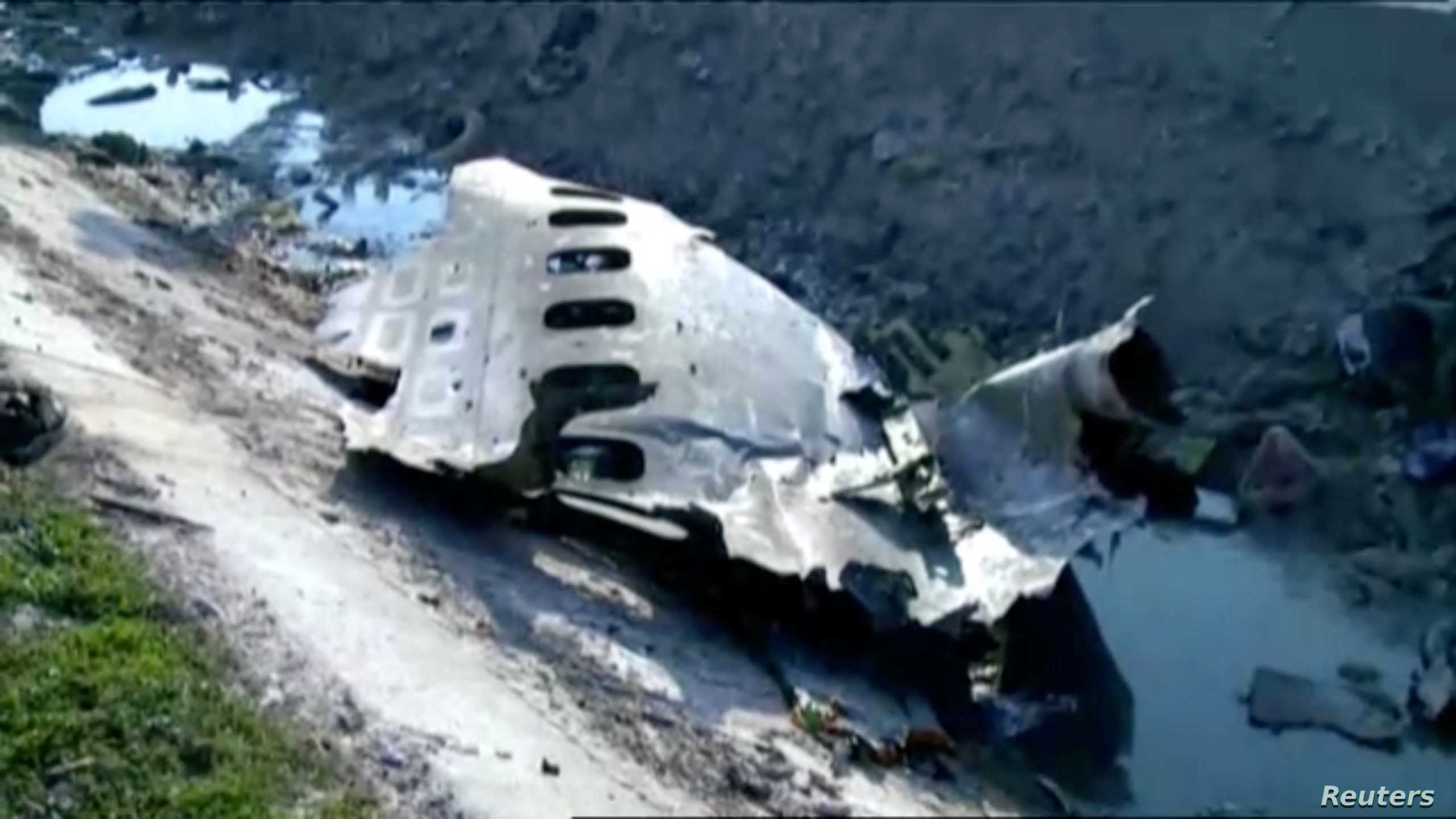
An helicopter crashed into a swamp near Naval Base in Igbokoda, the headquarters of Ilaje Local Government Area of Ondo State, on Monday.
The incident occurred at about 11.00a.m during heavy down pour, throwing the coastal community into panic.
The number of people on board of the helicopter was yet to be officially confirmed, while the condition of possible survivors cannot be confirmed.
Confirming the incident, Maurice Oripenaiye, the Chairman of the local government, told the News Agency of Nigeria (NAN) in a telephone interview that he could not ascertain the number of the victims.
Oripenaye also said he was yet to ascertain the identity of the crashed helicopter and the passengers.
“It happened during the heavy rainfall at about 11.00a.m. I cannot confirm the number of the people on board. I have deployed some youths to the area for rescue purpose,” he told NAN.
Similarly, the Police Command in Ondo State while confirming the crash, said details surrounding the incident were still emerging.
The command in a statement by its spokesperson, Abayomi Jimoh, a deputy superintendent of police, in Akure, said efforts were ongoing to establish the full circumstances surrounding the crash.
“The command urges members of the public, particularly residents of Igbokoda and adjoining communities, to remain calm and refrain from circulating unverified information.
“The public will be duly informed as soon as further credible information becomes available,” it stated.
(NAN)


