
Entertainment
Multiple Award Winning Producer, Composer, Quincy Jones Dies at 91


- /home/rhoncare/pointblank.ng/wp-content/plugins/mvp-social-buttons/mvp-social-buttons.php on line 27
https://pointblank.ng/wp-content/uploads/2024/11/Quincy-jones-bio.jpg&description=Multiple Award Winning Producer, Composer, Quincy Jones Dies at 91', 'pinterestShare', 'width=750,height=350'); return false;" title="Pin This Post">
- Share
- Tweet /home/rhoncare/pointblank.ng/wp-content/plugins/mvp-social-buttons/mvp-social-buttons.php on line 69
https://pointblank.ng/wp-content/uploads/2024/11/Quincy-jones-bio.jpg&description=Multiple Award Winning Producer, Composer, Quincy Jones Dies at 91', 'pinterestShare', 'width=750,height=350'); return false;" title="Pin This Post">
Quincy Jones, the multi-talented music titan whose vast legacy ranged from producing Michael Jackson’s historic “Thriller” album to writing prize-winning film and television scores and collaborating with Frank Sinatra, Ray Charles and hundreds of other recording artists, has died at 91.
Jones’ publicist, Arnold Robinson, says he died Sunday night at his home in the Bel Air section of Los Angeles, surrounded by his family.
“Tonight, with full but broken hearts, we must share the news of our father and brother Quincy Jones’ passing,” the family said in a statement. “And although this is an incredible loss for our family, we celebrate the great life that he lived and know there will never be another like him.”
Jones rose from running with gangs on the South Side of Chicago to the very heights of show business, becoming one of the first Black executives to thrive in Hollywood and amassing an extraordinary musical catalog that includes some of the richest moments of American rhythm and song. For years, it was unlikely to find a music lover who did not own at least one record with his name on it, or a leader in the entertainment industry and beyond who did not have some connection to him.
Jones kept company with presidents and foreign leaders, movie stars and musicians, philanthropists and business leaders. He toured with Count Basie and Lionel Hampton, arranged records for Sinatra and Ella Fitzgerald, composed the soundtracks for “Roots” and “In the Heat of the Night,” organized President Bill Clinton’s first inaugural celebration and oversaw the all-star recording of “We Are the World,” the 1985 charity record for famine relief in Africa.
Lionel Richie, who co-wrote “We Are the World” and was among the featured singers, would call Jones “the master orchestrator.”
In a career which began when records were still played on vinyl at 78 rpm, top honors likely go to his productions with Jackson: “Off the Wall,” “Thriller” and “Bad” were albums near-universal in their style and appeal. Jones’ versatility and imagination helped set off the explosive talents of Jackson as he transformed from child star to the “King of Pop.” On such classic tracks as “Billie Jean” and “Don’t Stop ‘Til You Get Enough,” Jones and Jackson fashioned a global soundscape out of disco, funk, rock, pop, R&B and jazz and African chants. For “Thriller,” some of the most memorable touches originated with Jones, who recruited Eddie Van Halen for a guitar solo on the genre-fusing “Beat It” and brought in Vincent Price for a ghoulish voiceover on the title track.
“Thriller” sold more than 20 million copies in 1983 alone and has contended with the Eagles’ “Greatest Hits 1971-1975” among others as the best-selling album of all time.
“If an album doesn’t do well, everyone says ‘it was the producers fault’; so if it does well, it should be your ‘fault,’ too,” Jones said in an interview with the Library of Congress in 2016. “The tracks don’t just all of a sudden appear. The producer has to have the skill, experience and ability to guide the vision to completion.”
The list of his honors and awards fills 18 pages in his 2001 autobiography “Q”, including 27 Grammys at the time (now 28), an honorary Academy Award (now two) and an Emmy for “Roots.” He also received France’s Legion d’Honneur, the Rudolph Valentino Award from the Republic of Italy and a Kennedy Center tribute for his contributions to American culture. He was the subject of a 1990 documentary, “Listen Up: The Lives of Quincy Jones” and a 2018 film by daughter Rashida Jones. His memoir made him a best-selling author.
Born in Chicago in 1933, Jones would cite the hymns his mother sang around the house as the first music he could remember. But he looked back sadly on his childhood, once telling Oprah Winfrey that “There are two kinds of people: those who have nurturing parents or caretakers, and those who don’t. Nothing’s in between.” Jones’ mother suffered from emotional problems and was eventually institutionalized, a loss that made the world seem “senseless” for Quincy. He spent much of his time in Chicago on the streets, with gangs, stealing and fighting.
“They nailed my hand to a fence with a switchblade, man,” he told the AP in 2018, showing a scar from his childhood.
Music saved him. As a boy, he learned that a Chicago neighbor owned a piano and he soon played it constantly himself. His father moved to Washington state when Quincy was 10 and his world changed at a neighborhood recreation center. Jones and some friends had broken into the kitchen and helped themselves to lemon meringue pie when Jones noticed a small room nearby with a stage. On the stage was a piano.
“I went up there, paused, stared, and then tinkled on it for a moment,” he wrote in his autobiography. “That’s where I began to find peace. I was 11. I knew this was it for me. Forever.”
Source: APnews


Veteran Nollywood actor, Francis Duru, has died at the age of 57 following a brief illness.
His family announced his death on his official Instagram page in the early hours of Friday, expressing appreciation to fans and well-wishers for their support.
“We, the family of Francis Duru, regret to announce his passing following a brief illness.
“We appreciate your prayers, love, and understanding. May his soul rest in perfect peace. Amen,” the statement read.
Duru’s death comes months after he dismissed reports that he was battling a life-threatening illness.
In June, concern spread among fans and colleagues after a video showing the actor looking frail circulated on social media.
Responding to the reports, Duru shared a video on Instagram in which he described the footage as “fabricated and malicious”.
Born on July 27, 1969, in Cameroon to Nigerian parents from Imo State, Duru completed his primary and secondary education in the country before relocating to Nigeria for university studies.
He gained admission to the University of Port Harcourt, Rivers State, where he studied Theatre Arts and graduated with a Bachelor of Arts degree in 1996.
Duru began his acting career in 1989 with Missing Mark, a film directed by the late Ndubuisi Oko.
However, he gained wider recognition in 1995 after featuring in Rattlesnake, an action-comedy produced by the late filmmaker Amaka Igwe. He played Ahanna in the film.
Throughout his career, Duru received several awards and honours for his contributions to the Nigerian film industry. He was also named a United Nations ambassador of peace in recognition of his influence on young people.
In 2020, he won the Best Actor in a Leading Role (Igbo) award at the Best of Nollywood Awards for his performance in Mboputa.
Duru married his wife, Adokiye, in 2003, and they had four children together. The family lost one of their children, Ifeanyi, in August 2024.
Entertainment
‘Bulaba Never Renew Him Subscription’, Charly Mocks Asari Dokubo for Calling for Tinubu’s ‘Surrender’

A former leader of the Movement for the Emancipation of the Niger Delta, MEND, Asari Dokubo, has asked President Bola Tinubu to surrender, saying that the economic situation in Nigeria is unbearable.
Singing a war song, Asari said it was obvious that the President cannot fight and so should step aside.
Meanwhile, a frontline Nigerian entertainer, Charly Boy, also known as the Area Father, has mocked the former militant leader, saying his outcry might be because the presidency has not ‘renewed his subscription.’
Brandishing a sword in a video on social media, Asari says in Pidgin English, “Tinubu, na me dey tell you, you no go fit fight. Tinubu surrender. The country too hard. This country is too hard. We dey vex. Look, out fuel, everything is too expensive in this country.
“Everything is too expensive. We have refineries but they’re not working in this country. Nothing is working in this country and we’ll not continue in this situation. We’re hungry. We’re hungry. We’re hungry and this must stop. It must stop.”
Reposting the video on X, Charly Boy wrote, “Asari say make Tinubu surrender.
Say country too hard. Bulaba never renew him subscription.”
Source: DailyPost
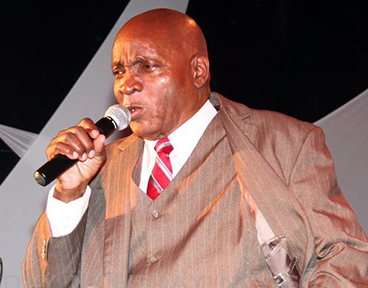
Family, friends and admirers of Calypso King of the World, Slinger Francisco, better known as the Mighty Sparrow, have celebrated the man behind the legend at a memorial service in New York.
His daughter, Gina Francisco, reflected on her father’s final years, recalling how the man who once travelled the globe eventually relied on others to carry him, yet never complained.
The service at Linden Seventh-day Adventist Church drew fellow musicians, politicians, diplomats, clerics and supporters from across the Caribbean diaspora.
Francisco said her father treated those around him warmly and deeply valued his family. She joked that, with 14 children, she could not remember all their names. One of his greatest lessons, she said, was humility.
“The greatest thing that I think that he did, because it was a very humbling experience to watch my father being carried. He couldn’t walk. He had to be carried, and he was very uncomplaining.”
She added: “I’ve seen my father change over the years. He was very uncomplaining, and his world became smaller and smaller and smaller. You’re looking at a man who travelled the world, and then he’s kind of limited to where he is, and he never complained.”
Francisco said sharing her father with the world sometimes frustrated her and her siblings, but she eventually came to appreciate his impact on generations of people.
“He taught me how to be at peace with whatever God gives you,” she said.
Among those paying tribute was New York City Public Advocate Jumaane Williams, who described Sparrow as a giant of Caribbean culture whose influence extended far beyond Trinidad and Tobago.
“This is obviously a sad occasion,” Williams said, adding that Sparrow’s death at 91 also provided an opportunity to celebrate a remarkable life.
“I just want to thank the family because I’m honoured to come to speak about a 91-year-old who lived an amazing life.”
He invited mourners to applaud the late calypsonian.
“The Calypso Monarch Emeritus, no one can beat him. What he did for our culture is simply amazing and cannot be overstated.”
Williams recalled that Sparrow’s name was regarded as “royalty” in his household and in countless others across the Caribbean diaspora.
Yves Abel of Haiti’s legendary band Tabou Combo also paid tribute, recalling Sparrow’s support for Caribbean artistes and his commitment to regional unity.
“It is an honour for me to be invited to the celebration of the life of Mr Mighty Sparrow, one of the greatest calypso men in the world,” Abel said.
He recalled that Sparrow had helped the group in its early years by securing performances at major New York venues.
“When we were 22 years old, 19 years old, playing music in Brooklyn, Mighty Sparrow invited us to some of the greatest venues in New York. He took us to Madison Square Garden, he took us to the Lincoln Center, he took us to Carnegie Hall.”
Abel said Sparrow understood that Caribbean people were united by culture despite their linguistic differences.
“Sparrow knew that although we speak different languages based on our colonial backgrounds, we carry one music, and it’s from Africa where we all come from.”
During the service, Brother Don Enoch Mohammed of the Nation of Islam played an audio recording of a conversation between Sparrow and the organisation’s leader, Louis Farrakhan.
In the recording, the two men prayed for each other and exchanged jokes. Farrakhan urged Sparrow to write a song for him, and Sparrow suggested that Farrakhan provide the melody. Farrakhan replied that it would become “the biggest calypso ever”.
“I recall telling my mother that if there is no calypso in heaven, then I don’t want to go,” Farrakhan said in the recording.
Sparrow will be accorded a State-assisted funeral. A date for the ceremony has not yet been announced.


