
Personality in Focus
NANTA: The Defining Moments and Quest for Mentorship


- /home/rhoncare/pointblank.ng/wp-content/plugins/mvp-social-buttons/mvp-social-buttons.php on line 27
https://pointblank.ng/wp-content/uploads/2023/11/IMG-20231115-WA0014-1000x600.jpg&description=NANTA: The Defining Moments and Quest for Mentorship', 'pinterestShare', 'width=750,height=350'); return false;" title="Pin This Post">
- Share
- Tweet /home/rhoncare/pointblank.ng/wp-content/plugins/mvp-social-buttons/mvp-social-buttons.php on line 69
https://pointblank.ng/wp-content/uploads/2023/11/IMG-20231115-WA0014-1000x600.jpg&description=NANTA: The Defining Moments and Quest for Mentorship', 'pinterestShare', 'width=750,height=350'); return false;" title="Pin This Post">
By Frank Meke
National Association of Nigeria Travel Agencies ( Nanta) is about 47 years old, going to 48. The Association has contributed immensely to the history and growth of Nigerian travel and the tourism industry and does not gloat about it.
And until the brick breakers came to the Nigerian tourism space, nanta rightly held a board position in the making of Nigerian Tourism Development Corporation ( now Nigerian Tourism Development Authority).
Its two-legged operational importance in the tourism and aviation sector justifiably confered it the wisdom to share and contribute its knowledge, expertise, and support to growing need to reposition Nigerian tourism and the travel( transport)content in the aviation industry.
The founding fathers of Nigeria tourism, from its birth as Nigeria Tourism Authority, to Nigeria Tourism Board to Nigerian Tourism Development Corporation ( Ntdc), were supportive of the growth of nanta and during its trying moments, decreed and like the supreme Court judges, pulled away the rugs from self seeking spoilers who wanted to cause a slipt of the association.
These were during its dramatic and formative years in the early seventies, a development that foreclosed such divisive tendencies and through progressive constitutional righteousness, the association blossomed into greatness, stronger and open to new ideas and character.
Talking about character, whoever emerged as president of this iconic association, tends to define its character, deliveries, interventions, and growth or failings.
I will possibly dwell on a few of the presidents of this association that I knew closely and covered their times as a journalist. Their character of selflessness, boldness, and courage in the face of threats to their private businesses is beyond pedestrian definition and understanding.
And of these lots, I will mention and share the character models of Olufemi Adefope, Teresa Ezobi( now ojo), Soji Amusan, Dayo Adeola, Ahmed zabadne, Munzali Dantata, Bankole Bernard and Mrs Susan Akporiaye.
It’s important to highlight that the association leadership is usually dominated by men,and often takes to supersonic flight when women take over, and theirs is a challenge not only to engendering new business offerings but a zealous search for the best of nanta tomorrow.
I will come to the two women ceiling breakers in nanta later. Femi Adefope, in his days, was a daytime terror to foreign airlines. For each of the obnoxious policies which these foreign airlines subjected nanta members to, Adefope will scream blue murder, shot from the hips, and as a trained forensic expert, his clinical deployment of confrontational legalism, puts the unrelenting and domineering foreign carriers in disarray.
He was courted and hated at the same time, and he maintained an open door to the tourism media. He was always available to share his dream for nanta. Adefope avoided the temptation to remain in power beyond his call and worked hard to Unite nanta, and today, he is the octopus of the aviation downstream sector, where he runs his business with grit and wisdom. He indeed shaped the position and deliveries of nanta in his very unapologetic combative image. His menties, a story for another day.
Munzali Dantata brought fortunes to nanta leadership. He was then young, rich, and ambitious. A scion of the famous Dantata family of kano, Munzali Dantata, was a very patient and caring leader. He was during his time out in nanta, a General Sales Agent for Saudia, the national carrier of oil rich Saudi Arabia.
Munzali Dantata spent his fortunes on nanta, in a single-minded effort to change its image and also bring it into national tourism economic space. Though tolerated by the usual noisy and egocentric lagos cum South West nanta members due to his peace seeking outreach to foreign airlines, Munzali Dantata toned down nanta’s combative facade to suit his worldview.
Then came the fire spitting, fearless and courageous Tereza Ojo ( ezeobi). Her special advisers were Femi Adefope, Olu Ogunsulire, and Babatunde Akala. I had this feeling that these three musketeers dragged her into nanta leadership.
Tereza was graceful and richly connected. Her Tess Travel is the official travel implant in most foreign embassies, and she was big, I mean very big, in cultural tourism promotion. She filled the grounds of the kano Durbar festival with a chartered plane filled with foreigners and brought Ogun state into the limelight as a domestic tourism destination. As the then President of Nigeria Cycling Federation , Tereza Ezeobi ( Ojo) pushed forward the tourism content in that sport genre into national reckoning. The spoilers of Nigerian Airways hated her guts as she boldly confronted their thieving hands in honey pot the airline and at one of such heated meeting at the office of then Minister of Aviation located around Tafawa Balewa Square, she had to be smuggled out through the minister’s back door to avoid the raging Nigerian Airways leadership who could not tolerate her righteous indignation.
Tereza was a thunderstorm. If Adefope is known to shot from the hips, Tereza was the master snipper, all for the sake of nanta’s better tomorrow.
Soji Amusan is a disciplinarian to the core. Trained by the German lufthansa Airlines, he brought a new training and retraining culture to nanta membership. He took on nanta survival expectations with clinical precision, preferring to reason with nanta publics, particularly the foreign airlines rather than being combative. He led from the position of knowledge and education to the dynamic processes in the emerging world of travel as a trade. Today, some nanta members own aviation schools as a result of the campaign by Soji Amusan.
Ahmed zabadne is a Nigerian of Lebanese parentage. He spent fortunes trying to rubber stamp his business orientation background in nanta. He was collaborative and sought to have nanta members expand their reach beyond trade on airlines’ inventories. Ahmed zabadne is a born hospitality caregiver and operator despite being a travel trade professional. He was a jolly good fellow who loved Nigeria.
Dayo Adeola is subtle but with a huge appetite for deliveries. He built the three storey nanta secretariat on Ikorodu Road and a great mobilizer of men and resources. He will out spend others in the quest to transform nanta and also mentor young persons in collaborative ecosystem that clearly marked him out as a godfather to many trading their way to success. His trademark of competence and visionary commitment still speaks volume in nanta circles. Is he bound by his promises? One must learn to wrestle like Jacob to catch Adeola off guard.
Bankole Bernard is a pursuer of history and legacy. Young, stubborn, and fearless, Bankole Bernard tried to change the narratives of nanta and brokered efforts to gain back nanta’s board membership of ntdc, which the new pharaoh at ntda insisted to ambush out of fear of the powerful reach of nanta in both aviation and tourism space.
He also worked hard at getting nanta a focal constitutional authority and brought the association some political inroads, partnering to honour game changers in the industry. Energetic and confident, he fought internal schism and selflessly flew the nanta flag. He nearly lost his life in the untiring effort to leave his name in the nanta records of achievers. Some say he is arrogant and irritant, yes to many people who do not bother to study his character. He can trump a suprise change, and that makes him a highly misunderstood enigma.
Mrs Susan Akporiaye went through the tough lines of the nanta leadership structure to emerge as president. She confronted the covid pandemic and gave some lifeline to most struggling nanta members during the early days of global travel uncertainty. That pandemic period truly defined her willpower. Nanta nearly collapsed but she held strong, very strong, putting her critics on wrong footing. I will repeat that Susan Akporiaye is strong, bold, and beautiful inside more than mere physical eyes can see.
Her commitment and self drive opened the flood gate of new and old members of nanta , who now took their future into their own hands. She spoke courage and sold inspiration.
She is a Nigeria’s new tourism diva, steering nanta to other streams of income in the very dynamic and collaborative travel and tourism industry.
She has successfully shaped the nanta dream of tomorrow, frontal with foreign airlines, shadow boxed them into a corner, with same Adefope and Tereza Ojo punchy style.
She consults with wisdom but takes responsibility where others shiver in fear. Susan Akporiaye revealed and sustained the Tereza Ojo tourism goal agenda for nanta members and, above all, a dedicated and sacrificial mentor to the young and upcoming nanta members, many who rejoice at her leadership which has engaged and inspired them to rediscover their talents and strength. From South Africa, Kenya, Namibia, and London, nanta leads in promoting Nigeria tourism, even in tech start-ups.
By mid next year, a chapter in nanta history will be closed, and another opened. Susan Akporiaye has opened the gates for the nanta young persons to raise their heads and voice to give nanta sustainable leadership growth narratives, and so we say Amen and rejoice that nanta is on the match, greater and stronger because a true leader emerged. Will this trend gain sustained traction? We watch and pray!



The Obi of Onitsha, His Majesty Igwe Alfred Nnaemeka Achebe, has commended Globacom for its unwavering commitment to the preservation and promotion of Nigeria’s cultural heritage, noting that the telecommunications company’s sustained support has helped transform the Ofala Festival into a world-renowned cultural celebration.
Speaking on the 2026 edition of the festival, held at Ime Obi, Onitsha, Anambra State, on Friday, the monarch paid a glowing tribute to Globacom for its longstanding role as the principal sponsor of the festival, a partnership that has spanned fifteen consecutive years since 2011.
According to the monarch, “Their partnership has transformed the festival from a palace ritual to a world-renowned cultural festival owes a great deal to purposeful partnership. Since 2011, Globacom has stood with us as our principal partner – now fifteen consecutive years of unwavering commitment.” He added that “In good times and challenging times, Globacom has helped us preserve the authenticity of Ofala while enhancing its presentation, documentation, broadcast and global reach. They have helped take a living heritage to the global stage”.
Igwe Achebe also applauded the vision of Globacom’s Chairman, Dr Mike Adenuga Jr., whose commitment to cultural preservation, he noted, reflects a profound appreciation of the role of indigenous traditions in strengthening national identity and social cohesion.
“I thank Globacom and its Chairman, Otunba (Dr) Mike Adenuga Jr., GCON, a true man of culture, for his vision and belief that culture is not a luxury but a foundation for unity,” the monarch said.
Commenting on the theme of this year’s festival, “Igba Mbo, Iga N’Iru” — Strive and Advance — Igwe Achebe described it as a compelling call to diligence, excellence, self-improvement and collective progress. He explained that the theme embodied the enduring spirit of the forebears who built the Onitsha kingdom on the banks of the Niger, while challenging younger generations to preserve that legacy through enterprise, purposeful endeavour and a commitment to progress.
In his goodwill message to the monarch and the people of Onitsha, Dr Adenuga described Globacom’s association with the Ofala Festival “since 2011 has been much more than a corporate partnership. It has been a relationship which we cherish deeply and regard as a privilege”. He expressed profound appreciation to Igwe Achebe for the opportunity afforded Globacom to contribute to the preservation, celebration and wider projection of the community’s priceless cultural heritage.
He noted that the annual festival provides a valuable platform for showcasing the rich cultural traditions, dignity and enduring values of the Onitsha people to audiences across Nigeria, Africa and the wider world.
Through its longstanding partnership with Ofala, Globacom continues to demonstrate that corporate citizenship extends beyond commercial enterprise to the preservation of the cultural foundations that give communities their identity, strengthen their unity and connect generations.

Kardinal Business Travel, a travel technology company with African and global focus, was among 60 startups that pitched at the 2nd edition of the Economic Community of West African States (ECOWAS) Startup Awards, held at the ECOWAS Commission headquarters in Abuja recently.
The company’s Chief Executive Officer and Founder, Cornelius Ugwunwa, presented the company’s case at the three-day event. The awards was part of an ECOWAS initiative to help West African businesses and startups scale through digital transformation, regional integration and sustainable value chains, with the aim of widening access to global markets.
Temitope Kareem, founder of Nigerian healthtech firm HubPharm Africa, won the top prize of $30,000. Senegal’s Gaynako took home $20,000 as first runner-up, while Steve Bah Blesson’s MyOpinion from Côte d’Ivoire won $15,000 as second runner-up.
Speaking during his pitch, Ugwunwa said Africa needs a new system for business travel. He cited a market with $75 billion in inbound travel spending and a strong business travel component in 2025, while travel and tourism as a whole contributed $228 billion to the regional economy.
“When a company sends its employees across Africa for a business engagement, we at Kardinal noticed the challenges of countless inboxes, spreadsheets and emails, mostly after the trip.
Businesses keep asking: How much did we spend? Who did we spend it on? Was it above or below budget? Can we reconcile everything on one platform?” he said.
He described African business travel as a $30 billion market that is largely fragmented and overly dependent on manual processes.
According to him, many businesses lose over $1 billion to manual travel processing and cannot track spending in real time. “That is why Kardinal exists: to solve this entrenched problem,” he said.
Ugwunwa said GoKardinal is an artificial intelligence-driven platform built to track expenses for African businesses. It brings the entire business travel lifecycle (planning, budgeting, booking, financing and expense tracking) onto one platform, in real time.
“GoKardinal is not another travel platform. It is an infrastructure for business travel, powered by AI for expense management,” he said, adding that the idea is to help businesses move without delay from one location to another to do their best work, expand and make profit.
On the company’s performance, he said the platform serves over 51 businesses in Nigeria and across Africa, with estimated weekly profit of $10,000 and gross merchandise value of over $1 million, growing at 65 per cent annually. he added.
He noted that about 80 per cent of African businesses still run their business travel manually, without any form of expense tracking, in a market worth over $30 billion annually. “African business travel is not just travelling for the fun of it.
It is an ecosystem with the potential to generate over $70 billion when digitalised,” Ugwunwa said.
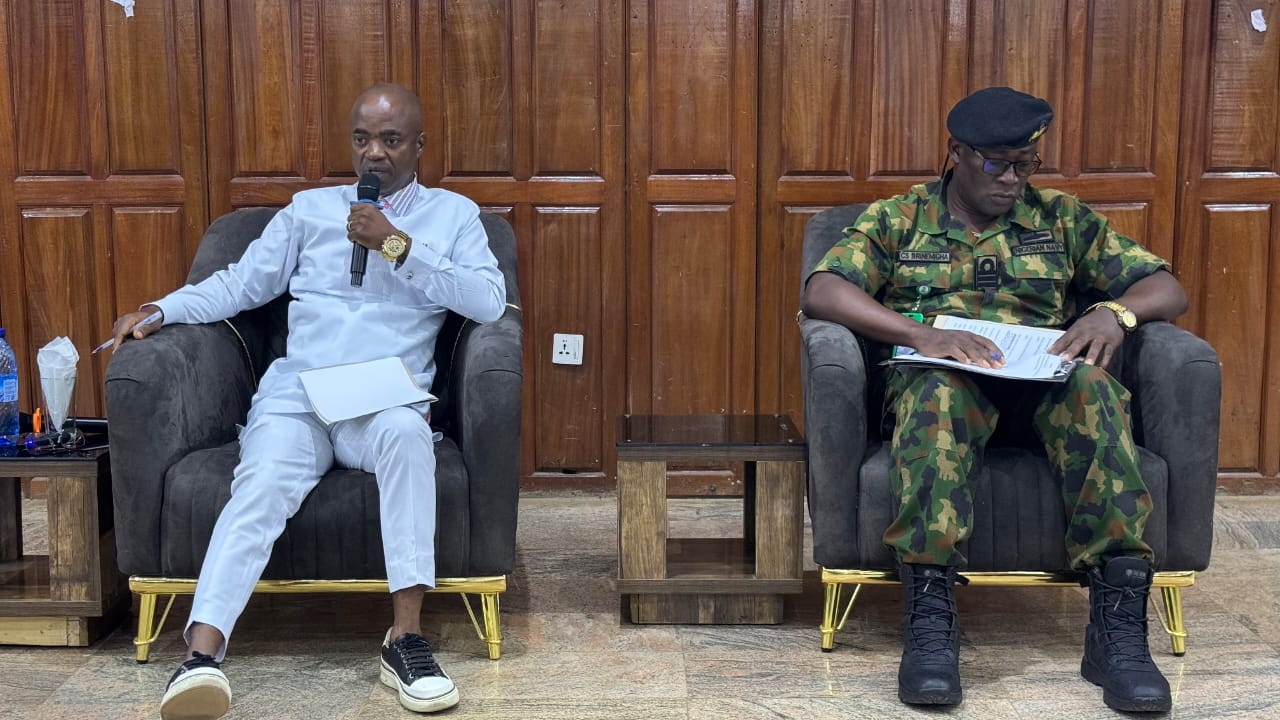
The President of Security Resources & Risk Management Academy, Lagos, Mr. Matthew Ibadin, has charged officers of the Nigerian Armed Forces and allied nations to practice emotional discipline, warning that unmanaged anger remains a greater threat to a Staff Officer than the enemy.
Ibadin, who is also a doctoral researcher at the Nigerian Defence Academy (NDA) and University of Abuja, stated this on Monday while delivering a lecture on “Emotional Discipline Under Pressure and Anger Management for Staff Officers” to participants of Senior Course 48 at the Armed Forces Command and Staff College (AFCSC), Jaji, Kaduna.
The lecture was attended by 436 officers comprising the Nigerian Army, Nigerian Navy, Nigerian Air Force and officers from eight friendly nations.
Describing anger as “a temporary madness that leaves a permanent record,” Ibadin warned officers that “the line between a respected officer and an inmate is thinner than you can imagine.”
“Anger may enter the room, but must never take command,” he said.
The Lion Principle
Illustrating his point with the parable of the lions, Ibadin noted that while both male and female lions roar, the female roars only when necessary and lives 15-18 years compared to 10-12 years for the male.
“She lives longer not because she is weaker, but because she is more disciplined. Many of us have become male lions in uniform – fighting juniors, spouses, traffic, minor disagreements even when no real threat exists. That constant agitation slowly destroys what you have built,” he said.
He therefore charged officers to “be a female lion in strategy and a male lion only when tactically necessary.”
Five Battlefields Where Anger Destroys
Ibadin identified five battlefields where undisciplined anger destroys officers: Health, Home Front, Office and Command, Career and Prison, and Relationships.
On health, he described anger as a silent killer that triggers hypertension, stroke and cardiac arrest, noting that many officers survive the war front but do not survive peacetime.
“At Jaji, your rank commands respect, but at home your rank is irrelevant. If you win at the office and lose at home, you have lost. An officer whose home is under emotional fire cannot think clearly at the command post,” he cautioned.
He warned that signatures appended in anger to operational orders, procurement papers and personnel assessments could lead to Boards of Inquiry, career ruin and mission failure.
He added that 70 percent of inmates in correctional centres for murder never planned to kill, but acted in a moment of unmanaged anger.
Practical Tools
Ibadin introduced practical tools including the 90-Second Rule and the S.T.O.P Protocol – Stop, Take a Breath (4-4-4), Observe, and Proceed with Discipline – for decisions under pressure.
He adopted Aristotle’s five tests for disciplining anger: Right Person, Right Reason, Right Time, Right Degree, and Right Manner.


