Personality in Focus
NAOSNP President, Oki Samson Bags Police-Youth Advocate Award

- /home/rhoncare/pointblank.ng/wp-content/plugins/mvp-social-buttons/mvp-social-buttons.php on line 27
https://pointblank.ng/wp-content/uploads/2026/09/IMG-20260903-WA0165-1000x600.jpg&description=NAOSNP President, Oki Samson Bags Police-Youth Advocate Award', 'pinterestShare', 'width=750,height=350'); return false;" title="Pin This Post">
- Share
- Tweet /home/rhoncare/pointblank.ng/wp-content/plugins/mvp-social-buttons/mvp-social-buttons.php on line 69
https://pointblank.ng/wp-content/uploads/2026/09/IMG-20260903-WA0165-1000x600.jpg&description=NAOSNP President, Oki Samson Bags Police-Youth Advocate Award', 'pinterestShare', 'width=750,height=350'); return false;" title="Pin This Post">
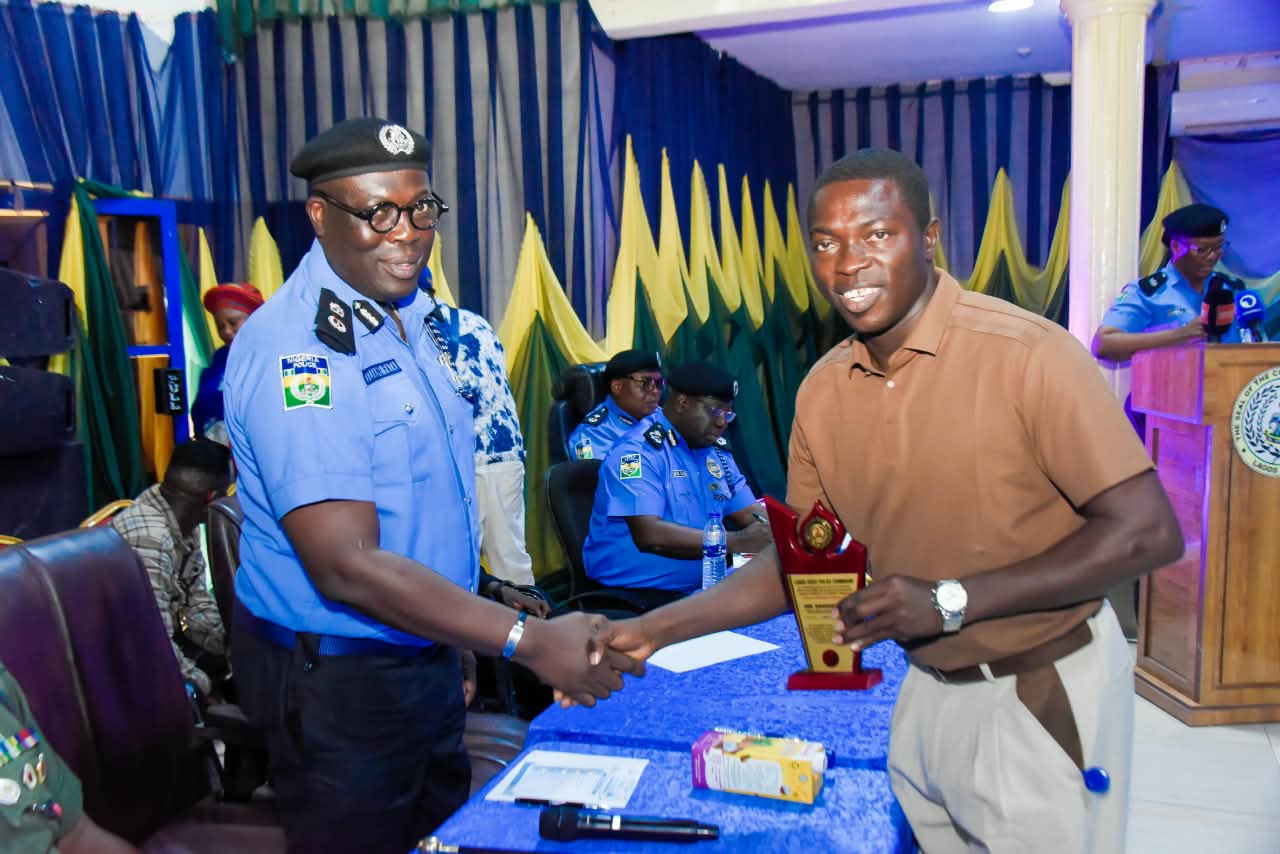
The Lagos State Police Command under the leadership of the Commissioner of Police, CP Fatai Tijani, on Thursday, honoured the President of the National Association of Online Security News Publishers (NAOSNP), Mayor Oki Olatunji Samson, as a Police-Youth Advocate for his contribution to youth engagement and advocacy, responsible security journalism and community safety.
The recognition came during the Command’s commemoration of International Youth Day 2026, themed “Different Contexts, Common Aspirations,” held at the Police Officers’ Wives Association (POWA) Secretariat, Oduduwa Street, Lagos.
The event also featured the launch of the National Campaign Against Political and Digital Thuggery and a Police-Youth Dialogue designed to build stronger partnerships between law enforcement and young Nigerians. The initiative, in line with the vision of Inspector-General of Police, IGP Olatunji Rilwan Disu, placed youth participation, responsible citizenship and peacebuilding at the centre of contemporary security discourse.
In his address at the event, the NAOSNP President, a respected security journalist, stressed that youth advocacy must move beyond rhetoric to deliberate investment in the values, opportunities and relationships that enable young people to become agents of stability. He argued that the youth should not be viewed simply as potential victims or perpetrators of insecurity, but as indispensable stakeholders in preventing it. According to him, the digital space has become an extension of society and therefore requires the same standards of responsibility expected in the physical world.
The NAOSNP President urged young Nigerians to recognise the power of their voices, particularly on social media, and deploy that influence constructively. “Your phone is powerful. Your social media account is powerful. Your voice is powerful. Please use that power to build, not destroy.” He further challenged young people to resist political manipulation, stressing that no temporary political reward could justify sacrificing one’s future.
“Do not allow anyone to use your future to settle their present disagreement.”
He advocated a culture in which political differences could be expressed without becoming personal hostility, urging youths to verify information before sharing it and to understand that digital actions can have real-world consequences.
The intervention resonated strongly with the message of the Commissioner of Police, Lagos State Command, CP Tijani Fatai, who warned young people against allowing politicians to exploit them for electoral violence as the country approaches another election cycle. Fatai said youths must look beyond immediate gratification and recognise the importance of preserving their future.
“Tomorrow is there for us. We should not think of today. We should always think of tomorrow. That tomorrow is more important than what we are today.”
The CP also delivered a particularly strong message against the recruitment of young Nigerians into political thuggery, noting that political actors rarely expose their own children to the dangers of electoral violence. “None of these politicians will use any of their children for electioneering, thuggery, violence or what have you.”
He urged youths to reject attempts to use them for ballot-box snatching, intimidation, destruction of property and other forms of electoral violence, while stressing that political participation remained a legitimate right when exercised responsibly.
The Commissioner equally identified the digital environment as an emerging frontier of security, urging young Nigerians to think carefully before posting, sharing or reacting to provocative content. His message was clear: political participation must never become political violence, whether offline or online.
In his goodwill message, Commander, 9 Brigade, Nigerian Army, Brigadier General Ayokunle Owolabi, described the campaign as timely and commended the Police for strengthening engagement with young Nigerians. Owolabi noted that the energy, creativity and resilience of young people remained indispensable to Nigeria’s peace, security and development. He emphasised that national security could no longer be regarded as the exclusive responsibility of security agencies, but required a whole-of-society approach in which young Nigerians become active partners. He particularly warned against the misuse of digital platforms and physical spaces for violence, intimidation, misinformation and destructive engagement, while calling for stronger trust and communication between young people and security institutions.
Also speaking, the Lagos State Coordinator of the Police Campaign Against Cultism and Other Vices (POCACOV), SP Olivia Amarachi Ugochukwu, urged young people to become the change they desire in their communities.
“Policing is everybody’s business. If you see something, say something.”
She also charged the media to ensure that only verified information was disseminated, noting that responsible information management was essential to preventing fear, confusion and conflict.
The well attended event attracted representatives of the Nigerian Army, Nigerian Air Force, Nigerian Navy, NDLEA, FRSC and NSCDC, alongside NYSC, POCACOV, PCRC, NYCN, NANS, NURTW, RTEAN, CRAN, NAOSNP, POWA and youths from Police Barracks across Lagos. The programme featured an extensive Police-Youth Dialogue on security, political participation, social media, cultism, thuggery and emerging threats.
The recognition of Mayor Oki Samson as Police-Youth Advocate therefore represented more than an individual honour. It underscored the growing importance of credible voices capable of connecting young people, the media and security institutions around a shared commitment to peace.
In a society where insecurity can be amplified by a rumour, a provocative post or a manipulated young mind, youth advocacy has become a frontline security intervention. The future of Nigeria cannot be secured merely by policing the streets; it must also be secured by winning the minds, trust and participation of its young people.
The challenge before advocates such as Mayor Oki Samson and institutions such as the Police is to ensure that the message does not end with an award or a commemorative event. It must travel into schools, communities, newsrooms, transport parks and digital spaces—until peace becomes not merely a campaign slogan, but a conscious choice made by a generation whose future is ultimately at stake.


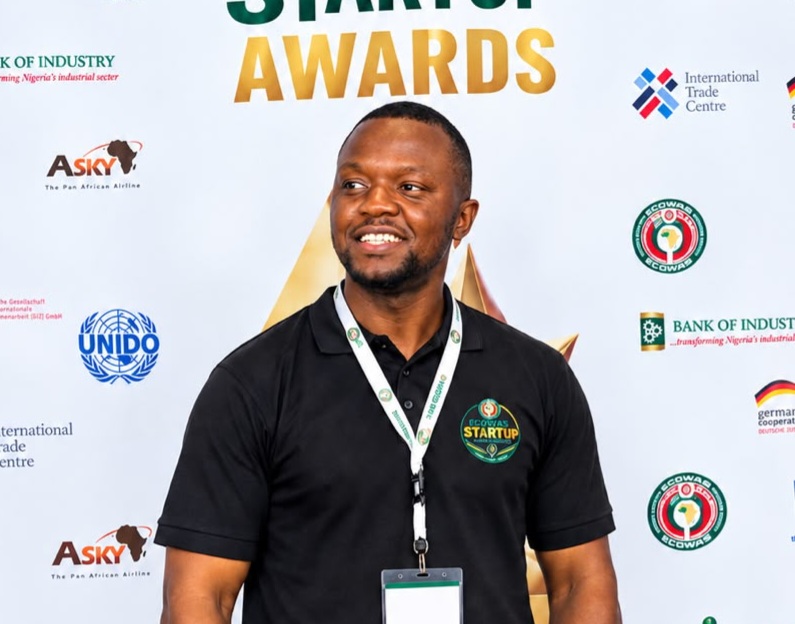
Kardinal Business Travel, a travel technology company with African and global focus, was among 60 startups that pitched at the 2nd edition of the Economic Community of West African States (ECOWAS) Startup Awards, held at the ECOWAS Commission headquarters in Abuja recently.
The company’s Chief Executive Officer and Founder, Cornelius Ugwunwa, presented the company’s case at the three-day event. The awards was part of an ECOWAS initiative to help West African businesses and startups scale through digital transformation, regional integration and sustainable value chains, with the aim of widening access to global markets.
Temitope Kareem, founder of Nigerian healthtech firm HubPharm Africa, won the top prize of $30,000. Senegal’s Gaynako took home $20,000 as first runner-up, while Steve Bah Blesson’s MyOpinion from Côte d’Ivoire won $15,000 as second runner-up.
Speaking during his pitch, Ugwunwa said Africa needs a new system for business travel. He cited a market with $75 billion in inbound travel spending and a strong business travel component in 2025, while travel and tourism as a whole contributed $228 billion to the regional economy.
“When a company sends its employees across Africa for a business engagement, we at Kardinal noticed the challenges of countless inboxes, spreadsheets and emails, mostly after the trip.
Businesses keep asking: How much did we spend? Who did we spend it on? Was it above or below budget? Can we reconcile everything on one platform?” he said.
He described African business travel as a $30 billion market that is largely fragmented and overly dependent on manual processes.
According to him, many businesses lose over $1 billion to manual travel processing and cannot track spending in real time. “That is why Kardinal exists: to solve this entrenched problem,” he said.
Ugwunwa said GoKardinal is an artificial intelligence-driven platform built to track expenses for African businesses. It brings the entire business travel lifecycle (planning, budgeting, booking, financing and expense tracking) onto one platform, in real time.
“GoKardinal is not another travel platform. It is an infrastructure for business travel, powered by AI for expense management,” he said, adding that the idea is to help businesses move without delay from one location to another to do their best work, expand and make profit.
On the company’s performance, he said the platform serves over 51 businesses in Nigeria and across Africa, with estimated weekly profit of $10,000 and gross merchandise value of over $1 million, growing at 65 per cent annually. he added.
He noted that about 80 per cent of African businesses still run their business travel manually, without any form of expense tracking, in a market worth over $30 billion annually. “African business travel is not just travelling for the fun of it.
It is an ecosystem with the potential to generate over $70 billion when digitalised,” Ugwunwa said.
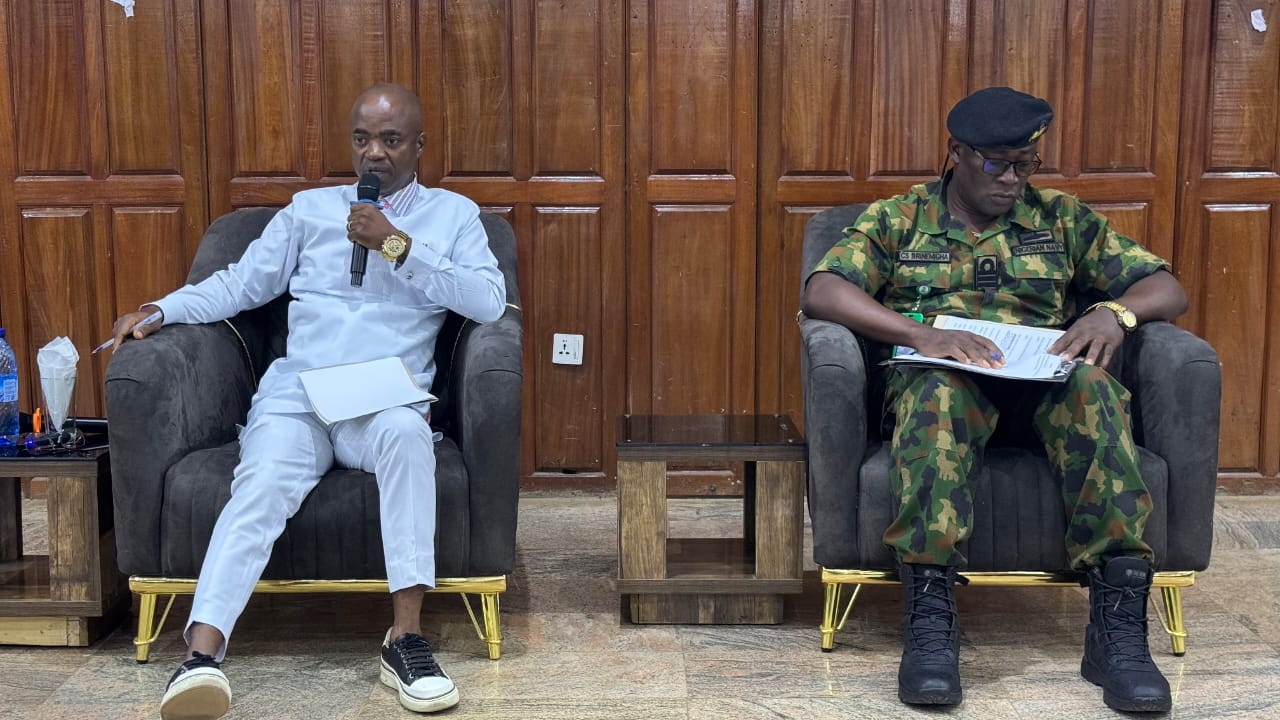
The President of Security Resources & Risk Management Academy, Lagos, Mr. Matthew Ibadin, has charged officers of the Nigerian Armed Forces and allied nations to practice emotional discipline, warning that unmanaged anger remains a greater threat to a Staff Officer than the enemy.
Ibadin, who is also a doctoral researcher at the Nigerian Defence Academy (NDA) and University of Abuja, stated this on Monday while delivering a lecture on “Emotional Discipline Under Pressure and Anger Management for Staff Officers” to participants of Senior Course 48 at the Armed Forces Command and Staff College (AFCSC), Jaji, Kaduna.
The lecture was attended by 436 officers comprising the Nigerian Army, Nigerian Navy, Nigerian Air Force and officers from eight friendly nations.
Describing anger as “a temporary madness that leaves a permanent record,” Ibadin warned officers that “the line between a respected officer and an inmate is thinner than you can imagine.”
“Anger may enter the room, but must never take command,” he said.
The Lion Principle
Illustrating his point with the parable of the lions, Ibadin noted that while both male and female lions roar, the female roars only when necessary and lives 15-18 years compared to 10-12 years for the male.
“She lives longer not because she is weaker, but because she is more disciplined. Many of us have become male lions in uniform – fighting juniors, spouses, traffic, minor disagreements even when no real threat exists. That constant agitation slowly destroys what you have built,” he said.
He therefore charged officers to “be a female lion in strategy and a male lion only when tactically necessary.”
Five Battlefields Where Anger Destroys
Ibadin identified five battlefields where undisciplined anger destroys officers: Health, Home Front, Office and Command, Career and Prison, and Relationships.
On health, he described anger as a silent killer that triggers hypertension, stroke and cardiac arrest, noting that many officers survive the war front but do not survive peacetime.
“At Jaji, your rank commands respect, but at home your rank is irrelevant. If you win at the office and lose at home, you have lost. An officer whose home is under emotional fire cannot think clearly at the command post,” he cautioned.
He warned that signatures appended in anger to operational orders, procurement papers and personnel assessments could lead to Boards of Inquiry, career ruin and mission failure.
He added that 70 percent of inmates in correctional centres for murder never planned to kill, but acted in a moment of unmanaged anger.
Practical Tools
Ibadin introduced practical tools including the 90-Second Rule and the S.T.O.P Protocol – Stop, Take a Breath (4-4-4), Observe, and Proceed with Discipline – for decisions under pressure.
He adopted Aristotle’s five tests for disciplining anger: Right Person, Right Reason, Right Time, Right Degree, and Right Manner.
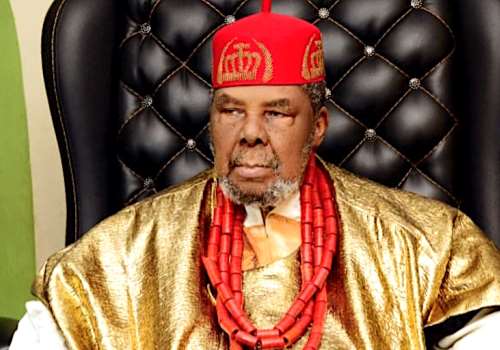
Veteran Nollywood actor, Pete Edochie has declared Chinua Achebe’s 1958 novel ‘Things Fall Apart’ as the greatest African book of all-time.
Speaking in a recent interview with TV3, Edochie explained that ‘Things Fall Apart’ is the greatest African book ever written because it tells the African story.
He stated that the book wouldn’t have been as popular as it is if it were telling the story of the colonisers.
He pointed out that many other African authors have also made efforts in telling African stories since ‘Things Fall Apart’ but none is as “strong” as it.
“The reason why ‘Things Fall Apart’ is the greatest book ever written on the African continent is because it is telling our own story.
“If it had been telling the story of the White man, it won’t be that popular. Many others have made efforts since then but not as strong as ‘Things Fall Apart’,” he said.
He urged African writers and creatives to focus on telling African stories, stressing that it would be their unique strength on the global stage.
The movie star, however, lamented that Africans were allowing their talents to be submerged by embracing foreign influences.
“We Africans permitted our talents to be submerged by overseas influences. I remember once upon a time I was being called Elvis Presley and John Wayne.
“I actually enjoyed answering those names but at some point I had to discard them and pick a name that’s culturally relevant to me. Then I went back to the root and started answering Uwadiegwu,” he added.
Source: DailyPost