
News
NCOY: FirstBank Powering Next Generation of Innovators, Entrepreneurs

- /home/rhoncare/pointblank.ng/wp-content/plugins/mvp-social-buttons/mvp-social-buttons.php on line 27
https://pointblank.ng/wp-content/uploads/2020/03/Dr.-Adesola-Adeduntan-FirstBank-CEO-1000x600.jpg&description=NCOY: FirstBank Powering Next Generation of Innovators, Entrepreneurs', 'pinterestShare', 'width=750,height=350'); return false;" title="Pin This Post">
- Share
- Tweet /home/rhoncare/pointblank.ng/wp-content/plugins/mvp-social-buttons/mvp-social-buttons.php on line 69
https://pointblank.ng/wp-content/uploads/2020/03/Dr.-Adesola-Adeduntan-FirstBank-CEO-1000x600.jpg&description=NCOY: FirstBank Powering Next Generation of Innovators, Entrepreneurs', 'pinterestShare', 'width=750,height=350'); return false;" title="Pin This Post">
What did (the various territories that were later to be amalgamated into) Nigeria look like in 1894? How about a hundred years later in 1994? And what could Nigeria look like in the year 2094? History provides elaborate answers to the first two questions. Answers – accurate or near-accurate answers, that is – to the third, however, will rely entirely on the ability to predict/envision the future and work to invent and create the predicted future.
With a continuing shining legacy of nation building – supporting innovative financial, commercial and other developments in Nigeria and even Africa – one bank is already projecting beyond today to the year 2094 – exactly 200 years from its founding in 1894. The bank, First Bank of Nigeria Ltd, is not just predicting a bright, innovative future for Nigeria but is going all out to foster what is required to invent it. FirstBank is putting its money where its mouth is. The bank has been betting the farm on Nigeria’s young and emerging generation for decades.
Take the last two decades, for example. FirstBank has been involved with Junior Achievement Nigeria (JAN) for over twenty years as one of the many ‘fronts’ in the bank’s engagements with the next generation of Nigerians to collaboratively create the bright, innovative future that Nigerians dream of. For ten years now, FirstBank has been supporting the National Company of the Year (NCOY) competition, an extension of the JAN Company Programme, designed to help senior secondary school students better understand how businesses are organised and operated. The students will be required, during the course of the competition, to develop a business plan, establish production and sales of goods and services for their company, monitor progress toward goals at regular department and company meetings, maintain complete financial records, compile a report to stockholders, and liquidate the company at a given period with the support of a volunteer.
FirstBank’s partnership with JAN on the National Company of the Year competition has meant a decade of impact and innovation illustrated by the very nature of innovative products and services created by young minds to solve real problems facing society and the business systems they put in place in form of student companies to successfully produce and market the products and services sustainably and to impact their local communities. Consider the growing problem of fire accidents and deaths from gas explosions resulting from gas leakage in homes, offices and industries. The students from Taidob College, Abeokuta, through their student company, TC Achievers, created an innovative solution to address it.
TC Achievers produced a domestic and industrial gas leakage detector – a device which raises an alarm and sends SMS to the owner’s mobile phone once there is any gas leakage. Their innovative device fetched TC Achievers first position in the regional competition in Ogun State and at the national level in Lagos, earning them the right to represent Nigeria in Ghana at the 2019 African Company of the Year competition. Taidob College emerged from Ghana with four awards, the most by any of the participating Junior Achievement member countries, including Botswana, Eswatini (Swaziland), Gabon, Ghana, Kenya, Mauritius, South Africa, Uganda, Zambia and Zimbabwe. The Nigerian representatives won the following: Client Focus Award, Entrepreneurial Spirit Award, Facilitator of the Year Award and were second runners-up for Company of the Year Award.
The 2018 National Company of the Year competition winners who went on to emerge the grand winners at the Africa Company of the Year competition in Ghana same year, Inventive Explorers from Caro Favoured College, Ajegunle, Lagos were concerned about traffic accidents, especially in areas with school children crossing busy streets. Their innovative device, a rechargeable handheld LED traffic light, was designed to solve this real problem faced by various congested communities. Besides the grand prize at the Africa Company of the Year competition, they also brought back home the Access Award, given to the business that best exhibits the principles of global connectivity.
Guided by the same spirit of innovativeness and enterprise and a passionate desire to solve a real problem facing society that were at work when TC Achievers and Inventive Explorers devised their award-winning innovative solutions, the first runners-up in 2018, Brain Max, the student company formed by student representatives of Government Girls Secondary School, Abaji, Abuja designed a website and software application for connecting local produce farmers directly to their customers. Brain Box also won Best Corporate Social Responsibility Project Award on account of which they visited camps of Nigeria’s internally displaced persons (IDPs) to provide financial literacy and entrepreneurship education to occupants, including helping the IDPs to secure seed funding. It was the same inspiration for the second runners-up, Sharon Glory Ventures, the student company formed by students of Sharon Rose College, Saki, Oyo State who produced a water-level indicator to enable homeowners to determine the level of water in their tanks. Sharon Global Ventures also received the award for the Most Innovative Product.
In 2020, given the global COVID-19 pandemic, the FirstBank-sponsored National Company of the Year competition will be conducted virtually. The virtual format will, however, not take anything away from the allure and competitiveness that the competition has been noted for over the years. This year’s unique competition, holding on Saturday, 12 December 2020 at 3 p.m. (West/Central African time), will bring together six outstanding student companies across Nigeria to lock horns for a lifetime opportunity to carry Nigeria’s flag at the JA Africa Company of the Year competition later in the year, and possibly repeat the feat achieved by the 2018 Nigerian representatives.
The Virtual Company of the Year (VCOY) competition is the culminating point for the implementation of the Virtual Company Programme. The goal of the VCOY is to create a signature showcase for JAN and the students who benefited from the impact of the digital JA Company Programme. This pilot programme will be in two stages where the first stage will identify the top business ideas from each region and select the top five most viable business ideas and reward them with seed funding to fully develop their ideas into businesses. The second stage of this competition sees the introduction of top professionals across different sectors who would serve as the panel of judges to determine each student company’s performance against a set of established criteria. Judges look out for evidence of innovation and application of new ideas in all aspects of business and select the best team to represent Nigeria at the Africa Company of the Year competition.
Whichever student companies emerge as winners of the 2020 National Company of the Year competition, one thing is certain: All the participants, not just at the national level but also at the regional levels, will join the ever-growing and rapidly-expanding crop of young minds engaged, trained, prepped and reoriented in a FirstBank-sponsored empowerment programme to become innovative and entrepreneurial thinkers and problem solvers. The bank is supporting such programmes so the young participants will join it in the arduous task of nation building and inventing the desired future for Nigeria. FirstBank is confident that the young minds who come through the JAN Company of the Year competition will be Nigeria’s future Steve Jobs, Bill Gates, Warren Buffet, Jeff Bezos, Mark Zuckerberg, Richard Branson, Larry Page and Sergey Brin. In their time and in the envisioned future for Nigeria, the country will stand tall, unintimidated by her Western counterparts, having been catapulted to the status of a leading developed nation by the young and emerging generation FirstBank has been betting big on for years.


National Chairman of the African Democratic Congress (ADC), Davis Mark, has said the party will adhere to electoral rules during the 2027 elections but will resist any attempt to manipulate the process.
Mark spoke on Wednesday in Abuja when the governing council of the Savannah Centre for Diplomacy, Democracy and Development, led by Olukayode Ariwoola, former chief justice of Nigeria, visited him at the ADC headquarters.
“We hold ourselves to the highest standards of good conduct as a political party. We will play by the rules,” Mark said.
The centre’s governing council, known as the council of the wise, was reconstituted in June to engage relevant institutions and political stakeholders towards fostering peaceful, free and credible elections.
The meeting with the ADC chairman was part of the centre’s ongoing engagement with political parties ahead of the elections.

The Presidency has expressed confidence that the growing number of governors backing President Bola Tinubu gives him a stronger political structure and an advantage over opposition candidates ahead of the 2027 presidential election.
The Special Adviser to the President on Policy Communication, Daniel Bwala, said this on Channels Television’s Politics Today, arguing that the political landscape has changed considerably since the 2023 election.
Bwala said the support of governors is significant because they control political structures in their respective states and could translate their backing for Tinubu into grassroots mobilisation ahead of the election.
“Since then, President Bola Tinubu has got how many governors on his side? The governors are the Chief Executive Officers of their respective states. They coordinate the structures of the State. These people say, ‘We are putting our goodwill, our resources, our structure, and our support to the President,’” he said.
He argued that the President’s political position has also been strengthened by people who have benefited from his administration’s policies, including beneficiaries of the Nigerian Education Loan Fund (NELFund), agricultural programmes, manufacturing incentives, CrediCorp and infrastructure projects.
Bwala said the developments constitute “facts, verifiable data” which, in his view, showed that Tinubu had made progress since assuming office in 2023.
He also dismissed suggestions that the administration’s confidence ahead of 2027 is based solely on divisions within the opposition, saying its record in office would form an important part of its campaign.
His comments came amid renewed debate over Tinubu’s popularity and the ability of the opposition to challenge his bid for a second term.
Bwala dismissed an assessment by The Economist that Nigerians may re-elect Tinubu despite disapproval of his administration, arguing that claims about the President’s popularity should be backed by representative opinion surveys.
“When you make a claim that Nigerians don’t like him, without saying, also, that there are a lot of people… one million families that the children have benefited from NELFund, you think they hate him?” he asked.
He similarly cited beneficiaries of agricultural interventions, support for manufacturers and CrediCorp, arguing that such groups should be considered when assessing public sentiment towards the administration.
On concerns over rising poverty and hunger, Bwala acknowledged that more Nigerians had fallen into poverty but attributed the hardship partly to the economic reforms undertaken by the Tinubu administration.
“More people went down to poverty, I acknowledge, I’m not doubting it. But there is a ‘but’ to it. Since when the reform started to today, we have made marked progress,” he insisted.
According to him, the reforms are necessary to address longstanding economic problems, despite the short-term discomfort experienced by Nigerians.
Bwala also defended Tinubu’s statement that Nigeria has moved from the “doldrums” towards prosperity, saying the President is not suggesting that Nigerians would suddenly begin experiencing prosperity from October 1.
He cited NELFund beneficiaries, subsidised healthcare, infrastructure projects and support for small and medium-sized businesses as examples of what he described as prosperity already reaching Nigerians.
“One million families whose children have benefited from the NELFUND programme, what they are benefiting is called prosperity,” he said.
“If you go to an environment or a place where there have been no roads or any form of infrastructure, and we have established infrastructure there, what has come to them is prosperity.”
Bwala further claimed that the opposition has lost several influential political figures who played key roles in their 2023 campaigns.
He said former Vice President Atiku Abubakar no longer has the support of governors who worked for his 2023 campaign, while Peter Obi has also lost some critical political allies.
“In terms of the other candidates who say he will not win, Atiku Abubakar lost close to 25 per cent of key people that you know around him. All the governors that worked for him that time are no longer with him,” Bwala said.
“Peter Obi lost 55 per cent of the critical people that carried his campaign; they’ve all disappeared. And some of them went to Atiku, some of them went wherever they could go to.”
He consequently expressed confidence in Tinubu’s prospects in the 2027 contest, saying the political support around the President was considerably different from what existed before the 2023 election.
News
Globacom Unveils Sponsorship of 2026 Ofala Festival, Promises ‘Never Settle for Less’ Celebration
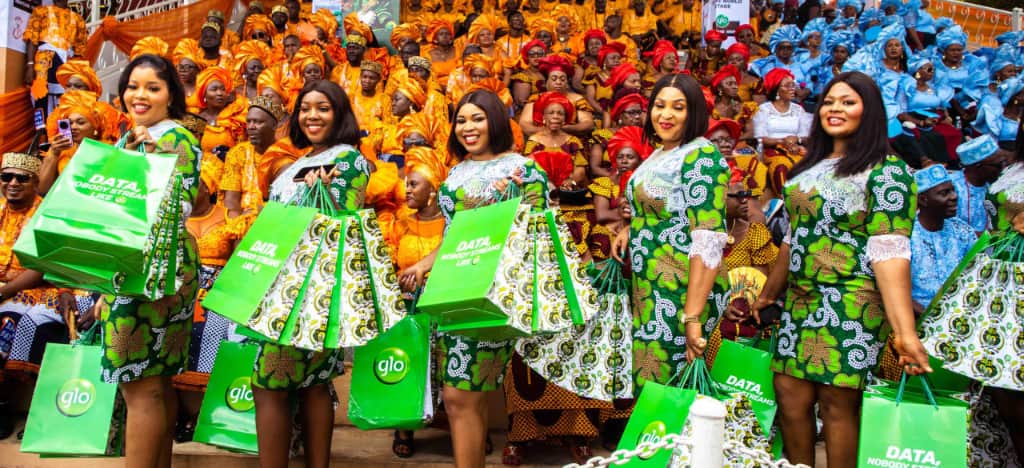
Globacom has once again demonstrated its commitment to Nigeria’s rich cultural heritage by supporting the 2026 Ofala Festival in Onitsha as the official sponsor.
The partnership, which has continued for over 15 years, highlights Globacom’s dedication to celebrating and sustaining cultural traditions that preserve identity, strengthen communities and contribute to the nation’s social and cultural development.
The 2026 edition, which marks the 25th Ofala of the reign of the Obi of Onitsha, Igwe Nnaemeka Alfred Achebe, is themed “Igba Mbo, Iga N’Iru – Strive and Advance: From Resilience to Progress.” The theme resonates strongly with the history and character of Ndi Onicha, whose story is one of resilience, enterprise, adaptability and an enduring determination to advance.
According to Globacom, its continued association with Ofala reflects the Company’s belief that cultural heritage and national development are complementary forces. “For Globacom, Ofala is more than an annual cultural celebration. It is a living expression of identity, continuity and collective aspiration. Our sustained partnership reflects our belief that preserving heritage and advancing society are not competing imperatives, but mutually reinforcing pillars of a progressive nation,” the Company stated.
The telecommunications giant added that the partnership also aligns with its “Never Settle for Less” philosophy, which encourages Nigerians to honour their foundations while continually pursuing greater possibilities. “Never Settle for Less is a philosophy of progress: to respect the foundations upon which we stand, while seeking to broaden possibilities, deepen impact and move the nation forward. We are proud to support a cultural institution that honours its roots while engaging the future,” Globacom said.
Over the years, Ofala has evolved from a sacred royal rite of renewal into a major platform for cultural affirmation, community engagement and social development. The 2026 programme features the Obi’s sacred period of seclusion and ceremonial emergence, the Medical, Health and Wellbeing Community Outreach, the international Oreze Art Exhibition, the Youth Carnival, and the grand finale of Iru Ofala and Azu Ofala.
For Globacom, supporting Ofala therefore goes beyond conventional sponsorship to represent corporate citizenship and cultural stewardship — an investment in preserving the memory, meaning and continuity of a people. The Company noted that the festival’s ability to draw strength from its ancestral foundations while embracing the future mirrors its own commitment to innovation, connectivity and digital inclusion.
As the people of Onitsha gather to celebrate another chapter in the history of the revered institution, Globacom remains proud to stand alongside them in honouring a heritage that continues to inspire generations.


