
News
NCOY: FirstBank Powering Next Generation of Innovators, Entrepreneurs

- /home/rhoncare/pointblank.ng/wp-content/plugins/mvp-social-buttons/mvp-social-buttons.php on line 27
https://pointblank.ng/wp-content/uploads/2020/03/Dr.-Adesola-Adeduntan-FirstBank-CEO-1000x600.jpg&description=NCOY: FirstBank Powering Next Generation of Innovators, Entrepreneurs', 'pinterestShare', 'width=750,height=350'); return false;" title="Pin This Post">
- Share
- Tweet /home/rhoncare/pointblank.ng/wp-content/plugins/mvp-social-buttons/mvp-social-buttons.php on line 69
https://pointblank.ng/wp-content/uploads/2020/03/Dr.-Adesola-Adeduntan-FirstBank-CEO-1000x600.jpg&description=NCOY: FirstBank Powering Next Generation of Innovators, Entrepreneurs', 'pinterestShare', 'width=750,height=350'); return false;" title="Pin This Post">
What did (the various territories that were later to be amalgamated into) Nigeria look like in 1894? How about a hundred years later in 1994? And what could Nigeria look like in the year 2094? History provides elaborate answers to the first two questions. Answers – accurate or near-accurate answers, that is – to the third, however, will rely entirely on the ability to predict/envision the future and work to invent and create the predicted future.
With a continuing shining legacy of nation building – supporting innovative financial, commercial and other developments in Nigeria and even Africa – one bank is already projecting beyond today to the year 2094 – exactly 200 years from its founding in 1894. The bank, First Bank of Nigeria Ltd, is not just predicting a bright, innovative future for Nigeria but is going all out to foster what is required to invent it. FirstBank is putting its money where its mouth is. The bank has been betting the farm on Nigeria’s young and emerging generation for decades.
Take the last two decades, for example. FirstBank has been involved with Junior Achievement Nigeria (JAN) for over twenty years as one of the many ‘fronts’ in the bank’s engagements with the next generation of Nigerians to collaboratively create the bright, innovative future that Nigerians dream of. For ten years now, FirstBank has been supporting the National Company of the Year (NCOY) competition, an extension of the JAN Company Programme, designed to help senior secondary school students better understand how businesses are organised and operated. The students will be required, during the course of the competition, to develop a business plan, establish production and sales of goods and services for their company, monitor progress toward goals at regular department and company meetings, maintain complete financial records, compile a report to stockholders, and liquidate the company at a given period with the support of a volunteer.
FirstBank’s partnership with JAN on the National Company of the Year competition has meant a decade of impact and innovation illustrated by the very nature of innovative products and services created by young minds to solve real problems facing society and the business systems they put in place in form of student companies to successfully produce and market the products and services sustainably and to impact their local communities. Consider the growing problem of fire accidents and deaths from gas explosions resulting from gas leakage in homes, offices and industries. The students from Taidob College, Abeokuta, through their student company, TC Achievers, created an innovative solution to address it.
TC Achievers produced a domestic and industrial gas leakage detector – a device which raises an alarm and sends SMS to the owner’s mobile phone once there is any gas leakage. Their innovative device fetched TC Achievers first position in the regional competition in Ogun State and at the national level in Lagos, earning them the right to represent Nigeria in Ghana at the 2019 African Company of the Year competition. Taidob College emerged from Ghana with four awards, the most by any of the participating Junior Achievement member countries, including Botswana, Eswatini (Swaziland), Gabon, Ghana, Kenya, Mauritius, South Africa, Uganda, Zambia and Zimbabwe. The Nigerian representatives won the following: Client Focus Award, Entrepreneurial Spirit Award, Facilitator of the Year Award and were second runners-up for Company of the Year Award.
The 2018 National Company of the Year competition winners who went on to emerge the grand winners at the Africa Company of the Year competition in Ghana same year, Inventive Explorers from Caro Favoured College, Ajegunle, Lagos were concerned about traffic accidents, especially in areas with school children crossing busy streets. Their innovative device, a rechargeable handheld LED traffic light, was designed to solve this real problem faced by various congested communities. Besides the grand prize at the Africa Company of the Year competition, they also brought back home the Access Award, given to the business that best exhibits the principles of global connectivity.
Guided by the same spirit of innovativeness and enterprise and a passionate desire to solve a real problem facing society that were at work when TC Achievers and Inventive Explorers devised their award-winning innovative solutions, the first runners-up in 2018, Brain Max, the student company formed by student representatives of Government Girls Secondary School, Abaji, Abuja designed a website and software application for connecting local produce farmers directly to their customers. Brain Box also won Best Corporate Social Responsibility Project Award on account of which they visited camps of Nigeria’s internally displaced persons (IDPs) to provide financial literacy and entrepreneurship education to occupants, including helping the IDPs to secure seed funding. It was the same inspiration for the second runners-up, Sharon Glory Ventures, the student company formed by students of Sharon Rose College, Saki, Oyo State who produced a water-level indicator to enable homeowners to determine the level of water in their tanks. Sharon Global Ventures also received the award for the Most Innovative Product.
In 2020, given the global COVID-19 pandemic, the FirstBank-sponsored National Company of the Year competition will be conducted virtually. The virtual format will, however, not take anything away from the allure and competitiveness that the competition has been noted for over the years. This year’s unique competition, holding on Saturday, 12 December 2020 at 3 p.m. (West/Central African time), will bring together six outstanding student companies across Nigeria to lock horns for a lifetime opportunity to carry Nigeria’s flag at the JA Africa Company of the Year competition later in the year, and possibly repeat the feat achieved by the 2018 Nigerian representatives.
The Virtual Company of the Year (VCOY) competition is the culminating point for the implementation of the Virtual Company Programme. The goal of the VCOY is to create a signature showcase for JAN and the students who benefited from the impact of the digital JA Company Programme. This pilot programme will be in two stages where the first stage will identify the top business ideas from each region and select the top five most viable business ideas and reward them with seed funding to fully develop their ideas into businesses. The second stage of this competition sees the introduction of top professionals across different sectors who would serve as the panel of judges to determine each student company’s performance against a set of established criteria. Judges look out for evidence of innovation and application of new ideas in all aspects of business and select the best team to represent Nigeria at the Africa Company of the Year competition.
Whichever student companies emerge as winners of the 2020 National Company of the Year competition, one thing is certain: All the participants, not just at the national level but also at the regional levels, will join the ever-growing and rapidly-expanding crop of young minds engaged, trained, prepped and reoriented in a FirstBank-sponsored empowerment programme to become innovative and entrepreneurial thinkers and problem solvers. The bank is supporting such programmes so the young participants will join it in the arduous task of nation building and inventing the desired future for Nigeria. FirstBank is confident that the young minds who come through the JAN Company of the Year competition will be Nigeria’s future Steve Jobs, Bill Gates, Warren Buffet, Jeff Bezos, Mark Zuckerberg, Richard Branson, Larry Page and Sergey Brin. In their time and in the envisioned future for Nigeria, the country will stand tall, unintimidated by her Western counterparts, having been catapulted to the status of a leading developed nation by the young and emerging generation FirstBank has been betting big on for years.



Afrobeats music singer, David Adeleke aka Davido, has said he will seek the intervention of United States President, Donald Trump, if anything goes wrong during the forthcoming Osun State governorship election.
The singer made the statement during a livestream hosted by content creator Carter Efe, where he discussed his interest in politics and his concerns about the conduct of elections in Nigeria.
Davido said he would consider joining politics when he is convinced that the country’s electoral system is transparent and allows voters to freely choose their leaders.
According to him, he is confident of emerging victorious in an election that is conducted fairly.
He said the lack of transparency remains one of the reasons he has not ventured into politics despite his interest.
“Until there’s transparency, then I can go ahead with politics because nobody can beat me in any election,” he said.
Davido added that he would be confident of winning if Nigerians were allowed to vote freely and have their votes properly counted.
He also expressed concern about the upcoming Osun governorship election, saying he was waiting to see how the exercise would be conducted.
“I want to see what they are going to do in Osun. We are waiting,” he said.
The singer then disclosed that he would reach out to Trump if he became dissatisfied with the electoral process in Osun.
Davido said he would tag and call the US president and, if necessary, take his concerns to the White House.
“I’ll tag Trump, I’ll call Trump, everybody. If they still don’t see anything, I’ll go in front of the White House and say, ‘Help us,’”
“Trump will just say, ‘I think there’s a Nigerian artiste sending me a message. Don’t worry, my message will be delivered.’he said.
He stressed that his threat should not be dismissed as a joke, adding that he expected his concerns to reach the US president.
Davido concluded by calling on those involved in the electoral process to allow the people of Osun State to freely determine their next governor.
“Leave Osun alone oo, leave it,” he said.
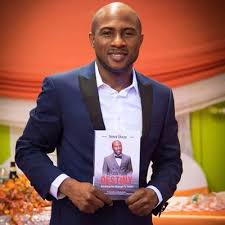
By Henry Ukazu
Destiny Friends,
The word ‘love’ is very significant. This is because of its descriptive power towDearards an action or feeling directed at someone or something. However, love means many things to many people, depending on one’s side of the divide.
Love is a beautiful thing. It is a beautiful experience and feeling when one gets it right. It breaks the heart when one loves someone and he/she is not loved back. Trust me, it really hits differently when one is loved in the manner they wished to be loved.
Love cuts all barriers of life, whether we are talking about purpose, health, academic, spirituality, finance, relationships, family, and career/vocation.
Let’s take a minute to dwell on the concepts of love as it relates to loving what one does.
Purpose:
Our purpose in life is much more important than our career. It’s instructive to note your profession is what you are trained to do as an attorney, doctor, engineer, accountant; your vocation is what one is paid to do as 9-5 work or skill work; but your ministry is your calling, that’s where you find your passion, your gift/talent. Our focus in life is to align our vocation, profession and ministry together.
Health:
If we love ourselves, we’ll pay attention to our health and that entails what we eat, how we exercise, and how we pay attention to our body. When we love our health, we’ll pay attention to what we do because our health will ultimately affect all we do.
Academic:
Loving what we do also affects our academics. It’s sad to see students who read majors they have no interest in just because of the job market. If one studies a major they don’t like, it will have an impact in their personal and professional lives. Imagine reading law when one’s interest is in accountancy, engineering or even Mass communication. The level of impact and fulfilment one gets studying a major they like is different from the impact they will deliver if they one don’t like the major. So, it’s advisable for one to study a major they have a strong interest in.
Spirituality:
Our spirituality plays an important role in what we do. We can’t succeed in life without the support of God. According to Evangelist Ebuka Obi, behind every successful man, there’s a spirit working for him. I totally agree with this saying because when you love what you do, the universe has a way of coming close and conspiring to make you succeed because it’s in alignment with God’s master plan and purpose for your life.
Finance
When we love what we do, it will have an influence on our finances especially when we are good at what we do. Everyone likes the best person who can do a job and that even entails paying for a premium service. One of the reasons why most people are poor is simply because they are not solving problems, even though they are solving problems, they are not solving the right problem, or they are not solving the right problem for the right people at the right places and time.
Relationships
To succeed in life, we must pay attention to our relationships because our relationships determine our network which ultimately determines our net worth. Loving what one does also entails being intentional in the people they let into their lives.
Family,
Family is the highest influence in a child’s life. When there is love in the family, the child will learn to love other people when they go outside. According to Mr. Okechukwu Ukazu, you can choose your boyfriend, girlfriend, husband, wife, and best friend, but you can’t choose your family. We don’t have control over who becomes our family either as parents or siblings because that’s how God designed it. Do you see why family is everything?
Career/vocation
Succeeding in life entails working in a profession or vocation we like. When we like what we are doing, and what we are doing like us, we shall be successful. It’s sad to see people working in jobs they don’t like just to pay the bills. It’s instructive to note that at creation God grants us talents and gifts to succeed in life, but because of the challenges of life, some of us now settle for something else. This is why some people are victims of defective success because as they climb the corporate ladder, one day, they will realize that they have gotten to the top only to realize they were climbing the wrong ladder of success.
Have you ever wondered why some people feel frustrated and depressed in life despite having resources at their disposal? It’s simply because they don’t like what they are doing. Loving what you do has a strong correlation to one’s physical and psychological and mental success in life.
In conclusion, to succeed, endeavor to love what you do.
Henry Ukazu writes from New York. He works with the New York City Department of Correction as the Legal Coordinator. He’s the founder of Gloemi. He’s a Transformative Human Capacity and Mindset coach. He is also a public speaker, youth advocate, creative writer and author of Design Your Destiny Design, Unleash Your Destiny and The Six Pillars of Succes . He can be reached via info@gloemi.com
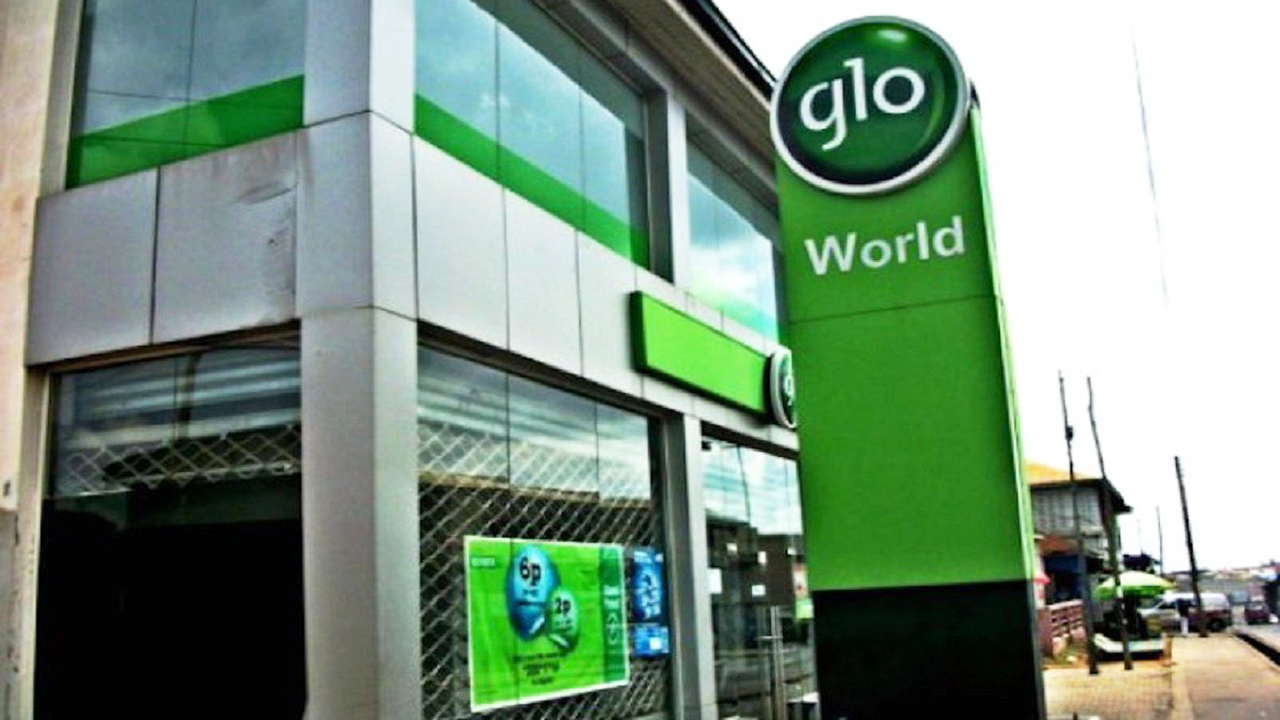
Digital solution provider, Globacom, recorded the highest Internet subscriber growth among Nigeria’s major telecom companies for the month of May.
Data from the Nigerian Communications Commission, NCC, Nigeria’s total Internet users increased to 157 million in May, up from 154.3 million in April. That is a growth of 2.67 million users in one month.
Globacom led the market by adding about 1.2 million new Internet subscribers. This means Glo was responsible for almost half of all new Internet users in May.
The company’s subscriber base grew from 15.5 million in April to 16.8 million in May. Airtel came second with 1.07 million new users, moving from 54.8 million to 55.8 million. MTN added 382,894 users to reach 83.5 million.
T2 Mobile, formerly 9mobile, recorded no growth for the second month in a row. Its subscriber base remained at 802,534. This is despite its roaming agreement with MTN, which was approved almost a year ago to help T2 customers use MTN’s network in areas with poor coverage.
Industry experts say Glo’s strong growth is due to its ongoing network upgrade. Since last year, the company has been building new base stations, expanding its fibre network, and adding thousands of new 4G sites across cities and rural areas.
The upgrades have improved voice and data quality for customers, while Globacom remain committed to providing better network experience and affordable Internet services to more Nigerians.


