Metro
NDLEA Nabs Suspected Drug Baron, Five Mexicans in Industrial Scale Meth Lab Bust in Enugu


- /home/rhoncare/pointblank.ng/wp-content/plugins/mvp-social-buttons/mvp-social-buttons.php on line 27
https://pointblank.ng/wp-content/uploads/2020/09/NDLEA.jpeg&description=NDLEA Nabs Suspected Drug Baron, Five Mexicans in Industrial Scale Meth Lab Bust in Enugu', 'pinterestShare', 'width=750,height=350'); return false;" title="Pin This Post">
- Share
- Tweet /home/rhoncare/pointblank.ng/wp-content/plugins/mvp-social-buttons/mvp-social-buttons.php on line 69
https://pointblank.ng/wp-content/uploads/2020/09/NDLEA.jpeg&description=NDLEA Nabs Suspected Drug Baron, Five Mexicans in Industrial Scale Meth Lab Bust in Enugu', 'pinterestShare', 'width=750,height=350'); return false;" title="Pin This Post">
The National Drug Law Enforcement Agency (NDLEA) said it has dismantled another industrial-scale methamphetamine laboratory in Enugu State.
It also said that it arrested a 63-year-old drug baron it identified as one “Chuks Enoch Ezeike, popularly known as ‘Over Size’,” and five Mexican meth specialists whom he allegedly smuggled into the country with forged passports to produce the Class A drug on Nigerian soil.
The NDLEA disclosed that a total of 1,512 kilograms of methamphetamine, finished and in production, with an estimated value of US$226.8 million, equivalent to N303,913,000,000.00, was recovered from the clandestine factory, alongside 6.68 tons of 20 different types of precursor and essential chemicals and an array of industrial equipment for making the illicit substance.
“Ezeike, a businessman who holds the traditional title of Ebekuo Dike na Nanka in his community in Anambra State, had built the industrial complex behind San Savanna Oil Company Limited, at Kilometre 1/2 Abakaliki Expressway, Emene, Enugu, complete with living quarters for the Mexicans so they could live and produce in the same place without being seen in town,” Chairman/Chief Executive Officer of the agency, Brig. Gen. Mohamed Marwa (rtd.) said at a press conference in Abuja on Wednesday.
Marwa described it as one of the most carefully planned, intelligence-led operations ever conducted by the agency, adding that the operation “began in faraway Mexico, ran through Colombia, France and the Republic of Benin, crossed into Lagos, and ended in an industrial complex in Enugu.”
He explained that the agency’s Special Operations Unit (SOU) began working on critical intelligence in April 2026, which identified Ezeike as a specialist in setting up clandestine methamphetamine laboratories with links to one Oscar Ramos-Cardenas, alleged to be a Mexican known for large-scale, industrial-grade methamphetamine production.
“From that moment, Ezeike was a marked man. Our officers opened a file on him, and we watched and waited,” the NDLEA chief was quoted as saying in a statement by the agency’s Director, Media and Advocacy, Femi Babafemi.
“On 25th August 2026, we received intelligence on the flight itineraries of five Mexican nationals, all identified as methamphetamine experts who were travelling from Mexico to Nigeria. Our analysis left no room for doubt: they were coming to set up an industrial-scale meth laboratory on Nigerian soil.
“Working closely with the Nigeria Immigration Service, we ensured that when they landed here in Abuja on 28th August 2026, they were denied entry. They were put on the next available flight back to Mexico.
“On that same day, our officers found out that Ezeike had travelled from Enugu to Abuja to receive the visiting Mexicans. His own bank records later confirmed the hotel payment in Abuja that day. The visitors he came to receive were the very men we had just sent back”, Marwa stated.
He further said that the suspect and his foreign collaborators worked out a new route.
The NDLEA chairman stated that the meth “experts” were flown from Bogotá, Colombia, through Paris, France, to the Republic of Benin, while Ezeike procured forged Argentine, Colombian and Chilean passports and sent them through a driver to Cotonou, where the Mexicans handed over their genuine passports and took on new identities.
“On 19th September 2026, the agency was alerted that five Mexicans had arrived in Cotonou, intending to slip into Nigeria through the land border. They are Gonzalez Numez Lucas (name on forged passport), Oscar Ramos-Cardenas (real name and leader/chief specialist), Lopez Salvador Vasquez Esperanza (name on forged passport), Juan Antonio Sarabia-Cabrera (real name), Hernandez Cortes Carlos Fuentes (Name on forged passport), Luis Enrique Garcia-Amador (real name), Fernandez Rio Mateo Jimenez (name on forged passport), Jose Alejandro Renteria-Reyes (Real name), Rodriguez Araya Andres Perez (name on forged passport), and Salomon Cabanillas-Torres (real name),” Marwa said.
He further said that, this time, Marwa said, the agency took a deliberate decision to let them in.
“We wanted the whole network: the meth specialist, the financier, the factory and the product. Sending them home a second time would only have postponed the problem,” he stated.
The chairman noted that three of the Mexicans crossed into Nigeria through the Seme Border Post on September 20, while the remaining two followed on September 21, on a road trip arranged by Ezeike.
“With NDLEA special operatives embedded in their every move, Ezeike received them in Lagos and lodged them in a hotel, where he was observed having breakfast with them on 22nd September, before moving them to Enugu.
“While the Mexicans lived and worked in the San Savanna complex, Ezeike stayed at Adig Suites, 2 Nwafor Orizu Street, Enugu, moving about in three vehicles: a blue Toyota Corolla, a red Toyota RAV4 and a Lexus RX 350. Providing further details,” Marwa said.
“Throughout September and October, our officers kept watch on both locations. In the course of surveillance, we watched the regular movement of Ezeike’s blue Corolla drive into San Savanna, stay a few minutes, and return to Adig Suites.
“Assisted by appropriate tools such as the deployment of a drone and other intelligence deductions, we were able to put all pieces together by 7th November 2026.
“Having got all this down, it was now time to strike. On 9th November, 2026, we assembled over 200 personnel of our Strike Force and Enugu State Command into a staging area. On 10th November, 2026, I gave the order to take down the lab. At about 5 a.m. on Wednesday, 11th November 2026, operatives of our Special Operations Unit, the Strike Force, the Forensic Directorate and the Enugu State Command carried out simultaneous raids on both locations. All personnel were appropriately deployed with clear tasks – those for outer cordon, inner cordon, search and arrest.”
Speaking further, he said, “At the San Savanna complex, our men stormed the laboratory and the adjoining guest house, which also served as a stash house. All five Mexicans were arrested at the scene, in the middle of production. At the same time, at Adig Suites, our operatives arrested Ezeike in Room 106. He was then taken to San Savanna to witness the search.
“There, in the presence of our officers, Ezeike admitted that he owns the laboratory and that he brought the Mexicans into Nigeria to manufacture methamphetamine. He told us that they had produced only a small batch so far. He also told us the Mexicans were due to leave Nigeria two days later, on Friday, 13th November 2026. In other words, we caught them with two days to spare.”
The NDLEA chairman disclosed that the 6.68 tons of precursor and essential chemicals recovered included 2,835kg of lead acetate, 1,050kg of tartaric acid, 450kg of mandelic acid, 160kg of P2P and 70kg of methylamine.
He said that the equipment seized included four industrial burners, two industrial distillation units, two boilers, two hydraulic presses, eleven gas cylinders, two freezers, two digital scales and four washing/drying machines, all of which forensic experts have confirmed are consistent with industrial methamphetamine manufacture.
“They were producing methamphetamine not by the kilogram, but by the ton. Had they succeeded, that poison would have flooded our streets, our schools and our communities, and exported to destroy lives abroad, with Nigeria’s name stamped on it,” the NDLEA boss declared.
According to Marwa, statements by the suspects since their arrest confirm that it was no first-time venture but an organised, recurring transnational operation with three layers: a cartel command in Mexico that recruits, deploys and pays the specialists.
He noted that Ezeike, as the local coordinator who built the laboratory, procured the chemicals and arranged travel, transport and false documents; and the Mexican production crew led by Ramos-Cardenas, whose supporting members change with each deployment.
He also said the cartel deliberately kept Nigerians out of the laboratory to reduce the risk of exposure, which was why the Mexicans lived where they worked and hid behind a company signboard.
According to him, the cooks were paid according to their production output.
Marwa noted that in the last four months alone, NDLEA has dismantled four industrial-scale methamphetamine laboratories in Enugu, the Ogun forest, the Oyo forest and the Ebonyi forest, with five Mexican nationals arrested in the earlier operations already in prison custody facing trial.
He also said that with the latest five, the number of Mexican meth specialists arrested in Nigeria in four months stands at 10.
Sending a strong message to foreign cartels, the NDLEA boss said, “Nigeria is not your laboratory. It is not your warehouse, and it is not your transit route. You may change your passports, your names, your flight routes and your entry points, but you cannot change the fact that we are watching.
“The next person you send will meet the same fate. Every one of your cooks who comes to Nigeria will leave in handcuffs, or not leave at all, except to serve his sentence.”
Describing Nigerian collaborators as “the greater traitors,” Marwa said, “You sell out your own country and your own people for profit. There is no hiding place for you. Not in a hotel suite, not behind a company signboard, and not in the deepest forest. We will find you, we will arrest you, we will prosecute you, and we will go after every naira, every property and every asset you gained from this trade.”
He urged landlords, property owners, and communities to know who lives in their property and what they do there, and to report anything suspicious to the nearest NDLEA office, assuring them that their identities would be protected.


The Delta State Government, on Monday, declared an immediate curfew in Ughelli North Local Government following a violent clash between members of the All Progressives Congress (APC) and the Nigeria Democratic Congress (NDC) in Uduere community.
At least four persons were feared dead in the clash.
According to a statement signed by the Secretary to the Delta State Government (SSG), Dr. Kingsley Eze Emu, the curfew will run from 6 pm to 6 am daily, starting from today, until further notice. He added that the measure was to “bring the situation under control”.
The statement advised residents of the local government area to adhere strictly to the directive.
Meanwhile, the State police command has commenced investigations to ascertain the circumstances surrounding the incident and identify those responsible.
In a statement issued by the Police Public Relations Officer, SP Bright Edafe, the command urged residents of Ughelli North Local Government Area to comply strictly with the curfew imposed by the Delta State Government, restricting movement between 1800 hours and 0600 hours until further notice.
Edafe advised residents to remain calm and cooperate with security personnel in the interest of public safety.
According to him, the Commissioner of Police, Samuel E. Erale, has directed intensified security operations in the affected area to prevent further violence and maintain law and order.
“The CP has ordered a full-scale investigation and assures residents of the state that anyone found culpable will face the full weight of the law, irrespective of political affiliation or status. He also urges members of the public to provide credible information to assist ongoing investigations.
“CP Erale assures residents of the command’s commitment to protecting lives and property and ensuring a peaceful environment for lawful political activities.
“The CP warns political actors and their supporters against thuggery, intimidation and the unlawful use of firearms, stressing that political differences must never be allowed to degenerate into violence or loss of lives.”
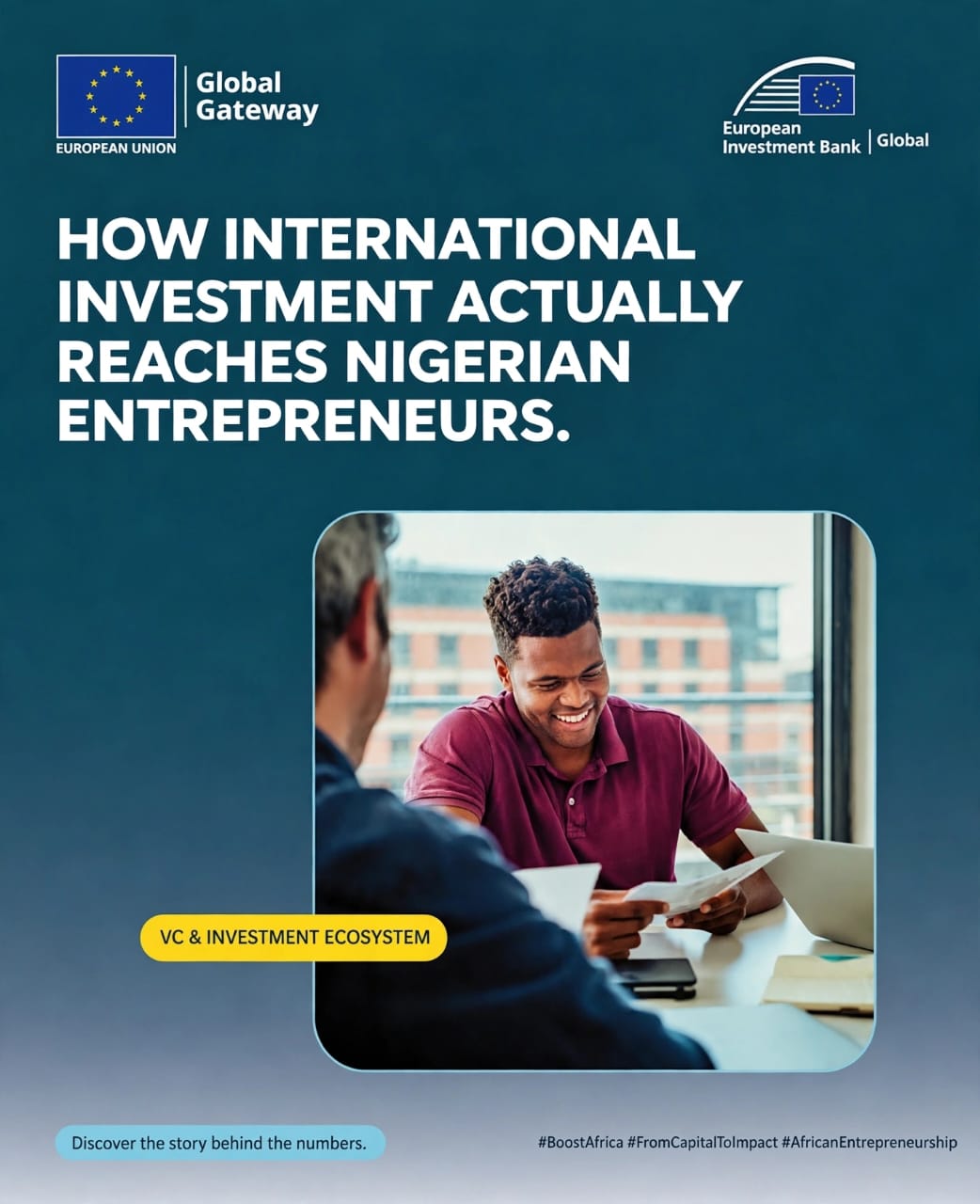
Large international development institutions do not typically invest directly in small, early-stage startups. Instead, they channel funding through venture capital firms with the local knowledge and expertise to identify promising businesses and support their growth.
These venture capital fund managers play a critical intermediary role, connecting global investment to entrepreneurs with innovative ideas and growth potential. Beyond providing capital, they help founders strengthen their business structures, prepare for expansion and navigate the challenges associated with building sustainable enterprises.
This approach is central to the European Investment Bank’s (EIB) Boost Africa initiative, through which the Bank has invested directly in six venture capital funds, including TLcom Tide Africa, Partech Africa Venture Capital Fund, AfricInvest Venture Capital Growth Fund, Janngo Capital Startup Fund, Atlantica Venture Capital Fund and Seedstars Africa Ventures I.
By providing risk-sharing capital and operational support to these investment intermediaries, the EIB helps fund managers extend financing and other forms of support to startups, including businesses operating in Nigeria’s finance, retail and technology sectors.
The model recognises the importance of venture capital firms in bridging the gap between international development finance and entrepreneurs who may otherwise struggle to access the funding needed to grow.
Through their understanding of local markets, fund managers are better positioned to assess business opportunities, identify capable founders and provide support suited to the realities of operating in African economies.
The initiative highlights how international investment can reach emerging businesses through a network of local investment partners rather than relying solely on direct funding arrangements.
An EIB feature story on Boost Africa in Nigeria examines how this investment approach is supporting entrepreneurs and the founders benefiting from the initiative.
Discover the founders benefiting from this approach in the EIB feature story on Boost Africa in Nigeria: https://www.eib.org/en/stories/boost-africa-nigeria-venture-capital-eu
Metro
When Diplomacy Becomes Pressure: The Nigeria–South Africa Faceoff and the Case for Fair, Balanced Journalism
By Tolulope A. Adegoke
“Between two nations that cannot afford to be strangers, every slight is a test—not of strength, but of restraint. Diplomacy becomes pressure only when the quiet channels are abandoned for the loud ones; and journalism fails its calling when it mistakes the noise of a moment for the truth of a relationship. The measure of statesmanship, and of the press that chronicles it, lies not in who wins the exchange, but in who preserves the bond” – Tolulope A. Adegoke, PhD
The diplomatic friction that erupted in November 2026 between Nigeria and South Africa over a ceremonial livestream is, on its surface, a minor procedural dispute. Yet it exposes a deeper pattern: two of Africa’s most consequential nations repeatedly allowing administrative missteps and public emotion to overshadow a relationship that is structurally indispensable to the continent. A fair and balanced reading of the incident—and of the broader tensions beneath it—requires resisting the temptation to assign villain and victim, and instead examining the institutional gaps that permit isolated grievances to escalate into diplomatic incidents.
The Incident Itself: A Dispute Over Optics and Protocol
The immediate trigger was straightforward. Nigeria’s newly appointed High Commissioner to South Africa, Femi Fani-Kayode, presented his letters of credence to President Cyril Ramaphosa on 13 November 2026, alongside fourteen other envoys. Fani-Kayode subsequently alleged on social media that the South African Presidency had deliberately excluded his remarks and the Nigerian delegation from the official livestream of the ceremony, while broadcasting the addresses of the other fourteen diplomats. He framed the omission as a slight to Nigeria’s dignity.
The South African Presidency rejected the allegation categorically. Spokesperson Vincent Magwenya stated that the President has no constitutional or legal authority to interfere in the editorial operations of the South African Broadcasting Corporation, and characterized the episode as a misunderstanding of livestream arrangements rather than deliberate discrimination. The SABC clarified that its editorial coverage was separate from the Presidency’s livestream, and footage of Fani-Kayode’s address was subsequently made available. South Africa’s Department of International Relations and Cooperation then summoned the High Commissioner and issued a demarche, invoking Article 41 of the Vienna Convention on Diplomatic Relations, which requires diplomatic agents to conduct official business through the receiving state’s foreign ministry rather than through public platforms.
Both positions contain elements of legitimacy. A diplomat who believes his country has been publicly slighted has recourse through formal channels; taking to social media before exhausting those channels arguably violates the spirit, if not the letter, of diplomatic protocol. Conversely, a host government that manages a multilateral credential ceremony owes all participating states equal and transparent treatment; even the perception of selective visibility is a failure of protocol management, regardless of intent. The fair conclusion is not that one side lied, but that both sides mishandled a situation that required quiet resolution rather than public escalation.
Beneath the Surface: The Real Pressures
To treat this incident as merely a personality clash would be to miss the structural pressures that made it combustible. Three underlying tensions deserve balanced attention.
First, migration and xenophobia. In mid-2026, anti-immigration protests and attacks targeting foreign nationals and migrant-owned businesses in South Africa prompted Nigeria to organize the voluntary repatriation of nearly 1,500 of its citizens. A Nigerian parliamentary delegation was later formed to engage South African authorities on the safety of Nigerians and to review compliance with prior bilateral agreements. South Africa has pushed back against blanket accusations of xenophobia, with the Presidency arguing that such labels unfairly damage the country’s image and that migration challenges require coordinated continental responses rather than isolated national measures. Both realities coexist: criminal violence against migrants is real and documented, and the vast majority of South Africans are not participants in it. Responsible journalism must report the violence without implying collective guilt, and must report the South African government’s response without dismissing the legitimate fears of migrant communities.
Second, economic asymmetry and mutual dependence. Nigeria and South Africa together account for over a third of Sub-Saharan Africa’s GDP. South African corporations—MTN, MultiChoice, Standard Bank, among others—have deep footprints in Nigeria, while relatively few Nigerian firms have expanded southward at comparable scale, a imbalance that distorts trade statistics and feeds perceptions of unequal benefit. The 11th session of the Bi-National Commission, held in Cape Town, produced commitments to simplify visa processes, including a five-year multiple-entry visa for Nigerian travelers, and to establish an investment and trade council. President Tinubu himself acknowledged that over thirty-four bilateral agreements exist but implementation has lagged, stating bluntly that it is time to “dust off these MOUs and start to implement them”. The gap between signed agreements and lived reality is where public frustration breeds.
Third, competing narratives about crime and contribution. Longstanding claims linking Nigerians to the origins of organized crime in South Africa have been challenged by recent research from the Africa Development Studies Centre, which examines the historical roots of criminal economies in South Africa and disputes the causal narrative. This does not erase the reality of transnational crime, nor should it. But it does underscore the danger of allowing anecdote and prejudice to stand in for evidence. Similarly, the Nigerian professional and entrepreneurial presence in South Africa—doctors, academics, small business owners—rarely features in popular discourse, yet it is as real as the criminal minority that dominates headlines.
Paths Toward a Sustainable Relationship
Viable solutions must operate at three levels: diplomatic, institutional, and civic.
At the diplomatic level, both governments should recommit to the Vienna Convention’s principle that grievances be raised through foreign ministries before public platforms. The Fani-Kayode incident could have been resolved with a single phone call between the Nigerian High Commission and DIRCO. A joint protocol review—agreeing that future multilateral ceremonies guarantee equal visibility for all participating envoys—would convert the dispute into a procedural reform. More ambitiously, the two governments should establish a standing Early Warning Mechanism for migration-related violence, jointly monitored by both foreign ministries and civil society observers, so that incidents are addressed before they escalate into repatriation crises.
At the institutional level, the Bi-National Commission must move from communiqué to implementation. The visa simplification announced in Cape Town is welcome, but its value depends on whether a Nigerian entrepreneur can actually obtain a five-year multiple-entry visa without bureaucratic obstruction. The proposed investment and trade council should publish annual benchmarks: how many Nigerian firms have entered South Africa, how many South African firms have expanded Nigerian operations beyond extractives and telecommunications, how many joint ventures have been registered. Transparency about implementation is the antidote to the cynicism that fuels public anger.
At the civic level, the most durable remedy is people-to-people contact that complicates the stereotypes. The Nigeria-South Africa Youth Dialogue, initiated in 2021, exists precisely for this purpose but has languished. It should be revived with funded exchanges in journalism, academia, and small business. A joint media fellowship program—placing Nigerian journalists in South African newsrooms and vice versa for extended periods—would do more to improve coverage than any government communiqué. Schools in both countries should teach the other’s history not as a footnote but as integral: Nigeria’s material and diplomatic support for the anti-apartheid struggle is a historical fact that South Africans should know, just as Nigerians should understand the internal complexities of post-apartheid South African society.
The Journalist’s Responsibility
Finally, the media itself must bear responsibility. The Nigeria-South Africa relationship generates enough genuine friction without amplification of misunderstandings. Fair and balanced journalism means reporting the Fani-Kayode incident by contacting both DIRCO and the Nigerian High Commission before publication, contextualizing it within the Vienna Convention framework, and resisting headlines that frame every disagreement as a “faceoff.” It means reporting xenophobic violence without implying that South Africa is uniquely bigoted, and reporting South African concerns about migration without endorsing xenophobia. It means giving equal weight to the Bi-National Commission’s quiet work and to the spectacular disputes that generate clicks.
The relationship between Nigeria and South Africa is too important to be left to the mercy of social media posts and diplomatic tempers. Both nations carry the weight of continental leadership. The path forward lies not in pretending grievances do not exist, but in building mechanisms that address them before they become incidents, and in a journalism that informs rather than inflames.
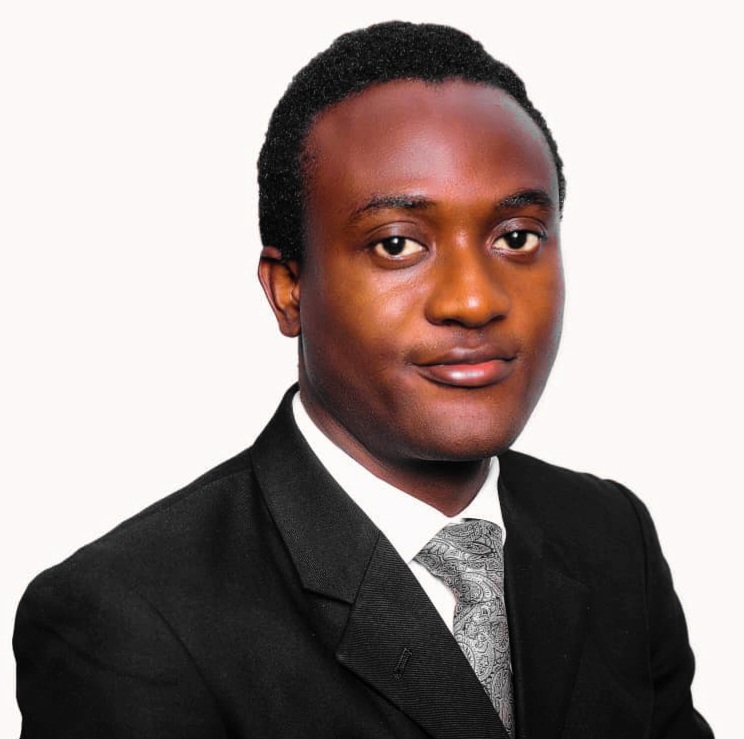
Dr. Tolulope A. Adegoke, AMBP-UN, is a globally recognized scholar-practitioner and thought leader at the nexus of security, governance, and strategic leadership. His mission is dedicated to advancing ethical governance, strategic human capital development, resilient nation-building, and global peace. He bridges the worlds of academic rigor and practical application, contributing to leadership discourse at the highest levels of policy and practice. He can be reached via: tolulopeadegoke01@gmail.com, globalstageimpacts@gmail.com