Business
Nestlé Partners Africa Food Prize for Strengthened Food Security, Climate Change Resilience


- /home/rhoncare/pointblank.ng/wp-content/plugins/mvp-social-buttons/mvp-social-buttons.php on line 27
https://pointblank.ng/wp-content/uploads/2021/12/Nestlé-Nigeria.jpg&description=Nestlé Partners Africa Food Prize for Strengthened Food Security, Climate Change Resilience', 'pinterestShare', 'width=750,height=350'); return false;" title="Pin This Post">
- Share
- Tweet /home/rhoncare/pointblank.ng/wp-content/plugins/mvp-social-buttons/mvp-social-buttons.php on line 69
https://pointblank.ng/wp-content/uploads/2021/12/Nestlé-Nigeria.jpg&description=Nestlé Partners Africa Food Prize for Strengthened Food Security, Climate Change Resilience', 'pinterestShare', 'width=750,height=350'); return false;" title="Pin This Post">
Nestlé announced today that it is partnering with the Africa Food Prize to help accelerate the transformation of food systems in Africa, as a way of strengthening the continent’s food security and building greater climate change resilience.
The Africa Food Prize awards USD 100,000 to individuals and institutions that are pioneering agricultural and food systems transformation in Africa. The Prize puts a spotlight on uniquely impactful agri-food initiatives and technological innovations that can be replicated across the continent to increase food security, spur economic growth and development, and eliminate hunger and poverty in Africa. The Africa Food Prize is hosted by AGRA, an African-led and Africa-based institution that puts smallholder farmers at the center of the continent’s growing economy by transforming agriculture from a solitary struggle to survive into farming as a business that thrives. AGRA is headquartered in Kenya and works in 15 African countries.
This year, Dr. Eric Yirenkyi Danquah, a plant geneticist from Ghana, was awarded the prestigious prize during September’s AGRF Summit in Kigali, Rwanda. Dr. Danquah was celebrated for his outstanding expertise and leadership in establishing the West Africa Centre for Crop Improvement (WACCI) and developing it into a world-class center for the education of plant breeders in Africa.
Nestlé will contribute CHF 100,000 to the Africa Food Prize, which will be awarded in 2023. Part of the contribution will go to the main award and part to a special category focusing on innovations that advance regenerative food systems.
Remy Ejel, Chief Executive Officer of Zone Asia, Oceania and Africa, Nestlé S.A. said, “Transforming agriculture to be more productive and sustainable is key to reducing hunger and improving livelihoods for the long term. We aim to support and amplify efforts that spearhead regenerative agriculture and food systems to enable better productivity, better nutrition and better incomes for people in Africa.”
Commenting on the partnership, Dr Agnes Kalibata, President of AGRA said, “We are happy to be partnering with Nestlé to recognize Africa’s best in food systems. The Africa Food Prize is a great opportunity to shine a bright spotlight on Africa’s outstanding minds, giving the rest of us a chance to learn and replicate their good work that is moving us closer to sustainable, inclusive and resilient food systems and achieving the United Nations Sustainable Development Goals 2 on Zero Hunger.”
Nestlé’s partnership with the Africa Food Prize builds on its years-long work in Africa to improve the continent’s nutrition and agriculture. The company has taken great strides to expand access to affordable nutrition in many communities, for example, by fortifying Maggi bouillon cubes with iron in Central and West Africa. It is also pioneering regenerative dairy farming with the establishment of the first net zero dairy farm in Skimmelkran, South Africa.
In early 2022, Nestlé launched an innovative income accelerator program, aimed at addressing child labor risks and closing the living income gap for cocoa-farming communities in Côte d’Ivoire and Ghana. Recently, Nestlé announced an investment of CHF 1 billion by 2030 under the Nescafé Plan to transition to sustainable coffee farming, including in Côte d’Ivoire.
Entries in the Africa Food Prize are evaluated by a judging committee comprising some of Africa’s greatest food system leaders. Winners are selected based on proven results and scalable efforts.
Submissions for next year’s Africa Food Prize will be open from January 2023 and winners will be announced at the AGRF, Africa Food Systems Forum, in September.


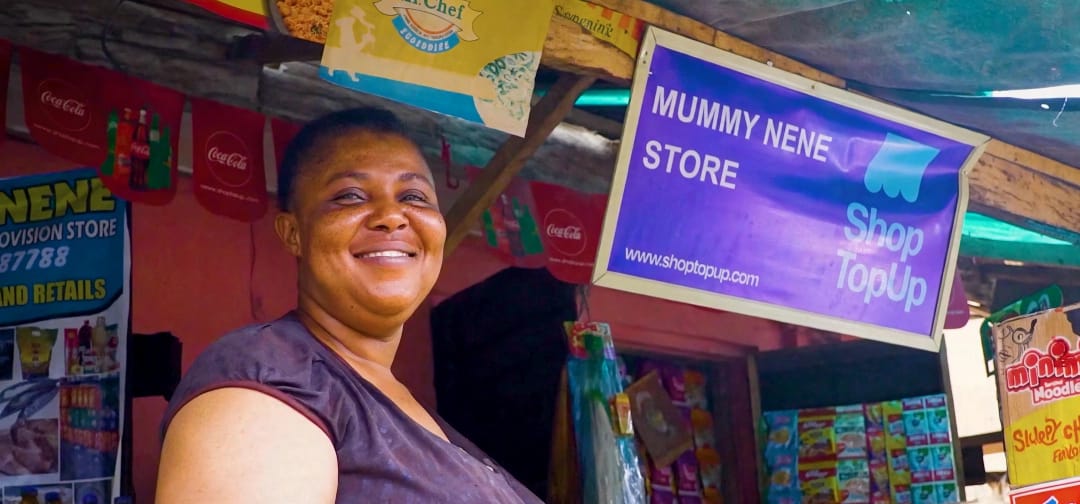
While conversations about the future of retail increasingly focus on supermarkets, shopping malls and online shopping platforms, millions of African consumers continue to rely on a more familiar and accessible business: the neighbourhood shop.
From small provision stores and corner shops to kiosks and informal retailers, these businesses remain an important part of everyday commerce, connecting communities to essential household products. However, behind their convenience lies a supply chain challenge that often limits their growth.
For many small retailers, sourcing products, managing inventory and securing enough working capital to keep their shelves stocked can be difficult. Fragmented distribution networks, multiple intermediaries and limited access to financing often make it harder for them to compete and expand.
Technology is beginning to offer a different possibility.
Digital platforms can simplify the way neighbourhood retailers purchase goods by connecting them more directly with manufacturers and distributors. They can streamline ordering, improve product availability and make inventory management more efficient.
Access to financial technology can further strengthen these businesses by helping eligible retailers secure the working capital required to replenish stock, respond to customer demand and grow sustainably.
One Nigerian technology company working to address these challenges is TradeDepot, which is using digital innovation to connect small retailers with manufacturers and distributors.
By making product sourcing and distribution more efficient, the company is helping to address some of the longstanding barriers facing small businesses in Africa’s retail sector.
However, scaling technology-driven solutions across a fragmented retail market requires more than innovation. It also demands significant investment.
This is where development finance and venture capital become important.
Through Boost Africa, the European Investment Bank (EIB) invested in Partech Africa Fund, a venture capital fund that subsequently backed TradeDepot. The investment illustrates how development finance can reach innovative African businesses through investment funds, providing capital to companies working to solve real economic challenges.
Boost Africa is a joint initiative of the European Investment Bank and the African Development Bank, with support from the European Union. The initiative supports African businesses and strengthens the continent’s entrepreneurial ecosystem by improving access to finance and opportunities for growth.
The wider significance of this investment goes beyond the technology platform itself. Strengthening neighbourhood retailers can contribute to more efficient supply chains, support small business growth and improve access to everyday consumer goods across communities.
For Africa, where small retailers remain central to local economies, the opportunity is substantial.
The future of retail may not necessarily involve replacing traditional neighbourhood shops with large supermarkets or online marketplaces. Instead, it could depend on equipping these existing businesses with better technology, stronger distribution networks and improved access to finance.
Ultimately, transforming retail may begin with something as familiar as the shop around the corner.
Boost Africa: From Capital to Impact.
Watch how TradeDepot is bringing commerce closer to communities through technology and investment
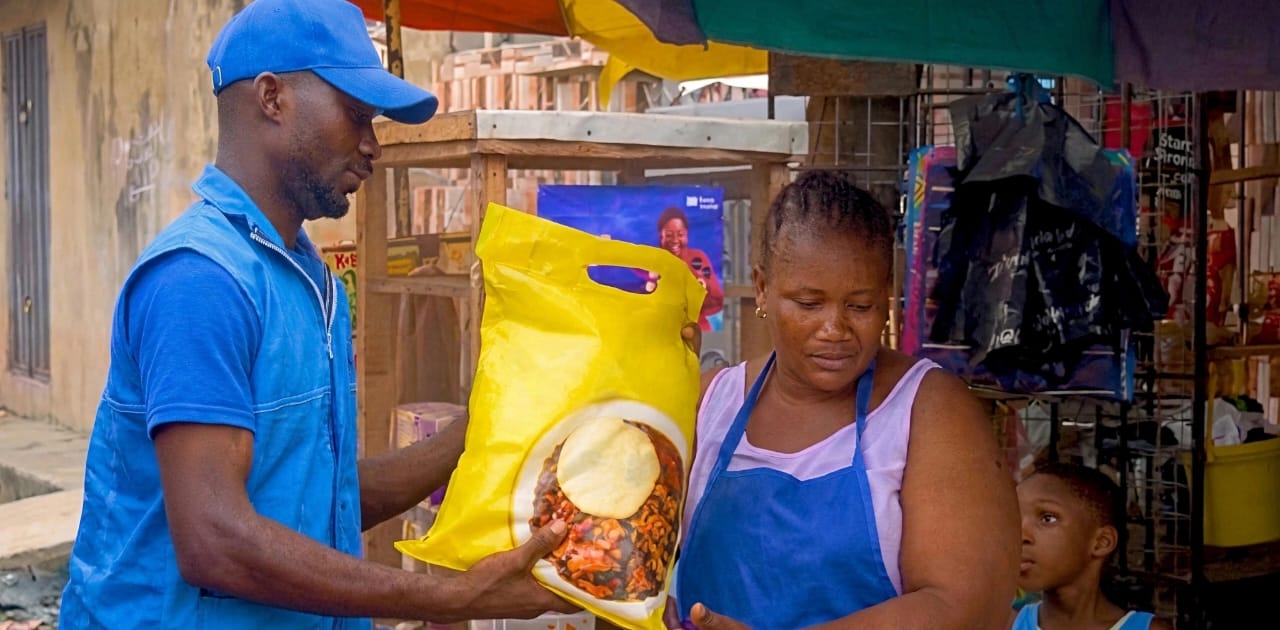
Ever wondered how the products on your neighbourhood shop shelves get there? Behind everyday purchases is a supply chain that can be costly, complex and inefficient, particularly for small retailers.
Nigerian technology company TradeDepot is changing this process by using technology to connect small retailers with manufacturers and distributors, making it easier for shop owners to order and receive the goods they need.
But transforming retail distribution takes more than an innovative idea. It requires investment to build, expand and scale.
Through Boost Africa, the European Investment Bank (EIB), alongside the African Development Bank and with support from the European Union, is helping strengthen the financing ecosystem for innovative African businesses.
One example is the EIB’s investment in Partech Africa Fund, which subsequently backed TradeDepot, helping channel capital into a Nigerian business working to improve how goods move from suppliers to neighbourhood shops.
The impact goes beyond technology. More efficient distribution can help small retailers access inventory, strengthen connections between manufacturers and suppliers, and bring commerce closer to the communities they serve.
Ultimately, TradeDepot’s story demonstrates how investment can go beyond funding to support stronger businesses, more efficient markets and opportunities for small retailers.
Boost Africa: From Capital to Impact.
Watch how TradeDepot is bringing commerce closer to communities.
▶ https://www.youtube.com/watch?v=zw9t2asF9Pc
Business
Beyond University Degrees: How ChipMango is Preparing African Engineers for Global Tech Industry
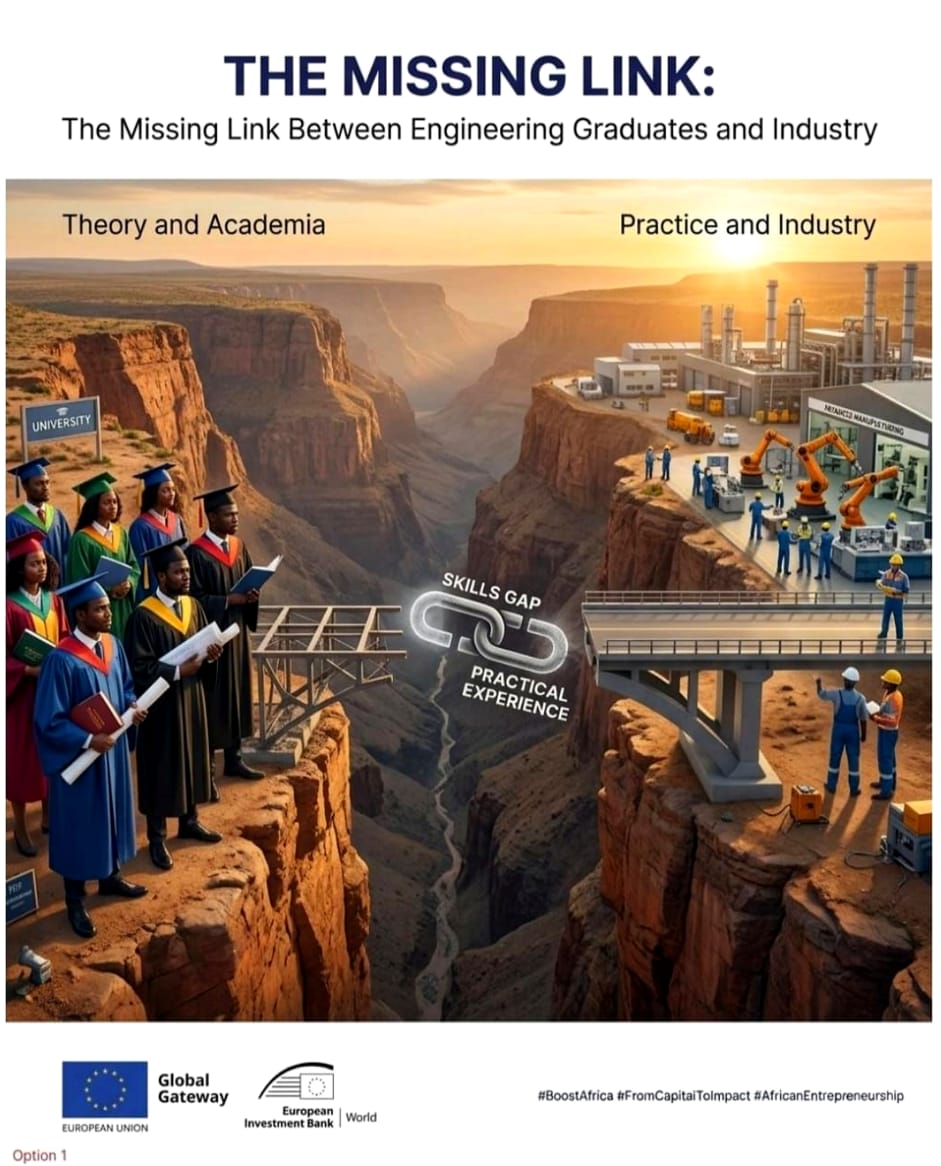
A university degree is a starting point, but practical industry experience can make all the difference.
Nigerian technology company ChipMango is bridging the gap through specialised semiconductor training and real-world chip design and verification projects, preparing African engineers for opportunities in the global technology industry.
Through Boost Africa, the EIB, AfDB and EU are strengthening the investment ecosystem supporting innovative African businesses.
Watch the video to discover how ChipMango is connecting engineering talent to real industry opportunities.
Watch the video: