Headlines
Netherlands End Falconets Women’s World Cup Dreams with 2-0 Defeat


- /home/rhoncare/pointblank.ng/wp-content/plugins/mvp-social-buttons/mvp-social-buttons.php on line 27
https://pointblank.ng/wp-content/uploads/2022/08/Falconets-2.jpg&description=Netherlands End Falconets Women’s World Cup Dreams with 2-0 Defeat', 'pinterestShare', 'width=750,height=350'); return false;" title="Pin This Post">
- Share
- Tweet /home/rhoncare/pointblank.ng/wp-content/plugins/mvp-social-buttons/mvp-social-buttons.php on line 69
https://pointblank.ng/wp-content/uploads/2022/08/Falconets-2.jpg&description=Netherlands End Falconets Women’s World Cup Dreams with 2-0 Defeat', 'pinterestShare', 'width=750,height=350'); return false;" title="Pin This Post">
Nigeria bowed out of the FIFA Under-20 Women’s World Cup after a 2-0 loss to The Netherlands on Sunday.
The Falconets could not reenact earlier round performances, which saw them winning all three group phase matches, in this their quarter-final match in Alajuela, Costa Rica.
Flourish Sabastine, who scored Nigeria’s winning goal against France in their Group C opening match, could not make hay in the seventh minute.
But four minutes later, the Dutch were ahead, when Zera Hulswit rammed a perfect dipping shot beyond Omini Oyono after pulling away on the counter-attack.
In the 15th minute, Sabastine again pulled away and let fly, but the ball was tipped away by impressive goalkeeper Claire Dinkla.
On the half-hour, Nigeria nearly got the leveller that their endeavour deserved when Deborah Abiodun seized the ball as the Dutch defence fell into confusion.
But her dipping shot from 25 metres rocked the crossbar and was then tipped away from the head of Chiamaka Okwuchukwu.
Only three minutes later, the Dutch doubled their lead after breaking through the right once more.
With team captain Oluwatosin Demehin and Omowumi Oshobukola in a fumble, Ziva Henry bundled the ball past Oyono.
Substitute Joy Jerry came close to pulling one back when her head met the ball from Rofiat Imuran’s cross in the 62nd minute, but the ball floated away.
In the second minute of added time, a Dutch defender handled the ball in the box as Nigeria poured forward.
But after consulting the Video Assistant Referee, Costa Rican official Marianela Araya overturned her own decision to award a penalty kick.
The News Agency of Nigeria reports that defeat meant elimination for a team that had won all three group phase matches, scoring five goals and conceding only one.
The Netherlands will now meet Spain on Thursday in the first semi-final fixture, after the European side beat Mexico 1-0 in the first quarter-final match on Saturday.
Brazil who also won 1-0 against Colombia on Saturday in the second quarter-final match await the winners of the fourth quarter-final match fixture between defending champions Japan and France.
NAN


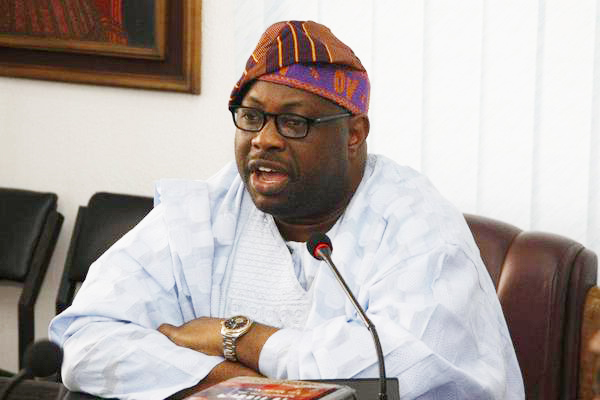
A chieftain of the African Democratic Congress (ADC), Dele Momodu, has said that some Nigerian governors are secretly praying for divine intervention to stop President Bola Tinubu from securing a second term in office.
Momodu alleged that governors across the country had become afraid of Tinubu, whom he accused of concentrating power and intimidating political leaders.
He made the allegation on Thursday while speaking as a guest on Channels Television’s Politics Today programme.
The ADC chieftain expressed concern over what he described as the growing threat to Nigeria’s democracy, claiming that the president has taken control of key institutions of government.
According to him, the judiciary, legislature and even members of the executive arm of government are afraid of the President.
Momodu said he has several friends among the governors and knows that many of them are uncomfortable with the current political situation.
“The governors are scared. I have a lot of friends who are governors. They are scared of one man because they believe he’s so ruthless, and he has always bullied his way anyway in whatever he did growing up.
“So they believe he’s using the same, you know, mafia tactic of saying yes, I’m in charge.”
“The judiciary is afraid. The legislature is afraid. The executive is afraid,” he said.
He further claimed that governors are no longer exercising the influence and authority associated with their offices, alleging that they were being treated like domestic servants.
“Nigerians, I can tell you, even governors are praying fervently and quietly that God should please remove this pestilence for them, because for the first time, governors have lost their power.
“They’ve lost their integrity. People used to see governors as mini presidents. Governors are now being treated like houseboys, which is very ugly,” Momodu added.
He warned that the alleged concentration of power in the hands of the President is unhealthy for Nigeria’s democracy.

Political scientist, Pat Utomi, has urged the electorate not to allow political loyalty, ethnic sentiments, religious affiliations or empty promises to blind them while casting their votes in 2027.
Utomi said any politician who cannot provide reliable electricity, decent roads, functional hospitals and quality education should not ask for the opportunity to lead Nigerians.
Posting on X, Utomi said Nigerians cannot continue rewarding failure and expect a different future for the country.
He said, “There is something profoundly disturbing about a political system in which those entrusted with public responsibility can comfortably watch entire communities struggle with problems that should have been addressed years ago.
“Yet, when election season approaches, these same communities suddenly become important. Their votes become valuable, their streets become campaign destinations, and their suffering becomes a convenient subject for political speeches.
“Come 2027, remember these things when you approach the ballot box. Do not allow political loyalty, ethnic sentiments, religious affiliations or empty promises to blind you to the reality of your everyday existence.
“A politician who cannot demonstrate a commitment to providing reliable electricity, decent roads, functional hospitals and quality education has no business demanding another opportunity to govern you.
“You cannot continue rewarding failure and expect a different future for Nigeria. Sometimes, the most patriotic thing a citizen can do is to withdraw his support from those who have repeatedly demonstrated that they do not deserve it.”

The Independent Communications Authority of South Africa (ICASA) has issued a formal notice of non-compliance to SpaceX, the Elon Musk-owned aerospace company.
This is according to Communications Minister Solly Malatsi, who disclosed that ICASA had issued the notice in a Parliamentary response to Umkhonto Wesizwe (MK) MP Adil Nchabeleng.
Nchabeleng had asked the minister what actions his department and ICASA were taking to crack down on people using Starlink’s low-Earth-orbit satellite Internet service in the country.
Starlink is not licenced to operate in South Africa, but some people are still using the service illegally with legally imported dish kits.
ICASA has been investigating allegations of unauthorised provision and use of Starlink services in South Africa since 2025.
Starlink’s roaming service has been available in South Africa since early 2023. Many people, especially those in poorly connected rural areas, used Starlink through roaming plans.
These plans allowed customers who had purchased and registered Starlink equipment in South Africa’s neighbouring countries to access the Internet service without it being launched locally.
Starlink has disabled roaming in countries after receiving explicit orders from governments and telecommunications regulators.
In mid-2024, Starlink began enforcing a 60-day continuous-use rule. This rule meant that roaming users would have to access Starlink from their home country.
For example, a South African user who registered their kit in Lesotho would have to visit the country every 60 days to avoid having their Starlink disconnected.
Despite this rule, South African users continued to find workarounds to ensure that their service would not be disrupted.
This included switching off their kit, pausing their service for a few days to reset the continuous-use timer, or hopping across the border with the kit to “phone home.”
As of 2026, Starlink reduced the continuous-use roaming period to 30 days to continue cracking down on this practice.
In October, MyBroadband’s Speed Test platform recorded a big increase in Starlink tests over the last few months. This was despite SpaceX imposing a harsher 7-day limit on roaming users in South Africa.
However, since October, SpaceX has implemented even stricter restrictions, requiring that anyone registering for the roaming service prove their identity and country of origin.
In May 2025, ICASA formally requested clarification from SpaceX on reports that Starlink could be used in South Africa.
SpaceX then advised ICASA that it had implemented measures to prevent unauthorised access to its services in South Africa, including taking action against unauthorised resellers.
“Following continued reports of suspected unauthorised operations, ICASA established a dedicated task team and conducted further investigations and inspections,” said Malatsi.
“On 14 October 2026, the Authority issued a formal notice of non-compliance to SpaceX, demanding that it cease the unauthorised provision and operation of Starlink services in the Republic.”
Malatsi said these actions stemmed from ICASA’s ongoing investigations into the alleged continued use of Starlink services in the country.
“ICASA is taking steps to strengthen its monitoring and investigative capabilities to support effective, evidence-based enforcement,” he said.
The minister said ICASA was not placing the blame on any official for the continued use of Starlink in South Africa and that the regulator was exercising its oversight and enforcement mandate.
This response was to Nchabeleng’s question about which ICASA officials had been found responsible for the enforcement failures.
This response was to Nchabeleng’s question about which ICASA officials had been found responsible for the enforcement failures.