
Headlines
Nigeria vs South Africa: The Making of a Big Diplomatic Face-off

- /home/rhoncare/pointblank.ng/wp-content/plugins/mvp-social-buttons/mvp-social-buttons.php on line 27
https://pointblank.ng/wp-content/uploads/2019/09/BuhRam-1000x600.jpg&description=Nigeria vs South Africa: The Making of a Big Diplomatic Face-off', 'pinterestShare', 'width=750,height=350'); return false;" title="Pin This Post">
- Share
- Tweet /home/rhoncare/pointblank.ng/wp-content/plugins/mvp-social-buttons/mvp-social-buttons.php on line 69
https://pointblank.ng/wp-content/uploads/2019/09/BuhRam-1000x600.jpg&description=Nigeria vs South Africa: The Making of a Big Diplomatic Face-off', 'pinterestShare', 'width=750,height=350'); return false;" title="Pin This Post">
…as Xenophobia Tears Africa Apart
By Eric Elezuo
Literarily defined as the fear or hatred of that which is perceived to be foreign of strange, according to Wikipedia, xenophobia is fast threatening to tear the African continent apart, notably Nigeria and South Africa.
In the last few days, uncanny events have occurred to prove that if care is not taken, the highly treasured bi-lateral relationship between Africa’s supposedly two great economic powers, Nigeria and South Africa, will be hitting a brick wall. This is prompted by current ‘sporadic and premeditated’ attacks in the cities of Johannesburg and Jeppestown, leading to massive looting and destruction of business concerns of Africa nationals majority of whom are Nigerians.
Xenophobic attacks among natives of South Africa date back to the 2000s when natives in a bid to ‘clean’ the area of foreigners engaged in violent display of hatred targeting citizens of other countries including Mozambique, Zimbabwe, Zambia, Malawi among others. The immigrants, mostly those living in the Alexandria township were “physically assaulted over a period of several weeks” in an operation tagged “Buyelekhaya” (go back home). The natives have blamed the foreigners of being the brains behind crimes, unemployment and sexual attacks.
Until, 2015, Nigeria has remained immune to the unprovoked attacks of the South Africans, and then out of the blues, a number of Nigerians were deported on the flimsy excuse of uncertified yellow card. Nigeria promptly retaliated by bundling home some South Africans whose immigration papers were less than accurate. Though the matter was resolved without rancour, the seed of diplomatic suspicion had been sown.
The xenophobic attacks resurrected in April 2015, in Durban and spread to Johannesburg when Zulu King Goodwill Zwelithini was quoted as saying that foreigners should “go back to their countries” thereby fueling a crisis.
But the South African government’s reactions to the attacks of September 1 and 3 on businesses belonging to foreigners, especially Nigerians have been anything but palatable. It has brazenly defended the attacks, blaming the foreigners for their woes.
In his reaction, South African Small Business Development Minister, Lindiwe Zulu said that foreign business owners cannot expect to co-exist peacefully with local business owners unless they share their trade secrets. Zulu noted that foreign business owners had an advantage over South African business owners due to marginalisation under apartheid. “They cannot barricade themselves in and not share their practices with local business owners,” Zulu said.
The reaction drew a lot of criticisms from some African countries leading to immediate withdrawal of Nigeria, Rwanda, Malawi, Congo DR and others from the just concluded world Economic Forum held in South Africa. Zambia also called off a friendly match with South Africa.
In Nigeria, the Federal government’s summoning of the South African High Commissioner, Mr. Bobby Moore, did not yield any positive result, as the envoy seems to echo the stand of the South African government. He maintained that there were no xenophobic attacks ongoing in South Africa. He said that what was going on was attacks masterminded by criminals in which South African businesses have also been affected.
This latest response became irk of the Nigerian public, and there was an immediate reprisal attacks, targeting South African businesses nationwide. In the wake of the reprisal attacks, offices of the telecommunication giants, MTN were torched in some areas just as retail shops like Shoprite, Spar and PEP were also massively looted.
Nigeria also withdrew from WEF in South Africa and recalled its ambassador. In the same vein, most Nigerian artist withdrew their participation in major events billed to take place in South Africa while some others vowed never to set foot in South Africa again until a reasonable settlement is achieved.
Ever since, both countries have been talking tough. While South Africa has declared that it will never pay compensation to those who lost their businesses as Nigeria demanded, the Federal government has been advised the annex South Africa businesses in Nigeria including MTN, Stanbic IBTC, Shoprite among others.
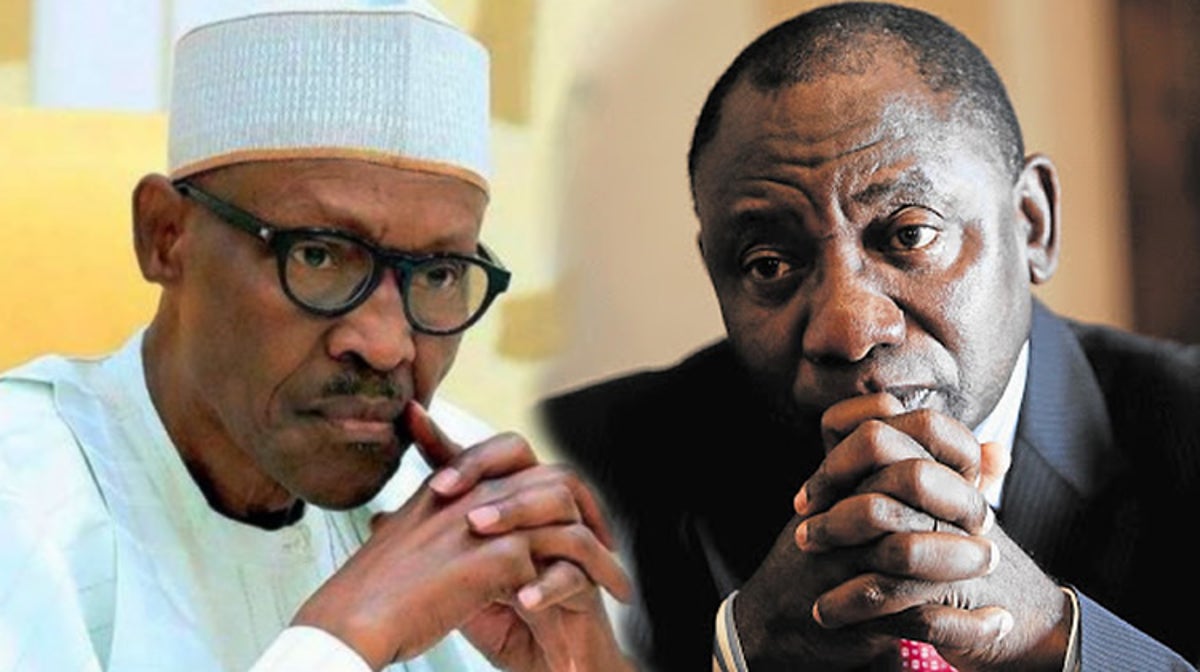
The rift is eating deep between the two counties that it seems there is no immediate sign of peace even as President Mohammadu Buhari said he has sent special envoy, whose identity is still shrouded in mystery, to visit President Cyril Ramaphosa of South Africa to discuss the way forward.
Stakeholders believe that it will take more than diplomatic approach to bring the crisis to a logical settlement. They said that it is not just about the physical attacks on persons and businesses. They argue that that xenophobic attacks have been going on against Nigerians in many areas, saying that South Africa will not think twice to stop Nigerians from entering their soil.
A member, South Africa Specialist Group and CEO, 1860 Travels, Mr. Francis Daodu, revealed that South Africa would not blink at the prospect of severing travel relationship as they have in the past make visa procurement for Nigerians a herculean task.
“In the past, it takes only a 10 days for a visa application to be ready, whether positive or negative outcome, but in recent times, one is practically held hostage, passport seized and no communication between the embassy and the applicant. When you get tired of waiting, they hand you over your passport with absolutely nothing done on it. They may not have told anyone that they are not needed in Nigeria, but their body language speaks volume. This is a clear message that Nigerians are no longer wanted in South Africa,” he said.
He hoped however, that the South African government, which said it was planning an e-visa procedure before the end of the year will bring it to pass to alleviate the challenges visa applicants face.
In one of the statements of the group, titled Xenophobia, Discrimination and Racism against Nigerians in Visa Procurement by South African Embassy, they averred that:
“The discrimination has become so obvious that it appears that the Embassy is averse to having Nigerians in their homeland as a step forward in the xenophobia being practiced against Nigerians in the country. Recall that violent attacks against Nigerians in South Africa took place in 2008, 2015 and 2017, leaving many killed for no just cause other than hatred.
“This hatred has been reinvented by the Embassy in Nigeria as Nigerians who apply for visas are never given.”
Mr. Daodu believes that much as South Africa continually exhibits xenophobic tendencies against Nigeria, the truth remains they will be the loser in the event of diplomatic blockade. This is because “South African tourism has an active presence in Nigeria, and has been doing a lot of marketing and activation targeted at promoting South Africa as a foremost destination”.
As the two countries battle for diplomatic supremacy – a crisis that has spilled into the streets, it is believed that the volume of trade between both countries currently put at over $60 billion, may be affected. Also, the National Bureau of Statistics First Quarter 2019 Foreign Trade Statistics also revealed that South Africa is one of Nigeria’s top five export destinations as the country exported goods with total value of N325.5 billion or 7.2 percent to South Africa within the period. Consequently, Nigeria stands to lick its wounds should a diplomatic barrier be instituted between both countries.
Unyielding, South Africa maintains that most Nigerians in their country are drug dealers, and are the reasons behind every crime in the country. In other words, since they cannot be fished out, all Nigerians, as a matter of urgency should vacate the country.
Lending credence, Nigeria’s Minister of Information, Alhaji Lai Mohammed, had informed that attacking South African business concerns will hurt Nigerians more, taking into consideration that thousands of Nigerians have both direct and indirect connection to all South African businesses operating in Nigeria. He noted that a lot of people will be returned to the labour market.
The crux of the matter remains that neither countries has taken responsibility for the its actions. While South Africa has blatantly refused to offer compensation for the loss Nigerians suffered in Johannesburg and other cities where massive looting and destruction have taken place, Nigeria is seriously considering a legal option. This is even as citizens of Nigeria have caused substantial damage to facilities and businesses not only belonging to South Africans, but to Nigerian citizens. It goes to say the least that perpetrators of the xenophobic act in South Africa and those saddled with reprisal attacks in Nigeria, are all bunch of thugs, if the voice of the South Africa Chief of Police should echoed.
“Otherwise, why will a Nigerian, who is well aware that all the businesses attacked so far have 90 per cent of Nigerian staff. In fact, smaller shops surrounding shoprite were also looted and destroyed; were those ones also South African shops? When we can’t do the right thing, thugs will always hijack it,” a social commentator, who craved anonymity said.
However, while Nigeria has arraigned 85 out of the 125 allegedly arrested during the violent protests, South Africa is yet to take action though it said some arrests have been made.
Presently, the Embassy of South Africa in Nigeria has been shut down just as most of enterprises own and run by South Africa have also closed shops. These include Shoprite, MTN and others. Again, the Federal Government of Nigeria has recalled its ambassador to South Africa, paving the way for more diplomatic brouhaha. It has however, said it would not severe diplomatic relations with South Africa.
The coming days will really be trying as it is yet unknown if Nigeria will keep to its words or will she be cutting diplomatic ties with a country it sacrificed so much to see its liberation.


President Bola Tinubu has approved salary increases of between 30 and 80 per cent for personnel of the Nigerian Armed Forces, with about 250,000 officers and men set to benefit from the enhanced remuneration package aimed at boosting troop welfare and morale.
The new salary structure, which takes effect from September 1, will see officers above the rank of Colonel receive a 30 per cent salary increase, while personnel from the rank of Colonel down to Warrant Officer will enjoy a 50 per cent increment. Soldiers from the rank of Private to Staff Sergeant will receive the highest increase of 80 per cent.
The approval will raise the annual salary bill for the Armed Forces from N660 billion to N924 billion.
Special Adviser to the President on Information and Strategy, Bayo Onanuga, said the salary review underscores the Tinubu administration’s commitment to improving the welfare of military personnel in recognition of their sacrifices in safeguarding the country.
The President noted that members of the Armed Forces have continued to display courage and dedication in confronting banditry, kidnapping, terrorism and other security threats across the country.
“The men and women who help to keep us safe in our homes must be supported and appreciated in the course of their duties to our nation,” Tinubu said.
He assured that his administration would continue to prioritise troop welfare while strengthening the operational capacity of the military through improved equipment and technology.
“Our administration will continue to prioritise troop welfare and modernise the armed forces by providing the weapons and technological tools needed to discharge their duties,” the President stated.
Tinubu stressed that security remains central to national development, saying no country can attain sustainable progress without guaranteeing the safety of its citizens.
“Our administration believes that no nation can achieve greatness without security. We therefore remain resolute in mobilising all military and law enforcement assets to eliminate security threats and protect the lives and property of all Nigerians,” he said.
The President urged military personnel to see the enhanced remuneration as a demonstration of the nation’s appreciation for their service and commitment.
“I urge our servicemen to take our gesture as a sign of our deep appreciation of the services they render to our fatherland. Together we shall prevail over the enemies intent on destroying the fabric of our nation,” Tinubu added.

General Overseer of Living Faith Church Worldwide aka Winners Chapel, Bishop David Oyedepo, has taken a swipe at President Bola Tinubu over the worsening insecurity and economic hardship in Nigeria.
In a viral video shared online, Oyedepo alleged that the Tinubu administration was failing to take decisive action to address the challenges bedeviling the Nigerian people.
The cleric expressed anger over the persistent attacks and killings across the country, issuing a note of warning that Nigerians who have endured the situation for a long time may no longer remain silent.
The General Overseer, however, condemned those behind the attacks and killing of unarmed Nigerians, stating that victims should not be expected to show sympathy towards the perpetrators of the heinous crime.
“The president needs to act now and stop pretending. You can’t slaughter members of my family and expect me to pray for you. I will pray against you and your household.
“The government is pretending like they don’t know what to do. I have been quiet for a long time, but the bubble is about to burst,” he fumed.
He equally accused the government of appearing unaware of the severity of the security crisis, saying leaders had failed to demonstrate the urgency required to protect citizens and restore confidence.
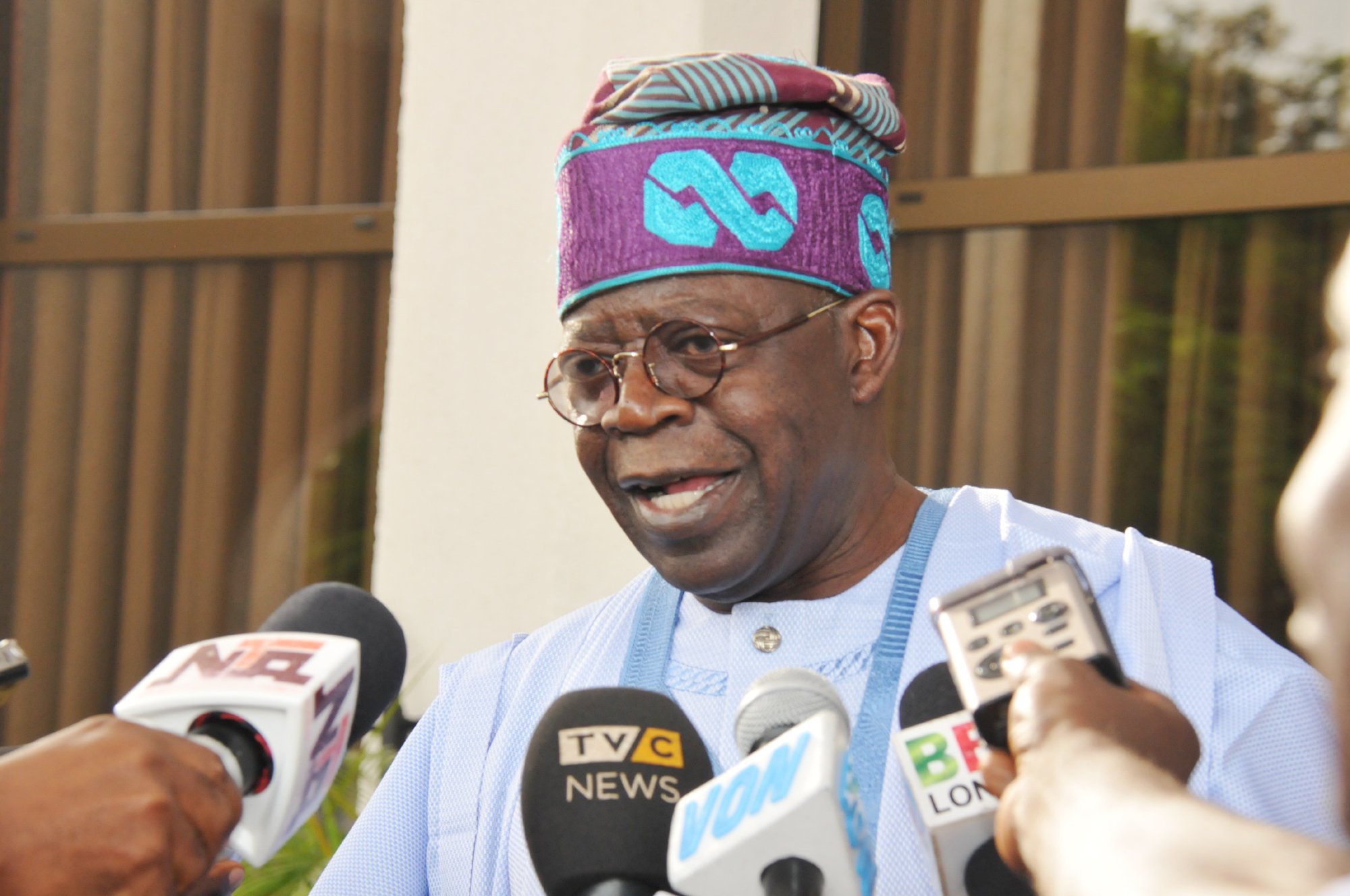
The African Democratic Congress (ADC) has argued that President Bola Tinubu is not qualified to contest the 2027 presidential election, citing his alleged failure to present his primary and secondary school certificates to the public.
Tinubu, in the form he submitted to the Independent National Electoral Commission (INEC) for next year’s election, reportedly left blank the sections designated for his primary and secondary school education, raising concerns among some Nigerians, particularly members of the opposition.
A lawyer and ADC chieftain, Kalu Kalu, alleged that the President committed forgery by previously presenting certificates he did not possess, an act he claimed automatically disqualifies him from contesting for the nation’s highest office. He cited Section 137(1)(j) of the 1999 Constitution, which states that a person is not qualified to run for the office of President if they have presented a forged certificate to the Independent National Electoral Commission (INEC).
He alleged that the primary and secondary schools Tinubu claimed to have attended either did not exist at the time or were falsely represented. Kalu further claimed that although Tinubu presented those certificates during the 2023 election, the due diligence carried out by the ADC’s presidential candidate, Atiku Abubakar, who was the Peoples Democratic Party (PDP) presidential candidate in the last general election, had prompted the President to remain silent about his primary and secondary school education in his latest submission to INEC.
Kalu also questioned the authenticity of President Tinubu’s Chicago State University certificate, saying it had been subjected to scrutiny in a United States court.
The ADC stalwart said: “Atiku Abubakar went for the discovery of the academic records of Bola Ahmed Tinubu and the US court directed Chicago State University to release those academic records of Bola Ahmed Tinubu. And when they were released, it was found that Bola Ahmed Tinubu made a very dangerous false entry that he attended Government College, Lagos and graduated in 1970, whereas Government College, Lagos, was not even in existence in 1970; it was established in 1974. That’s one.
Speaking on whether the matter could be relitigated, Kalu said: “The challenge is that the Supreme Court’s position on pre-election matters is that only an aspirant can challenge another aspirant in the race. Now Tinubu has emerged, and nobody from the APC is challenging him. But the issue now is Section 29 of the Electoral Act. Is the Electoral Act superior to the Constitution? The answer is no. If the Constitution says, under Section 137(1)(j), that you are not qualified to contest an election if you have presented a forged certificate to INEC.


