Metro
Nigerians Won’t Eat Your Bogus GDP Figures, ADC Tells FG


- /home/rhoncare/pointblank.ng/wp-content/plugins/mvp-social-buttons/mvp-social-buttons.php on line 27
https://pointblank.ng/wp-content/uploads/2026/04/ADC-LOGO-BIG-1000x600.webp&description=Nigerians Won’t Eat Your Bogus GDP Figures, ADC Tells FG', 'pinterestShare', 'width=750,height=350'); return false;" title="Pin This Post">
- Share
- Tweet /home/rhoncare/pointblank.ng/wp-content/plugins/mvp-social-buttons/mvp-social-buttons.php on line 69
https://pointblank.ng/wp-content/uploads/2026/04/ADC-LOGO-BIG-1000x600.webp&description=Nigerians Won’t Eat Your Bogus GDP Figures, ADC Tells FG', 'pinterestShare', 'width=750,height=350'); return false;" title="Pin This Post">
The African Democratic Congress (ADC), on Wednesday, faulted the Federal government’s celebration of Nigeria’s reported GDP growth, saying the figures do not reflect the economic strain facing ordinary citizens.
The party’s position speaks to a growing gap between official claims of progress and the daily reality of rising food prices, shrinking incomes, job losses and mounting business costs across the country.
In a statement by its National Publicity Secretary, Bolaji Abdullahi, the ADC said economic growth is meaningless if it does not improve how people actually live.
“People do not eat GDP,” Abdullahi said.
The party said millions of Nigerians remain trapped in hunger, inflation, unemployment and weakening purchasing power despite government claims of recovery.
Rejecting the government’s narrative, the ADC said, “The African Democratic Congress (ADC) rejects the Federal Government’s attempt to use headline GDP figures to whitewash the deep economic suffering Nigerians are currently enduring across the country.
“No government should be celebrating economic statistics while millions of its citizens are battling hunger, poverty, collapsing purchasing power, and rising hopelessness.
“The reality of the Nigerian economy is not what is written in government presentations. The reality is what Nigerians confront every day in markets, on farms, in factories, in shops, and in their homes.”
The party pointed to intensifying pressure on households and businesses nationwide.
Abdullahi said: “Food prices are unbearable. Transportation costs have become punitive. Small businesses are shutting down daily under the crushing weight of inflation, energy costs, and weak consumer demand. Salaries have lost value. Families who once lived modestly are now struggling to survive.
“Economic growth that does not reduce suffering, create jobs, improve incomes, or restore dignity to citizens is empty growth. Growth that only exists in official reports while citizens descend deeper into hardship is not meaningful progress.”
The ADC also questioned what Nigerians are being asked to celebrate under current conditions.
The party said, “The purpose of governance is not to manage public relations for economic statistics. The purpose of governance is to improve the living conditions of the people.
“What exactly should Nigerians celebrate? The fact that food inflation continues to devastate households? That millions of young Nigerians remain unemployed or underemployed? That businesses are collapsing faster than new ones are emerging? That more citizens are slipping into poverty despite working harder than ever?”
Calling for a shift in approach, the party urged the government to prioritise measurable improvements in citizens’ welfare over headline figures.
The ADC said: “A government that is serious about economic recovery would show humility, acknowledge the pain Nigerians are experiencing, and focus on delivering measurable improvements in living conditions instead of celebrating figures that have no meaning to hungry citizens.
“The ADC believes that the true test of economic policy is simple: Can Nigerians live better today than they did yesterday? For millions of Nigerians, the answer is no.
“Nigeria needs an economy that works for ordinary people, not an economy that only looks impressive in presentations to investors and international institutions.
“Until growth is felt in the homes of ordinary citizens, through affordable food, stable electricity, decent jobs, lower business costs, and improved purchasing power, this government has no moral basis to declare economic success.”


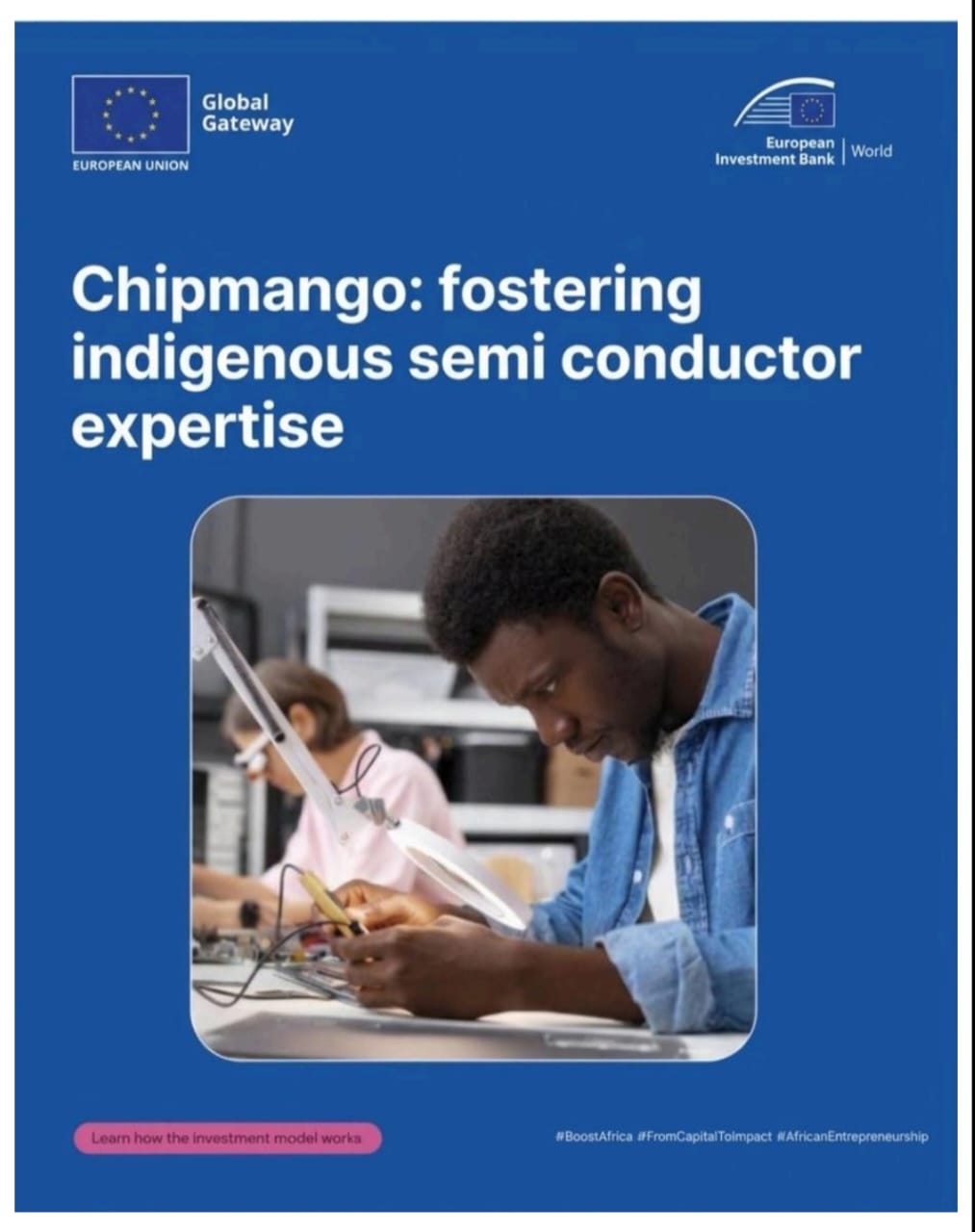
From smartphones and laptops to
vehicles and AI systems, semiconductors are essential to modern technology. Yet, the expertise required to design these components remains concentrated in a relatively small number of global
technology hubs.
ChipMango is working to expand access to semiconductor engineering skills and commercial opportunities for African engineers. Its journey also highlights why initiatives such as EIB’s Boost Africa matter. By supporting venture capital funds investing in innovative African businesses, Boost Africa helps strengthen the financing ecosystem needed to develop specialised technology companies. Watch the video to learn how
ChipMango is contributing to Africa’s place in the global technology industry.
Watch the video:
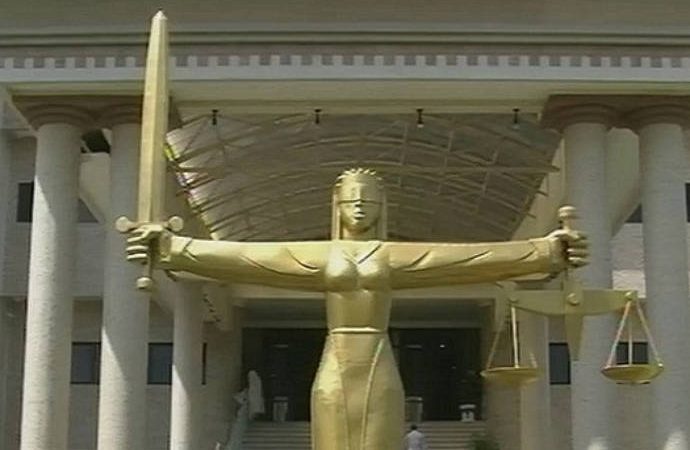
The Court of Appeal has inaugurated 375 judges for election petition tribunals across the country ahead of the 2027 general elections, setting in motion preparations for the adjudication of electoral disputes that may arise from the polls.
President of the Court of Appeal, Justice Monica Dongban-Mensem, inaugurated the judges on Monday at the Body of Benchers Complex in Abuja, coming 68 days before the 2027 general elections.
The tribunals will hear and determine petitions arising from elections into the National and State Houses of Assembly, as well as governorship elections, in line with the provisions of the 1999 Constitution, as amended.
Speaking at the inauguration, Dongban-Mensem said the exercise represents an important institutional step towards safeguarding constitutional democracy, upholding the rule of law and preserving the integrity of Nigeria’s electoral process.
She stressed that the responsibility of the judiciary extends beyond the formal determination of disputes, noting that the manner in which election petitions are handled has significant implications for public confidence in democratic governance.
“This gathering is more than a ceremonial event; it is an important institutional preparation for one of the most consequential responsibilities entrusted to the judiciary,” she said.
Dongban-Mensem maintained that the credibility of democratic institutions depends not only on the conduct of elections but also on the availability of impartial and effective judicial mechanisms for resolving disagreements over electoral outcomes.
“The credibility of democracy depends not only on the conduct of elections but also on the existence of impartial, effective, and timely mechanisms for resolving electoral disputes,” she added.
She further explained that the judiciary’s responsibility in electoral matters is central to ensure that the outcome of democratic contests is subjected to lawful scrutiny whenever challenged.
“Through the fair determination of such disputes, the Judiciary safeguards the people’s mandate, upholds constitutional supremacy and sustains public confidence in democratic governance,” Dongban-Mensem noted.
Providing a breakdown of the tribunal membership, Dongban-Mensem disclosed that the 375 judges were nominated from various courts and judicial institutions across the country.
She said 138 of the judges are returning members who had previously served on election petition tribunals, while 237 are newly nominated.
“Of this number, 138 are returning members with previous Tribunal experience, while 237 are newly nominated members,” she said.
The composition brings together judicial officers with previous experience in election petition proceedings and newly nominated members who will be participating in the tribunal process for the first time.
The Court of Appeal President urged the judges to approach their assignments with a strong sense of responsibility, reminding them that their conduct and decisions would attract considerable public scrutiny.
She cautioned them, in particular, to remain mindful of the significance of their judicial responsibilities in determining disputes capable of affecting the political fortunes of candidates and parties, as well as public confidence in the electoral process.
The tribunal judges are expected to discharge their duties in accordance with the Constitution and applicable electoral laws, ensuring that petitions brought before them receive fair and lawful consideration.
The inauguration is pursuant to the constitutional and statutory framework governing the establishment and operation of election petition tribunals in Nigeria.
Section 285(1) and (2) of the 1999 Constitution, as amended, vests in the President of the Court of Appeal the responsibility of constituting election petition tribunals to adjudicate disputes arising from National and State Houses of Assembly elections, as well as governorship elections.
Similarly, Section 134(3)(a) and (b) of the Electoral Act, 2026, prescribes timelines for constituting the tribunals and opening their registries.
These provisions establish the legal framework for the tribunals to commence operations and entertain petitions arising from the elections.
The inauguration of the 375 judges comes as the country prepares for the 2027 general elections, with the judiciary expected to play a critical role in resolving post-election disputes and determining challenges to electoral outcomes in accordance with the law.

The Nigeria Democratic Congress (NDC) governorship candidate in Lagos, Funso Doherty, has accused vested interests within the State’s informal transport sector of frustrating efforts to modernise public transportation.
Doherty made the remarks during the Lagos governorship debate on Friday organised by the Nigeria Debate Consortium comprising Channels Television, TVC News, The PUNCH, TheCable and Vanguard, where he criticised the continued reliance on ageing commercial buses and the influence of the agbero system in the State’s transport sector.
He questioned why successive administrations had failed to modernise public transportation despite the thousands of rickety buses operating across Lagos.
“Our public transportation system is not modernised. Thousands of rickety buses are moving around. We must ask ourselves: are these what our people deserve? Why has it taken so long to modernise public transportation?” he asked.
The NDC candidate argued that the failure to reform the system is not accidental, alleging that powerful interests benefit from the existing arrangement.
“In my opinion, the lack of modern transportation is not by accident. There are vested interests in operating the bus system the way it is. Many of us understand the agbero system; there is an ecosystem around it, and there is no political will to deal with that problem,” he said.
Doherty, who promised to overhaul the State’s public transportation system if elected, said his administration would not be beholden to informal transport networks.
“We would modernise public transportation because we would be elected by the people and not by the agbero network,” he added.