
Metro
No More ASUU Strikes in Nigeria, Tinubu Promises As UNILAG Holds 56th Convocation Ceremony


- /home/rhoncare/pointblank.ng/wp-content/plugins/mvp-social-buttons/mvp-social-buttons.php on line 27
https://pointblank.ng/wp-content/uploads/2026/01/FB_IMG_1769415192422.jpg&description=No More ASUU Strikes in Nigeria, Tinubu Promises As UNILAG Holds 56th Convocation Ceremony', 'pinterestShare', 'width=750,height=350'); return false;" title="Pin This Post">
- Share
- Tweet /home/rhoncare/pointblank.ng/wp-content/plugins/mvp-social-buttons/mvp-social-buttons.php on line 69
https://pointblank.ng/wp-content/uploads/2026/01/FB_IMG_1769415192422.jpg&description=No More ASUU Strikes in Nigeria, Tinubu Promises As UNILAG Holds 56th Convocation Ceremony', 'pinterestShare', 'width=750,height=350'); return false;" title="Pin This Post">
President Bola Tinubu has reassured Nigerians that there will be no more industrial action by the Academic Staff Union of Universities (ASUU) or any other workers’ unions in the nation’s public tertiary institutions.
He stated that his administration is fully committed to this goal and will ensure it becomes a permanent feature of Nigeria’s education landscape.
Tinubu gave the assurance in Lagos while addressing the gathering at the recently concluded 56th Convocation ceremony of the University of Lagos (UNILAG) in Akoka.
A total of 16,506 students for the 2024/2025 academic session, spanning diploma, undergraduate, and postgraduate programs, were graduated at the event.
Speaking further through the Minister of Education, Dr. Tunji Alausa, the president highlighted some of the reforms and interventions his administration has introduced to drive meaningful development in tertiary education. These include the Nigerian Education Loans Fund (NELFUND) for students, the Institutional Staff Support Fund for tertiary school workers, and several other initiatives.
On ASUU, he said: “Since the inception of my administration, we have witnessed two uninterrupted academic sessions across our tertiary institutions, and this is no accident. It is the result of firm political will, sustained dialogue, and responsible leadership.
“For example, acting under my direct mandate, we have been able to sign a new agreement with ASUU that decisively resolves a crisis that has persisted for years and undermined confidence in our university system.
“This landmark achievement marks a turning point in the history of our tertiary education, guaranteeing industrial harmony and a predictable academic calendar. It will restore the dignity of learning and clearly end the era of perennial strikes in our universities.
“My administration will continue to pursue far-reaching reforms across the education sector for a technology-driven future, including curriculum restructuring, quality assurance, promotion of skill-based learning and literacy, and fostering data-competence-based, innovation-led problem-solving.”
Tinubu underscored the importance of universities producing well-rounded graduates who will not only be job-ready but also become job creators and innovators.
Speaking earlier, the Pro-Chancellor and Chairman of the Governing Council of the university, Chief Wole Olanipekun, commended President Tinubu for addressing some of the challenges that have long plagued Nigeria’s public education system, including at the university level.
He, however, expressed strong concern over the rampant abuse of cyberspace in Nigeria, urging the Federal Government and relevant stakeholders to take measures to change this narrative.
He said, “The idea that someone can wake up, insult or abuse another person over the phone, record it, and share it on cyberspace with impunity can only happen in a lawless country.
“Cyberbullying or assault is a serious and punishable offense in countries like the United States and the United Kingdom. Nothing should stop Nigeria from enacting laws and enforcing them to discourage this practice.
“We cannot continue to live without laws guiding our conduct and behavior, both as citizens and as a government.”
Olanipekun congratulated the graduating students, urging them to contribute meaningfully to society.
On her part, the Vice-Chancellor of UNILAG, Prof. Folasade Ogunsola, commended members of the university Senate, staff, and other stakeholders for their commitment to advancing the university.
She congratulated the graduating students and their sponsors on their achievement, noting that all the graduates had been thoroughly trained. She urged them to turn challenges into opportunities to make a positive impact in their chosen fields and society at large.
The highlight of the ceremony was the presentation of academic and honorary awards to deserving individuals.
Notable honorees included Distinguished Professors James Olowokudejo and Duro Oni, both retired from UNILAG, who were awarded Emeritus Professorships. Prof. Akinsanya Osibogun, a renowned scholar of medicine, was elevated to Distinguished Professorship.
Other recipients included Professor Ayoka Mopelola Olusakin, former Director of Academic Planning at UNILAG, and Dr. (Mrs.) Taiwo Ipaye, former Registrar, both of whom received the Gold Medal award for their exceptional contributions to UNILAG and humanity.
Mr. Jubril Adewale Tinubu, founder and CEO of Oando Plc, and Mr. Kanu Agabi, former Minister of Justice, were conferred with honorary doctoral degrees.
Additionally, top-performing graduates were recognized, including Chukwuzubelu Benedict Umeozo, who graduated with a perfect 5.0 Cumulative Grade Point Average (CGPA) as the overall best at the undergraduate level; Haruna Abubakar, who emerged as the overall best in the doctoral degree class; and Oyeyemi Adebamowo from the University’s Business School.



The Edo State Special Criminal Court has sentenced four men to death for their involvement in the kidnapping of a woman at the Vegetable Market along Airport Road in Benin City.
Justice Aigbona Momodu handed down the sentences after finding the defendants guilty on multiple counts connected to the kidnapping case.
The convicts are Marvellous Isaac, Wisdom Michael, Rufus Emete Michael and Gift Raphael.
Isaac and Michael were sentenced to death on counts two through nine. They also received separate prison terms on other counts, including seven years on count one, while Isaac was sentenced to 10 years on count 10 and life imprisonment on count 11.
Rufus Emete Michael was sentenced to death on counts two, three, four, six and seven, in addition to a seven-year prison term on count one.
The fourth defendant, Gift Raphael, was sentenced to death on counts two, four, six and eight and received seven years imprisonment on count one.
Delivering the sentences, Justice Momodu ordered that the death sentences be carried out by hanging or lethal injection, in accordance with the court’s judgment.
The court also ordered the forfeiture of a JoJef pump-action firearm and ammunition tendered as exhibits during the trial.
The firearm, identified as Exhibit M, along with two unused cartridges and two spent cartridges listed as Exhibits E and E1, was ordered to be handed over to the Edo State Police Armourer at the State Criminal Investigation Department for destruction.
Justice Momodu directed that the exhibits be transferred to the police through the Deputy Director of the Criminal Division and destroyed within 30 days.
The convictions bring to an end the trial arising from the abduction of the woman at the Vegetable Market along Airport Road, an incident that added to concerns over kidnapping and armed crime in Benin City.
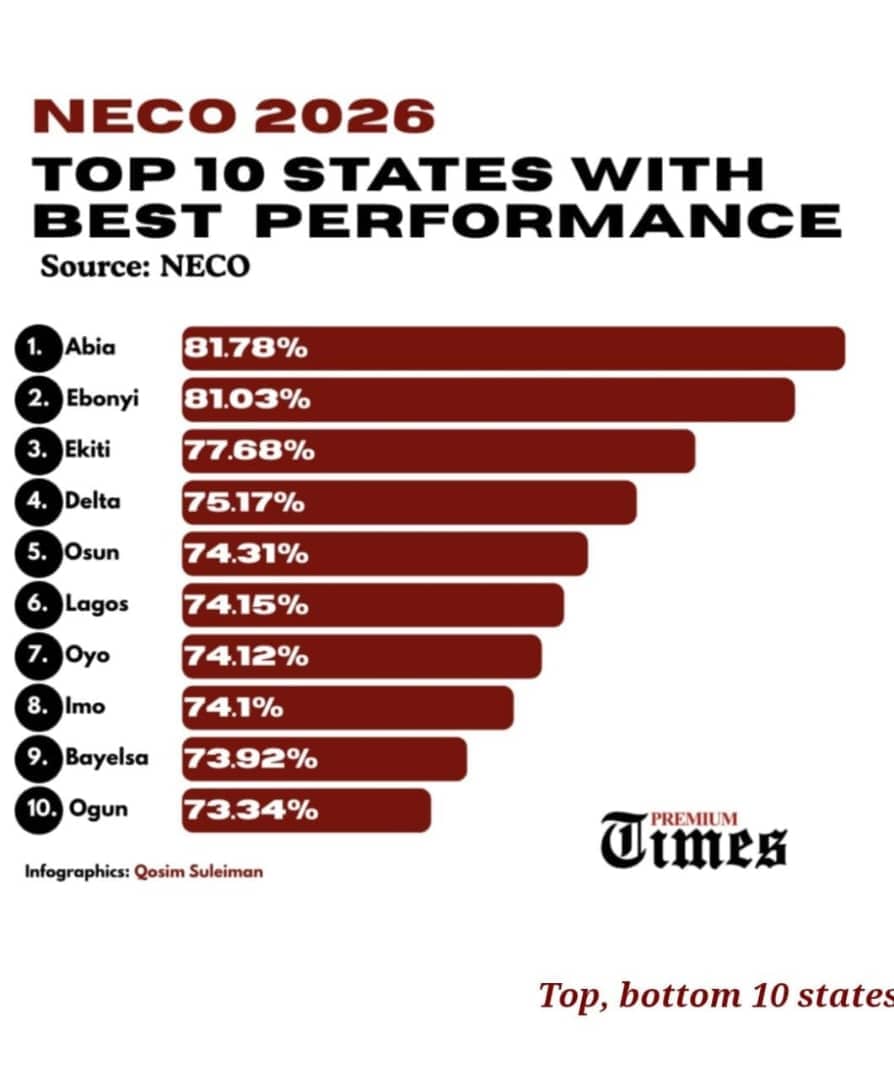
Osun State Governor, Senator Ademola Adeleke, has hailed the state’s strong performance in the 2026 National Examinations Council (NECO) Senior School Certificate Examination, describing the result as a positive reflection of ongoing efforts to reposition education in the state.
Osun placed fifth nationally in the 2026 NECO ranking, with 74.31 per cent of candidates recording at least five credits, including English Language and Mathematics.
While congratulating the students, teachers, parents, school administrators and other stakeholders, the governor noted that the state performance has been improving within a single digit rating for three consecutive years namely 2024, 2025 and 2026.
“Osun has moved from 33rd position in the 2022 NECO ranking to 5th in 2026, while improving its pass rate to 74.31 per cent. This is encouraging, and it shows that our sustained interventions in the education sector are yielding positive results,” the Governor said.
Governor Adeleke said the improved performance reflects his administration’s deliberate investment in the education sector, including the recruitment of additional teachers to strengthen the teaching workforce, while prioritising workers’ welfare and creating a more conducive environment for effective teaching and learning across public schools.
The Governor said the performance reinforces his administration’s determination to continue investing in education, noting that the objective is to build a system that gives every Osun child the knowledge, skills and opportunities needed to succeed.
“This result is encouraging, but we see it as a reason to do more. We will continue to invest in our schools, improve the learning environment, support our teachers and provide our students with the necessary tools to excel.
“We are building an education system that prepares our young people not only for examinations but for life,” the Governor said.
He assured that ongoing interventions in the education sector would be sustained and expanded, while urging students to remain committed to their studies.
His Excellency also commended teachers across the state for their dedication and sacrifices, assuring them that the administration would continue to prioritise measures that strengthen the education system and improve workers’ welfare.
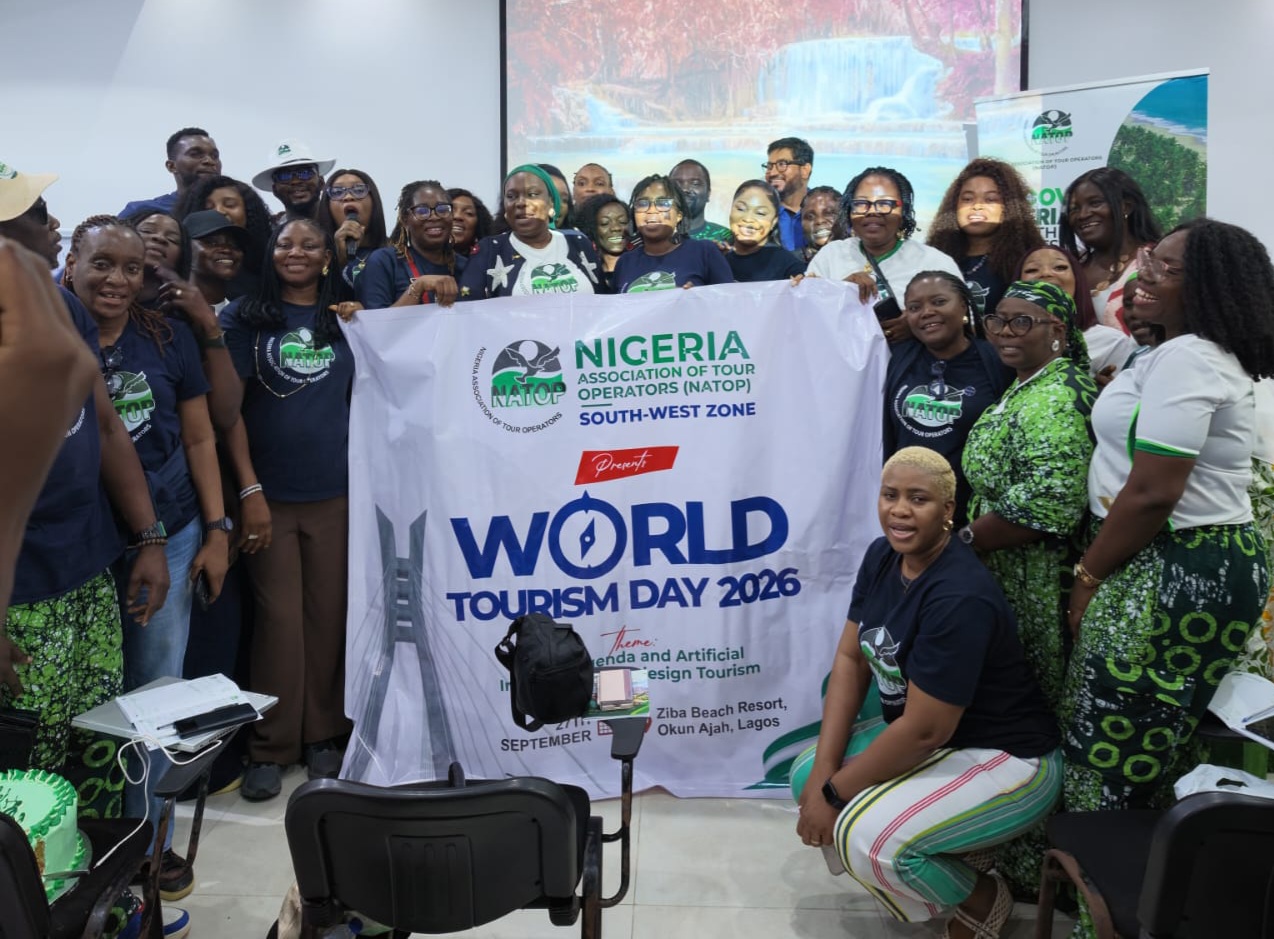
The Nigeria Association of Tour Operators (NATOP) marked the 2026 World Tourism Day with activities which capture capacity building, technology, destination promotion and domestic tourism, and celebration.
In the South West Zone, close to 200 tour operators gathered at Ziba Beach Resort, Lagos, for a special training focused on Artificial Intelligence and its application in tourism, equipping operators with digital tools to improve their businesses and destination marketing.
In Abuja, the FCT and Northern Zone, in collaboration with Naija Adventurers, staged a colourful Tourism Awareness Walk and Hike to the Centre of Nigeria.
The celebration also spread to the South-South Zone, where members marked the day with a destination tour, alongside activities to commemorate with the world tourism day celebrations.
In line with the theme for this year’s WTD celebration: ‘Digital agenda and artificial intelligence to redesign tourism’ the NATOP training on AI and application in tour operation at Ziba Beach Resort Lagos saw a large turnout of the members of the association.
The President of the association, Hajia Bolaji Mustapha explained that the idea for the location and training was to train members on how to do tour business, to know how to promote tourism digitally, using different AI tool and everything so that they will grow their businesses.
She said: “we follow the theme and, you know, blend with the old situation. Let’s do the training so that we attach it to the World Tourism Day with the theme that we have achieved something and also celebrate.”
She said the training will go a long way in helping the tour operators do greater content to digitally tell destination stories using AI, and also using the tool for expression.
Mustapha also explained why the association chose Ziba Beach Resort: “We always attach World Tourism Day to a tourism site. And definitely, if you look at this whole area and this community, that’s why we see that Ziba is a tourism site. We want to explore and of course. The resort newly launched its third phase. So, we will use this opportunity to look at their rooms, look at how we can sell this destination, to showcase it that the resort is actually in Nigeria, not Zanzibar. By using the place, we would kill two birds with one stones.
Facility tour of Ziba Beach Resort
“As tour operators who are willing to tell the good story of our Nigeria, we need to bring ourselves up to the speed, align with the digital revolution. Let everybody go digital. Because we also see the content creators are taking our business, we want to align it with what they do. We are the ones that understand the business and we’ll be able to tell the story better, so that anybody coming to Nigeria will be able to discover Nigeria with the experts.”
Also commenting on the celebration, the NATOP Vice President South West and chairman of the WTD Organizing Committee for the zone, Mrs. Wonuola Olatunde-Lamidi explained why NATOP South West’s usage of the 2026 WTD for training. She said many of the members still have a lot to learn about the tour business, and that some do not understand the foundation of the business, including how to create packages hence the need for the training.
Mrs. Olatunde-Lamidi spoke further: “Many don’t understand the foundation of what it is to create a tour package. And when you have people that are not well-trained in an industry, the industry will not grow. The kind of people that you also have will not have enough earning power to do many things. And because this is an industry that I have been in for 16 years, I run Diamonds and Pearls Travels with my husband. And I’ve seen Diamonds and Pearls Travels metamorphose into a company where people don’t just look at us as travel agents. We have become a Destination Management Company (DMC). We have become a trusted brand. We have become a company that when we talk about a destination, people want to go to that destination because of how we have portrayed the destination. And you may not realize that, as tour operators, you can actually decide where people go. You can make people go to a particular destination by marketing it, by letting them know the benefits of that destination.”
The tour operators had opportunity to tour the resort and unwind during the programme.


