
Metro
NSCDC Arrests Three Hoodlums for Raping Pregnant Kwara Woman in Husband’s Presence

- /home/rhoncare/pointblank.ng/wp-content/plugins/mvp-social-buttons/mvp-social-buttons.php on line 27
https://pointblank.ng/wp-content/uploads/2019/04/NSCDC.jpg&description=NSCDC Arrests Three Hoodlums for Raping Pregnant Kwara Woman in Husband’s Presence', 'pinterestShare', 'width=750,height=350'); return false;" title="Pin This Post">
- Share
- Tweet /home/rhoncare/pointblank.ng/wp-content/plugins/mvp-social-buttons/mvp-social-buttons.php on line 69
https://pointblank.ng/wp-content/uploads/2019/04/NSCDC.jpg&description=NSCDC Arrests Three Hoodlums for Raping Pregnant Kwara Woman in Husband’s Presence', 'pinterestShare', 'width=750,height=350'); return false;" title="Pin This Post">
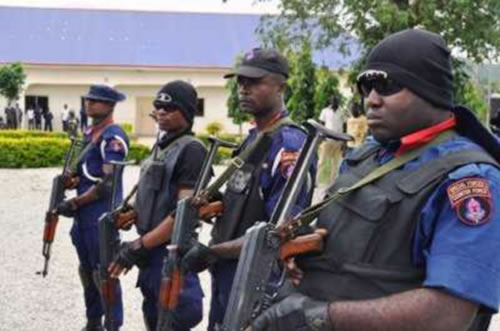
The Nigeria Security and Civil Defence Corps, Kwara State, has arrested three suspects over the alleged rape of a seven-month pregnant woman in Woro village in the Kaiama Local Government Area of the state.
The suspects: Lawal Ibrahim, 25; Mohammed Issa, 19; and Ibrahim Ahmed, 20; were also alleged to have robbed the woman and her husband.
The Public Relations Officer of NSCDC in the state, Ayeni Olasunkanmi, who confirmed the incident, said one of the three suspects, Lawal, was arrested while trying to sell some items stolen from the home of the couple.
He said, “A case of rape and robbery was reported on July 5 at the NSCDC Woro Outpost. The crime was reported to have happened at Woro village in Kaiama LGA around 2am.
“The victims: a seven-month pregnant woman and her husband were allegedly attacked by the suspects in their house at Woro. The seven months’ pregnant woman was allegedly raped and some items were carted away by the assailants.
“Upon getting the report, the state Acting Commandant, DCC Jonah Gabriel, gave an order that the perpetrators be fished out.
“Luck ran out on the suspects as one of them, Lawal Ibrahim, was arrested by our men while he was trying to dispose the stolen items.
“The apprehended suspect gave some confessional statements, which eventually led to the arrest of the other two suspects.”
Ayeni said the suspects were arraigned before an area court in Kaiama.
The Punch


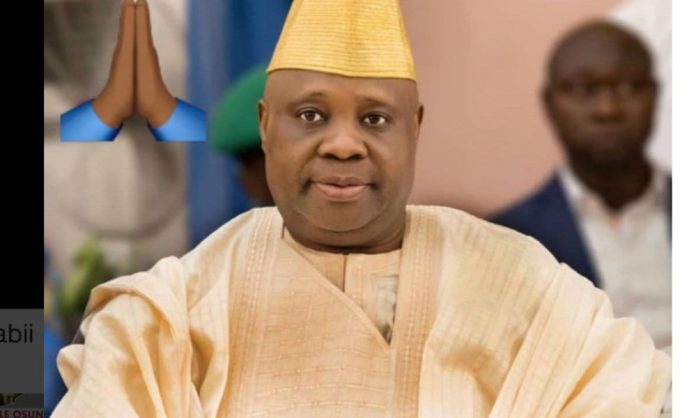
Osun State Governor, Ademola Adeleke, has announced a N500m Election Violence Victims Endowment Fund for verified victims and families affected by pre-election violence in the state.
Adeleke also disclosed that his family, through the Springtime Development Foundation, would provide full scholarships up to university level for the children and dependants of those who lost their lives in the violence.
The governor made the announcement on Wednesday in a statement issued after receiving his Certificate of Return from the Independent National Electoral Commission following his re-election.
He said the fund would support verified victims and affected families, while a Verification and Relief Committee, chaired by the Speaker of the Osun State House of Assembly, Rt. Hon. Adewale Olumide Egbedun, would oversee the identification of victims and distribution of the support.
“This is not a political intervention. It is a humanitarian responsibility. No eligible victim will be excluded because of political affiliation, religion, ethnicity, gender or social status. In grief, there is no political party. In our common humanity, we are one people,” he said.
The governor also named some of those killed in the violence, including Ezekiel Olapade, Aderogba Ajayi, Remi Abass and Kolade Eluyera.
“We remember Ezekiel Olapade, Aderogba Ajayi, Remi Abass, Kolade Eluyera, and every other victim of electoral violence. Regardless of political affiliation, they were first our brothers, sisters and fellow citizens. To their families, your pain is our pain, and your loved ones will never be reduced to mere statistics,” Adeleke said.
He said the decision to establish the fund followed the loss of lives, injuries, destruction of property and livelihoods recorded during the electoral process.
“It is deeply painful that any family should have to bury a loved one because of politics. No election, political office or ambition is worth the life of a single citizen,” he said.
Adeleke also called for unity in the state following the governorship election, assuring residents who voted for other candidates that he remained governor of the entire state.
“The election is over. The campaign is over. The contest is over. Now is the time to govern, unite, heal and build,” he said.
He added, “To those who voted for me, I thank you. To those who voted for another candidate, I thank you for participating in our democracy. I remain Governor to all, and together we must place Osun State above politics.”
The governor said his administration would continue to focus on infrastructure, healthcare, education, workers’ welfare, youth empowerment and economic development, while strengthening accountability, inclusion and transparency.
Adeleke, who described his renewed mandate as a fresh responsibility to serve the people, said, “You have given me another opportunity to serve, and I accept this responsibility with humility. I will work harder. I will listen more. I will do more.”
He added, “Today, we are grateful for victory, but sober in remembrance. Tomorrow, we return to work.”
Adeleke was declared winner of the governorship election after polling 511,067 votes to defeat the candidate of the All Progressives Congress, Bola Oyebamiji, who scored 409,849 votes.
The governor won in 19 of the state’s 30 local government areas, while Oyebamiji secured victory in 11.
The Punch

The management of the Nnamdi Azikiwe University (UniZik), Awka, Anambra State, has ordered an immediate, comprehensive and impartial investigation after a viral video showing students assaulting a lecturer over an alleged sexual misconduct sparked outrage online.
The incident that occurred on Saturday on the Awka campus.
Footage that circulated widely on social media on Saturday captured some UniZik students physically assaulting and rough-handling a lecturer from the Department of Chinese Studies, Faculty of Arts.
According to witnesses and the circulating videos, the lecturer was allegedly caught attempting to molest a female student within the university premises before students intervened.
The clips have drawn widespread condemnation and calls for a thorough probe, with many Nigerians debating both the allegation and the students’ resort to violence.
The lecturer’s identity has not yet been officially released by the university.
In a statement issued at the weekend, the Director of Information and Public Relations, Aloysius Attah, said the institution is “deeply saddened” by the development.
The management strongly condemned jungle justice and self-help while also taking the sexual misconduct allegation seriously.
“The Management of Nnamdi Azikiwe University, Awka, has received reports of the alleged physical assault and attack on a lecturer in the Department of Chinese Studies, Faculty of Arts, following an allegation of attempted sexual misconduct involving a female student of the University,” the statement read.
Attah confirmed that authorities have directed an immediate investigation to “establish the facts and circumstances surrounding the incident.”
UniZik says the investigation will cover two tracks:
1. The sexual misconduct allegation — to determine if the lecturer attempted to molest the female student.
2. The assault on the lecturer — to identify students involved in the physical attack and address breaches of campus discipline.
“The university remains committed to upholding the highest standards of discipline, academic integrity and the safety and dignity of all members of the university community,” Attah added.
Sexual harassment allegations in Nigerian universities have repeatedly sparked protests and policy reviews. UniZik itself has faced pressure in recent years to strengthen its anti-sexual harassment framework.
At the same time, university authorities are under pressure to curb vigilante actions on campus, warning that mob justice undermines due process and endangers lives.
For now, the lecturer has been taken off active duty pending the outcome of the probe, according to campus sources.
UniZik said further updates will be provided as the investigation progresses and urged students and staff to remain calm and allow due process.
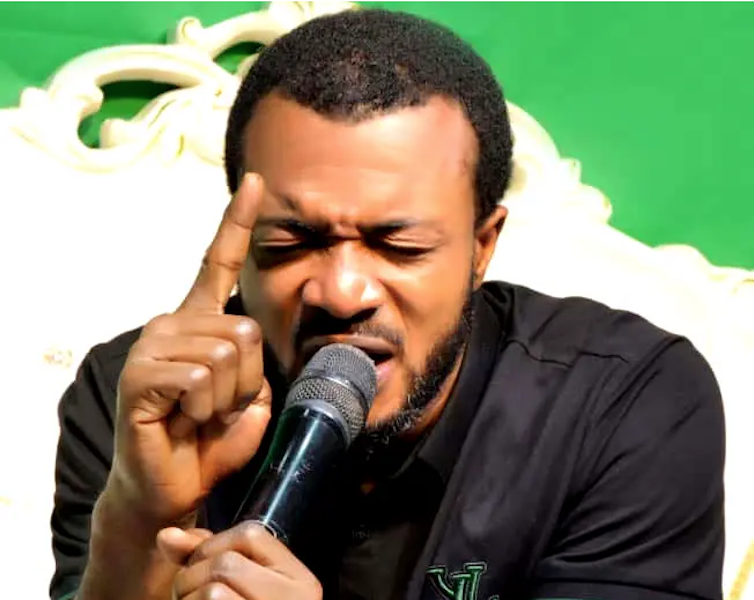
The 2026 World Conference of Zion Prayer Movement Outreach will be held next week at Zion City, the permanent site of the ministry at Mgbichi, Ngor Okpala, Imo State.
A press statement released by Zion Ministry in Lagos on Friday disclosed that the three-day crusade will begin on Friday, August 21, and end on Sunday, August 23, 2026.
The World Conference is the largest annual gathering organized by Zion Prayer Movement Outreach and attracts participants from across Nigeria, Africa, Europe, North America, Asia, the Middle East and others parts of the world.
It is the Third time the annual conference will be held outside Lagos, and the crusade will mark the end of the 100 Days Fasting and Prayer started in May by the ministry. Like in previous editions, hundreds of thousands of Zionites from across the world are expected to attend this year’ conference.
The Annual 100 Days Fasting and Prayers is one of the ministry’s most significant spiritual programmes during which members engage in a season of prayers, fasting, worship, Biblical reflection, thanksgiving and fellowship. The programme culminates in the closing World Conference drawing worshippers, pilgrims, clergy, volunteers and media representatives.
The Spiritual Director of Zion, Evangelist Chukwuebuka Anozie Obi, said that the crusade is expected to record thousands of people giving up their lives to Christ, awesome miracles, instant healings, deliverance from bondage, salvation of souls and verifiable testimonies.


