
Personality in Focus
Ogbunechendo, Ooni Differ on Southern Traditional Rulers’ Council

- /home/rhoncare/pointblank.ng/wp-content/plugins/mvp-social-buttons/mvp-social-buttons.php on line 27
https://pointblank.ng/wp-content/uploads/2026/02/agubuzu.jpg&description=Ogbunechendo, Ooni Differ on Southern Traditional Rulers’ Council', 'pinterestShare', 'width=750,height=350'); return false;" title="Pin This Post">
- Share
- Tweet /home/rhoncare/pointblank.ng/wp-content/plugins/mvp-social-buttons/mvp-social-buttons.php on line 69
https://pointblank.ng/wp-content/uploads/2026/02/agubuzu.jpg&description=Ogbunechendo, Ooni Differ on Southern Traditional Rulers’ Council', 'pinterestShare', 'width=750,height=350'); return false;" title="Pin This Post">
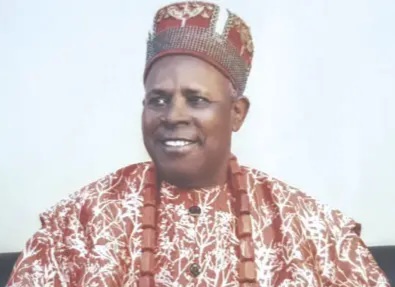
The Ogbunechendo of Ezema Olo Kingdom in Enugu State, Igwe Lawrence Agubuzu, and the Ooni of Ife, Oba Adeyeye Ogunwusi, on Tuesday disagreed over the existence of a southern traditional rulers’ council.
Agubuzu had while addressing participants at the National Traditional and Religious Leaders Summit On Health in Abuja, attended by President Tinubu, said there was “nothing like a Southern Traditional Rulers’ Council”.
He also urged the Federal Government to be wary of those who claim to be members of the council, especially in the disbursement of funds.
“Now, again, they were talking about the Southern Traditional Rulers Committee on Health, and the eminent Professor Pate was saying that this will become an annual event—what we are doing today—if I heard him correctly.
“The truth of the matter is that there is nothing like a Southern Traditional Rulers’ Council. If you come here, Pate, and give money to people on that basis, it’s not correct,” Igwe Agubuzu said.
“The South is not the North. We have our system. We need unity in diversity. So, if you want to deal with us, deal with us in the South-East. If you have resources for us, give them to us. Don’t give it to people who come and say, ‘We’re Southern Traditional Rulers’ Council.
“Democracy is representative government, and anybody who goes to present himself without his people is not democratic or traditional. So, get it. We think that we will do our best. Mr. President, please listen to our cries,” he added.
But the Ooni of Ife countered the position of the Enugu monarch, saying that the membership of the council was optional.
“Southern Traditional Council is very optional. You don’t need to join us if you don’t want to join us, but it’s a force, a formidable force among traditional institutions for us to come together.
“And we are all reputable in all our domains. You can see all of us because one of us made a speech that there’s nothing like that. We don’t agree to that, but our President is there; we don’t want any impression that there’s division,” Oba Ogunwusi told journalists during an interview.
The Osun monarch said the council was not limited to traditional rulers from the South-West.
He also pledged its support for President Tinubu.
“We don’t want to take out South-East. We have Eze Aro here. Eze Arochukwu is one of the very prominent traditional rulers in the South-East. We have a lot of southeastern traditional rulers with whom we are working together for the betterment of the country.
“So for us, it’s something that is key to let the whole world know that if you don’t want to be part of us, you can option your suggestion out. And please, we implore each and every one of us to focus more on news that is of quality, not social media and rumours. This is one of the major things affecting our country,” he added.
Similarly, the Eze Aro of Arochukuwku Kingdom, Eberechukwu Oji, who also identified himself as the publicity secretary of the Southern Nigerian Traditional Rulers’ Council, described the council as a movement.
“As the Ooni said, the Southern Nigerian Traditional Rulers’ Council is a movement. It’s a journey comprising members from across the entire southern part of Nigeria. The Ooni is our chairman.
“We have King Jaja of Opopo, who is from the South-South, and we have eminent traditional rulers from across the southern parts of Nigeria who have come together to advance the cause of the Southern Nigerian Traditional Rulers’ Council,” the Abia monarch said.
He also disclosed that the council was recognised by the Federal Government.
“So let us put it on record and put it on record very clearly. The President was part of the inauguration of the Southern Nigerian Traditional Rulers’ Council. It happened in Owerri, and we have representatives of both the press, the government, and stakeholders in that inauguration,” Oji told journalists.



Kardinal Business Travel, a travel technology company with African and global focus, was among 60 startups that pitched at the 2nd edition of the Economic Community of West African States (ECOWAS) Startup Awards, held at the ECOWAS Commission headquarters in Abuja recently.
The company’s Chief Executive Officer and Founder, Cornelius Ugwunwa, presented the company’s case at the three-day event. The awards was part of an ECOWAS initiative to help West African businesses and startups scale through digital transformation, regional integration and sustainable value chains, with the aim of widening access to global markets.
Temitope Kareem, founder of Nigerian healthtech firm HubPharm Africa, won the top prize of $30,000. Senegal’s Gaynako took home $20,000 as first runner-up, while Steve Bah Blesson’s MyOpinion from Côte d’Ivoire won $15,000 as second runner-up.
Speaking during his pitch, Ugwunwa said Africa needs a new system for business travel. He cited a market with $75 billion in inbound travel spending and a strong business travel component in 2025, while travel and tourism as a whole contributed $228 billion to the regional economy.
“When a company sends its employees across Africa for a business engagement, we at Kardinal noticed the challenges of countless inboxes, spreadsheets and emails, mostly after the trip.
Businesses keep asking: How much did we spend? Who did we spend it on? Was it above or below budget? Can we reconcile everything on one platform?” he said.
He described African business travel as a $30 billion market that is largely fragmented and overly dependent on manual processes.
According to him, many businesses lose over $1 billion to manual travel processing and cannot track spending in real time. “That is why Kardinal exists: to solve this entrenched problem,” he said.
Ugwunwa said GoKardinal is an artificial intelligence-driven platform built to track expenses for African businesses. It brings the entire business travel lifecycle (planning, budgeting, booking, financing and expense tracking) onto one platform, in real time.
“GoKardinal is not another travel platform. It is an infrastructure for business travel, powered by AI for expense management,” he said, adding that the idea is to help businesses move without delay from one location to another to do their best work, expand and make profit.
On the company’s performance, he said the platform serves over 51 businesses in Nigeria and across Africa, with estimated weekly profit of $10,000 and gross merchandise value of over $1 million, growing at 65 per cent annually. he added.
He noted that about 80 per cent of African businesses still run their business travel manually, without any form of expense tracking, in a market worth over $30 billion annually. “African business travel is not just travelling for the fun of it.
It is an ecosystem with the potential to generate over $70 billion when digitalised,” Ugwunwa said.

The President of Security Resources & Risk Management Academy, Lagos, Mr. Matthew Ibadin, has charged officers of the Nigerian Armed Forces and allied nations to practice emotional discipline, warning that unmanaged anger remains a greater threat to a Staff Officer than the enemy.
Ibadin, who is also a doctoral researcher at the Nigerian Defence Academy (NDA) and University of Abuja, stated this on Monday while delivering a lecture on “Emotional Discipline Under Pressure and Anger Management for Staff Officers” to participants of Senior Course 48 at the Armed Forces Command and Staff College (AFCSC), Jaji, Kaduna.
The lecture was attended by 436 officers comprising the Nigerian Army, Nigerian Navy, Nigerian Air Force and officers from eight friendly nations.
Describing anger as “a temporary madness that leaves a permanent record,” Ibadin warned officers that “the line between a respected officer and an inmate is thinner than you can imagine.”
“Anger may enter the room, but must never take command,” he said.
The Lion Principle
Illustrating his point with the parable of the lions, Ibadin noted that while both male and female lions roar, the female roars only when necessary and lives 15-18 years compared to 10-12 years for the male.
“She lives longer not because she is weaker, but because she is more disciplined. Many of us have become male lions in uniform – fighting juniors, spouses, traffic, minor disagreements even when no real threat exists. That constant agitation slowly destroys what you have built,” he said.
He therefore charged officers to “be a female lion in strategy and a male lion only when tactically necessary.”
Five Battlefields Where Anger Destroys
Ibadin identified five battlefields where undisciplined anger destroys officers: Health, Home Front, Office and Command, Career and Prison, and Relationships.
On health, he described anger as a silent killer that triggers hypertension, stroke and cardiac arrest, noting that many officers survive the war front but do not survive peacetime.
“At Jaji, your rank commands respect, but at home your rank is irrelevant. If you win at the office and lose at home, you have lost. An officer whose home is under emotional fire cannot think clearly at the command post,” he cautioned.
He warned that signatures appended in anger to operational orders, procurement papers and personnel assessments could lead to Boards of Inquiry, career ruin and mission failure.
He added that 70 percent of inmates in correctional centres for murder never planned to kill, but acted in a moment of unmanaged anger.
Practical Tools
Ibadin introduced practical tools including the 90-Second Rule and the S.T.O.P Protocol – Stop, Take a Breath (4-4-4), Observe, and Proceed with Discipline – for decisions under pressure.
He adopted Aristotle’s five tests for disciplining anger: Right Person, Right Reason, Right Time, Right Degree, and Right Manner.
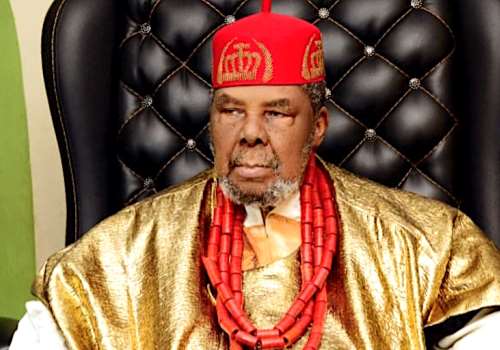
Veteran Nollywood actor, Pete Edochie has declared Chinua Achebe’s 1958 novel ‘Things Fall Apart’ as the greatest African book of all-time.
Speaking in a recent interview with TV3, Edochie explained that ‘Things Fall Apart’ is the greatest African book ever written because it tells the African story.
He stated that the book wouldn’t have been as popular as it is if it were telling the story of the colonisers.
He pointed out that many other African authors have also made efforts in telling African stories since ‘Things Fall Apart’ but none is as “strong” as it.
“The reason why ‘Things Fall Apart’ is the greatest book ever written on the African continent is because it is telling our own story.
“If it had been telling the story of the White man, it won’t be that popular. Many others have made efforts since then but not as strong as ‘Things Fall Apart’,” he said.
He urged African writers and creatives to focus on telling African stories, stressing that it would be their unique strength on the global stage.
The movie star, however, lamented that Africans were allowing their talents to be submerged by embracing foreign influences.
“We Africans permitted our talents to be submerged by overseas influences. I remember once upon a time I was being called Elvis Presley and John Wayne.
“I actually enjoyed answering those names but at some point I had to discard them and pick a name that’s culturally relevant to me. Then I went back to the root and started answering Uwadiegwu,” he added.
Source: DailyPost


