
Metro
Open Letter to Global Leadership: Forging New Intergenerational Partnership for Sustainable Governance


- /home/rhoncare/pointblank.ng/wp-content/plugins/mvp-social-buttons/mvp-social-buttons.php on line 27
https://pointblank.ng/wp-content/uploads/2025/08/DR.TOLULOPE-A.-ADEGOKE-AMBP-UN__-1-744x600.jpg&description=Open Letter to Global Leadership: Forging New Intergenerational Partnership for Sustainable Governance', 'pinterestShare', 'width=750,height=350'); return false;" title="Pin This Post">
- Share
- Tweet /home/rhoncare/pointblank.ng/wp-content/plugins/mvp-social-buttons/mvp-social-buttons.php on line 69
https://pointblank.ng/wp-content/uploads/2025/08/DR.TOLULOPE-A.-ADEGOKE-AMBP-UN__-1-744x600.jpg&description=Open Letter to Global Leadership: Forging New Intergenerational Partnership for Sustainable Governance', 'pinterestShare', 'width=750,height=350'); return false;" title="Pin This Post">
By Tolulope A. Adegoke, PhD
“Sustainable governance in the 21st century requires a new operating system: one where intergenerational partnership is not an aspiration, but an engineered and mandatory feature of all decision-making.” – Tolulope A. Adegoke, PhD
Esteemed Leaders, Heads of State, and Architects of Global Policy,
As we navigate the third decade of the 21st century, our world is suspended between unparalleled technological promise and profound systemic peril. This duality defines our epoch. Yet, within this tension lies a persistent, critical flaw in our global governance model: the exclusion of youth from the formal structures of power and long-term decision-making. This letter posits that this is not merely a representational gap, but the central governance failure of our time. To secure a stable, prosperous, and equitable future, we must enact nothing less than a New Intergenerational Partnership—a binding, structural, and practical commitment to integrate youth into the very heart of political and corporate leadership. The alternative is not stagnation, but a heightened risk of repeated crises and a forfeiture of our collective potential.
Deconstructing the Crisis of Legitimacy and Innovation
Our current systems are hemorrhaging legitimacy among the young. This disillusionment stems from a recognizable pattern: short-term political cycles incentivize policies that harvest immediate rewards while deferring complex costs—ecological, financial, and social—to a future electorate that had no say in their creation. This creates a dangerous democratic deficit.
· The Foresight Deficit: Young people are not a monolithic bloc, but they are unified as the primary stakeholders in long-term outcomes. Their lived experience—from navigating precarious job markets shaped by automation to mobilizing for climate justice—grants them an intuitive, granular understanding of emerging realities. Excluding this perspective from high-level strategy results in policies that are reactive, myopic, and often obsolete upon implementation. For instance, regulatory frameworks for artificial intelligence or biotechnology crafted without the generation that will be most affected by their societal integration are inherently flawed.
· The Innovation Imperative: The challenges we face are novel and interconnected. Solving them requires cognitive diversity and a willingness to dismantle legacy paradigms. Youth bring this disruptive ingenuity. They are natural systems thinkers, adept at collaborating across digital networks and cultural boundaries. Their inclusion is not about adding a “youth perspective” as a separate item on an agenda; it is about fundamentally improving the quality of decision-making through necessary cognitive diversity. It is the difference between digitizing an old process and reimagining the system entirely.
A Bilateral Blueprint: Cultivating Capacity and Engineering Access
Bridging the intergenerational divide requires a twin-pillar strategy: one pillar dedicated to rigorous preparation, the other to guaranteed access. One without the other is insufficient.
Pillar One: The Cultivation of “Next-Gen Stewards” Through Ecosystem Reform
We must re-engineer societal institutions to build not just skilled employees, but wise, ethical, and resilient stewards capable of wielding complex responsibility.
1. Transformative Education Systems: Our educational institutions, from secondary to tertiary levels, must pivot from knowledge transmission to capacity cultivation. Core curricula should be restructured around:
o Complex Problem-Solving: Using real-world case studies on climate migration, public health, or digital ethics.
o Civic Architecture: Teaching the mechanics of governance, policy drafting, public finance, and diplomatic negotiation.
o Ethical Leadership: Embedding philosophy, mediation, and integrity frameworks into all disciplines.
o Planetary Literacy: Ensuring every graduate understands the core principles of ecological systems and sustainable economics.
2. Global Mentorship & Fellowship Networks: We propose the creation of a Global Stewardship Fellowship, a publicly and privately funded initiative that places high-potential young adults into year-long, rotating apprenticeships across sectors—spending time in a ministerial office, a multinational corporation’s sustainability division, a UN agency, and a grassroots NGO. This builds empathy, systemic understanding, and a powerful professional network dedicated to the public good.
3. The “Civic Sandbox”: National and local governments should allocate dedicated “innovation budgets” and regulatory sandboxes for youth-led pilot projects. Whether it’s testing a universal basic income model in a municipality, deploying blockchain for land registry transparency, or piloting a zero-waste circular economy program, these sandboxes provide the critical space for experimentation, managed failure, and scalable success.
Pillar Two: Structural Integration – From Tokenism to Tenured Influence
Preparation must be met with irrevocable access. We must engineer specific, mandated entry points into leadership.
1. Legislated Quotas for “Next-Gen Leadership Roles”: We advocate for national legislation requiring that a minimum percentage (e.g., 25-30%) of all senior governmental advisory roles, board positions in state-owned enterprises, and diplomatic corps slots be filled by individuals under 35, selected through meritocratic and competitive processes. These cannot be silent roles; they must carry voting rights, budgetary oversight, and public reporting responsibilities.
2. Mandatory Youth Policy Advisory Panels: Beyond junior minister roles, every major ministry or department should be required to establish a Mandatory Youth Policy Advisory Panel. This formally recognized body, composed of young experts and representatives, would receive all non-classified policy briefings and legislative drafts. Their mandate would be to produce and publish independent, alternative analyses, impact assessments, and recommendations, which would then be formally submitted for official parliamentary or congressional review alongside the government’s proposals. This ensures their expert critique and innovative ideas become a mandatory part of the legislative record and public debate.
3. Intergenerational Co-Leadership Models: For specific, future-focused portfolios—such as Minister of Digital Transformation, Minister of Climate Resilience, or Minister of Future of Work—we propose a mandatory co-leadership model. One experienced administrator and one appointed youth leader would share the title and decision-making authority, forcing collaborative governance and instant knowledge transfer.
The Cross-Sectoral Dividend: Concrete Solutions Emerge
This structural inclusion is not an isolated political reform; it is the catalyst for unlocking solutions across every sector.
· Economic Renaissance: Young entrepreneurs are at the forefront of the purpose-driven economy. Their direct influence in economic ministries can redirect investment toward regenerative agriculture, renewable energy micro-grids, and the care economy, creating jobs while solving social problems. They are best positioned to formalize the vast informal sector through inclusive fintech and platform cooperatives.
· Accelerated Climate & Ecological Restoration: Young leaders treat the climate crisis with the urgency it demands. Their inclusion moves debates from cost distribution to opportunity creation, prioritizing investments in green infrastructure, biodiversity credits, and just transition policies that are both socially fair and ecologically sound.
· Trust-Based Technological Governance: From data privacy to algorithmic accountability, young digital natives can design governance frameworks that protect citizens without stifling innovation. They can pioneer models for digital public infrastructure, data cooperatives, and civic tech that enhance transparency and rebuild public trust.
· Social Cohesion and Narrative Renewal: Having often grown up in more diverse societies, young leaders can design immigration policies that are humane and economically smart, craft narratives that counter polarization, and rebuild community fabric through culture and sport, addressing the loneliness and alienation that fuel extremism.
The Imperative for a Global Commitment: From Isolated Action to Collective Norm
This cannot be a piecemeal, nation-by-nation endeavor. The scale of our interconnected challenges demands a synchronized, normative shift.
We therefore call for the immediate development and ratification of a Global Framework for Intergenerational Partnership (GFIP), to be adopted at the United Nations General Assembly. This Framework would:
1. Establish Clear Metrics: Create a standardized index measuring youth inclusion in legislatures, cabinets, corporate boards, and diplomatic missions, with annual public reporting and peer review.
2. Create a Financing Mechanism: Launch a dedicated global fund, capitalized by sovereign and private contributions, to finance the Global Stewardship Fellowship, Civic Sandboxes, and youth policy incubators worldwide.
3. Institute Diplomatic Recognition: Incorporate a nation’s GFIP compliance and performance into international assessments, credit ratings, and partnership considerations, making intergenerational equity a core component of a nation’s global standing.
A Final Word to Two Generations:
To Emerging Leaders: Your mandate is to prepare with relentless rigor. Master the details, but never lose the vision. Cultivate the humility to learn from the past and the courage to redesign the future. Lead with evidence, empathy, and an unwavering commitment to integrity.
To Established Leaders: Your defining legacy lies in the leaders you raise, not just the monuments you build. True statesmanship in this century is measured by your ability to voluntarily share power, to mentor without condescension, and to institutionalize pathways that make your own position, one day, gracefully obsolete in a better system. This is the highest form of patriotism and planetary stewardship.
True leadership is measured not by the monuments it builds, but by the successors it empowers. The urgent task of our time is to forge an unbreakable partnership between experience and vision—to build the scaffolding for the next generation to stand higher than we ever could.
The status quo is a failing strategy. The New Intergenerational Partnership is the pragmatic pathway forward. The time for deliberation has passed; the era of implementation must begin.
Dr. Tolulope A. Adegoke, AMBP-UN is a Doctor of Philosophy (PhD) in History and International Studies, Fellow Certified Management Consultant & Specialist, Fellow Certified Human Resource Management Professional, a Recipient of the Nigerian Role Models Award (2024), and a Distinguished Ambassador For World Peace (AMBP-UN). He has also gained inclusion in the prestigious compendium, “Nigeria @65: Leaders of Distinction”



The Edo State Special Criminal Court has sentenced four men to death for their involvement in the kidnapping of a woman at the Vegetable Market along Airport Road in Benin City.
Justice Aigbona Momodu handed down the sentences after finding the defendants guilty on multiple counts connected to the kidnapping case.
The convicts are Marvellous Isaac, Wisdom Michael, Rufus Emete Michael and Gift Raphael.
Isaac and Michael were sentenced to death on counts two through nine. They also received separate prison terms on other counts, including seven years on count one, while Isaac was sentenced to 10 years on count 10 and life imprisonment on count 11.
Rufus Emete Michael was sentenced to death on counts two, three, four, six and seven, in addition to a seven-year prison term on count one.
The fourth defendant, Gift Raphael, was sentenced to death on counts two, four, six and eight and received seven years imprisonment on count one.
Delivering the sentences, Justice Momodu ordered that the death sentences be carried out by hanging or lethal injection, in accordance with the court’s judgment.
The court also ordered the forfeiture of a JoJef pump-action firearm and ammunition tendered as exhibits during the trial.
The firearm, identified as Exhibit M, along with two unused cartridges and two spent cartridges listed as Exhibits E and E1, was ordered to be handed over to the Edo State Police Armourer at the State Criminal Investigation Department for destruction.
Justice Momodu directed that the exhibits be transferred to the police through the Deputy Director of the Criminal Division and destroyed within 30 days.
The convictions bring to an end the trial arising from the abduction of the woman at the Vegetable Market along Airport Road, an incident that added to concerns over kidnapping and armed crime in Benin City.
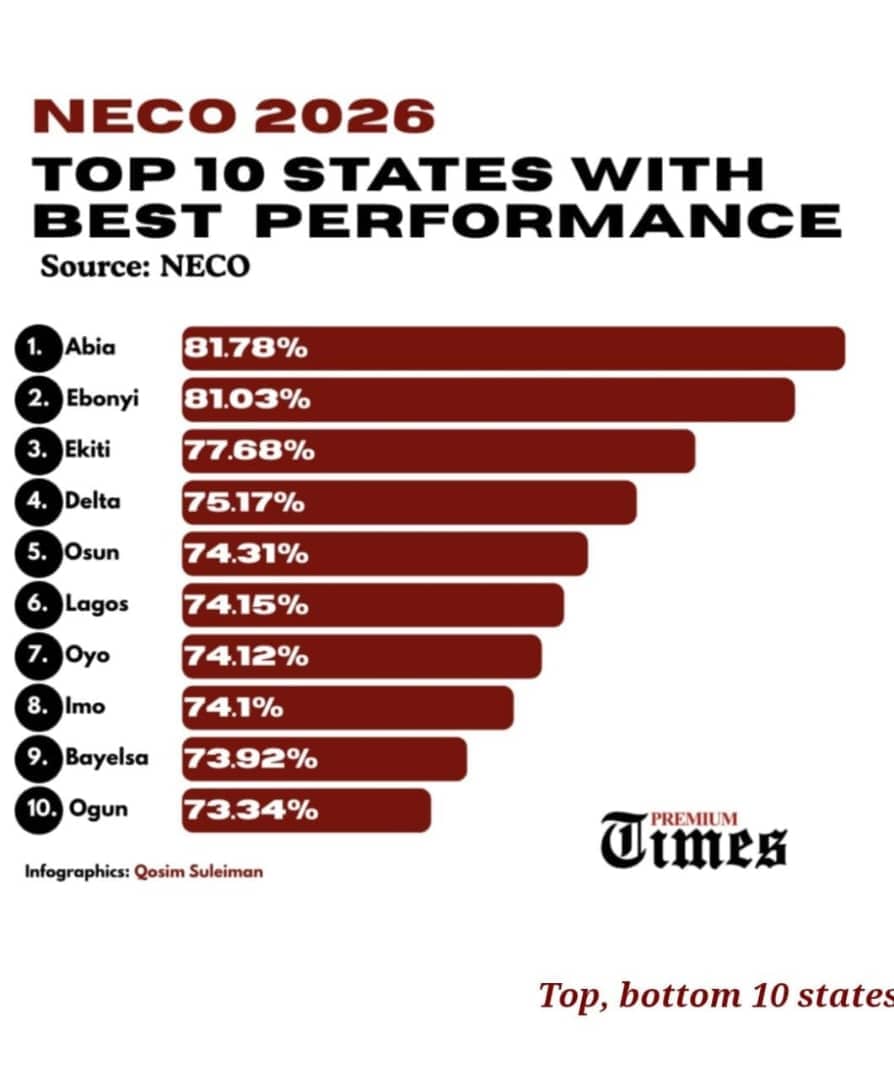
Osun State Governor, Senator Ademola Adeleke, has hailed the state’s strong performance in the 2026 National Examinations Council (NECO) Senior School Certificate Examination, describing the result as a positive reflection of ongoing efforts to reposition education in the state.
Osun placed fifth nationally in the 2026 NECO ranking, with 74.31 per cent of candidates recording at least five credits, including English Language and Mathematics.
While congratulating the students, teachers, parents, school administrators and other stakeholders, the governor noted that the state performance has been improving within a single digit rating for three consecutive years namely 2024, 2025 and 2026.
“Osun has moved from 33rd position in the 2022 NECO ranking to 5th in 2026, while improving its pass rate to 74.31 per cent. This is encouraging, and it shows that our sustained interventions in the education sector are yielding positive results,” the Governor said.
Governor Adeleke said the improved performance reflects his administration’s deliberate investment in the education sector, including the recruitment of additional teachers to strengthen the teaching workforce, while prioritising workers’ welfare and creating a more conducive environment for effective teaching and learning across public schools.
The Governor said the performance reinforces his administration’s determination to continue investing in education, noting that the objective is to build a system that gives every Osun child the knowledge, skills and opportunities needed to succeed.
“This result is encouraging, but we see it as a reason to do more. We will continue to invest in our schools, improve the learning environment, support our teachers and provide our students with the necessary tools to excel.
“We are building an education system that prepares our young people not only for examinations but for life,” the Governor said.
He assured that ongoing interventions in the education sector would be sustained and expanded, while urging students to remain committed to their studies.
His Excellency also commended teachers across the state for their dedication and sacrifices, assuring them that the administration would continue to prioritise measures that strengthen the education system and improve workers’ welfare.
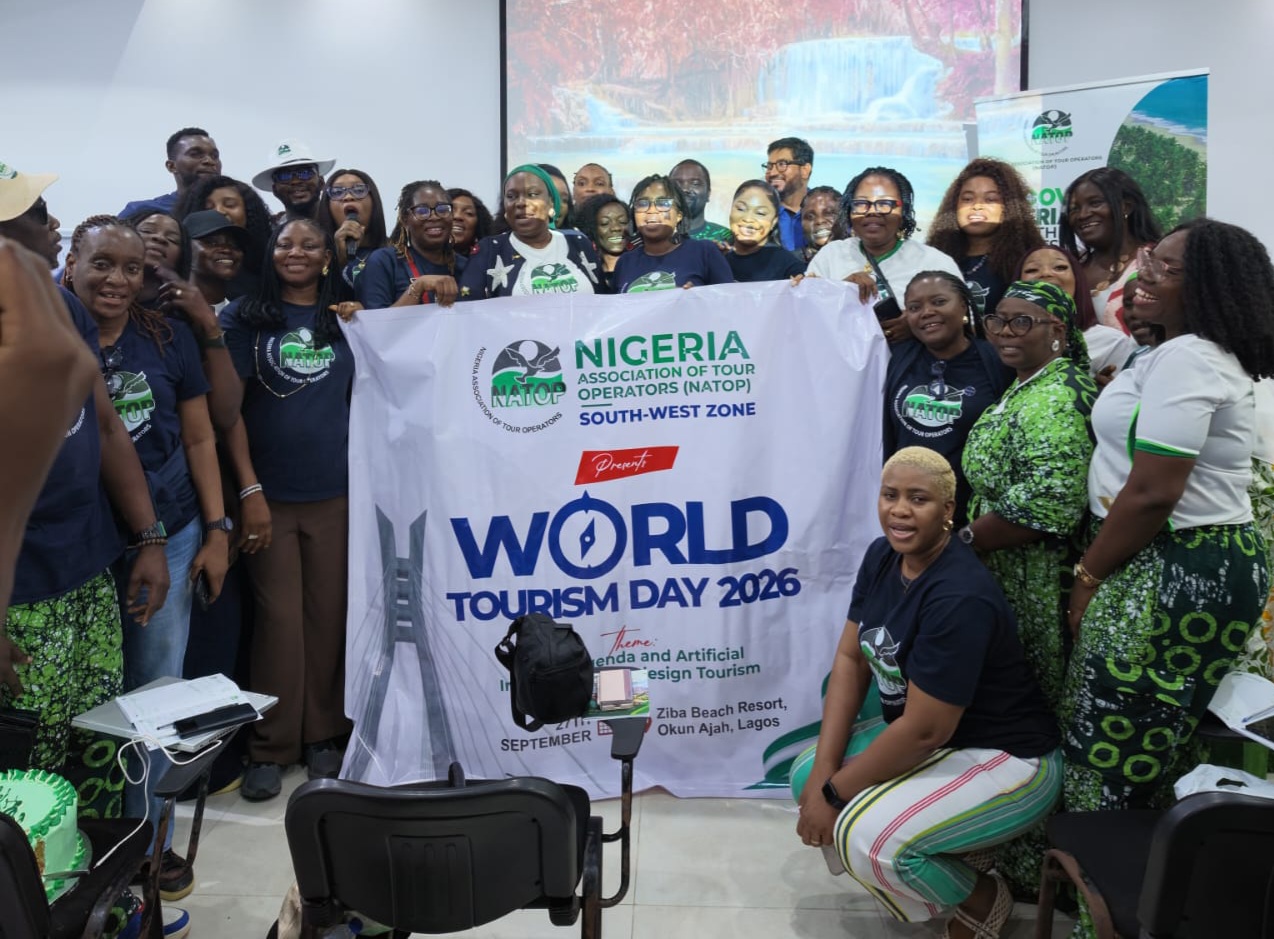
The Nigeria Association of Tour Operators (NATOP) marked the 2026 World Tourism Day with activities which capture capacity building, technology, destination promotion and domestic tourism, and celebration.
In the South West Zone, close to 200 tour operators gathered at Ziba Beach Resort, Lagos, for a special training focused on Artificial Intelligence and its application in tourism, equipping operators with digital tools to improve their businesses and destination marketing.
In Abuja, the FCT and Northern Zone, in collaboration with Naija Adventurers, staged a colourful Tourism Awareness Walk and Hike to the Centre of Nigeria.
The celebration also spread to the South-South Zone, where members marked the day with a destination tour, alongside activities to commemorate with the world tourism day celebrations.
In line with the theme for this year’s WTD celebration: ‘Digital agenda and artificial intelligence to redesign tourism’ the NATOP training on AI and application in tour operation at Ziba Beach Resort Lagos saw a large turnout of the members of the association.
The President of the association, Hajia Bolaji Mustapha explained that the idea for the location and training was to train members on how to do tour business, to know how to promote tourism digitally, using different AI tool and everything so that they will grow their businesses.
She said: “we follow the theme and, you know, blend with the old situation. Let’s do the training so that we attach it to the World Tourism Day with the theme that we have achieved something and also celebrate.”
She said the training will go a long way in helping the tour operators do greater content to digitally tell destination stories using AI, and also using the tool for expression.
Mustapha also explained why the association chose Ziba Beach Resort: “We always attach World Tourism Day to a tourism site. And definitely, if you look at this whole area and this community, that’s why we see that Ziba is a tourism site. We want to explore and of course. The resort newly launched its third phase. So, we will use this opportunity to look at their rooms, look at how we can sell this destination, to showcase it that the resort is actually in Nigeria, not Zanzibar. By using the place, we would kill two birds with one stones.
Facility tour of Ziba Beach Resort
“As tour operators who are willing to tell the good story of our Nigeria, we need to bring ourselves up to the speed, align with the digital revolution. Let everybody go digital. Because we also see the content creators are taking our business, we want to align it with what they do. We are the ones that understand the business and we’ll be able to tell the story better, so that anybody coming to Nigeria will be able to discover Nigeria with the experts.”
Also commenting on the celebration, the NATOP Vice President South West and chairman of the WTD Organizing Committee for the zone, Mrs. Wonuola Olatunde-Lamidi explained why NATOP South West’s usage of the 2026 WTD for training. She said many of the members still have a lot to learn about the tour business, and that some do not understand the foundation of the business, including how to create packages hence the need for the training.
Mrs. Olatunde-Lamidi spoke further: “Many don’t understand the foundation of what it is to create a tour package. And when you have people that are not well-trained in an industry, the industry will not grow. The kind of people that you also have will not have enough earning power to do many things. And because this is an industry that I have been in for 16 years, I run Diamonds and Pearls Travels with my husband. And I’ve seen Diamonds and Pearls Travels metamorphose into a company where people don’t just look at us as travel agents. We have become a Destination Management Company (DMC). We have become a trusted brand. We have become a company that when we talk about a destination, people want to go to that destination because of how we have portrayed the destination. And you may not realize that, as tour operators, you can actually decide where people go. You can make people go to a particular destination by marketing it, by letting them know the benefits of that destination.”
The tour operators had opportunity to tour the resort and unwind during the programme.


