
News
Opinion: 33 Years of Road Safety Administration, Traffic Management in Nigeria, Journey So Far

- /home/rhoncare/pointblank.ng/wp-content/plugins/mvp-social-buttons/mvp-social-buttons.php on line 27
https://pointblank.ng/wp-content/uploads/2021/02/IMG-20210218-WA0000-1000x600.jpg&description=Opinion: 33 Years of Road Safety Administration, Traffic Management in Nigeria, Journey So Far', 'pinterestShare', 'width=750,height=350'); return false;" title="Pin This Post">
- Share
- Tweet /home/rhoncare/pointblank.ng/wp-content/plugins/mvp-social-buttons/mvp-social-buttons.php on line 69
https://pointblank.ng/wp-content/uploads/2021/02/IMG-20210218-WA0000-1000x600.jpg&description=Opinion: 33 Years of Road Safety Administration, Traffic Management in Nigeria, Journey So Far', 'pinterestShare', 'width=750,height=350'); return false;" title="Pin This Post">
By Assistant Corps Marshal Bisi Kazeem fsi
The ugly narrative of Road Traffic crashes in the early 70s changed through Federal Government’s resilience in the establishment of the Federal Road Safety Commission (FRSC) in 1988, as the Lead Agency in road safety administration and traffic management in Nigeria via decree no 45 of 1988 as amended by decree no 35 of 1992, later codified as FRSC Act (CAP 141) Laws of the Federation 1990 and FRSC Act CAP F19, LFN, 2004; FRSC (Establishment) Act, 2007.
Being a strategic intervention to address the ugly trend of road crashes, the FRSC has, since its establishment operated in line with best global practices. The organisation was specifically established and empowered by legislation to coordinate road safety administration and traffic management in Nigeria with an ultimate aim of halting the trend of road traffic crashes and fatalities on all roads (204,000km) in the country, and its Laws and Regulations can be exercised in any part of the country.
The major goal of the founding fathers was for the Corps to become a world class organisation that will fulfill its primary purpose of existence, and align herself towards realizing all United Nations resolutions on reduction of deaths and injuries on the roads and make Nigerian roads one of the safest in the world.
To achieve this cardinal mandate of saving lives without compromise, the FRSC religiously chose the path of honour in efficient service conveyance, by delivering high quality services in line with a Quality Management Policy that is not at variance with other laws of the land in respect to road safety administration and management in the country. Unlike other agencies of government, the establishment of FRSC was in conformity with the lead agency concept recommended by the United Nations and World Health Organization, that member nations should dedicate an agency of government to lead in coordinating Road safety management as a best practice to combat the scourge of death and injuries from RTC.
Prior to the establishment of the FRSC in 1988, the World Health Organization (WHO) had adjudged Nigeria, the second only behind Ethiopia, as the most dangerous country in the world to drive a motor vehicle.
In its thirty three years as lead agency in traffic and safety management, FRSC has recorded tremendous achievements in the area of Traffic Engineering, Road Safety Administration, Traffic Management, rescue operation, and Crash reduction. It has achieved this glorious feat, as a result of a chain of leadership ingenuity that led to the fusion of the services of volunteers called Special Marshals and social responsibility groups in its programmes to enhance road safety management in Nigeria.
To this end, road safety administration in Nigeria has witnessed a paradigm shift from Traditional approach to Safe Systems Approach through the use of state of the art Information Technology facilities; the Corps has been able to enhance its operational capacity aimed at promoting public safety and security. The Corps under different governmental and administrative leaderships has proven to allay the menace of road traffic crashes in the past 33 years.
Considering that road transport sector in Nigeria accounts for over 90% of passengers and freight movement, this exerts undue pressure on the FRSC in discharging its cardinal responsibilities. In view of the foregoing, the Corps has over the years embarked on several reforms which include but not limited to the following: Development of a national road safety strategy road map, established a National Road Safety Advisory Council (NaRSAC) which is directly under the Office of the Vice President, Yemi Osinbajo improved operational efficiency, enhanced regulatory environment, and accelerated response capability to situations that needed immediate actions.
The Corps therefore defined its cause in tandem with UN Decade of Action as well as the mantra of functional 21st century organisation by chatting a path to meet the Accra Declaration of 50% reduction in fatality by 2015, achieve the UN decade of action on road Safety of 50% fatality reduction by 2021 and the rollover of UN Decade of Action in 2031.
The Corps has now come of age after going through good times and tides. In its thirty Three years journey, it recorded for instance, a commendable 62.4% reduction in crash from 40,881 in 1976 to 25,792 within its first operational year alone. In this regard, it is instructive to state that the Corps has doggedly fought RTC from the unacceptable 40,881 of 1976 down to 10522 in 2020. The statistics above shows that the Corps is gaining grounds accordingly.
As a performance driven organisation with clearly set measurable Key performance Indicators, FRSC is today, the only law enforcement organization in Nigeria certified by the International Standard organization. The Corps has over three decades designed and operated 28 web applications for its operational activities so as to create an accessible platform for the general public.
The introduction of the toll free 122 emergency number and a 24 hours call center established to reduce response time for crash victims; a single step that has reduced emergency response time from 50 minutes to 15 minutes thereby decreasing the number of fatalities in crash situations. More so, the introduction of Verification Portal for drivers licence and number plates, the introduction of the Road Transport Safety Standardisation Scheme (RTSSS) for uniformity and harmonization of fleet operators in the country, the Driving School Standardisation Scheme (DSSP), the introduction of the speed limiting device whose enforcement began on 1st February, 2017, and the vehicle tracking system among others, are policies formulated and implemented to fight road traffic crash to extinction.
Further to the aforementioned, as one of the nation’s custodian of critical data infrastructure, the Corps has successfully strengthened inter-agency cooperation with relevant stakeholders such as the National Identity Management Commission (NIMC), National Bureau of Statistics (NBS), Nigerian Customs Service (NCS), and Banks in Nigeria with evident success in inter agency collaboration and harmonization of data for national development.
Again, it is noteworthy to look at the direction of the present leadership of Dr Boboye Oyememi’s swift response to the incessant abuse of traffic rules which led to the putting together of the OPERATION COBRA to address certain life-threatening traffic-related offences. This singular step has become instrumental to the decline in crash rate as offenders apprehended by the Operation Cobra squad are usually referred to a government health facility for Emotional Stability Test. Oyeyemi’s Management has so far constructed and inaugurated 16 permanent structures in various Sector commands, with other two awaiting inauguration.
To achieve the stated targets, the Corps has developed transformational initiatives focused on People, Processes and Technology (PPT) that is why today not only does its staff pride as the most disciplined but the Corps stands as the best Information Technology (IT) driven organization in Nigeria with its robust data base and over 95 percentage digitalized administrative and operational procedures.
It is therefore, expedient to state that the era covering the period of reign of the present Corps Marshal, Dr. Boboye Oyeyemi, and establishment of State Traffic Agencies was encouraged to further complement the function of the FRSC within the states. The Corps also embarks in consultation with stakeholders who have become more involved through the mechanism of the special marshals, celebrity Special Marshals and road Safety clubs. The deployment of FRSC personnel to Tank Farms has to a large degree, dwindled the rate of crashes associated with articulated vehicles, particularly tankers carrying petroleum products. Through its Safe-to- Load initiative, articulated vehicle have been subjected to checks before they are allowed to load from the various depots across the country with trained personnel of the Corps undertaken routine checks to ensure strict compliance.
In pursuit of aggressive public enlightenment programme, the FRSC Management under him established the National Traffic Radio 107.1 FM in October, 2019 as a medium for educating mass members of the public on traffic matters and updating them of road conditions across the country. The Corps further introduced a massive welfare scheme through the Post Service Scheme and the 20,000 Housing project for Staff.
With its present 12 Zonal Commands, 37 Sector Commands, 213 Unit Commands, 41 Out Posts, FRSC Academy, FRSC Training Schools, FRSC Staff College, 214 Driver License Centres/Work Stations, 1 Signage Plant, 1 National Driver License Print Farm, 43 Emergency Ambulance Points (ZEBRAs), and 17 Staff Clinics; it’s quite in order to posit that the Corps has witnessed tremendous expansion in these 33 years rising from its hitherto few command structures to having representation in the 774 Local Governments of the Federation.
On the global scene, FRSC takes leadership role of West African road Safety Organisation (WARSO) as part of measures to scale up the bar on road safety management within the West African region. . Further to this, the Corps has provided technical assistance to Sierra Leone, Liberia, Ethiopia and so on. It has secured implementation of a policy robust engagement with international organizations for capacity building including world bank project on Safe corridor Project etc. Apart from succeeded in securing the endorsement of National Road Safety Strategy in 2016, FRSC made Nigeria the first African country to be admitted into International Traffic Safety Data analysis group IRTAD, became the first African country to accede to six (6) United Nations Conventions on Road Safety. This is to align with global best practice and domesticate the standards.
These efforts have given the organization awards both national and international especially during a workshop under the auspices of the United Nations Economic Commission for Africa in Adis Ababa, Ethiopia, where the FRSC was adjudged the best lead agency on road safety management in Africa.
In the same vein, the Corps’ success story has been attributed to its establishment under the Presidency with clear mandate and budget, also identified the introduction of a world class drivers’ licensing standard by the FRSC which is difficult to forge, building and maintenance of a dedicated work force including regular marshals and a volunteer arm and optimal deployment of technology, a feat which has been described as unparalleled in Africa, South of the Sahara.
Experts in the transportation industry also identified data utilization and transparency as one of the Corps’ quick win strategies which has ensured effective management of traffic-related matters through a weekly reportage of traffic trends, utilisation of data for performance monitoring and targeted interventions, effective monitoring, evaluation and planning, in addition to transparent evaluation of trends and sustained drive for improved performance.
In recognising the leadership role FRSC has played in shaping Nigeria’s Road Safety in thirty three (33) years, it is important to acknowledge that the level of awareness and citizen’s view of road safety as a collective responsibility together with political will of the government is the reason for the achievements so far recorded.
Bisi Kazeem is the Corps Public Education Officer, FRSC.


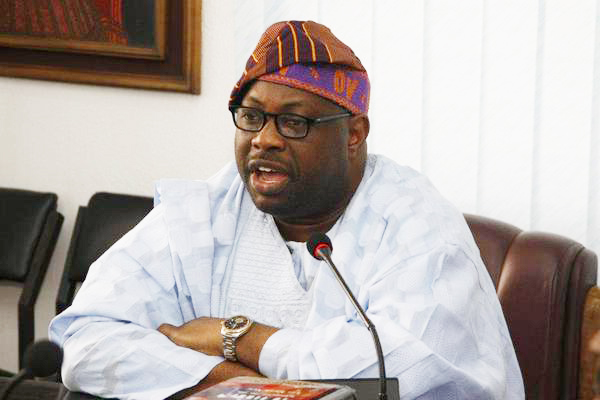
A chieftain of the African Democratic Congress (ADC), Chief Dele Momodu, has said no political permutation will save President Bola Tinubu in the 2027 presidential election, insisting that widespread hunger and hardship will determine the outcome.
Momodu stated this on Thursday during an appearance on Channels Television’s Politics Today, anchored by Seun Okinbaloye.
According to him, Nigerians across all regions and ethnic lines are united by economic hardship, which no amount of money or political calculation can overcome.
“The common factor now is the hunger in the land. No permutation can beat hunger. The Yorubas are suffering, the Hausas are suffering, the Igbos are suffering, everybody is suffering,” he said.
He argued that President Tinubu cannot buy the entire country, even if he was able to deploy money effectively in Lagos State politics in the past.
“Tinubu believes he can buy the whole of Nigeria, but my personal belief is that if he could buy the whole of Lagos, I doubt if he can use money to buy the whole of Nigeria,” Momodu stated.
The Ovation Publisher said Nigerians had become wiser and would collect any money offered to them during elections but still vote according to their conscience.
He cited the Osun State governorship election as a case study, noting that, despite the huge funds allegedly deployed, the people voted for Governor Ademola Adeleke.
“And a lot of people will take the money like they took it in Osun State. People’s eyes are wide open now. They brought a lot of money to Osun State, but they still lost the election to Ademola Adeleke,” he said.
Momodu also recalled that Tinubu lost Lagos State to Mr Peter Obi of the Labour Party in the 2023 presidential election, which he said proves that incumbency and financial muscle do not guarantee victory.
He maintained that President Tinubu would not win in 2027, claiming that many Nigerians could not imagine a second term for the administration.
“If you ask an average Nigerian today, do you trust Tinubu to conduct a free and fair election? 90 per cent will say no. Nobody trusts Tinubu, including his own supporters,” Momodu said.
On the detention of former Kaduna State Governor, Mallam Nasir El-Rufai, Momodu described him as a “prisoner of conscience” who is being persecuted because of his political influence.
“Nasir El-Rufai is a lion. They caged him because he is a lion. Even when a lion is caged, it is still a lion. They want him locked up until after 2027 because they fear his influence,” he said.
He disclosed that El-Rufai’s appointment as Deputy Chairman of the Atiku Abubakar Presidential Campaign Council was in honour of his sacrifice and resilience.
“It is a way of honouring his sacrifice because his travails are quite political in nature. That is why Nasir has become a prisoner of conscience. He is in the hands of a government that he helped to midwife,” Momodu added.
He said the 2027 election would be a referendum on hunger, hardship and governance, and not on political permutations.
Meanwhile, the Senior Special Assistant to the President on Digital Communications, Engagement and New Media Strategy, O’tega Ogra, has faulted Momodu’s comments.
Reacting to the interview, Ogra accused the opposition of embracing “perpetual negativity” and opposing government policies without objective assessment.
He said Momodu’s assertion ignored ongoing reforms and improvements recorded in key economic indicators, including foreign reserves, power generation and inflation management.
Ogra urged opposition figures to offer constructive criticism rather than painting a picture of total failure, stressing that President Tinubu would ultimately be judged by his reforms and track record.
The Tribune
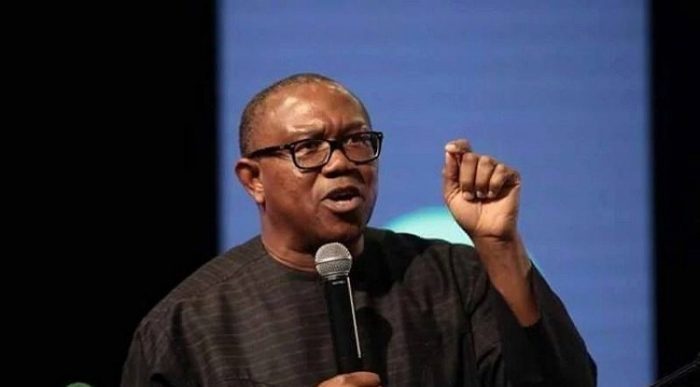
The Nigeria Democratic Congress (NDC) presidential candidate, Peter Obi, has denied asking Nigerians living in the United Kingdom to abandon relatives who depend on them for financial support, saying his message about hardship in Nigeria was distorted by political opponents.
Obi said he appreciates Nigerians in the Diaspora who make sacrifices to support their families at home, stressing that his concern is the country’s dependence on remittances to meet basic needs.
In a statement titled; “My Message Has Been Twisted”, posted on X on Tuesday, the former Governor of Anambra State clarified that he never asked Nigerians abroad to stop supporting their loved ones.
“I deeply appreciate Nigerians in the diaspora who work tirelessly and make enormous sacrifices to support their families back home,” he said.
“Their remittances pay for school fees, hospital bills, rent, and feeding expenses. Their patriotism and sacrifices deserve our profound respect. I never asked them to abandon their loved ones.”
Obi said his message was aimed at drawing attention to the economic conditions forcing millions of Nigerians to rely on relatives abroad for their survival.
“My concern is that Nigeria should not remain a country where millions depend on relatives abroad for basic survival,” he said.
“Our goal must be to build a nation that provides jobs, affordable healthcare, quality education, and economic opportunities for its citizens.”
He accused political opponents of misrepresenting his comments, insisting that his position is about addressing the causes of hardship rather than discouraging financial assistance to families.
“Political opponents may twist my message, but the truth remains clear: I am not asking Nigerians abroad to abandon their families. I am advocating for a Nigeria that will no longer abandon its own people,” he said.
The clarification followed backlash over comments Obi made during a town hall meeting with Diaspora supporters in Manchester on Sunday.
In a video that went viral, Obi urged Nigerians in the UK to think twice before giving money to relatives and others at home who ask them for financial assistance, arguing that such support could ease hardship without addressing its underlying causes.
“You have people at home in Nigeria today who are begging you for money. Tell them no!” he said.
Obi attributed the country’s economic difficulties to poor leadership, urging Nigerians abroad to encourage their relatives and friends at home to vote for leaders who would prioritise productivity and economic opportunities.
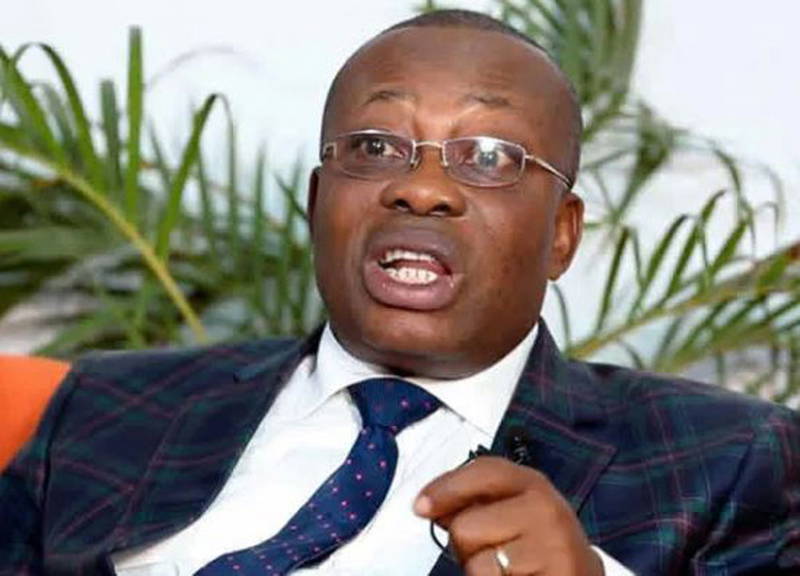
The Court of Appeal, Abuja Division, has dismissed the EFCC’s appeal and affirmed the ₦12 million compensation awarded to Dr. Monday Ubani, SAN, for his unlawful 21-day detention in 2019. The court also awarded ₦300,000 in costs against the Commission.
Ubani was detained after securing administrative bail for a client accused of jumping bail. Despite a court order directing the EFCC to release him conditionally or charge him with any alleged offence, the Commission failed to comply, prompting his lawyer, Chief Professor Mike Ozekhome, to institute a fundamental rights action in his favour.
On January 5, 2022, the Abuja High Court, presided over by Justice Sylvanus Oriji, ruled in Ubani’s favour. The EFCC appealed, challenging the trial court’s jurisdiction and the amount of compensation awarded.
In dismissing the appeal, the Court of Appeal rejected both arguments, holding that the compensation was justified and that the EFCC’s investigative powers do not permit arbitrary detention or disobedience of court orders.
The judgment reaffirms that law enforcement agencies remain subject to the Constitution and judicial authority. It also underscores the protection of fundamental rights, the limits of law enforcement powers and the consequences of unlawful detention.
Beyond the financial award, the decision highlights the responsibilities of sureties and the obligation of security agencies to obey court orders, making it a potentially significant reference in future fundamental rights litigation.


