
News
Opinion: As Edo Goes to the Polls Today


- /home/rhoncare/pointblank.ng/wp-content/plugins/mvp-social-buttons/mvp-social-buttons.php on line 27
https://pointblank.ng/wp-content/uploads/2020/09/Obaseki-Ize-Iyamu-1000x600.jpg&description=Opinion: As Edo Goes to the Polls Today', 'pinterestShare', 'width=750,height=350'); return false;" title="Pin This Post">
- Share
- Tweet /home/rhoncare/pointblank.ng/wp-content/plugins/mvp-social-buttons/mvp-social-buttons.php on line 69
https://pointblank.ng/wp-content/uploads/2020/09/Obaseki-Ize-Iyamu-1000x600.jpg&description=Opinion: As Edo Goes to the Polls Today', 'pinterestShare', 'width=750,height=350'); return false;" title="Pin This Post">
By Raymond Nkannebe
As the good people of Edo State troop out en masse to cast their ballots towards determining the next occupant of the Dennis Osadebe Government House in the State, so much is at stake.
On the one hand, the election is in many respects a referendum on the performance of incumbent Governor Godwin Obaseki who ran a popular campaign some four years ago to become the 5th democratically elected Governor of the State. On the other hand, it is a fight to the finish by political heavyweights in the State seeking to ‘retire’ each other.
Whereas Obaseki had been lavishly marketed by the former National Chairman of the All Progressives Congress (APC) and former Governor of the State, comrade Adams Oshiomhole, four years ago, in an election that seemed as though he was also on the ballot, today, the tables are completely turned. Friends have become bitter enemies. And for Oshiomhole, just about anything would be fine, to prevent Obaseki from winning re-election.
On the campaign stump, he was seen kneeling before a gathering of Benin Chiefs apologizing to them for the indiscretion of canvassing the candidate of his former God-son, Godwin Obaseki four years ago. He now says he (Obaseki) is the worst thing to have happened to the State. And wants to correct it, with the same man, he had told the whole world was an unrepentant liar, school dropout, and “a well known non-performer”, Pastor Osazie Ize Iyamu.
For Ize Iyamu, a veteran political figure in the State by all standards, the election is probably his last shot at acheiving what has clearly become a life ambition. His quest to become a Governor in the State has seen him alternate both ends of the political pendulum at different times depending on the political dynamics. While he had vied for the top job of the State under the banner of the Peoples Democratic Party (PDP) in 2016, he flies the flag of the APC today; a paradox that highlights the fluidity of Nigerian political parties and the lack of politics of ideology in Nigeria’s experiment with elective politics. Like Ize-Iyamu, like Obaseki, but it however remains to be seen whether his (Ize-Iyamu’s) well articulated SIMPLE Agenda makes any impression in the minds of the over 2 million registered voters who would be expected to cast their ballots today and in consequence decide the fate of the political gladiators.
From the robust and engaging campaigns of the leading contenders in the polls and the enthusiasm shown by the people of the state across the 192 wards, there is no doubt that the polls would be well attended, despite the challenges posed by the Covid-19 Pandemic. In this wise, the Electoral Commission, deserves some commendation for the efforts it has taken to create a Covid-19 environment for conduct of elections. As voters, electoral officers, observers and other election stakeholders in the State file out on election duty today, one hopes that compliance with the INEC Guidelines for Conducting Elections during the Covid-19 Pandemic is prioritised.
As with all elections, the place of transparency in the entire process cannot be overemphasized. Indeed the essence of democracy is to afford the people the latitude and liberty to elect their preferred leaders without interference from any quarters. Sadly, our history with elections on this score have been nothing to cheer about. The ugly outcome of the Bayelsa and Kogi State elections indeed leaves much to be desired. And it would be a sad commentary for our election management system if the electoral heist that the world witnessed in both elections repeat itself in Edo.
As usual, INEC says it is ready for the polls, promising to ensure free, fair and credible elections. But if there is anything we have learnt from the past, it is that those words mean nothing. However, today’s elections affords the electoral commission, the rare opportunity to redeem it’s battered image in the opinion of many Nigerians by, asserting it’s neutrality and independence from any power centres whether at Abuja or Edo Government House. The Commission can only do this by undertaking today’s exercise with the demonstrated knowledge that it is the repository of a public trust which must not be treated lightly.
Implicit in the role of INEC in delivering its mandate on free and fair elections, is the role of the security agencies. Last year in Kogi, the Nigerian Police made an embarrassing show of how unprofessional it can be in the conduct of the election as some of its officers and men, were seen publicly prostituting the electoral process to confer undue advantage to a particular candidate. Such cannot be the role of the police which ought to maintain neutrality at all times and provide civil cover for the entire electoral process. Will the situation be different today? That is the question.
Already the events of yesterday evening, where a detachment of about 300 policemen were reported to be laying seige at the hotel lodged by the Chairman of the PDP Campaign Council and Governor of Rivers State, Nyesom Wike does not give one hope that the over 30,000 police personnel posted to the State would conduct their duties with the highest sense of professionalism expected. When one factors the high stakes in today’s exercise as signposted in the serial cases of violence and thuggery that characterised the campaigns, that the police should be on the top of their game cannot be gainsaid. In my opinion, with all the best intentions in the world, there is little INEC can do in delivering on its mandate in the face of a compromised security architecture.
All said and done, beyond considerations of the oversized ego of the political actors in the State for whom this election is a test of their political future, we must not lose sight of the fact that the paramount demographics of today’s exercise is the people of Edo whose political choices today would determine how they’ll fare socially, economically and otherwise in another four years. If the President Muhammadu Buhari administration has taught us anything, it is that elections have huge consequences in the material well being of a people.
Consequently, the people of Edo must resist every attempt to make this election an extension of the political feud between Governor Obaseki and Adams Oshiomohle and vote in line with the dictates of their conscience and their aspirations as a collective. The developmental issues in the State are not in any way different from those in other parts of Nigeria: bad roads, ill equipped schools, unpaid salaries and other entitlements of civil servants, unemployment, electricity, lack of portable water, dilapidated healthcare system, a thin social security and poor access to credit in no particular order. An informed decision today at the ballot would entail a proper assessment of the manafestoes of the 14 political parties on the ballot, against the antecedents of each of the candidates, and making a choice accordingly.
By all means, today’s event should not be seen as an avenue to make quick money by unscrupulous voters and vote traders. Sadly, the wide trust deficit between citizens and leaders occasioned by years of leadership neglect, have given birth to a sprawling vote market as electorates now see election seasons as an opportunity to have their own share of the proverbial National Cake. A pre-election report released by the Centre for Democracy in Africa (CDD) on 17th September, 2020 which cited “vote trading” as a feared dynamic in the election had it that, “a number of voters interviewed insisted that the only thing, which would make them vote, is if a contestant, agrees to pay an amount for the vote”. When citizens trade their vote, they lose the moral right to hold elected governments to account and become complicit in their misery. Edolites can however sieze today’s occasion to elevate the standards of civic conduct at periodic elections in Nigeria.
Finally, elections like every other contests, are only amenable to one winner. In this connection, the conduct of the candidates at today’s exercise comes to mind. For all the foibles of our 21 years uninterrupted democratic process, we have been able to show leadership in the Continent by subscribing to a peaceful transition of power through the ballot, with president Good luck Jonathan elevating the bar in 2015. We cannot afford to go off that trajectory.
Therefore, irrespective of the outcome of the polls, basic rules of decorum, civility and gentlemanliness demands that contestants subscribe to the pact extracted from them by the Abdulsalami Abubakar and Bishop Kukah’s Peace Committee, not to foment trouble or outbreak of law and order by whatever means, but to explore our rich Jurisprudence to ventilate all perceived grievances at the Courts. In the words of former president Goodluck Jonathan, nobody’s political ambition should be worth anyone’s life.
May the best candidate emerge as the Heartbeat of the Nation, beats.
Raymond Nkannebe, a legal practitioner writes from Lagos. Comments and reactions to raymondnkannebe@gmail.com. He tweets @raynkah


National Chairman of the African Democratic Congress (ADC), Davis Mark, has said the party will adhere to electoral rules during the 2027 elections but will resist any attempt to manipulate the process.
Mark spoke on Wednesday in Abuja when the governing council of the Savannah Centre for Diplomacy, Democracy and Development, led by Olukayode Ariwoola, former chief justice of Nigeria, visited him at the ADC headquarters.
“We hold ourselves to the highest standards of good conduct as a political party. We will play by the rules,” Mark said.
The centre’s governing council, known as the council of the wise, was reconstituted in June to engage relevant institutions and political stakeholders towards fostering peaceful, free and credible elections.
The meeting with the ADC chairman was part of the centre’s ongoing engagement with political parties ahead of the elections.
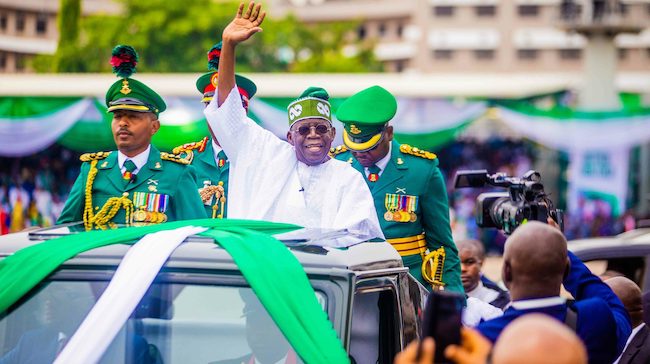
The Presidency has expressed confidence that the growing number of governors backing President Bola Tinubu gives him a stronger political structure and an advantage over opposition candidates ahead of the 2027 presidential election.
The Special Adviser to the President on Policy Communication, Daniel Bwala, said this on Channels Television’s Politics Today, arguing that the political landscape has changed considerably since the 2023 election.
Bwala said the support of governors is significant because they control political structures in their respective states and could translate their backing for Tinubu into grassroots mobilisation ahead of the election.
“Since then, President Bola Tinubu has got how many governors on his side? The governors are the Chief Executive Officers of their respective states. They coordinate the structures of the State. These people say, ‘We are putting our goodwill, our resources, our structure, and our support to the President,’” he said.
He argued that the President’s political position has also been strengthened by people who have benefited from his administration’s policies, including beneficiaries of the Nigerian Education Loan Fund (NELFund), agricultural programmes, manufacturing incentives, CrediCorp and infrastructure projects.
Bwala said the developments constitute “facts, verifiable data” which, in his view, showed that Tinubu had made progress since assuming office in 2023.
He also dismissed suggestions that the administration’s confidence ahead of 2027 is based solely on divisions within the opposition, saying its record in office would form an important part of its campaign.
His comments came amid renewed debate over Tinubu’s popularity and the ability of the opposition to challenge his bid for a second term.
Bwala dismissed an assessment by The Economist that Nigerians may re-elect Tinubu despite disapproval of his administration, arguing that claims about the President’s popularity should be backed by representative opinion surveys.
“When you make a claim that Nigerians don’t like him, without saying, also, that there are a lot of people… one million families that the children have benefited from NELFund, you think they hate him?” he asked.
He similarly cited beneficiaries of agricultural interventions, support for manufacturers and CrediCorp, arguing that such groups should be considered when assessing public sentiment towards the administration.
On concerns over rising poverty and hunger, Bwala acknowledged that more Nigerians had fallen into poverty but attributed the hardship partly to the economic reforms undertaken by the Tinubu administration.
“More people went down to poverty, I acknowledge, I’m not doubting it. But there is a ‘but’ to it. Since when the reform started to today, we have made marked progress,” he insisted.
According to him, the reforms are necessary to address longstanding economic problems, despite the short-term discomfort experienced by Nigerians.
Bwala also defended Tinubu’s statement that Nigeria has moved from the “doldrums” towards prosperity, saying the President is not suggesting that Nigerians would suddenly begin experiencing prosperity from October 1.
He cited NELFund beneficiaries, subsidised healthcare, infrastructure projects and support for small and medium-sized businesses as examples of what he described as prosperity already reaching Nigerians.
“One million families whose children have benefited from the NELFUND programme, what they are benefiting is called prosperity,” he said.
“If you go to an environment or a place where there have been no roads or any form of infrastructure, and we have established infrastructure there, what has come to them is prosperity.”
Bwala further claimed that the opposition has lost several influential political figures who played key roles in their 2023 campaigns.
He said former Vice President Atiku Abubakar no longer has the support of governors who worked for his 2023 campaign, while Peter Obi has also lost some critical political allies.
“In terms of the other candidates who say he will not win, Atiku Abubakar lost close to 25 per cent of key people that you know around him. All the governors that worked for him that time are no longer with him,” Bwala said.
“Peter Obi lost 55 per cent of the critical people that carried his campaign; they’ve all disappeared. And some of them went to Atiku, some of them went wherever they could go to.”
He consequently expressed confidence in Tinubu’s prospects in the 2027 contest, saying the political support around the President was considerably different from what existed before the 2023 election.
News
Globacom Unveils Sponsorship of 2026 Ofala Festival, Promises ‘Never Settle for Less’ Celebration
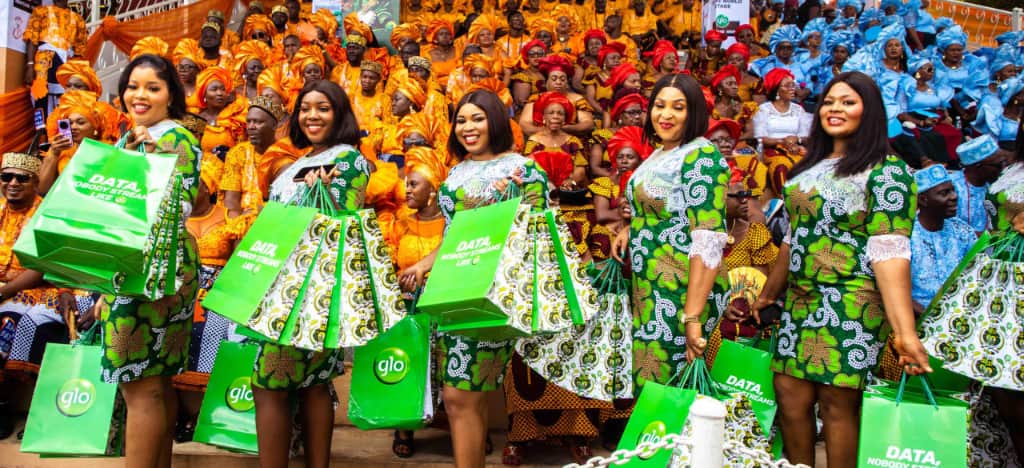
Globacom has once again demonstrated its commitment to Nigeria’s rich cultural heritage by supporting the 2026 Ofala Festival in Onitsha as the official sponsor.
The partnership, which has continued for over 15 years, highlights Globacom’s dedication to celebrating and sustaining cultural traditions that preserve identity, strengthen communities and contribute to the nation’s social and cultural development.
The 2026 edition, which marks the 25th Ofala of the reign of the Obi of Onitsha, Igwe Nnaemeka Alfred Achebe, is themed “Igba Mbo, Iga N’Iru – Strive and Advance: From Resilience to Progress.” The theme resonates strongly with the history and character of Ndi Onicha, whose story is one of resilience, enterprise, adaptability and an enduring determination to advance.
According to Globacom, its continued association with Ofala reflects the Company’s belief that cultural heritage and national development are complementary forces. “For Globacom, Ofala is more than an annual cultural celebration. It is a living expression of identity, continuity and collective aspiration. Our sustained partnership reflects our belief that preserving heritage and advancing society are not competing imperatives, but mutually reinforcing pillars of a progressive nation,” the Company stated.
The telecommunications giant added that the partnership also aligns with its “Never Settle for Less” philosophy, which encourages Nigerians to honour their foundations while continually pursuing greater possibilities. “Never Settle for Less is a philosophy of progress: to respect the foundations upon which we stand, while seeking to broaden possibilities, deepen impact and move the nation forward. We are proud to support a cultural institution that honours its roots while engaging the future,” Globacom said.
Over the years, Ofala has evolved from a sacred royal rite of renewal into a major platform for cultural affirmation, community engagement and social development. The 2026 programme features the Obi’s sacred period of seclusion and ceremonial emergence, the Medical, Health and Wellbeing Community Outreach, the international Oreze Art Exhibition, the Youth Carnival, and the grand finale of Iru Ofala and Azu Ofala.
For Globacom, supporting Ofala therefore goes beyond conventional sponsorship to represent corporate citizenship and cultural stewardship — an investment in preserving the memory, meaning and continuity of a people. The Company noted that the festival’s ability to draw strength from its ancestral foundations while embracing the future mirrors its own commitment to innovation, connectivity and digital inclusion.
As the people of Onitsha gather to celebrate another chapter in the history of the revered institution, Globacom remains proud to stand alongside them in honouring a heritage that continues to inspire generations.


