
News
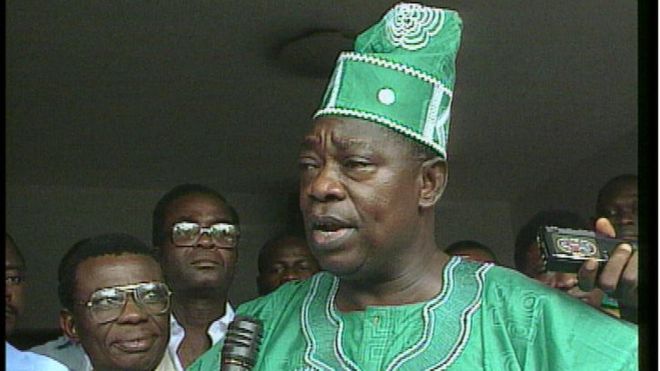
Opinion: Beyond the ‘Politricks’ of June 12

- /home/rhoncare/pointblank.ng/wp-content/plugins/mvp-social-buttons/mvp-social-buttons.php on line 27
https://pointblank.ng/wp-content/uploads/2019/06/June-12.jpg&description=Opinion: Beyond the ‘Politricks’ of June 12', 'pinterestShare', 'width=750,height=350'); return false;" title="Pin This Post">
- Share
- Tweet /home/rhoncare/pointblank.ng/wp-content/plugins/mvp-social-buttons/mvp-social-buttons.php on line 69
https://pointblank.ng/wp-content/uploads/2019/06/June-12.jpg&description=Opinion: Beyond the ‘Politricks’ of June 12', 'pinterestShare', 'width=750,height=350'); return false;" title="Pin This Post">
By Raymond Nkannebe
Many Nigerians, including this writer still share the considered view that the decision by the President Muhammadu Buhari administration last year to post-humously recognise Chief MKO Abiola as the winner of the controversial June 12, 1993 election, was a red herring of sorts, or as some persons have chosen to describe it, a Greek gift.
Giving the timing of that audacious move, only a political neophyte would not see it’s political undercurrents. Since the mishap of June 12, the South West of the Country have not had a last word on the matter. It continues to feel betrayed and cheated after one of its own was denied the seat of the presidency in broad daylight. Not even the surreptitious enthroning of Chief Olusegun Obasanjo as the president of the Country by the military hierracy in 1999 was enough to placate frayed nerves in the West for whom the abortion of the June 12 election was a non-compoundable evil.
The day had thus taken a life of its own and at least two states in the western region observed it annually as a public holiday with state-sponsored activities dedicated to its commemoration. Despite all entreaties made to successive Nigerian governments by the Yoruba intelligentsia since the return of democracy in 1999 to officially decorate June, 12 in the pantheon of Nigeria’s history, same have met a cold reception by Abuja.
While the administration of Good luck Jonathan came close to that with its contemplation of conferring post-humous National Award to the hero of June 12, it was talked out of it by the Justice Belgore award committee who was of the view that national awards cannot be conferred post-humously.
Apparently not persuaded by the sentiments of the award committee, and perhaps determined to consolidate his electoral chances in the South West in the permutations to the recently held general elections, president Muhammadu Buhari saw a political millage within a serious national question: June 12 and decided in vintage Machiavellian fashion, to kill two birds with one stone: boosting his acceptance in the West of Nigeria by the act of conferring even if post-humously, the highest Honour in the land to the acclaimed winner of the June 12 1993 elections, Alhaji Moshood Kashimawo Olawale Abiola on the one hand, and rising to an instructive pan-Nigerian feeling-the genie of June 12 which over the years had become a national affair.
And I think the commendations that followed that deft move by the Buhari administration, even amongst those who acknowledge that it was a political move, says it all.
Of course no one can water down what June 12 represents in the historics of Nigeria. Not only was it an election that afforded Nigerians the opportunity to choose their leader democratically after the truncation of the second republic, it was a missed opportunity for Nigeria to consolidate on her traditional nemesis of division along ethnic and religious lines especially on socio-political issues.
After the ethno-religious sentiments that gave birth to the revenge coup of July 1966 and the civil war that it precipitated, Nigerians never had the occasion to speak on an issue with one voice without being overtaken by ethnic or religious bias. But June 12 was going to change the narrative.
Abiola, a Yoruba of the popular Egba clan and his running mate— Babagana Kingibe, a northerner of the Kanuri stock, were both Muslim candidates on the presidential ticket of the Social Democratic Party (SPD) and contested the June 12 1993 election against Alhaji Bashir Tofa; the Kano-born billionaire and his running mate, Harvard trained and Mbaise-born Sylvester Ugoh; who ran on the ticket of the National Republican Convention (NRC). It was the calculation of the NRC hierracy at the time that it’s more “balanced” ticket would give it an edge above the Muslim-Muslim ticket of its opponent, apparently in a bid to cash-in on the ethno- religious sentiments of the electorate.
But as it turned out, Nigerians on June 12 under the A4 Option of Prof. Humphrey Nwosu queued behind the Abiola-Kingibe ticket and just before the announcement of the result was aborted by the Babaginda Junta, Abiola had garnered a whopping 8,341, 301 votes ahead of his opponent’s 5, 954, 087 votes as unofficial reports put it before the annulment of the exercise. Not only that, Abiola was leading in 19 out of the then 30-state structure ahead of his opponent who managed 11 states. Instructively, Abiola won Alhaji Bashir Tofa in his home state of Kano. It was the first time a southerner would defeat a northerner in his home base.
And the message out of that was loud and clear. The electorates gave no hoot about the religious persuasions of the candidates. As one analyst put it, “it was a day that religion meant noting as far as who governs the country was concerned”. More than anything else, it was the “HOPE” for a better Nigeria that Abiola promised, that resonated with many Nigerians at the time, as it should be. But all of that was not to be. It is therefore from this sense of collective loss on the part of Nigerians who were all equal partners in the June 12 project, that it’s subsequent national appeal derives.
It is understandable however why the Yoruba have kept it closer to their heart. Not only was their son directly in issue in the political mishap, he would go on to die a very controversial death after prolonged incarceration by the Abacha junta and reportedly on a day he was due to be released. But beyond that, his beloved wife would also pay the supreme price following from her sundry activities in reclaiming the mandate of her beloved husband. It is along this context, I think, that June 12 remains an emotional affair for many Yorubas as Biafra is to the Igbo. However, that does not operate to take away it’s national allure, or make it a Yoruba-affair; hence why the signing into law of the bill marking June 12 as the official Democracy Day by president Muhammadu Buhari the other day, would go on after many years to become one of the remarkable acts of his presidency; to the extent that it was a move that struck at the chord of our journey as a nation.
Yet, it is not the mere commemoration of June 12 as Democracy Day that lays the ghost of Abiola finally to rest. That would be reducing the mysticism of the day. It must take a whole lot than the pomp and pegeantry that would pervade most government houses today to underscore the essence of June 12. As against being a day for outlandish celebration, it calls for serious reflection; not only on the life and times of the eponymous hero of the event, but also on the concept of democracy as a cherished system of Government in the 21st century and whether after 20 years of experimenting with Democracy, Nigerians could be said to have been given the “HOPE” the hero of June 12 promised.
In the United States for example, when the Martin Luther King day was declared, it was meant not just to honour him, but to uphold the principles and ideals he stood for as a champion of Civil Liberty whose campaign against racial segregation made America a better place. In much the same way, the celebration of June 12 would remain a cosmetic affair or another presidential pet project, if the ideals and values that go with it are not imbibed and internalised.
Without a doubt, two of those values stand out in the context of the June 12 election namely: free and fair electoral process and, the choice of leaders without recourse to narrow ethnic and religious considerations. Unfortunately, on both scores, Nigeria continues to wobble. The voting pattern in the last two presidential elections leaves a gory picture of a country deeply divided along ethnic and religious lines. Such voting demographics speaks volumes and portends a great danger for national cohesion. Certainly, those were not what June 12 looked like.
Away from the disturbing optics of the voting pattern in the referenced elections, is probably the more serious problem of electoral malpractices. It is to the collective shame of Nigeria and Nigerians that we continue to refer to an election conducted some 26 years ago as the freest and fairest in all our history despite the advancement in technology that could have been deployed to make the process a lot better. One of reasons why many pro-democracy activists enlisted in defence of the Abiola mandate was because of the consensus around it as a freely and fairly conducted election. It was therefore a cause worthy to die for. It is difficult to hazard a guess that anyone in our current patently rigged electoral process, would put their lives in the line for any candidate at an election; as it has become an open secret that politicians go to the polls to out-rig themselves.
If 26 years after, June 12 remains the model election for Nigeria, then it raises serious concerns for the hoopla about 20 years of uninterrupted democracy. It is an indictment that we have not made any progress in arguably the most fundamental ritual of any democracy: fee and fair franchise; which is what June 12 is most popular for. And there is no better proof of this than the cauldron of pre and post election cases now littered in our courts and tribunals.
It is in these key collateral failings that discourses around June 12 must be situated. Beyond the politics and Politricks of the event therefore, current and subsequent administrations must be seen to commit to the key values and ideals the absence of which brought about the mistake of June 12. It is only when this is done, that the memory of Abiola could be said to have been honoured and the essence of June 12 as a latter Democracy Day fully served. Not in its panegyrics.
Raymond Nkannebe is a legal practitioner


National Chairman of the African Democratic Congress (ADC), Davis Mark, has said the party will adhere to electoral rules during the 2027 elections but will resist any attempt to manipulate the process.
Mark spoke on Wednesday in Abuja when the governing council of the Savannah Centre for Diplomacy, Democracy and Development, led by Olukayode Ariwoola, former chief justice of Nigeria, visited him at the ADC headquarters.
“We hold ourselves to the highest standards of good conduct as a political party. We will play by the rules,” Mark said.
The centre’s governing council, known as the council of the wise, was reconstituted in June to engage relevant institutions and political stakeholders towards fostering peaceful, free and credible elections.
The meeting with the ADC chairman was part of the centre’s ongoing engagement with political parties ahead of the elections.
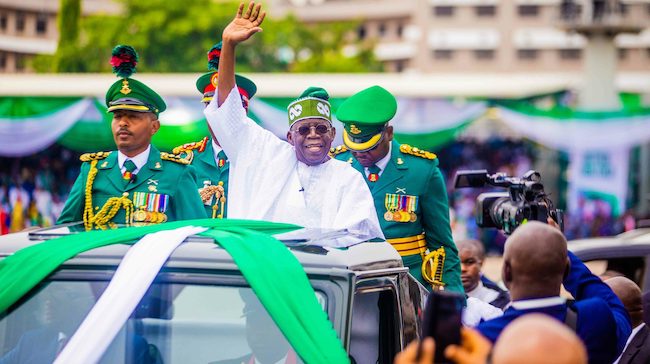
The Presidency has expressed confidence that the growing number of governors backing President Bola Tinubu gives him a stronger political structure and an advantage over opposition candidates ahead of the 2027 presidential election.
The Special Adviser to the President on Policy Communication, Daniel Bwala, said this on Channels Television’s Politics Today, arguing that the political landscape has changed considerably since the 2023 election.
Bwala said the support of governors is significant because they control political structures in their respective states and could translate their backing for Tinubu into grassroots mobilisation ahead of the election.
“Since then, President Bola Tinubu has got how many governors on his side? The governors are the Chief Executive Officers of their respective states. They coordinate the structures of the State. These people say, ‘We are putting our goodwill, our resources, our structure, and our support to the President,’” he said.
He argued that the President’s political position has also been strengthened by people who have benefited from his administration’s policies, including beneficiaries of the Nigerian Education Loan Fund (NELFund), agricultural programmes, manufacturing incentives, CrediCorp and infrastructure projects.
Bwala said the developments constitute “facts, verifiable data” which, in his view, showed that Tinubu had made progress since assuming office in 2023.
He also dismissed suggestions that the administration’s confidence ahead of 2027 is based solely on divisions within the opposition, saying its record in office would form an important part of its campaign.
His comments came amid renewed debate over Tinubu’s popularity and the ability of the opposition to challenge his bid for a second term.
Bwala dismissed an assessment by The Economist that Nigerians may re-elect Tinubu despite disapproval of his administration, arguing that claims about the President’s popularity should be backed by representative opinion surveys.
“When you make a claim that Nigerians don’t like him, without saying, also, that there are a lot of people… one million families that the children have benefited from NELFund, you think they hate him?” he asked.
He similarly cited beneficiaries of agricultural interventions, support for manufacturers and CrediCorp, arguing that such groups should be considered when assessing public sentiment towards the administration.
On concerns over rising poverty and hunger, Bwala acknowledged that more Nigerians had fallen into poverty but attributed the hardship partly to the economic reforms undertaken by the Tinubu administration.
“More people went down to poverty, I acknowledge, I’m not doubting it. But there is a ‘but’ to it. Since when the reform started to today, we have made marked progress,” he insisted.
According to him, the reforms are necessary to address longstanding economic problems, despite the short-term discomfort experienced by Nigerians.
Bwala also defended Tinubu’s statement that Nigeria has moved from the “doldrums” towards prosperity, saying the President is not suggesting that Nigerians would suddenly begin experiencing prosperity from October 1.
He cited NELFund beneficiaries, subsidised healthcare, infrastructure projects and support for small and medium-sized businesses as examples of what he described as prosperity already reaching Nigerians.
“One million families whose children have benefited from the NELFUND programme, what they are benefiting is called prosperity,” he said.
“If you go to an environment or a place where there have been no roads or any form of infrastructure, and we have established infrastructure there, what has come to them is prosperity.”
Bwala further claimed that the opposition has lost several influential political figures who played key roles in their 2023 campaigns.
He said former Vice President Atiku Abubakar no longer has the support of governors who worked for his 2023 campaign, while Peter Obi has also lost some critical political allies.
“In terms of the other candidates who say he will not win, Atiku Abubakar lost close to 25 per cent of key people that you know around him. All the governors that worked for him that time are no longer with him,” Bwala said.
“Peter Obi lost 55 per cent of the critical people that carried his campaign; they’ve all disappeared. And some of them went to Atiku, some of them went wherever they could go to.”
He consequently expressed confidence in Tinubu’s prospects in the 2027 contest, saying the political support around the President was considerably different from what existed before the 2023 election.
News
Globacom Unveils Sponsorship of 2026 Ofala Festival, Promises ‘Never Settle for Less’ Celebration
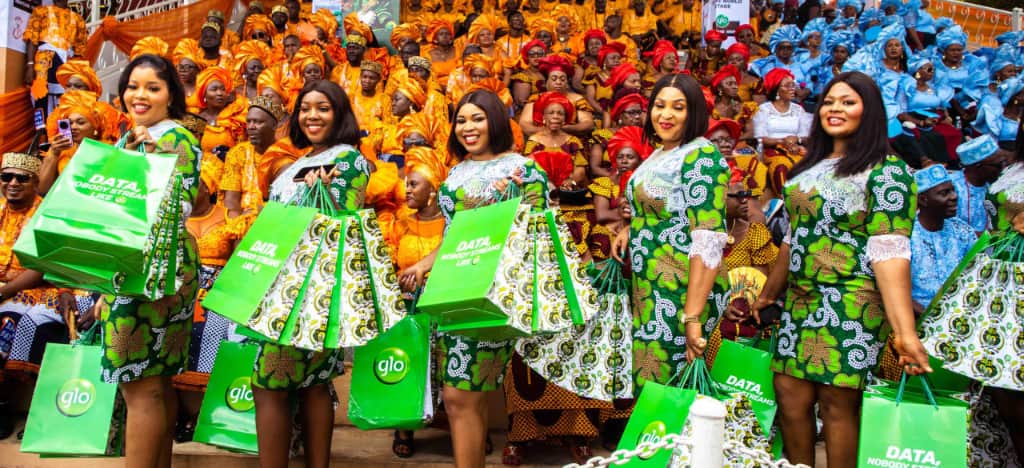
Globacom has once again demonstrated its commitment to Nigeria’s rich cultural heritage by supporting the 2026 Ofala Festival in Onitsha as the official sponsor.
The partnership, which has continued for over 15 years, highlights Globacom’s dedication to celebrating and sustaining cultural traditions that preserve identity, strengthen communities and contribute to the nation’s social and cultural development.
The 2026 edition, which marks the 25th Ofala of the reign of the Obi of Onitsha, Igwe Nnaemeka Alfred Achebe, is themed “Igba Mbo, Iga N’Iru – Strive and Advance: From Resilience to Progress.” The theme resonates strongly with the history and character of Ndi Onicha, whose story is one of resilience, enterprise, adaptability and an enduring determination to advance.
According to Globacom, its continued association with Ofala reflects the Company’s belief that cultural heritage and national development are complementary forces. “For Globacom, Ofala is more than an annual cultural celebration. It is a living expression of identity, continuity and collective aspiration. Our sustained partnership reflects our belief that preserving heritage and advancing society are not competing imperatives, but mutually reinforcing pillars of a progressive nation,” the Company stated.
The telecommunications giant added that the partnership also aligns with its “Never Settle for Less” philosophy, which encourages Nigerians to honour their foundations while continually pursuing greater possibilities. “Never Settle for Less is a philosophy of progress: to respect the foundations upon which we stand, while seeking to broaden possibilities, deepen impact and move the nation forward. We are proud to support a cultural institution that honours its roots while engaging the future,” Globacom said.
Over the years, Ofala has evolved from a sacred royal rite of renewal into a major platform for cultural affirmation, community engagement and social development. The 2026 programme features the Obi’s sacred period of seclusion and ceremonial emergence, the Medical, Health and Wellbeing Community Outreach, the international Oreze Art Exhibition, the Youth Carnival, and the grand finale of Iru Ofala and Azu Ofala.
For Globacom, supporting Ofala therefore goes beyond conventional sponsorship to represent corporate citizenship and cultural stewardship — an investment in preserving the memory, meaning and continuity of a people. The Company noted that the festival’s ability to draw strength from its ancestral foundations while embracing the future mirrors its own commitment to innovation, connectivity and digital inclusion.
As the people of Onitsha gather to celebrate another chapter in the history of the revered institution, Globacom remains proud to stand alongside them in honouring a heritage that continues to inspire generations.


