
News
Opinion: Exemplars of Greatness: The Nikola Tesla Story

- /home/rhoncare/pointblank.ng/wp-content/plugins/mvp-social-buttons/mvp-social-buttons.php on line 27
https://pointblank.ng/wp-content/uploads/2019/09/Adegoke-1000x600.jpg&description=Opinion: Exemplars of Greatness: The Nikola Tesla Story', 'pinterestShare', 'width=750,height=350'); return false;" title="Pin This Post">
- Share
- Tweet /home/rhoncare/pointblank.ng/wp-content/plugins/mvp-social-buttons/mvp-social-buttons.php on line 69
https://pointblank.ng/wp-content/uploads/2019/09/Adegoke-1000x600.jpg&description=Opinion: Exemplars of Greatness: The Nikola Tesla Story', 'pinterestShare', 'width=750,height=350'); return false;" title="Pin This Post">
By Tolulope A. Adegoke
“A hero can be anyone…anyone who can show courage when faced with a problem. A hero is someone who is willing to help others in his or her best capacity.” – Ricky Martin
Last week edition was titled “From Zero to HERO”, there in, we explored the principles and strategies for becoming a paragon of greatness. We have savoured the process of transitioning from the ditch to the peak, from grass to grace, from nothing to something, from the cross to the crown, from shame to fame, from story to glory, from the valley to the mountain, from the ground to the sky, from tests to testimonies and from Zero to HERO!
Now, we must get to the more practical aspect of illustrating the principles we have discussed so far by examining the lives of some carefully selected heroes (you may also call them trailblazers and game-changers) across the world who are making extraordinary impacts, due to their decision to harness their potentials for the good of mankind. As an added advantage, we shall be learning directly from them as they recount their experiences and offer timeless tips on attaining greatness.
Nikola Tesla was born on July 10, 1856, in what is now Smiljan, Croatia. He was one of five children, which included siblings Dane, Angelina, Milka and Marica, in the family.
Tesla’s interest in electrical invention was spurred by his mother, Djuka Mandic, who invented small household appliances in her spare time, while her son was growing up. Tesla’s father, Milutin Tesla, was a Serbian priest and writer. He often pushed for his son to join the priesthood. But Nikola’s interests lay squarely in the sciences. He studied at the Real Schule, Karlstadt, the Polytechnic Institute in Graz, Austria, and the University of Prague. Thereafter, during the 1870s, he moved to Budapest, where, for a time, he worked at the Central Telephone Exchange. It was while in Budapest that the idea for the induction motor first came to him, but after several years of trying to attract interest in his invention, Tesla decided to leave Europe for America at the age of 28.
In 1884, Tesla arrived the United States with little more than clothes on his back and a letter of introduction to famed inventor and business mogul, Thomas Edison, whose DC (Direct Current)-based electrical works were fast becoming the standard in the country. Edison “hired” Tesla, and the two men were soon working tirelessly alongside each other, making improvements to Edison’s inventions.
However, several months later, the two parted ways due to a conflicting business-scientific relationship, attributed by historians to their incredibly different personalities: while Edison was a power figure who focused on marketing and financial success, Tesla was commercially out-of-tune and somewhat vulnerable. Tesla discovered and invented the AC (Alternative Current)-based electrical works. He informed his boss (Edison) about it, but Edison ignored it because he saw the Alternative Current as an impossible invention. Besides, he considered that even if it was possible, it would not be safe for public consumption due to its massive voltage and current.
Rather than encouraging Tesla and finding means of putting resources together to advance the AC, Edison was so engrossed with the financial success of his DC invention that he was blinded to the future possibilities of the so-called ‘impossible’ AC of Tesla. This was why Tesla was left with no other choice than to part ways with his boss.
After parting ways with Edison, Tesla kept on working on his invention. He saw possibilities in it and saw the timely need to chase his dreams. He wrote several letters to potential investors (businessmen) across the United States for funding. He eventually received funding for the Tesla Electric Light Company and was tasked by his investors to develop improved arc lighting. After successfully doing so, however, Tesla was forced out of the venture and for a time, had to work as a manual labourer – a zero – in order to survive.
Fortunately, his destiny was re-launched in 1887, when he was able to find more interests in his AC electrical system and funding for his new Tesla Electric Company. Setting straight to work, by the end of the year, Tesla had successfully filed several patents for AC- based inventions.
Tesla’s AC system eventually caught the attention of American engineer and businessman, George Westinghouse, who was seeking a solution to supplying the nation with long-distance power. Convinced that Tesla’s inventions would help him achieve this, he, in 1888, purchased Tesla’s patents for $60,000 in cash, as well as stocks in the Westinghouse Corporation. As interest in an Alternating Current System grew, Tesla and Westinghouse were put in direct competition with Thomas Edison, who was bent on selling his DC current to the nation. A negative press campaign was soon waged by Edison, in an attempt to undermine interest in AC power.
Tesla, on his part continued his work and would patent several more inventions during this period, including the Tesla coil, which laid the foundation for wireless technologies and is still used in radio technology today.
Unfortunately for Thomas Edison, the Westinghouse Corporation was chosen to supply the lighting at the 1893 World’s Columbian Exposition in Chicago, and Tesla conducted demonstrations of his AC system there. Two years later, in 1895, Tesla designed what was among the first AC hydro-electric power plant in the United States, at the Niagara Falls. The following year, it was used to power the city of Buffalo, New York, a feat that was highly publicised throughout the world. With its repeat successes and favourable press, the Alternating Current system became the preeminent power system of the 20th century, and it has remained the worldwide standard ever since.
Nikola Tesla, therefore, can be said to have transited from being a zero to being a HERO! He did not give up on his dream despite all odds. He did not let his dream end up as a dream; rather, he pushed through, relentlessly empowered his potentials (zero), and planted his ‘seed’ in the fertile land of the United States of America. He discovered his strength and worked on his weak points, even in the midst of storms. He weathered the storms, discovered his actual location (fertile land) and moved out of his comfort zone to the land where God showed him, just like the biblical Abraham. He then carved a niche for himself! Even when Tesla got to his promised land (United States), he encountered greater storms (giants) which came in form of relegation, frustration, intimidation, disappointment, delay and lack, among others; yet he surmounted all in turning his dreams into reality! Tesla worked and walked his way indefatigably into the future against all odds, with his dreams intact, well empowered, then, emerged a global HERO even above his former boss, Thomas Edison. Tesla chased excellence, then success chased him! He knew financial prosperity would eventually locate him after he had done his own part of the deal, by perfecting his gifts and skills to excellence (the law of zero to hero).
I tell you, friend, you too can rise from your present level to an exceedingly glorious and influential one. This is the will of God for you.
Exemplars of Greatness Series continues next week…
Watch out for the Book titled: “The Power of an Empowered Zero” (From Zero to HERO) by Tolulope A. Adegoke. Foreword by Dr Yomi Garnett (CEO/Chancellor, Royal Biographical Institute, Philadelphia, Pennsylvania U.S.A., U.K., Abuja, Nigeria.) Edited by Ola Aboderin.
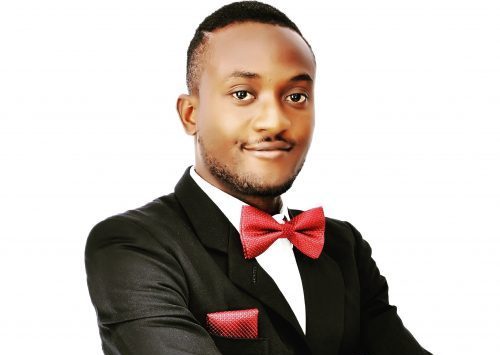
Tolulope A. Adegoke is an acclaimed “globalpreneur”, with the mandate to enrich lives and provide the professional, spiritual, academic and leadership empowerment needed to birth, maximize and sustain possibilities in peoples, corporates and nations. He is a prolific writer, frequent keynote speaker and spoken word poet, among others, having written countless articles in diverse reputable fields and honoured many public invitations.
He is also a Senior Administrator.
Tolulope Adegoke can be booked for public events via the contacts below:
E-mail: adegoketolulope1022@gmail.com


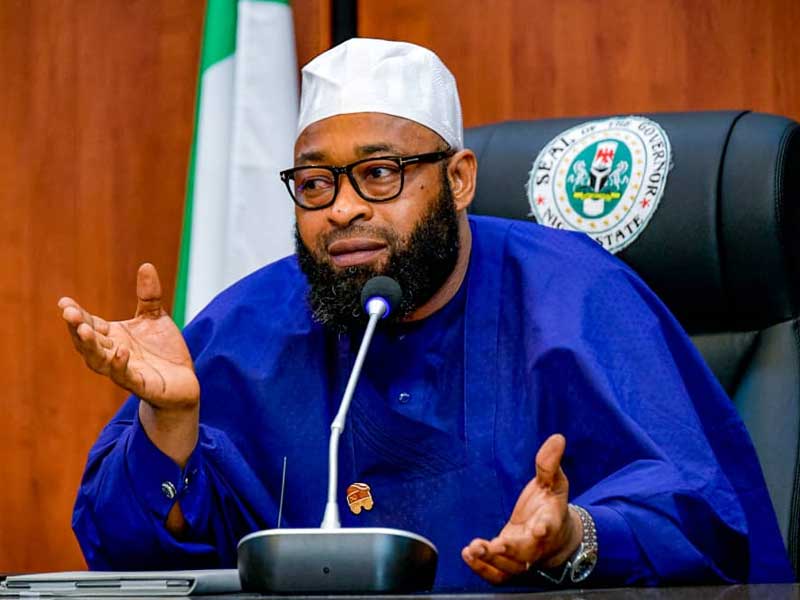
Niger State under the leadership of His Excellency the Farmer Governor, Muhammadu Umaru Bago will today launch its Climate Change Policy Document and Action Plan (CCP&AP).
The CCP&AP with support from the Africa Climate Foundation (ACF), technical assistance from the Society for Planet and Prosperity (SPP) and LQY SPV Ltd represents the progressing impact of the Farmer Governors launch of the states blue print for a green economy in 2023. The policy document represents the states efforts to deepen the nations commitment to the goals of the Paris agreement.
On the platform of NDC 3.0 and the blueprint the CCP&AP was developed and will be the launched. This launch will be used to actualize the states’ CIDP, a platform to nurture the implementation of the CCP&AP. The CIDP will work with key line ministries such as the Ministry of Environment & Climate Change, the Ministry of Budget and Planning and the Ministry of Finance as well as key sectoral Ministries such as Agriculture and Energy to develop a pipeline of projects that will have climate benefits and be bankable. The CIDP is part of a three state initiative to develop bankable climate projects at state level. The other participating states are Enugu and Delta States.
Participants at the workshop, post the launch, will break into three technical working groups – Financial Management and Climate Investment, Climate Smart Agriculture and Renewable Energy and the state electricity act. The CCP&AP is the latest in the states efforts from a policy and regulatory level to expand the platform for mobilization of climate resources to the state. Projects identified will be subjected to tests for bankability as well as relevance to policy and be presented at a workshop in the first quarter of 2027 to be attended by bilateral investors, multilateral investors, non state actors as well as domestic development banks. The workshop will be used to obtain commitments for funding to enable implementation.
By Henry Ukazu
Dear Destiny Friends,
We are all stars, but sometimes we act like the moon and sun. Don’t get me wrong, the moon and sun are all God’s creatures, but in this context, I’m referring to the star as it relates to being a standard, an exceptional being and a leader that will set the pace for others to follow.
Being a star gives you an identity and opportunity to showcase the world what you are made of. Your star will shine when you are working on purpose. At creation, we were all created with a unique purpose which will be manifested on earth. So, it’s fair to say our purpose was made in heaven, but our assignment is on earth.
It’s instructive to note that our start is the embodiment of what makes us to be identifiable, recognizable and traceable. When our star is shining, the world stands still and observes. Isn’t it true that the world sets apart for the man who knows where he’s going.
Everyone loves a star. Imagine being the best in your class, team, or even in the family, you will be the envy of everyone. Stars attract jealousy. To understand how a star works, imagine playing soccer, despite each team having captains and star players, it’s whoever that has the ball the attention of the players, spectators and the world will be focused on because at that moment, whoever has the ball is the star, hence the reason why the person is being tackled.
Stars attract favor, blessings, opportunities, and blessings just because they are fulfilling their purpose of manifestation. As a self-discovery coach, I propounded the concept of STAR. S stands for shining, T represents Target, the A represents Action and R represents Recognition.
A brief analysis of the concept of STAR will give a proper perspective. When one is a star, one will be a shining star, and when one is a shining star, they’ll definitely be a target because the sugar will always attract ants. Because one is a star, they’ll be action oriented. A star can’t be hidden. It is the work they do that makes them noticeable which ultimately gives them recognition.
If I may ask you, are you a star? If yes, what makes you a star? Stars are a unique set of people who excel more than their counterparts or contemporaries. Stars defy human logic and understanding, especially when there is a spiritual element attached to it. While humans go to school to acquire knowledge and information, stars have inherent and intuitive knowledge which is revealed to them from God.
A little insight into the inherent and intuitive knowledge of how stars work. One’s profession is what one is trained to do in school or even taught in practice, one’s vocation is what one is paid to do like skilled work or a regular 9-5 work, while one’s ministry is where one’s talent/gift manifests their God given potential. When one is a star, both their profession, vocation and ministry will be working in alignment. They won’t have to do much to excel. Their light will gradually shine effortlessly with little or no support. A little effort by them will magnify their work.
It’s unfortunate that many stars can’t shine because many people are afraid of stepping out of their comfort zone. Some of us are afraid of what the world will say, how their message will be received, and how one can overcome these challenges if their star is not shining as it ought to. This is one of the major challenges why most people fail to activate their star. Trust me, I get it. The fears and concerns are valid. As humans we are bound to have fears, however, our desire for success should outweigh our fear for failure.
Do you know that the grave is considered the richest place on planet earth? Yes, because many talents are buried inside the grave simply because some people failed to unleash their talents, gifts and God given potentials. Here is what I will say, may we not die with what God has given to us.
Do you want to be a star? If yes, ask yourself, what makes you unique? If you discover it, say to yourself, I am a star, I am blessed. I am a child of destiny. I will fulfill my purpose. I will not die with what God has given to me. I will shine and I will possess my possession because I am a star.
Henry Ukazu writes from New York. He works with the New York City Department of Correction as the Legal Coordinator. He’s the founder of Gloemi. He’s a Transformative Human Capacity and Mindset coach. He is also a public speaker, youth advocate, creative writer and author of Design Your Destiny- Actualizing Your Birthright to Success, Unleash Your Destiny and The Six Pillars of Success . He can be reached via info@gloemi.com
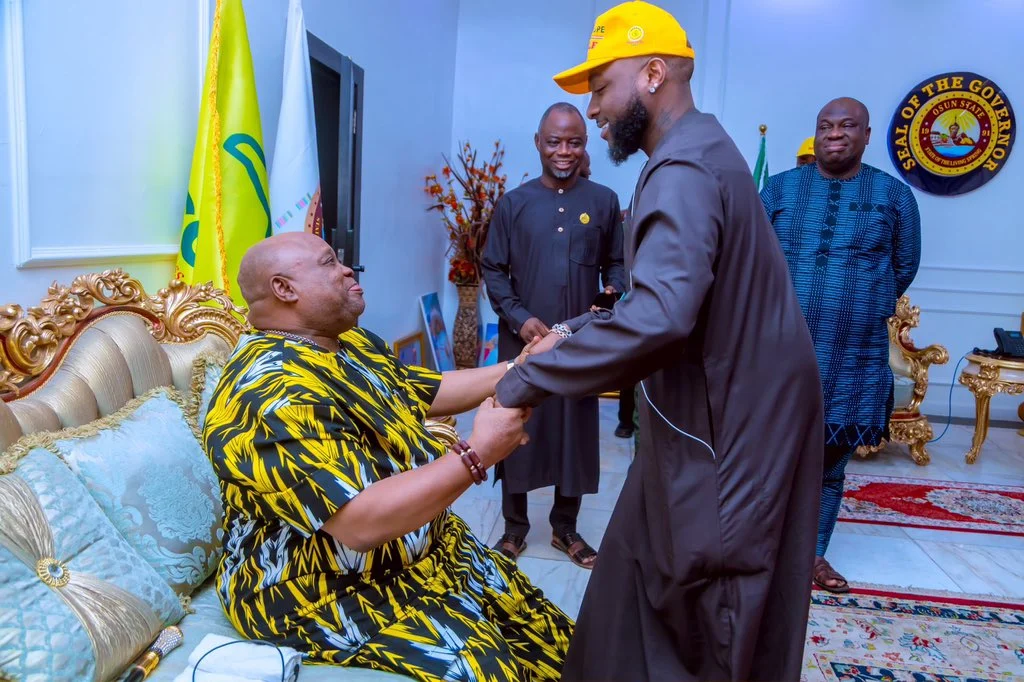
Music star, David Adeleke, popularly known as Davido, was the target of the attack on the convoy of Osun State governor, according to the police.
Daily Trust had reported how security escorts of the governor engaged some unidentified men in a gun duel during the governor’s visit to the palace of the Ataoja of Osogbo, earlier on Wednesday.
The governor had visited the monarch shortly after receiving his certificate of return from the Independent National Electoral Commission (INEC).
His nephew, Davido, who was actively involved in the election, alongside his children, accompanied the governor to INEC office and the palace.
Some residents of Oja Oba Osogbo said gunshots caused panic for over 15 minutes as the men kept shooting sporadically while the governor’s security detail returned fire.
Commenting on the incident, Police Public Relations Officer in Osun, Abiodun Ojelabi, said preliminary investigation revealed that members of Eye Confraternity were after Davido.
“One Adebayo Taoreed, popularly known as “Small Rugged”, an ex convict, a suspected notorious thug and a member of eye confraternity allegedly attempted to gain access to Davido but was resisted by members of his security Team.
“The ensuing confrontation reportedly attracted other suspected gang members in the vicinity, who temporarily blocked the entrance to the palace and obstructed the movement of the convoy of the Governor.”
Ojelabi said a 60-year-old man identified as Tajudeen Yusuf was shot dead during the gun duel.
“Shortly afterwards, the suspected gang members reportedly departed the vicinity and, however on their way, they allegedly shot Tajudeen Yusuf at Itaolokan area of Osogbo.
“Upon receiving the information, the police immediately mobilised a patrol team to the scene, where the victim was found lying in a pool of blood. He was promptly rushed to the University Teaching Hospital, Osogbo, for medical attention. Unfortunately, he was pronounced dead by the doctors on duty.”
“The Command has commenced a full-scale investigation into the incident and intensified efforts to identify, apprehend and bring the fleeing suspects to justice.
“The Commissioner of Police (Election), Osun State Command, CP Samuel Etaifo, strongly condemns the dastardly act and assures members of the public that the Command will deploy all available resources to apprehend those responsible.
“The Command therefore urges anyone with useful information that could assist the investigation to promptly approach the nearest police station or contact the Command through its official channels. Members of the public are also advised to remain calm and refrain from taking the law into their own hands.”
The PPRO said the Police Command has commenced a full-scale investigation into the shooting incident.
Ojelabi said further updates on the incident would be provided as the investigation progresses.


