
News
Opinion: Is Corruption to Blame for Nigeria’s Rising Energy Prices?

- /home/rhoncare/pointblank.ng/wp-content/plugins/mvp-social-buttons/mvp-social-buttons.php on line 27
https://pointblank.ng/wp-content/uploads/2019/04/Popoola.jpg&description=Opinion: Is Corruption to Blame for Nigeria’s Rising Energy Prices?', 'pinterestShare', 'width=750,height=350'); return false;" title="Pin This Post">
- Share
- Tweet /home/rhoncare/pointblank.ng/wp-content/plugins/mvp-social-buttons/mvp-social-buttons.php on line 69
https://pointblank.ng/wp-content/uploads/2019/04/Popoola.jpg&description=Opinion: Is Corruption to Blame for Nigeria’s Rising Energy Prices?', 'pinterestShare', 'width=750,height=350'); return false;" title="Pin This Post">
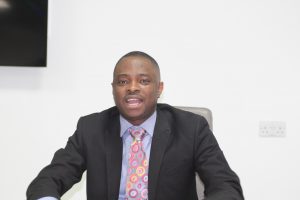
By Joel Popoola
Nigerians are paying more and more as energy bills, and getting less and less for their money.
The National Bureau of Statistics last week reported that inflation has reached an eye-watering 15.9 per cent, driven in part by rising energy costs.
The NBS figures suggest that electricity, gas and fuel costs are now almost 12.5% higher than it was this time last year.
One recent study has suggested that Nigerians are now paying 68% of their monthly income on utilities.
These price rises come against a backdrop of energy shortages described as “incessant”, even leading to protests in places like Oyero, where one community leader has been quoted as saying:
“They only bring electricity occasionally. We pay these bills, yet we barely get electricity for two hours a day.”
A system collapse of the national electricity grid on April 8 was the third in less than a month and the fifth this year, leaving both Abuja, and Lagos, the largest city in all of Africa, without power.
In less than our decade the grid has failed over 200 times. With our energy system so unreliable, many Nigerians and businesses rely instead on diesel-powered generators. But diesel prices too have more than doubled since the start of the year.
The government is to some extent at the mercy of events. A post-COVID-19 surge in energy demand has placed huge pressure on energy systems across the world. The Russian invasion of Ukraine has made things worse.
But that does not change that fact that in 2018, the World Bank approved $486 million to improve Nigeria’s Electricity Transmission Network and infrastructure.
Can anyone claim that this investment has made much difference?
As always, it is hard not to come to the conclusion that a (literally on this occasion) brighter future for Nigeria has been squandered because of corruption.
That is certainly the view of the Socio-Economic Rights and Accountability Project (SERAP), who have called for an investigation into government spending on energy.
The Deputy Director of the group, Kolawole Oluwadare, has claimed that N11 trillion ($26bn) intended for investment in our electricity supply has allegedly been squandered by governments since 1999.
Oluwadare has been quoted as saying: “Nigerians have for far too long been denied justice, and the opportunity to get to the bottom of why they continue to pay the price for corruption in the electricity sector, staying in darkness, but still made to pay crazy electricity bills.
“The staggering amounts of public funds alleged to have been stolen over the years in the electricity sector have had catastrophic effects on the lives of millions of Nigerians, akin to crimes against humanity and the Nigerian people.”
If just a fraction of that N11 trillion had been spent on improving the resilience of our energy network and increasing domestic energy production with an emphasis on renewable sources like solar power.
And even if that figure is inaccurate, it will feel accurate to most Nigerians who have little faith in our democratic institutions. That needs to change.
SERAP has requested publication of the names of companies and contractors paid by government since 1999 to carry out electricity projects across the country. This is exactly the kind of transparency our democracy needs, and digital technology makes it easy to achieve.
The digital democracy campaign I lead is attempting to improve democratic transparency with technology.
One of our projects is a free smartphone app called Rate Your Leader, which puts politicians and the people they elect in direct person-to-person contact. Think of it as being friends on Facebook with your local representative, except that unlike other social media platforms, Rate Your Leader insists both sides can prove they are who they say they are, and makes abusive communication impossible.
Rate Your Leader creates a direct line between electors and elected, helping both sides better understand each other, and collaborate to make our communities better. It encourages politicians to do everything out in the open, and rewards them in the form of positive feedback and ratings from the people they serve, improving their reputation amongst their contacts, friends, peers and neighbours – the people whose opinions they trust the most.
Building trust in the political process has to start person-to-person, and politician to voter. And digital technology can deliver that change at the touch of a button.
Both corruption and energy security must be at the heart of the 2023 presidential election campaign.
Candidates must heed the call of business leader, Tony Elumelu, who has called for energy to be a central plank of election manifestos, stating “Elections are coming – security and resources need to be everyone’s agenda – let’s be vocal for our nation’s priority.”
Voters need to be clear that this is their priority. And leaders need to listen.
Joel Popoola is a Nigerian tech entrepreneur, digital democracy campaigner and creator of the Rate Your Leader mobile app.


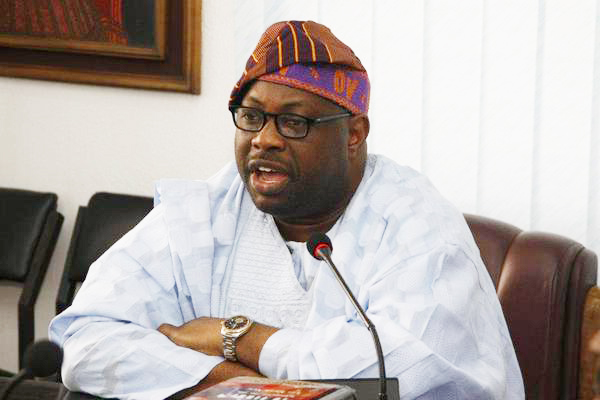
A chieftain of the African Democratic Congress (ADC), Chief Dele Momodu, has said no political permutation will save President Bola Tinubu in the 2027 presidential election, insisting that widespread hunger and hardship will determine the outcome.
Momodu stated this on Thursday during an appearance on Channels Television’s Politics Today, anchored by Seun Okinbaloye.
According to him, Nigerians across all regions and ethnic lines are united by economic hardship, which no amount of money or political calculation can overcome.
“The common factor now is the hunger in the land. No permutation can beat hunger. The Yorubas are suffering, the Hausas are suffering, the Igbos are suffering, everybody is suffering,” he said.
He argued that President Tinubu cannot buy the entire country, even if he was able to deploy money effectively in Lagos State politics in the past.
“Tinubu believes he can buy the whole of Nigeria, but my personal belief is that if he could buy the whole of Lagos, I doubt if he can use money to buy the whole of Nigeria,” Momodu stated.
The Ovation Publisher said Nigerians had become wiser and would collect any money offered to them during elections but still vote according to their conscience.
He cited the Osun State governorship election as a case study, noting that, despite the huge funds allegedly deployed, the people voted for Governor Ademola Adeleke.
“And a lot of people will take the money like they took it in Osun State. People’s eyes are wide open now. They brought a lot of money to Osun State, but they still lost the election to Ademola Adeleke,” he said.
Momodu also recalled that Tinubu lost Lagos State to Mr Peter Obi of the Labour Party in the 2023 presidential election, which he said proves that incumbency and financial muscle do not guarantee victory.
He maintained that President Tinubu would not win in 2027, claiming that many Nigerians could not imagine a second term for the administration.
“If you ask an average Nigerian today, do you trust Tinubu to conduct a free and fair election? 90 per cent will say no. Nobody trusts Tinubu, including his own supporters,” Momodu said.
On the detention of former Kaduna State Governor, Mallam Nasir El-Rufai, Momodu described him as a “prisoner of conscience” who is being persecuted because of his political influence.
“Nasir El-Rufai is a lion. They caged him because he is a lion. Even when a lion is caged, it is still a lion. They want him locked up until after 2027 because they fear his influence,” he said.
He disclosed that El-Rufai’s appointment as Deputy Chairman of the Atiku Abubakar Presidential Campaign Council was in honour of his sacrifice and resilience.
“It is a way of honouring his sacrifice because his travails are quite political in nature. That is why Nasir has become a prisoner of conscience. He is in the hands of a government that he helped to midwife,” Momodu added.
He said the 2027 election would be a referendum on hunger, hardship and governance, and not on political permutations.
Meanwhile, the Senior Special Assistant to the President on Digital Communications, Engagement and New Media Strategy, O’tega Ogra, has faulted Momodu’s comments.
Reacting to the interview, Ogra accused the opposition of embracing “perpetual negativity” and opposing government policies without objective assessment.
He said Momodu’s assertion ignored ongoing reforms and improvements recorded in key economic indicators, including foreign reserves, power generation and inflation management.
Ogra urged opposition figures to offer constructive criticism rather than painting a picture of total failure, stressing that President Tinubu would ultimately be judged by his reforms and track record.
The Tribune
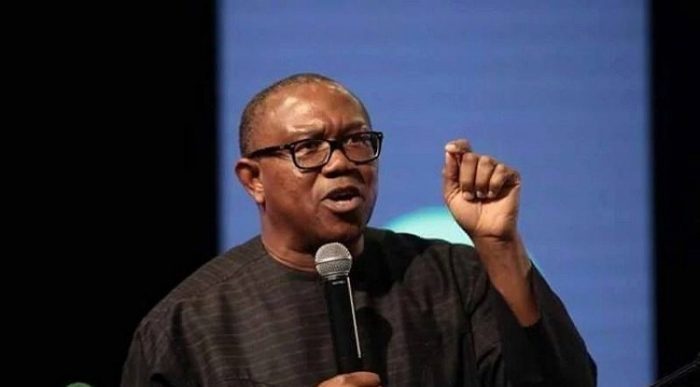
The Nigeria Democratic Congress (NDC) presidential candidate, Peter Obi, has denied asking Nigerians living in the United Kingdom to abandon relatives who depend on them for financial support, saying his message about hardship in Nigeria was distorted by political opponents.
Obi said he appreciates Nigerians in the Diaspora who make sacrifices to support their families at home, stressing that his concern is the country’s dependence on remittances to meet basic needs.
In a statement titled; “My Message Has Been Twisted”, posted on X on Tuesday, the former Governor of Anambra State clarified that he never asked Nigerians abroad to stop supporting their loved ones.
“I deeply appreciate Nigerians in the diaspora who work tirelessly and make enormous sacrifices to support their families back home,” he said.
“Their remittances pay for school fees, hospital bills, rent, and feeding expenses. Their patriotism and sacrifices deserve our profound respect. I never asked them to abandon their loved ones.”
Obi said his message was aimed at drawing attention to the economic conditions forcing millions of Nigerians to rely on relatives abroad for their survival.
“My concern is that Nigeria should not remain a country where millions depend on relatives abroad for basic survival,” he said.
“Our goal must be to build a nation that provides jobs, affordable healthcare, quality education, and economic opportunities for its citizens.”
He accused political opponents of misrepresenting his comments, insisting that his position is about addressing the causes of hardship rather than discouraging financial assistance to families.
“Political opponents may twist my message, but the truth remains clear: I am not asking Nigerians abroad to abandon their families. I am advocating for a Nigeria that will no longer abandon its own people,” he said.
The clarification followed backlash over comments Obi made during a town hall meeting with Diaspora supporters in Manchester on Sunday.
In a video that went viral, Obi urged Nigerians in the UK to think twice before giving money to relatives and others at home who ask them for financial assistance, arguing that such support could ease hardship without addressing its underlying causes.
“You have people at home in Nigeria today who are begging you for money. Tell them no!” he said.
Obi attributed the country’s economic difficulties to poor leadership, urging Nigerians abroad to encourage their relatives and friends at home to vote for leaders who would prioritise productivity and economic opportunities.
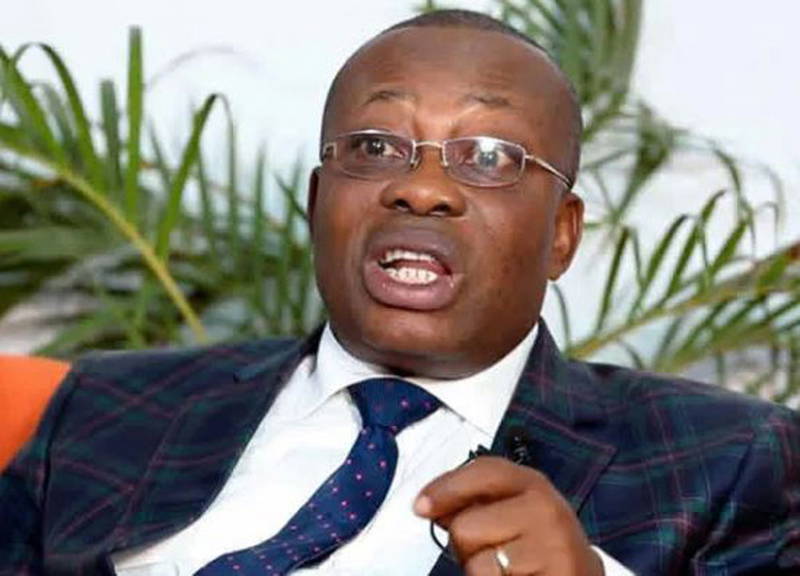
The Court of Appeal, Abuja Division, has dismissed the EFCC’s appeal and affirmed the ₦12 million compensation awarded to Dr. Monday Ubani, SAN, for his unlawful 21-day detention in 2019. The court also awarded ₦300,000 in costs against the Commission.
Ubani was detained after securing administrative bail for a client accused of jumping bail. Despite a court order directing the EFCC to release him conditionally or charge him with any alleged offence, the Commission failed to comply, prompting his lawyer, Chief Professor Mike Ozekhome, to institute a fundamental rights action in his favour.
On January 5, 2022, the Abuja High Court, presided over by Justice Sylvanus Oriji, ruled in Ubani’s favour. The EFCC appealed, challenging the trial court’s jurisdiction and the amount of compensation awarded.
In dismissing the appeal, the Court of Appeal rejected both arguments, holding that the compensation was justified and that the EFCC’s investigative powers do not permit arbitrary detention or disobedience of court orders.
The judgment reaffirms that law enforcement agencies remain subject to the Constitution and judicial authority. It also underscores the protection of fundamental rights, the limits of law enforcement powers and the consequences of unlawful detention.
Beyond the financial award, the decision highlights the responsibilities of sureties and the obligation of security agencies to obey court orders, making it a potentially significant reference in future fundamental rights litigation.


