
Headlines
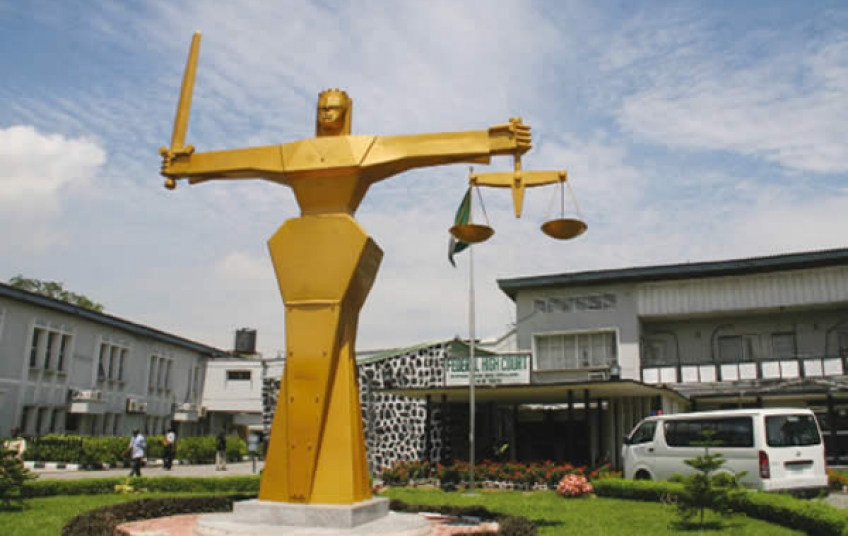
Opinion: Judiciary in the Dock

- /home/rhoncare/pointblank.ng/wp-content/plugins/mvp-social-buttons/mvp-social-buttons.php on line 27
https://pointblank.ng/wp-content/uploads/2019/04/Federal-High-Court-Lagos_large.jpg&description=Opinion: Judiciary in the Dock', 'pinterestShare', 'width=750,height=350'); return false;" title="Pin This Post">
- Share
- Tweet /home/rhoncare/pointblank.ng/wp-content/plugins/mvp-social-buttons/mvp-social-buttons.php on line 69
https://pointblank.ng/wp-content/uploads/2019/04/Federal-High-Court-Lagos_large.jpg&description=Opinion: Judiciary in the Dock', 'pinterestShare', 'width=750,height=350'); return false;" title="Pin This Post">
By Sehinde Omoniyi
“Somewhere along the way, the balance of power between the prosecution, the defense and the judiciary shifted. We have to readjust it. The stakes are so high – the well-being of so many communities and the trajectories of so many lives, public safety depends on our collective faith in fairness and our view of the law as legitimate” – Emily Bazelon
Over the last few years, the Nigerian judiciary has been perceived as the weeping child of the three arms of government. Whether correctly or otherwise, the common truth is that the man on the street thinks something is fundamentally wrong with the judicial system in Nigeria. This perception places a huge moral burden on the judiciary in this dispensation, and in going forward.
For the first time in the history of Nigeria, judges’ homes were invaded, many top judicial officers are facing trial, and at the height of it all, a sitting Chief Justice was made subject of a public ridicule and in the end, Justice Walter Onnoghen is recorded as the first Chief Justice of Nigeria to be forced out of office on allegations of corruption.
To put it mildly, the integrity of the judiciary in Nigeria has never been this subjected to scrutiny and odium. To compound the problem of the judiciary, the narrow-minded verdict of the Supreme Court in the now celebrated case of the Osun State Governorship Election between Adeleke v Oyetola, seem to have further widened the gulf of trust between the people and the judiciary.
However, the 2019 Presidential Election Tribunal presents another presents another opportunity to the judiciary, to rediscover itself.
Since March, the Tribunal has been fed with tons of evidence on what happened and did not happen by both parties – People’s Democratic Party (PDP) and its Presidential candidate Atiku Abubakar who is seeking the court’s confirmation of himself as the winner and (or) disqualify candidate of the All Progressives Congress (APC) President Muhammadu Buhari. Aside the APC and President Buhari, the other respondent is the Independent National Electoral Commission (INEC) whose conduct of that election has been severally lampooned.
For those who may not have followed the proceedings athe Tribunal, it is important to note that the Petitioner has argued that:
i) The 2nd Respondent (Muhammadu Buhari), was not duly elected by majority of lawful votes cast at the February 23, 2019 Presidential Election.
ii) The election of Muhammadu Buhari is invalid by reason of corrupt practices
iii) The election of Muhammadu Buhari is invalid by reason of non- compliance with the provision of the Electoral Act 2010 (as amended)
iv) Muhammadu Buhari was at the time of the election not qualified to contest the said election, and
v) The 2nd Respondent (Muhammadu Buhari) submitted to INEC an affidavit containing false information of a fundamental nature in aid of his qualification for the said election.
Indeed, in the history of election petitions since Nigeria’s democracy, the amount of witnesses and documented evidence presented by the petitioner including expert witness, has not been recorded.
In a matter of hours, the five-man Appeal Court Judges would be expected to deliver their verdict based on the evidences brought by them. Their task is one which stands to make or mare the judiciary.
Political grandstanding notwithstanding, intimidations from the gladiators and their agents notwithstanding, upon the shoulders of these five judges stands the hope and future of the Nigerian judiciary.
The options before these judges are clear. They either choose to stand by truth supported by evidences presented before them or they may adopt the new albatross of the Nigerian judiciary called technicality and pass over the burden of facing the facts as they are. Whichever way they choose t go, it is a deeper battle of them and their conscience, and the future of the country.
And as stated above by journalist and legal researcher, Emily Bazelon, the judges as the Tribunal owe the legal profession, to Nigerians and humanity in general to display justice and fairness. The judiciary obviously needs a readjustment. “The well-being of so many communities and the trajectories of so many lives, public safety depends on our collective faith in fairness and our view of the law as legitimate”, Emily is not alone in this thought.
The world attention in this coming days is riveted on the Nigerian judiciary, the decision or indecision of the five-man appeal tribunal is sacrosanct.
Sehinde Omooniyi is a Socio-Political writer based in Abuja


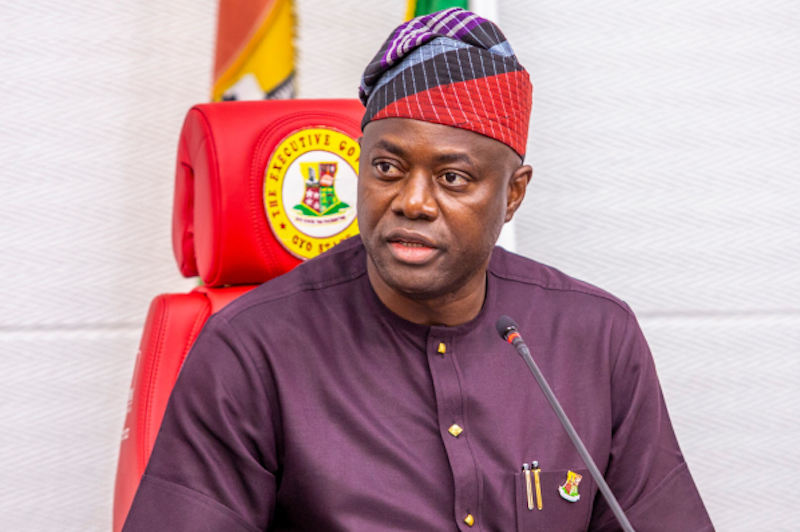
The Allied Peoples Movement (APM) presidential candidate, Seyi Makinde, on Thursday, criticised President Bola Tinubu’s “Emi Lokan” slogan ahead of the 2027 presidential election.
Makinde said Nigerians do not need “turn-by-turn nepotism”, arguing that voters should be free to decide who becomes the country’s next president in 2027.
The Oyo State governor spoke during the APM’s town hall meeting in Akure, Ondo State.
Makinde asked: “How can someone say ‘Eemi lokan’ in a country like Nigeria? You were given the opportunity. If you recall the 1999 presidential election, the South-West voted massively for Baba Olu Falae, but the rest of Nigerians voted for Baba Obasanjo. So, this is not an issue that only the South-West can resolve; it is an issue we must address collectively as Nigerians.
“We do not want ‘turn-by-turn nepotism’, nor do we want a situation where people say, ‘I will vote for projects because it is my turn’. You will not finish those projects, and when it becomes someone else’s turn, they will do the same thing. We will end up with a Nigeria where we cannot get value for the resources belonging to Nigerians.
“The Reset Nigeria agenda is about building a country where infrastructure development supports economic growth and addresses the concerns of young people and women.
“Once we fix our economy, no zone will be left behind, and no demographic group will be left behind.”
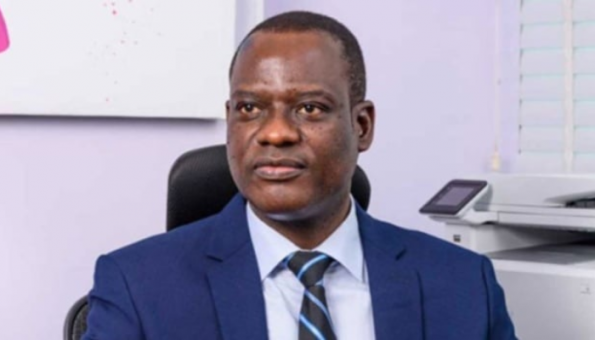
Minister of Finance and Coordinating Minister of the Economy, Taiwo Oyedele, has denied saying the Federal government will introduce a fuel tax when the economy stabilises and income levels improve.
In a post on X on Tuesday, Oyedele said his remarks during an interview with ARISE News was misrepresented, insisting that a “fuel tax is not on the table.”
However, during the interview with Rotus Odiri, ARISE News Business Correspondent, on the sidelines of the 2026 International Monetary Fund and World Bank annual meetings in Bangkok, Thailand, Oyedele said the tax would come when income levels improve enough for Nigerians to accommodate it.
He said taxes account for between 20 and 80 percent of pump prices in some countries, while many African countries impose between six and 10 different taxes on fuel products.
He said introducing fuel tax while petrol was still subsidised would have been counterproductive because government would effectively be paying the tax itself.
According to him, imposing the tax immediately after removal of petrol subsidy would be insensitive to Nigerians.
“The objective should be that instead of trying to suppress prices, which hasn’t worked for us, it hasn’t worked for any country in the world, not one. Instead of trying to suppress prices, think about how to grow income faster than prices rise,” Oyedele said.
“That’s how you bring prosperity and grow the middle class and that is exactly what we are doing as led by Mr. President himself.
“At the appropriate time, when the economy has stabilizes and income level will be able to accommodate it, those taxes will come. Not because we want to impose taxes,” he added.
In his Tuesday post, the minister reiterated that introducing a fuel tax at this time would be insensitive following removal of petrol subsidy, describing reports that government will introduce the levy when the economy stabilises as “fake news.”
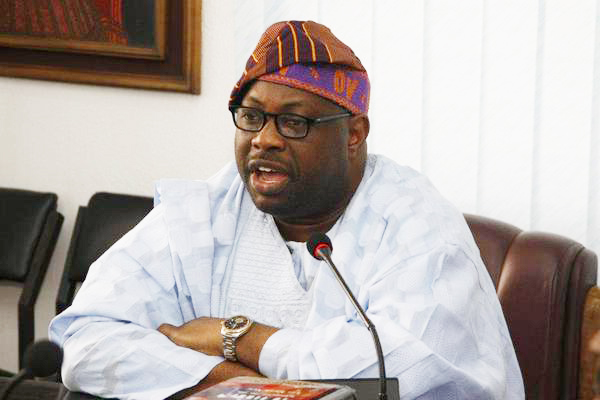
A chieftain of the African Democratic Congress (ADC), and Deputy Director of the Presidential Campaign Council, Chief Dele Momodu, has described former Vice-President Atiku Abubakar as the most nationally formidable and experienced among the leading contenders for the 2027 presidential election.
Momodu said Atiku’s experience at the national level distinguishes him from President Bola Tinubu and former Anambra State Governor, Peter Obi.
He stated this on Wednesday during an interview on Eagle 102.5 FM, Ilese-Ijebu, in Abeokuta.
“If you look at the antecedents of the three major candidates, between Atiku Abubakar and Peter Obi, you will see that Atiku is the most experienced. He has managed our country at the highest level,” he said.
Momodu traced Atiku’s political journey to the 1992 Social Democratic Party (SDP), presidential primary where he contested against late MKO Abiola and stepped down for him.
He said Atiku accepted the outcome without crisis even after he was not picked as Abiola’s running mate, describing it as a mark of true democratic temperament.
“He is the only one who started from around 1992, contested the SDP primary against Abiola and stepped down with uncommon equanimity. He did not make any noise,” Momodu said.
He noted that Atiku was among the founders of the Peoples Democratic Party, PDP, and served as Vice-President from 1999 to 2007.
Comparing Atiku with Obi, Momodu argued that while Obi’s best was demonstrated in Anambra, Atiku’s was at the presidency level managing the national economy.
“Peter Obi has tried his best in Anambra, while Atiku’s best is at the level of vice president controlling the economy of Nigeria. The difference is clear. He has matured in experience and exposure,” he said.
Momodu also said President Tinubu’s experience was largely limited to Lagos.
“What I’m trying to say is that Tinubu’s experience was limited to Lagos, and that is why when he became president, he thought Nigeria was Lagos. And he has found out now that Nigeria is not Lagos,” he said.
He argued that the current economic hardship under the present administration did not show prosperity, insisting Atiku remained better positioned to lead the country.
“Well, we are yet to see that prosperity, and if yesterday would determine today and tomorrow, it is obvious that Tinubu should retire now and let someone else do it,” Momodu added.
DailyPost


