
Metro
Oyo PMS Crisis: Auxiliary Escapes As Police Kill One, Parade 78 Suspects, Recover 20 Guns

- /home/rhoncare/pointblank.ng/wp-content/plugins/mvp-social-buttons/mvp-social-buttons.php on line 27
https://pointblank.ng/wp-content/uploads/2022/05/Police-1.jpg&description=Oyo PMS Crisis: Auxiliary Escapes As Police Kill One, Parade 78 Suspects, Recover 20 Guns', 'pinterestShare', 'width=750,height=350'); return false;" title="Pin This Post">
- Share
- Tweet /home/rhoncare/pointblank.ng/wp-content/plugins/mvp-social-buttons/mvp-social-buttons.php on line 69
https://pointblank.ng/wp-content/uploads/2022/05/Police-1.jpg&description=Oyo PMS Crisis: Auxiliary Escapes As Police Kill One, Parade 78 Suspects, Recover 20 Guns', 'pinterestShare', 'width=750,height=350'); return false;" title="Pin This Post">
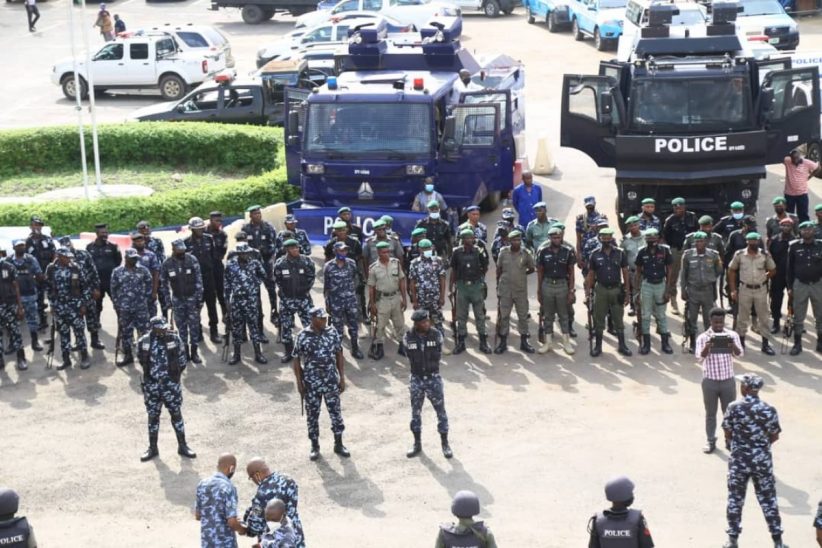
The police on Tuesday in Ibadan paraded 78 suspects arrested for allegedly planning to wreak havoc in the city over the sack of the leaders of a roads transport group.
The state government had earlier on Monday evening announced the suspension of the Disciplinary Committee of the state’s Parks Management System, which the state government had set up to manage motor parks in the state.
The committee is led by a political enforcer, Mukaila Lamidi, also known as Auxiliary.
The suspension of the committee had caused anxiety in Ibadan where disputes among road transport unions usually led to mayhem.
A member of the disbanded group was reportedly killed during a shootout with the police on Tuesday.
The police made this known while parading 78 persons believed to be members of the dissolved PMS for unlawful possession of firearms, ammunition and other criminal instruments.
Trouble started in the state after the announcement of Auxiliary’s sack through a statement by the governor’s Chief of Staff, Segun Ogunwuyi.
On Tuesday, the police besieged Auxiliary’s hotel where they said they recovered arms and ammunition.
The suspended transport union leader was reported to have escaped with some of his boys during the encounter.
While speaking during the parade, the state commissioner of police, Adebowale Williams, told journalists that his men went to Auxiliary’s hostel acting on intelligence of his plans to unleash mayhem.
“Sequel to the above, on Tuesday 30/05/2023 in a strategic intelligence coordinated raid around his location at Diamond Hotel, Alakia-Isebo, under Egbeda LGA, (78) Seventy-Eight suspected hoodlums who had perfected plans to unleash mayhem at the early hours of today at major parts of the Metropolis were arrested in possession of sophisticated firearms, (724) Seven Hundred and Twenty-four Cartridges assorted charms, (33) Thirty-three Mobile Phones, and a cash sum of about (N3,450,000) Three Million Four Hundred and Fifty Thousand Naira Only.”
The police boss said sophisticated firearms were recovered from the hotel rooms and in the trunk compartment of parked vehicles within the hotel.
“Exhibits recovered from the suspects are one AK-47 Riffle, four (4) AK-47 magazines, Eighty four (84) live AK-47 Ammunitions, Nineteen (19) pump action riffles, one Barreta Pistol, Seven Cut-to-size Gun, one English made Barrel Gun, Seven Hundred and twenty four (724) live cartridges, 25 cutlasses, Seven Jack knives, thirty three(33) mobile phones, one Samsung Laptop, Charms, One Mazda Bus, One Toyota Sienna, Cash sum of Three Million, Four Hundred and fifty thousand naira, (N3,450,000.00).
“Worthy of note is that, though the PMS Chieftain was able to escape with some of his boys during the gun duel with the Police, However a member of the group was neutralized in a gun duel with the Police.
“Recall that the same group was alleged to be responsible for the attack on (14) Fourteen members of the Road Transport Employers Association of Nigeria (RTEAN) along Agodi axis under Ibadan North-East LGA enroute the venue of yesterday’s Inaugural celebrations.
“Furthermore, in line with Standard Operational Procedure, all recovered items were properly Documented, packaged and recorded for onward forensics analysis and for evidence purposes in accordance with the Administration of Criminal Justice Act 2015 and all other relevant laws.”
Premium Times



The Dangote Petroleum Refinery has increased its Premium Motor Spirit (PMS) aka petrol, gantry price by 6.7 per cent to N1,350 per litre from N1,265 per litre, effective September 12, 2026.
The refinery also raised its coastal price to N1,783,530 from N1,669,543, representing an increase of N113,987, or 6.8 per cent.
In a memo to customers, Dangote Petroleum Refinery announced the revised prices, saying:
“Dear valued customer, please find below the revised DPRP PMS gantry and coastal price which is effective 12th September 2026.”
The refinery also directed customers with existing loading arrangements to return their Automated Truck Certificates, ATCs, for repricing.
It said: “You are advised to return all ATCs for repricing and a new volume contract will be issued for immediate loading resumption.”
The latest adjustment is expected to increase the acquisition cost of petrol for marketers sourcing supplies from the refinery and could put upward pressure on pump prices.
The increase comes amid renewed volatility in the international crude oil market, with Brent crude recently trading above $100 per barrel.
Nigeria’s downstream petroleum market operates under deregulation, with petrol prices influenced by crude oil costs, refining expenses, foreign exchange, logistics and market forces.
Consequently, the new Dangote price is expected to trigger reviews by marketers, although the extent of any adjustment at filling stations will depend on transportation, distribution costs, competition and prevailing market conditions.
The Dangote refinery has emerged as a major supplier of locally refined petrol as Nigeria seeks to reduce its dependence on imported petroleum products.
The latest increase could therefore have implications for consumers and businesses if marketers pass the higher acquisition cost through to retail prices.
Marketers are now expected to adjust their purchase and selling prices in response to the new Dangote petrol rates.

The Osun State Police Command has arrested a woman after a vigilante member, identified as Sunday and popularly known as Apetu, died shortly after having a sexual encounter with her in Ile-Ife, Osun State.
A video circulated on social media showed the man in severe distress at Ooni Ilare Street, where he was heard pleading with the woman to give him urine.
The incident occurred on Sunday around 2:30pm in the Odi-Olokun area of Ile-Ife, after which the woman was taken into custody at the Moore Police Division.
According to a situation report attributed to the Nigeria Security and Civil Defence Corps, Apetu was found gasping, screaming and pleading with the woman while showing signs of severe physical distress after the encounter.
The report said the man eventually died from the incident, while his remains were deposited at the morgue of the Obafemi Awolowo University Teaching Hospitals Complex, Ile-Ife.
The cause of Apetu’s death has not been officially established, despite claims by some residents that he died from what they described as a “thunderbolt.”
Authorities have not confirmed the claim or established any link between the traditional belief and the man’s death.
The belief centres on a traditional claim that a person affected by a supposed “thunderbolt” spell could harm another person through sexual contact. However, the claim has not been established as a medical or scientific explanation for the death.
A senior officer of the Osun State Police Command said the command was aware of the reports circulating on social media but warned members of the public against spreading unverified information.
The incident has drawn attention in Ile-Ife because of the conflicting accounts surrounding the sudden death.
Authorities have urged residents to remain calm and allow the police and relevant medical authorities to establish the actual cause of death.
The Lagos State Police Command has confirmed a mob action which allegedly led to the death of one Basit Kolade.
The victim was allegedly attacked by a group of individuals following a road traffic incident at Freeman Street, Lagos Island, on Wednesday, 2nd September 2026, at about 10:40 p.m, a statement signed by the Public Relations Officer, SP Adebisi Abimbola, and made available to the National Association of Online Security News Publishers (NAOSNP), said.
The Police noted in the stateent as follows:
Preliminary investigation revealed that Basit Kolade was travelling with his spouse, from Ebute Metta towards Lagos Island in a black Lexus Jeep, with registration number KSF 115 JZ, when a motorcycle allegedly collided with the vehicle from behind.
An argument reportedly ensued between both of them. In the course of the incident, the vehicle allegedly reversed and hit the motorcycle, causing the rider and the motorcycle to fall. This reportedly attracted a group of individuals in the area, who allegedly attacked Basit with dangerous weapons. His spouse was rescued by some women in the vicinity, while Kolade was rushed to the Lagos Island General Hospital, where he was subsequently confirmed dead. The motorcycle rider who was allegedly hit in the incident is, however, alive and currently receiving medical treatment in a hospital.
Four (4) suspects have so far been arrested in connection with the attack. They are Khalid Rafiq ‘m’ 20 years; Gafar Rahim ‘m’ 21 years; Ibrahim Azeez ‘m’ 33 years; and Samos Momoh ‘m’ 21 years. Efforts are ongoing to identify and arrest other persons who allegedly participated in the attack.
The Command has commenced an investigation into the incident, which is being treated as a homicide case, and the matter has been transferred to the State Criminal Investigation Department (SCID), Panti, for further investigation and appropriate legal action.
The Command wishes to reiterate that the 1999 Constitution of the Federal Republic of Nigeria, as amended, guarantees every person the fundamental right to life under Section 33. The Constitution permits deprivation of life only in circumstances specifically recognised by law.
Similarly, under the Criminal Law of Lagos State, unlawful killing constitutes an offence of homicide. The law provides that unlawful killing may amount to murder or manslaughter depending on the circumstances. In particular, the provisions on murder cover unlawful killing with the intention to kill or cause grievous harm, with the law prescribing severe punishment upon conviction.
The Command therefore warns members of the public against mob action, jungle justice, and the resort to self-help under any circumstance. No individual or group has the legal authority to arrest, try, convict, or execute another person.
The warning is consistent with the directive of the Inspector-General of Police, IGP Olatunji Rilwan Disu, psc(+), NPM, who has directed Police Commands to treat cases involving mob action resulting in death as homicide and warned that persons who participate in, organise, incite, or support such attacks will face the full weight of the law.
The Command reiterates that suspicion or an allegation of wrongdoing does not confer on anyone the right to take the law into their own hands. Members of the public are urged to promptly report criminal incidents to the Police and allow the law to take its course.
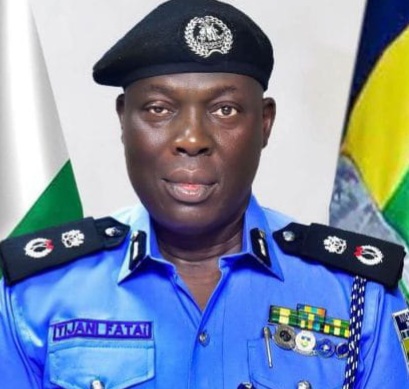
The Commissioner of Police, Lagos State Command, CP Tijani Fatai, psc, mnips, has directed that all persons found culpable in the incident be identified, arrested, and prosecuted in accordance with the law. He assures members of the public that the investigation will be thorough and professional, and that all persons found to have participated in the attack or otherwise contributed to the death will be made to face the law.


