News
‘Oyo Tops List of Out-of-School Girls in South-West’

- /home/rhoncare/pointblank.ng/wp-content/plugins/mvp-social-buttons/mvp-social-buttons.php on line 27
https://pointblank.ng/wp-content/uploads/2024/02/Seyi-Makinde.png&description=‘Oyo Tops List of Out-of-School Girls in South-West’', 'pinterestShare', 'width=750,height=350'); return false;" title="Pin This Post">
- Share
- Tweet /home/rhoncare/pointblank.ng/wp-content/plugins/mvp-social-buttons/mvp-social-buttons.php on line 69
https://pointblank.ng/wp-content/uploads/2024/02/Seyi-Makinde.png&description=‘Oyo Tops List of Out-of-School Girls in South-West’', 'pinterestShare', 'width=750,height=350'); return false;" title="Pin This Post">
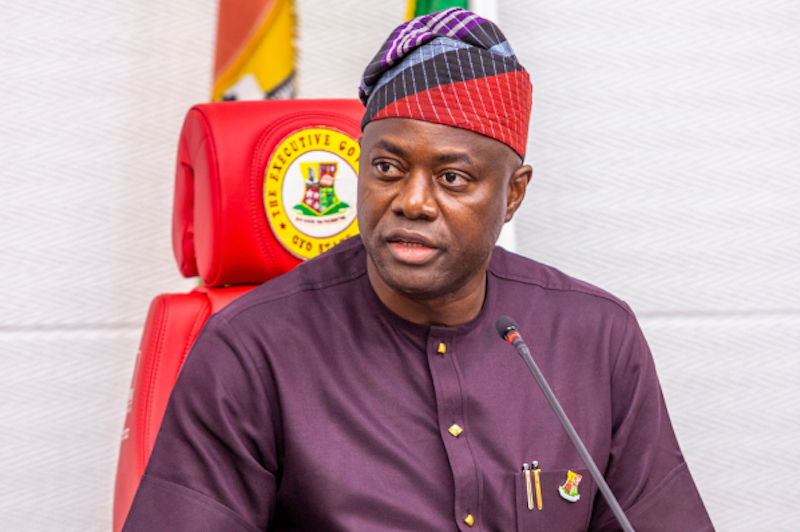
A Non-Governmental Organisation (NGO), the Black Girls’ Dream Initiative (BGDI), has revealed that one in five girls of school age in Oyo State is not in school, making the State the highest with out-of-school children in South-western Nigeria.
The BGDI, in association with some education stakeholders in the State, made this known in Ibadan on Wednesday during a sensitisation workshop organised by the NGO, in partnership with Global Schools Forum and the IDF Foundation, and themed ‘Girls’ education in Oyo State: Our shared goal’.
The founder of BGDI, Karimot Odebode, described the number of out-of-school children in Oyo State as alarming and as a crisis that has to be urgently curbed by the government, schools, parents, traditional rulers, and other vital stakeholders in the state.
Odebode noted that though the government and other stakeholders are trying their best to send and keep children, especially the girl-child, in school, barriers such as poverty, early marriage, family responsibilities, and cultural expectations are marring their efforts.
Given this, she added that NGOs, such as BGDI, are working to reverse this trend by spotlighting the problem, engaging decision-makers, and opening doors for re-entry into the classroom because every girl deserves a second chance at learning.
She stated that BGDI, in its quest to ensure that more girls get quality education and remain in school, is aligning local education data with the challenges; collaborating with stakeholders to identify, engage, and reintegrate out-of-school girls; encouraging trackable reduction in dropout rates; and increasing enrolment, especially in underserved local governments in the State.
Odebode urged the government, schools, and parents to empower girls as future leaders. She explained how her organisation is doing this through their debate, mentorship programmes, sensitisation initiatives, and stakeholders’ workshops.
“We should make sure children are not just returning to school, but are returning with confidence, agency, and a sense of purpose; and also make sure we initiate and sustain long-term developmental impact that builds self-driven, educated citizens,” she said.
She further said: “We are the enablers of change. We need to move from conversation to action. Change happens when stakeholders act together. What we do today shapes the data tomorrow.”
The stakeholders, in the course of the workshop, identified and offered solutions to the main problems facing the girl-child’s education in Oyo State.
The Baale Sinko of Ido Local Government Area of Oyo State, Adeleke Waheed Mobolaji, and the Mogaji of Ogundele Compound, Labiran, Ibadan, Chief Ogunsina Oluseyi Oladebo emphasised that the government cannot train the girl-child alone and that the bulk of the training and education girls starts from the home, stressing that to encourage girls to go to school, their mothers needs to be properly empowered.
The two Ibadan-based traditional rulers, Adeleke and Oladabo, also urged society to support less-privileged students, especially girls, in their education, to ensure that no child of school age will be on the street hawking, idling, or committing crime, instead of being in school.
Some of the teachers and parents at the event, M. C. Ebike, Janet Adio, Fausat Boladale, Rejoice Adegoke, O. O. Ogundare, Peace Akinola, Dorcas Oyinloye, stressed that the security of female students in schools is important, and special attention should be given to them to encourage them to attend and remain in school.
They urged schools and teachers to be kind and proactive while dealing with female students, which will encourage them to learn. Furthermore, they advised the government to recruit trained and passionate teachers and empower them with the best resources to ensure students are inspired to return to school.
Opeyemi Lawal of Project Wabi Sabi, Adetokunbo Ikumoluyi of Hosec Foundation, and Opeyemi Adebisi of Teach for Nigeria stated that NGOs and governments have a lot to do to keep students in school, adding that the out-of-school challenge facing Oyo State could be addressed through sustainable partnership, investment in education, parents’ and guardians’ sensitisation, and students’ empowerment.
The convener of the event, Karimot Odebode, stated that the feedback and recommendations from the stakeholders regarding the theme and outcome of the sensitisation workshop will be submitted to the appropriate government authorities for policy formulation and implementation.


By Henry Ukazu
Dear Destiny Friends,
There’s no gainsaying the fact that Words are powerful. Yes, Words have impact, and there’s no doubt about it. Whether we are speaking to our friends, partners, children, leaders, or even to ourselves, words are important. That said, there’s something more powerful and magical about words that we can’t see, and that’s the spiritual aspects.
Sometimes, when we speak, we don’t seem to know the effect of our words. Depending on who is speaking to you and whom you are speaking to, there are certain words that evoke hopelessness, frustration, hope, anger, pain, depression, greatness, joy, love, etc. To understand how this works, we must understand how the spiritual implication of words works. The book of Life states in Matthew 15:11 that it is not what goes into a person’s mouth that defiles them, but what comes out of their mouth.
According to a Lao Tzu in his famous quote, ” Watch your thoughts, they become your words; watch your words, they become your actions; watch your actions, they become your habits; watch your habits, they become your destiny.”, Mahatma Gandhi also stated, “Carefully watch your thoughts, for they become your words. Manage and watch your words, for they will become your actions. Consider and judge your actions, for they have become your habits. Acknowledge and watch your habits, for they shall become your values. Understand and embrace your values, for they become your destiny.”
Looking at these two quotes, one thing is certain: they are products of thoughts and words. It is what we think that manifests in our thoughts and reality. Sometimes, as humans, we don’t seem to realize how powerful our words are; words can evoke emotions. Words are like our tongue. We can either use it to cause an inferno or use it to soothe humanity. Words are also like a knife; if you use the sharp side, it will cut you, and if you decide to use the blunt side, it won’t hurt you.
In communication, it is not really what we say that matters, but how we say it. It’s instructive to note that our life and world are governed by what we speak. We may not see it, but if we look carefully, we can feel it in the air.
To understand how words work in life. No problem can’t be solved with the right communication. It’s just a matter of understanding because there can be no problem where there’s a problem, and there can be problems where there’s no problem. What this really means is that life is about understanding. What might appear like a little problem between two people, how they will handle it, can make it look big, and what appears like a big problem among two people, how they will handle it can make it appear small.
Do you see that life is a matter of understanding, and to resolve conflicts, the right words are powerful. Words can make or mar someone, organizations, countries, schools, hospitals, or even churches.
How words can affect an individual
Let’s take a case study of a careless statement by an individual who is vulgar in his thought process. Many people will tend to avoid the person. Imagine if the person is a Bishop, politician, or student and he uses words that are uncultured and uncouth. The backlash might be brutal. Imagine if that word is used in an organization that sees such a word as sexual harassment. The person might be called for an explanation
How words can affect an organization
Whether we are talking about schools, business, hospitals, churches, etc. All these are corporate organizations. Their words or utterances can affect their organizations. Organizations are known for their brands, which they have earned over the years. Imagine a brand-known endorsing a policy which the public frowns at just because they feel it can serve their interest at a particular point in time. Such statements can affect the image and perception of the organization, especially when the person who made the statement speaks on behalf of the organization.
How words can affect a country
A country can be affected by the kind of words its leader utters. Imagine if the President of the United States of America makes a careless statement, whether it relates to war, spirituality, or sexism. Let’s say, for example, President Trump states that the United States of America doesn’t believe in God or will not identify with God, or President Trump makes a statement about war or the economy. Such statements can evoke emotions which can affect the market economy.
Even in marriage, words can play a huge role. This is because words have spiritual effects on partners because they are legally married. When a partner lays a curse on their partner, and that curse is justified, it won’t take long for that curse to manifest. One may not see it now, but soon, it will manifest.
The same principle applies to children. Do you know that, as a parent, nobody has more influence on your child than you? Nobody can even bless your child more than you apart from God. So, it’s imperatively important for parents to bless their children as opposed to cursing them no matter how provoked they are.
As a father and parental advocate, I know the importance of parental blessings. When children are blessed by their parents, they will succeed when others fail. Even in their career, they will flourish and receive uncommon favors. When children are blessed by their parents and they go for interviews, they might both be the best, but the panel can favor them just because there’s this aroma of grace following them because of parental blessings. This is a typical example of how the spiritual implication of words works.
Finally, the spiritual power of words cannot be explained to a layman. When we speak, the wall hears it, the ground stamps it, and the universe carries it to the place it deserves. So, let’s cultivate the habit of praying with words, singing with words, and meditating so we can hear what God is saying to words. When we do these very well, I believe, we shall triumph above any setback or challenge we are experiencing.
Henry Ukazu writes from New York. He works with the New York City Department of Correction as the Legal Coordinator. He’s the founder of Gloemi. He’s a Transformative Human Capacity and Mindset coach. He is also a public speaker, youth advocate, creative writer, and author of Unleash Your Destiny, and The Six Pillars of Success. He can be reached via info@gloemi.com
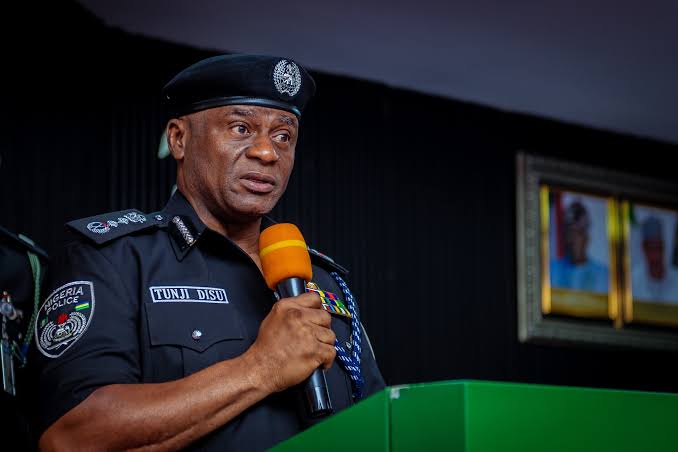
The Inspector-General of Police (IGP), Olatunji Disu, has urged hospitals and medical personnel across Nigeria to provide immediate treatment to gunshot victims without insisting on a police report before attending to them.
Disu also assured Nigerians that they would not face punishment for assisting injured persons during emergencies, encouraging members of the public to help victims whenever necessary.
The Police chief made the appeal in a video shared on the Nigeria Police Force’s X handle on Thursday, describing the issue as critical to saving lives.
He explained that obtaining a police report should not be a condition for admitting or treating anyone who sustains gunshot injuries.
According to him, medical personnel are expected to prioritise emergency care rather than delay treatment over administrative requirements.
“When a gunshot victim is brought to any hospital, the law does not require a police report before treatment,” he said.
Disu specifically appealed to doctors, nurses and other healthcare workers to ensure that injured persons receive prompt medical attention.
“To our doctors and healthcare workers, you are enjoined to treat gunshot victims immediately without waiting for a police report,” he stated.
He also addressed members of the public, urging them not to hesitate to assist people who sustain injuries, particularly in emergency situations.
The IGP assured citizens that helping an injured person would not expose them to punishment by the police.
“To members of the public, if you see someone injured, do not hesitate to help. You will not be punished for helping,” he said.
Disu further stressed that the responsibility of the police was to protect lives and guarantee public safety rather than create fear among citizens.
“Our duty is not to create fear, but to protect lives. We wish to reassure citizens of their safety at all times,” he added.
He urged police officers and healthcare professionals to comply with the law and ensure that bureaucratic procedures did not stand in the way of urgent medical attention.
Emphasising the importance of prompt intervention, the police chief said every second mattered when dealing with gunshot injuries.
He concluded by urging hospitals and emergency responders to adopt a life-saving approach, saying: “Treat first, save lives.”
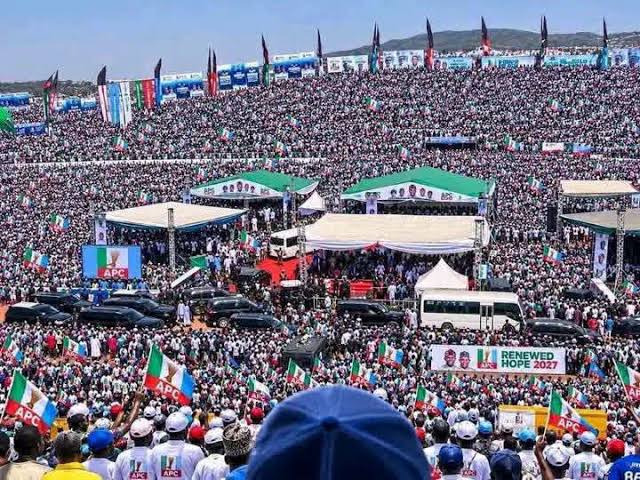
The Presidency has deleted a controversial photograph shared by President Bola Tinubu’s media aide, Dada Olusegun, which appeared to show a packed crowd at the All Progressives Congress (APC) North-Central campaign rally in Jos, Plateau, following allegations that the image was generated or manipulated using artificial intelligence (AI).
The photograph, which was posted on X on Sunday, November 15, a day after Tinubu attended the APC rally in Jos, attracted criticism from Nigerians who questioned its authenticity and accused the presidential aide of exaggerating the crowd turnout.
Olusegun had shared the image with the caption, “Plateau State for PBAT”, portraying the campaign ground as filled with supporters.
However, social media users began circulating photographs and videos from the rally showing sections of the venue with visibly fewer people, raising questions about the authenticity of the image.
The controversy prompted widespread reactions, with several users accusing the presidential aide of using AI-generated content to create an impression of overwhelming support for Tinubu ahead of the 2027 general election.
A report by the Foundation for Investigative Journalism (FIJ) said its examination of the photograph indicated that it had been altered using artificial intelligence, with additional people appearing to have been inserted into the original image.
The report also noted that social media users had compared the disputed photograph with other images and videos from the same event, which showed a different picture of attendance at the venue.