News
PANDEF Laments Buhari’s PIB Assent, Says Sad Day for Niger Delta People


- /home/rhoncare/pointblank.ng/wp-content/plugins/mvp-social-buttons/mvp-social-buttons.php on line 27
https://pointblank.ng/wp-content/uploads/2021/08/Edwin-Clark-1000x600.jpg&description=PANDEF Laments Buhari’s PIB Assent, Says Sad Day for Niger Delta People', 'pinterestShare', 'width=750,height=350'); return false;" title="Pin This Post">
- Share
- Tweet /home/rhoncare/pointblank.ng/wp-content/plugins/mvp-social-buttons/mvp-social-buttons.php on line 69
https://pointblank.ng/wp-content/uploads/2021/08/Edwin-Clark-1000x600.jpg&description=PANDEF Laments Buhari’s PIB Assent, Says Sad Day for Niger Delta People', 'pinterestShare', 'width=750,height=350'); return false;" title="Pin This Post">
The Pan Niger Delta Forum has said the President’s assent to the PIB despite opposition from various southern groups was a sad day for the people of the Niger Delta region.
The National Publicity Secretary of PANDEF, Ken Robinson, said this in a telephone interview with one of our correspondents on Monday.
Robinson said the action of the President showed insensitivity and disregard towards the feelings of the Niger Delta people.
He stated, “It is a sad day for the Niger Delta people and a clear demonstration of the disregard and insensitivity of the government of President Muhammadu Buhari concerning the feelings and concerns of the Niger Delta people.
“It is very unfortunate and very sad that in spite of the outcry and the condemnation that greeted the National Assembly’s approval of the PIB, a paltry three per cent is allocated for the host communities’ development and the outrageous 30 per cent of the NNPC’s profit that is allotted for oil exploration in the frontiers, which we know is basically North-East Nigeria, perhaps North-Central Nigeria.”



The African Democratic Congress Presidential Campaign Council (ADC-PCC) has criticised President Bola Tinubu over his continued defence of fuel subsidy removal, accusing him of ignoring the economic difficulties facing millions of Nigerians.
The council described the President’s position as insensitive and disconnected from the harsh realities experienced by ordinary citizens.
Tinubu had told Nigerians at a rally held at Mapo Hall in Ibadan, Oyo State, that they should forget about fuel subsidy, arguing that the policy belonged to the past.
However, reacting during an interaction with young people in Lokoja ahead of the ADC presidential campaign rally in Kogi State, the council’s Director of Media and Publicity, Kola Ologbondiyan, said the President’s remarks showed little concern for Nigerians battling hunger, poverty and rising living costs.
“The President appears more interested in being addressed as Mr. President than in tackling the crushing realities confronting the people. He has demonstrated little or no concern for the suffering of ordinary Nigerians,” Ologbondiyan said.
He added: “That explains his brash insistence that Nigerians should forget about fuel subsidy removal simply because, in his estimation, it belongs to the past.”
Ologbondiyan questioned how the government could describe the subsidy issue as a thing of the past when its effects continued to affect millions of people.
He asked: “How can hardship, hunger and widespread poverty, which are direct consequences of the hurriedly imposed economic policies of the Tinubu administration, suddenly become things of the past when Nigerians continue to bear their devastating consequences every day?”
The ADC-PCC spokesman argued that the subsidy removal was introduced without adequate preparation or effective measures to protect low-income earners and other vulnerable groups.
According to him, the policy has contributed to higher transportation fares, rising food prices and difficulties for small businesses, while pushing more households into poverty.
“To ask Nigerians to forget a policy whose consequences they confront every waking moment is not only insensitive; it is an insult to their intelligence and a mockery of their suffering,” he added.
The council said good leadership required listening to citizens, admitting policy shortcomings and making necessary changes to reduce their hardship.
It accused the Tinubu administration of continuing to defend its economic decisions despite the difficulties many Nigerians face in meeting their daily needs.
The ADC-PCC also raised concerns over what it described as attempts to weaken key democratic institutions, including the judiciary, security agencies, anti-corruption bodies and financial institutions, allegedly to advance Tinubu’s second-term ambition.
It warned that institutions created to protect democracy and serve the public interest should not be used to promote the political interests of individuals.
“Nigeria cannot afford a second term built on the ruins of its democratic institutions and the continued impoverishment of its citizens,” the council declared.
The campaign council maintained that the country’s economic difficulties were not unavoidable, blaming them on what it described as poor policy decisions, inadequate planning and failure to prioritise citizens’ welfare.
It called for a change in leadership, saying Nigeria needed a government with the experience and political will to address the economic challenges and restore public confidence.
The council presented its presidential candidate, Atiku Abubakar, as the person it believes could lead the country out of the current difficulties.
It said an Atiku-led government would focus on better economic planning, social protection programmes and policies that put the welfare of citizens at the centre of governance.
The ADC-PCC urged Nigerians to use lawful and constitutional means to decide the country’s leadership in the 2027 general election, calling on voters to make their voices heard through the ballot.
“Nigerians deserve a government tat feels their pain, understands their struggles and takes deliberate steps to ease their burden, not one that dismisses their suffering or asks them to forget the circumstances that have made life increasingly unbearable.”
News
Fountain of Life Church: Jimmy Odukoya Sues Sister, Tolu, Church Trustees over Removal As Senior Pastor
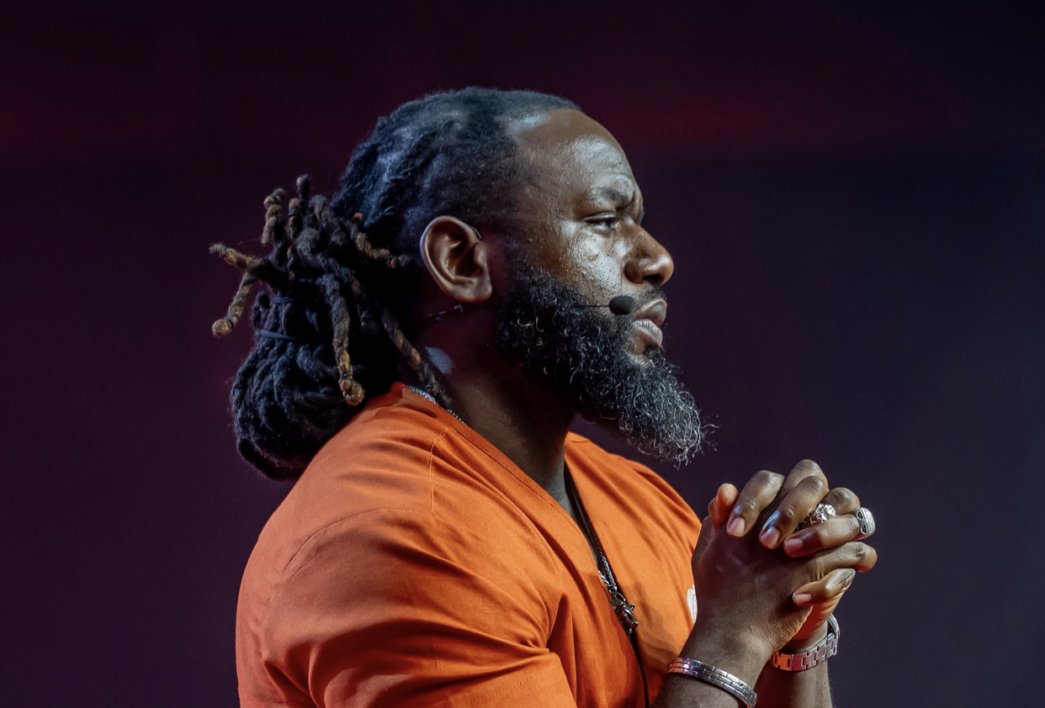
Pastor Jimmy Odukoya has taken his leadership dispute with The Fountain of Life Church to the Federal High Court in Lagos, filing a lawsuit against his sister, Tolu Odukoya, and several church officials over his removal as senior pastor.
The suit, marked FHC/LAG/CS/1568/2026, was reportedly filed on Friday, November 20, 2026, marking a fresh development in the growing leadership crisis within the Lagos-based ministry.
According to a report, the defendants include Tolu Odukoya, Biodun Balogun, Biodun Awosika, Rotimi Okpaise, Tobi Enuha, Gbenga Onabanjo, Fred Ohiani and Akin Osinbajo.
Odukoya is challenging the circumstances surrounding his removal and is asking the court to declare the decision unlawful.
They alleged that Taiwo Odukoya had designated Pastor Kunle Areogun as his successor, with Jimmy expected to serve as his administrative assistant and head of the church’s youth ministry.
However, Jimmy Odukoya and the church rejected the removal announcement, describing it as unconstitutional and insisting that his appointment as senior pastor in September 2023 was unanimously approved by the Board of Trustees.
The dispute subsequently took another legal turn when the Lagos State High Court, on November 18, granted an interim order restraining Jimmy from presenting himself as the church’s senior pastor and spiritual head.
The order followed a separate suit instituted by the Incorporated Trustees of The Fountain of Life Church.
The court adjourned that matter until December 1, 2026, while preserving Odukoya’s right to challenge the interim order.
Jimmy became senior pastor following the death of his father in August 2023. The Fountain of Life Church was founded by Taiwo and his late wife, Pastor Bimbo Odukoya.
The latest lawsuit introduces another dimension to the succession controversy, with the competing positions of the parties now facing legal scrutiny.
The outcome of the proceedings could have significant implications for the leadership structure and governance of the church.
As of the time of this report, the defendants’ response to the latest suit had not been established.
By Henry Ukazu
Dear Destiny Friends,
There’s no gainsaying the fact that Words are powerful. Yes, Words have impact, and there’s no doubt about it. Whether we are speaking to our friends, partners, children, leaders, or even to ourselves, words are important. That said, there’s something more powerful and magical about words that we can’t see, and that’s the spiritual aspects.
Sometimes, when we speak, we don’t seem to know the effect of our words. Depending on who is speaking to you and whom you are speaking to, there are certain words that evoke hopelessness, frustration, hope, anger, pain, depression, greatness, joy, love, etc. To understand how this works, we must understand how the spiritual implication of words works. The book of Life states in Matthew 15:11 that it is not what goes into a person’s mouth that defiles them, but what comes out of their mouth.
According to a Lao Tzu in his famous quote, ” Watch your thoughts, they become your words; watch your words, they become your actions; watch your actions, they become your habits; watch your habits, they become your destiny.”, Mahatma Gandhi also stated, “Carefully watch your thoughts, for they become your words. Manage and watch your words, for they will become your actions. Consider and judge your actions, for they have become your habits. Acknowledge and watch your habits, for they shall become your values. Understand and embrace your values, for they become your destiny.”
Looking at these two quotes, one thing is certain: they are products of thoughts and words. It is what we think that manifests in our thoughts and reality. Sometimes, as humans, we don’t seem to realize how powerful our words are; words can evoke emotions. Words are like our tongue. We can either use it to cause an inferno or use it to soothe humanity. Words are also like a knife; if you use the sharp side, it will cut you, and if you decide to use the blunt side, it won’t hurt you.
In communication, it is not really what we say that matters, but how we say it. It’s instructive to note that our life and world are governed by what we speak. We may not see it, but if we look carefully, we can feel it in the air.
To understand how words work in life. No problem can’t be solved with the right communication. It’s just a matter of understanding because there can be no problem where there’s a problem, and there can be problems where there’s no problem. What this really means is that life is about understanding. What might appear like a little problem between two people, how they will handle it, can make it look big, and what appears like a big problem among two people, how they will handle it can make it appear small.
Do you see that life is a matter of understanding, and to resolve conflicts, the right words are powerful. Words can make or mar someone, organizations, countries, schools, hospitals, or even churches.
How words can affect an individual
Let’s take a case study of a careless statement by an individual who is vulgar in his thought process. Many people will tend to avoid the person. Imagine if the person is a Bishop, politician, or student and he uses words that are uncultured and uncouth. The backlash might be brutal. Imagine if that word is used in an organization that sees such a word as sexual harassment. The person might be called for an explanation
How words can affect an organization
Whether we are talking about schools, business, hospitals, churches, etc. All these are corporate organizations. Their words or utterances can affect their organizations. Organizations are known for their brands, which they have earned over the years. Imagine a brand-known endorsing a policy which the public frowns at just because they feel it can serve their interest at a particular point in time. Such statements can affect the image and perception of the organization, especially when the person who made the statement speaks on behalf of the organization.
How words can affect a country
A country can be affected by the kind of words its leader utters. Imagine if the President of the United States of America makes a careless statement, whether it relates to war, spirituality, or sexism. Let’s say, for example, President Trump states that the United States of America doesn’t believe in God or will not identify with God, or President Trump makes a statement about war or the economy. Such statements can evoke emotions which can affect the market economy.
Even in marriage, words can play a huge role. This is because words have spiritual effects on partners because they are legally married. When a partner lays a curse on their partner, and that curse is justified, it won’t take long for that curse to manifest. One may not see it now, but soon, it will manifest.
The same principle applies to children. Do you know that, as a parent, nobody has more influence on your child than you? Nobody can even bless your child more than you apart from God. So, it’s imperatively important for parents to bless their children as opposed to cursing them no matter how provoked they are.
As a father and parental advocate, I know the importance of parental blessings. When children are blessed by their parents, they will succeed when others fail. Even in their career, they will flourish and receive uncommon favors. When children are blessed by their parents and they go for interviews, they might both be the best, but the panel can favor them just because there’s this aroma of grace following them because of parental blessings. This is a typical example of how the spiritual implication of words works.
Finally, the spiritual power of words cannot be explained to a layman. When we speak, the wall hears it, the ground stamps it, and the universe carries it to the place it deserves. So, let’s cultivate the habit of praying with words, singing with words, and meditating so we can hear what God is saying to words. When we do these very well, I believe, we shall triumph above any setback or challenge we are experiencing.
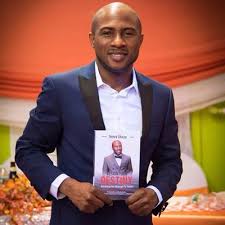
Henry Ukazu writes from New York. He works with the New York City Department of Correction as the Legal Coordinator. He’s the founder of Gloemi. He’s a Transformative Human Capacity and Mindset coach. He is also a public speaker, youth advocate, creative writer, and author of Unleash Your Destiny, and The Six Pillars of Success. He can be reached via info@gloemi.com