
Headlines
PDP Rejects Supreme Court’s Judgment on Ihedioha, Asks Tanko to Resign as CJN


By Eric Elezuo
The Peoples Democratic Party (PDP) has rejected the Supreme Court judgment which nullified the election of Hon Emeka Ihedioha as governor of Imo State, and installing Mr. Hope Uzodinma of the All Progressives Congress (APC) as duly elected.
Addressing the press, the party Chairman, Prince Uche Secondus, noted that the Supreme Court’s verdict was political and not in the interest of the people. He asked the Chief Justice, Mohammed Tanko, to step down as he has lost the confidence of the people.
Below is the text of his address:
January 16, 2020
Supreme Court Judgment On Imo Governorship Election is Groundless and Should Be Reversed
Being a text of Press Conference by the PDP National Working Committee (NWC) Presented by the National Chairman, Prince Uche Secondus, in Rejection of the Judgment of the Supreme Court On Imo Governorship Election.
Gentlemen of the Press!
The National Working Committee of our great party, after a thorough examination of all the issues relating to the miscarriage of justice by the Supreme Court on the Imo state governorship election petition, and after a very extensive consultation, resolves as follows:
That the Supreme Court, as presently constituted under Justice Mohammed Tanko, has become heavily compromised; lost its credibility and is now annexed to execute ignoble agenda of the APC-led Federal Government against the Nigerian people.
That the judgment of the Supreme Court voiding the lawful election of Hon. Emeka Ihedioha (who scored 276,404 votes) and awarding fictitious votes to declare Hope Uzodimma of the APC, who scored 96, 458 votes as governor of Imo state, is highly irrational, unfounded, a provocative product of executive manipulation and a recipe for crisis, which should not be allowed to stand.
With the verdict, the Supreme Court executed a coup against the PDP and the people of Imo state as well as other Nigerians, and such must not be allowed to have a place in our democracy.
The questions Justice Tanko’s Supreme Court must answer are:
1. The Supreme Court, in a host of cases, the latest and most celebrated being Atiku V Buhari & Ors, consistently decided that for a petitioner to succeed in an allegation of infraction of any provision of the Electoral Act especially one complaining about malpractice, as in this case, wrongful exclusion of votes, the petitioner must call witnesses polling unit by polling unit.
The question is, how many witnesses did Uzodinma/APC call from the 388 polling units from where the Supreme Court allocated votes to him.
The so called results from the 388 Polling units were rightfully rejected, in line with several decisions of the Supreme Court, by the Tribunal and Court of Appeal as it was merely dumped on the tribunal in a Ghana Must Go bag, by a policeman who had no mandate of the police to testify at the Tribunal.
The Tribunal did not even open the Ghana Must Go bags as there was no basis to do so. It is one of the great wonders of the world how the Supreme Court opened the bag, counted the results and added them to only the APC Candidate.
What is more perplexing is the fact that INEC produced a schedule of reasons why results were not produced from the 388 units.
Indeed election did not even take place in most of the units for one reason or another, like violence, etc and so no result could possibly be obtained from those units. The results were not merely rejected or cancelled by INEC.
None of the candidates or their Counsel, except perhaps APC, as we speak, are aware of the number of votes scored by each party from the 388 polling units. The Tribunal or Court of Appeal did not mention or ascribe any figure from the units to any party in their decisions.
In fact, in the cross examination of the APC Candidate, Sen. Hope Uzodinma, he could not read any figure from the “Oluwole” results. He said that the figures were not clear. And so it beats our imagination where the Supreme Court conjured and manufactured the figures it used in declaring Uzodinma/APC as duly elected.
But the law is settled as decided by the same Supreme Court in Buhari v. INEC (2008); that “weight can hardly be attached to a document tendered in evidence by a witness who cannot or is not in a position to answer questions on the document. One of such persons the law identifies is the one who did not make the document. Such a person is adjudged in the eyes of the law as ignorant of the content of the document”.
2. Does the Supreme Court have powers to formulate and allocate votes as election results?
3. Were the said results certified by INEC as required by law?
4. Did Hope Uzodinma call 388 witnesses from the 388 polling units to speak to the results to obviate the principle of dumping which the Supreme Court used against the PDP and her candidate, Atiku Abubarka, in the last Presidential Appeal.
5. Were the presiding officers and or party agents of the 388 polling units called to testify by Uzodinma/APC, who were the Petitioners?
6. What are the figures from each of the various 388 polling units generated and allocated to Hope Uzodinma/APC by the Supreme Court?
7. Is the Supreme Court saying that all the votes from the alleged 388 polling units were for the APC alone in an election that was contested by over 70 candidates?
8. It is on record that the votes analysis from the Imo governorship election as at March 11, 2019 when the results were declared were as follows:
-Total Accredited Votes: 823,743
-Total Valid Votes: 739,485
-Cancelled Votes: 25, 130
-Total Valid Votes: 714,355
But at the Supreme Court the Total Valid Votes have increased to 950,952.
This accounts for 127, 209 votes in excess of Total Accredited Votes of 823,743.
The question is; can the Supreme Court sit in Abuja on January 14, 2020 to increase the total number of accredited votes in election held in Imo State on March 9, 2019.
8. Is there any law, which permits the Supreme Court or anyone else for that matter, to unilaterally increase the total accredited votes by any margin after the accreditation and or the election?
9. Where did the Supreme Court get the numbers to declare Uzodinma/APC from a paltry 96,456 votes over Ihedioha/PDP votes of 276,404.
Even if all the excess accredited votes of 127,209 manufactured by the Supreme Court were added to Uzodinma/APC it will be 223,657 votes, still less than Ihedioha’s votes of 276,494 by 42,747 votes.
10. The victory of Ihedioha/PDP were confirmed by 2 concurrent judgments of both the Tribunal and the Court of Appeal and the tradition is that the Supreme Court hardly tamper with such decisions except it was found to be perverse. What was the evidence of perversity?
It is important to also bring to the consciousness of well-meaning members of the public, particularly Nigerians, that there were 2 elections on March 9, 2019, namely, Governorship and the House of Assembly.
As already known, there was only one accreditation for the 2 elections. The APC did not win any of the 27 seats in the Imo State House of Assembly which were won as follows:
PDP won 13
AA won 8
APGA won 6
APC won 0
Total 27
The above further questions and confronts the rationale for the judgment of the Supreme Court on Imo State.
How then did the Supreme Court arrive at its decision to allocate results to void a lawful governorship election and imposed an unelected person as governor?
The fact is that, the Supreme Court, as presently constituted under Justice Tanko, has lost its credibility and no longer commands the respect and confidence of Nigerians.
If the people no longer repose confidence in the Supreme Court, then our democracy, national cohesion and stability are at great risk.
The constitution of the panel that heard the appeal itself was a product of drama.
The panel was changed three times and any judge that showed signs of not agreeing to murder democracy in this case was promptly removed by the CJN.
The result had to be unanimous to satisfy the script of rationality.
But can any judge who sat on that panel go home and sleep well?
Can any judge who sat on that panel face his creator and swear that impartial justice was done? We think not.
We had intelligence before the verdict on the Imo Governorship that the hierarchy of APC had decided that they must use the Supreme Court to capture the states won and controlled by the PDP such as Imo, Sokoto, Bauchi, Adamawa and Benue.
Can the PDP rightly trust the impartiality and independence of the panel headed by Justice Tanko Mohammed, the CJN, to adjudicate on the remaining cases involving the PDP like Kano, Sokoto, Benue, Bauchi, Adamawa, Plateau and others?
Is the same fate awaiting the Governors of these states that are controlled by the PDP and other states like Kano where the PDP clearly won and was robbed?
Should Justice Tanko Mohammed and his colleagues on the Imo Governorship Panel not recuse themselves from the remaining cases involving PDP?
The PDP firmly holds that if the flawed judgment of the Supreme Court on Imo governorship election is allowed to stand, it would be a recipe for anarchy, chaos and constitutional crisis not only in Imo state but in the entire country.
Our party has it in good authority that Justice Tanko and his panel are working on instruction from certain forces in the Presidency to use the Supreme Court to take over states lawfully won by the PDP and award them to the APC.
The PDP therefore advises Justice Tanko not to allow himself to be used to push our nation to the path of anarchy and constitutional crisis as any further attempt to subvert justice in the pending petitions on Sokoto, Bauchi, Benue, Adamawa as well as Kano and Plateau states will be firmly and vehemently resisted.
In other to avoid an imminent breakdown of law and order, the PDP demands that Justice Tanko Mohammed immediately steps down as CJN and chairman of the National Judicial Council as Nigerians have lost confidence in him and a Supreme Court under his leadership.
Justice Tanko must not head the panel to determine the remaining election petitions before the Supreme Court.
One final issue to be noted is that it is in the public record that Hon Justice Kudirat Kekere-Ekun has been the constant instrument used by anti-democratic agents resident in Lagos from where she was elevated to the bench of the Supreme Court, to deliver at least 3 of the most doubtful and controversial judgments which removed PDP governors and other elected officials.
These judgments are:
1. Paul Ukpo V Liyel Imoke where Liyel Imoke was removed in very suspicious circumstances in 2007 when she was at the Court of Appeal;
2. Adeleke V Oyetola delivered in 2019 which annulled the election of Adeleke by the Osun people; and now;
3. Uzodinma V Ihedioha delivered on January 14, 2020 which removed Ihedioha of the PDP who won the election with 276,494 votes and replaced with Uzodinma of the APC who came 4th in the election with a paltry 96, 458 votes.
These cannot be mere coincidences.
CONCLUSION
In conclusion, in the light of extraordinary circumstances that vitiates that judgment as a product manipulation and a clear coup d’etat against the will of the people of Imo State, we demand that the decision of the Supreme Court on the Imo Governorship Election be reviewed and reversed in the interest of justice.
Furthermore we demand that Justice Tanko Mohammed, the CJN and his colleagues on the Imo Governorship Panel recuse themselves from the remaining cases involving PDP in the Supreme Court.
We state for the records that the Supreme Court under Justice Tanko Mohammed shall be held responsible if there is any breakdown of law and order in any state as a result of judgments procured solely for political rather than judicial reasons as is currently happening.
Thank you


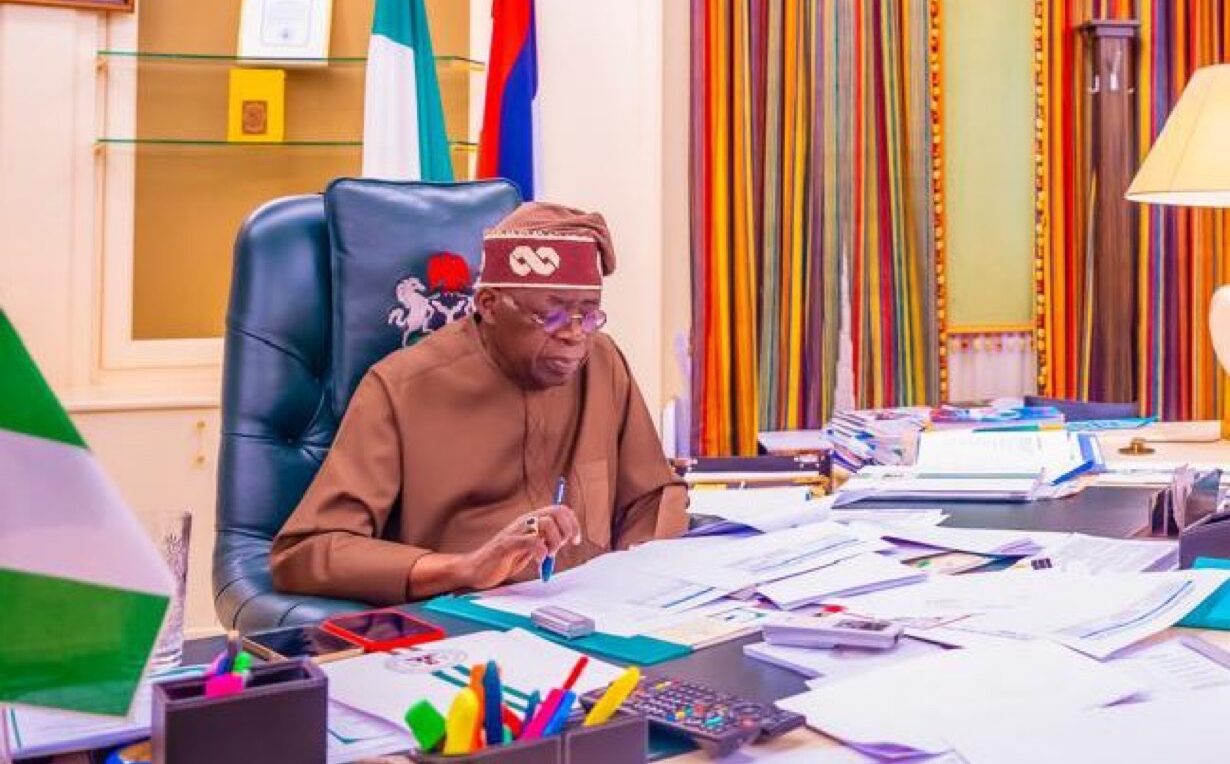
An Abuja High Court has cleared the way for the implementation of Nigeria’s new tax regime scheduled to commence on January 1, 2026, dismissing a suit seeking to halt the programme.
The ruling gives the Federal government, the Federal Inland Revenue Service (FIRS) and the National Assembly full legal backing to proceed with the take-off of the new tax laws.
The suit was filed by the Incorporated Trustees of African Initiative for Abuse of Public Trustees, which dragged the Federal Republic of Nigeria, the President, the Attorney-General of the Federation, the President of the Senate, Speaker of the House of Representatives and the National Assembly before the court over alleged discrepancies in the recently enacted tax laws.
In an ex-parte motion, the plaintiff sought an interim injunction restraining the Federal Government, FIRS, the National Assembly and related agencies from implementing or enforcing the provisions of the Nigeria Tax Act, 2025; Nigeria Tax Administration Act, 2025; Nigeria Revenue Service (Establishment) Act, 2025; and the Joint Revenue Board of Nigeria (Establishment) Act, 2025, pending the determination of the substantive suit.
The group also asked the court to restrain the President from implementing the laws in any part of the federation pending the hearing of its motion on notice.
However, in a ruling delivered on Tuesday, Justice Kawu struck out the application, holding that it lacked merit and failed to establish sufficient legal grounds to warrant the grant of the reliefs sought.
The court ruled that the plaintiffs did not demonstrate how the implementation of the new tax laws would occasion irreparable harm or violate any provision of the Constitution, stressing that matters of fiscal policy and economic reforms fall squarely within the powers of government.
Justice Kawu further held that once a law has been duly enacted and gazetted, any alleged errors or controversies can only be addressed through legislative amendment or a substantive court order, noting that disagreements over tax laws cannot stop the implementation of an existing law.
Consequently, the court affirmed that there was no legal impediment to the commencement of the new tax regime and directed that implementation should proceed as scheduled from January 1, 2026.
The new tax regime is anchored on four landmark tax reform bills signed into law in 2025 as part of the Federal Government’s broader fiscal and economic reform agenda aimed at boosting revenue, simplifying the tax system and reducing leakages.
The laws — the Nigeria Tax Act, 2025, Nigeria Tax Administration Act, 2025, Nigeria Revenue Service (Establishment) Act, 2025, and the Joint Revenue Board of Nigeria (Establishment) Act, 2025 — consolidate and replace several existing tax statutes, including laws governing companies income tax, personal income tax, value added tax, capital gains tax and stamp duties.
Key elements of the reforms include the harmonisation of multiple taxes into a more streamlined framework, expansion of the tax base, protection for low-income earners and small businesses, and the introduction of modern, technology-driven tax administration systems such as digital filing and electronic compliance monitoring.
The reforms also provide for the restructuring of federal tax administration, including the creation of the Nigeria Revenue Service, to strengthen efficiency, coordination and revenue collection across government levels.
While the Federal government has described the reforms as critical to stabilising public finances and funding infrastructure and social services, the laws have generated intense public debate, with some civil society groups and political actors alleging discrepancies between the versions passed by the National Assembly and those later gazetted.
These concerns sparked calls for suspension, re-gazetting and legal action, culminating in the suit dismissed by the Abuja High Court.
Reacting to the judgment, stakeholders described the ruling as a major boost for the reforms, saying it has removed all legal obstacles that could have delayed the implementation of the new tax framework.
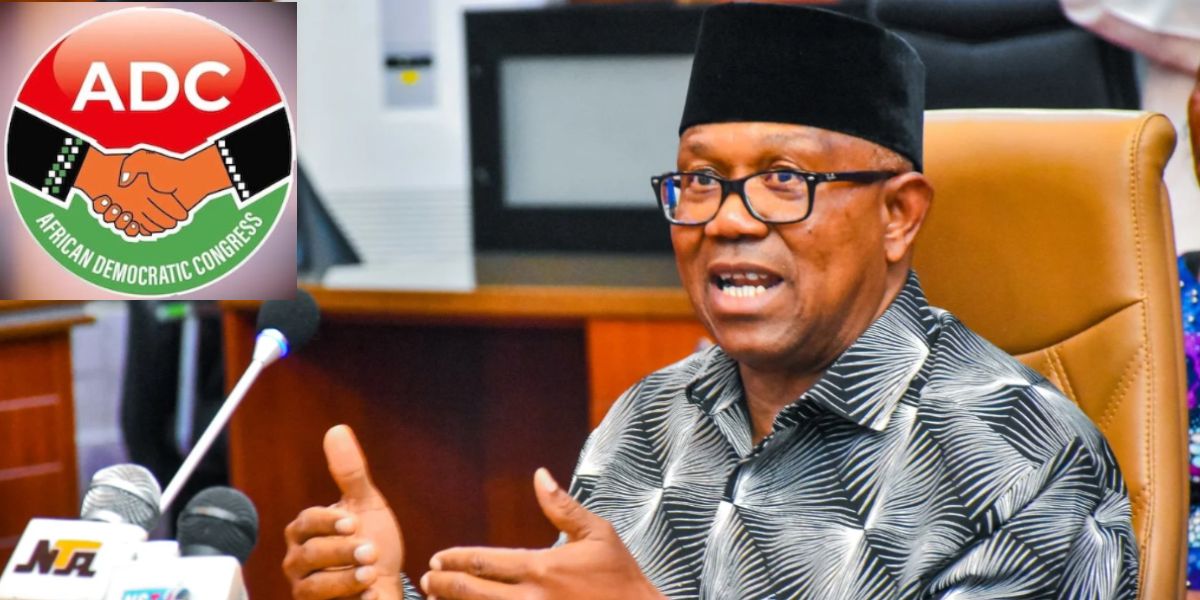
Former governor of Anambra State, presidential candidate of the Labour Party (LP) in the 2023 election, Mr. Peter Obi, has officially defected to the coalition-backed African Democratic Congress (ADC).
Obi announced the decision on Tuesday at an event held at the Nike Lake Resort, Enugu.
“We are ending this year with the hope that in 2026 we will begin a rescue journey,” Obi said.
The National Chairman of the ADC, David Mark, was among the attendees.

United States Representative Riley Moors has said further military strikes against Islamic State-linked militants in Nigeria could follow recent operations ordered by President Donald Trump, describing the actions as aimed at improving security and protecting Christian communities facing violence.
Moore made the remarks during a televised interview in which he addressed U.S. military strikes carried out on Christmas Day against militant targets in North-west Nigeria.
The strikes were conducted in coordination with the Nigerian government, according to U.S. and Nigerian officials.
“President Trump is not trying to bring war to Nigeria, he’s bringing peace and security to Nigeria and to the thousands of Christians who face horrific violence and death,” Moore said.
He said the Christmas Day strikes against Islamic State affiliates had provided hope to Christians in Nigeria, particularly in areas affected by repeated attacks during past festive periods.
According to U.S. authorities, the strikes targeted camps used by Islamic State-linked groups operating in parts of north-west Nigeria.
Nigerian officials confirmed that the operation was carried out with intelligence support from Nigerian security agencies as part of ongoing counter-terrorism cooperation between both countries.
The United States Africa Command said the operation was intended to degrade the operational capacity of extremist groups responsible for attacks on civilians and security forces.
Nigerian authorities have described the targeted groups as a threat to national security, noting their involvement in killings, kidnappings and raids on rural communities.
Moore said the strikes marked a shift from previous years in which attacks were carried out against civilians during the Christmas period. He said the U.S. administration was focused on preventing further violence by targeting militant groups before they could launch attacks.
U.S. officials have said the military action was carried out with the consent of the Nigerian government and formed part of broader security cooperation between the two countries. Nigeria has received intelligence, training and logistical support from international partners as it seeks to contain militant activity.
Moore had previously called for stronger international attention to attacks on Christian communities in Nigeria and has urged continued U.S. engagement in addressing extremist violence. He said further action would depend on developments on the ground and continued coordination with Nigerian authorities.
Nigerian officials have maintained that counter-terrorism operations are directed at armed groups threatening civilians, regardless of religion, and have reiterated their commitment to restoring security across affected regions.


