
Metro
Peace and Security: Gaidam Urges Security Agencies to Collaborate to Assess INTERPOL’s Tools

- /home/rhoncare/pointblank.ng/wp-content/plugins/mvp-social-buttons/mvp-social-buttons.php on line 27
https://pointblank.ng/wp-content/uploads/2025/02/IMG-20250225-WA0044-1000x600.jpg&description=Peace and Security: Gaidam Urges Security Agencies to Collaborate to Assess INTERPOL’s Tools', 'pinterestShare', 'width=750,height=350'); return false;" title="Pin This Post">
- Share
- Tweet /home/rhoncare/pointblank.ng/wp-content/plugins/mvp-social-buttons/mvp-social-buttons.php on line 69
https://pointblank.ng/wp-content/uploads/2025/02/IMG-20250225-WA0044-1000x600.jpg&description=Peace and Security: Gaidam Urges Security Agencies to Collaborate to Assess INTERPOL’s Tools', 'pinterestShare', 'width=750,height=350'); return false;" title="Pin This Post">
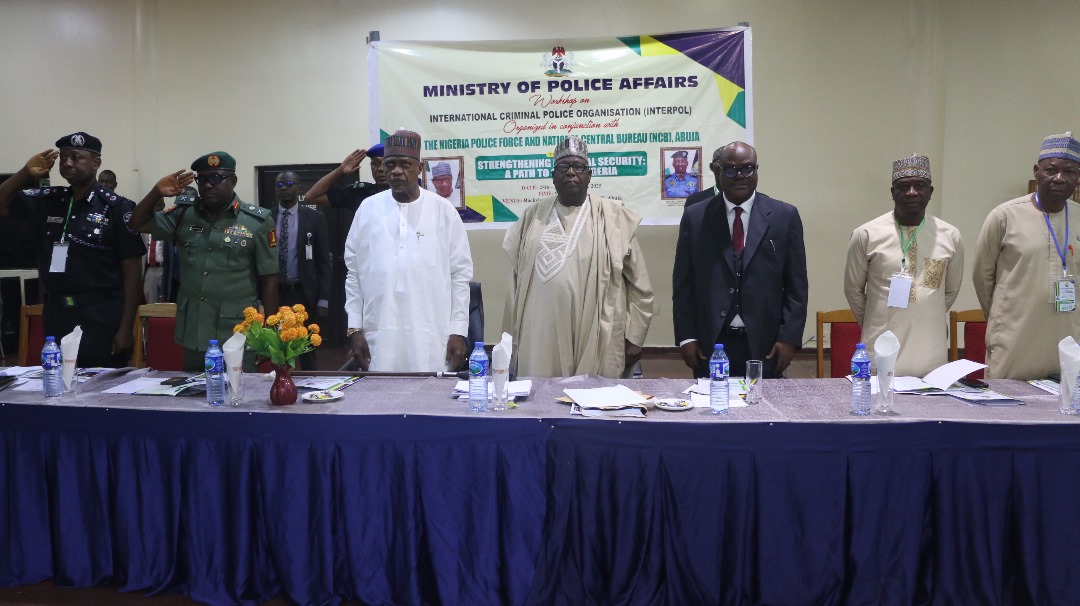
The Minister of Police Affairs, Senator Ibrahim Gaidam, has said that collaboration of security agencies will serve as a vital platform to enhance the capacity of Law Enforcement Agencies in leveraging INTERPOL’s tools to foster peace and security across the nation.
He stated this, according to a statement by the Deputy Director, Information and Public Relations Unit, Mr. Bolaji Kazeem, and made available to the National Association of Online Security News Publishers (NAOSNP), at the workshop on the International Criminal Police Organization (INTERPOL) with the theme “Strengthening Internal Security: A Path to a Safer Nigeria” organized by the Ministry of Police Affairs in conjunction with the Nigeria Police Force and National Central Bureau (NCB), Abuja at the Rockview Hotel in Abuja.
The Minister said that he firmly believed that the insights and outcomes from the Workshop will be critical in addressing the pervasive insecurity that currently afflicts our society.
“We must acknowledge that for decades, our nation has grappled with the chronic issue of criminal victimization, which has severely impacted the safety and well-being of our citizens. In recent years, we have faced an alarming rise in insurgency and terrorism, which have taken on increasingly complex international dimensions,” he said.
He maintained that the erosion of safety in the country extends far beyond the direct consequences of crime, and calls for a robust response to strengthen the internal security framework with the aid of advanced international policing tools.
“As technology evolves, so too must our strategies to combat these threats,” the Minister stressed
According to him, “INTERPOL is a prestigious organization with a membership spanning 196 countries, actively engaged in combating terrorism, organized crime, drug trafficking, human trafficking, and cybercrime, among other pressing issues. This Workshop is convened with the intent of exploring and understanding INTERPOL’s resources, enabling us to effectively integrate these tools into our internal, regional, and global security efforts.”
Gaidam opined that adopting methodologies akin to those employed by INTERPOL, Nigeria can significantly mitigate internal security challenges in view of the myriad security threats facing the nation today. It is imperative that we embrace international standards to safeguard lives, properties, and infrastructure, thereby fostering economic development and stability. The Minister added
He enumerated some of the remarkable strides made over the past year in fulfilling the mandates of the Ministry namely establishment of a National Criminal Data Fusion Center (NCDFC) for the Nigeria Police Force; 24/7 internet service for the West Africa Police Information System (WAPIS); signed a Memorandum of Understanding (MOU) with INTERPOL; automated Police Specialized Services; WAPIS terminals have been provided, granting security agencies access to critical information. and adoption of a legal framework related to the West African Police Information System (WAPIS).
In his goodwill message, the Chief of Defence Staff, General Christopher Musa represented by Major General Olatokunbo Bello, expressed gratitude for the honour given to him to be part of this workshop, noting that due to the rising security challenges in the country, the workshop will provide an opportunity for the participants to rob minds, share ideas and collaborate to improve Interpol activities that will help in the area of tackling the security issues in Nigeria.
The Chairman, Police Service Commission, DIG Hashimu Argungu(Rtd) stated that security has taken a new dimension in the 21st century and the threats are no longer primarily coming from the conventional (traditional) factors of the usual narrative.
He added that the workshop is entirely INTERPOL driven and National Bureau (NCB) Abuja is going to be of great assistance to the Law Enforcement Agents in the area of intelligence gathering, investigation, and collection of electronic evidence of transnational organized crime and corruption.
Earlier, the Inspector General of Police, IGP Kayode Egbetokun, represented by the Deputy Commissioner of Police DCP Patrick Daaor, reiterated that for the police to wield powers over all crimes require constant structured engagement and collaboration with other national law enforcement agencies, irrespective of their mandates.
According to him, one of the cornerstones of effective internal security is trust between the police and the communities we serve. We must work tirelessly to foster transparency, accountability, and open communication. Community policing should not just be a concept but a lived reality, where citizens feel empowered to collaborate with law enforcement in maintaining peace and security.



The Edo State Special Criminal Court has sentenced four men to death for their involvement in the kidnapping of a woman at the Vegetable Market along Airport Road in Benin City.
Justice Aigbona Momodu handed down the sentences after finding the defendants guilty on multiple counts connected to the kidnapping case.
The convicts are Marvellous Isaac, Wisdom Michael, Rufus Emete Michael and Gift Raphael.
Isaac and Michael were sentenced to death on counts two through nine. They also received separate prison terms on other counts, including seven years on count one, while Isaac was sentenced to 10 years on count 10 and life imprisonment on count 11.
Rufus Emete Michael was sentenced to death on counts two, three, four, six and seven, in addition to a seven-year prison term on count one.
The fourth defendant, Gift Raphael, was sentenced to death on counts two, four, six and eight and received seven years imprisonment on count one.
Delivering the sentences, Justice Momodu ordered that the death sentences be carried out by hanging or lethal injection, in accordance with the court’s judgment.
The court also ordered the forfeiture of a JoJef pump-action firearm and ammunition tendered as exhibits during the trial.
The firearm, identified as Exhibit M, along with two unused cartridges and two spent cartridges listed as Exhibits E and E1, was ordered to be handed over to the Edo State Police Armourer at the State Criminal Investigation Department for destruction.
Justice Momodu directed that the exhibits be transferred to the police through the Deputy Director of the Criminal Division and destroyed within 30 days.
The convictions bring to an end the trial arising from the abduction of the woman at the Vegetable Market along Airport Road, an incident that added to concerns over kidnapping and armed crime in Benin City.
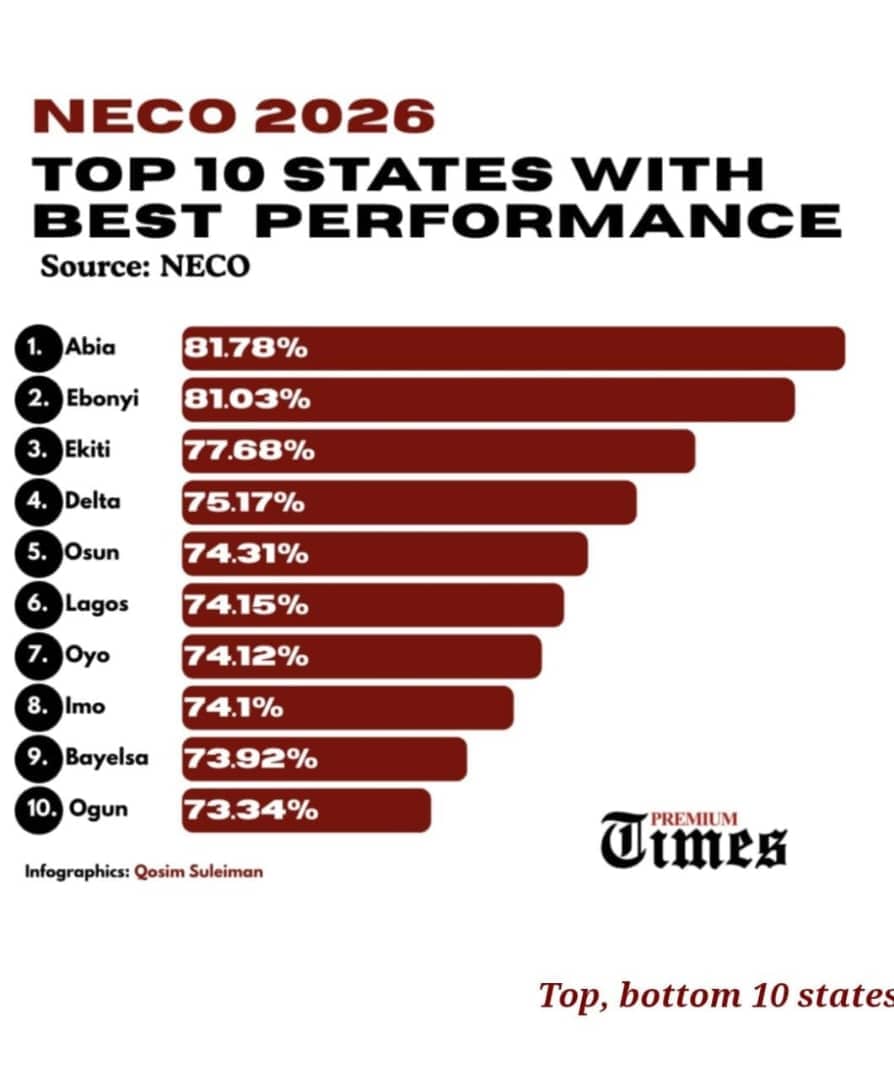
Osun State Governor, Senator Ademola Adeleke, has hailed the state’s strong performance in the 2026 National Examinations Council (NECO) Senior School Certificate Examination, describing the result as a positive reflection of ongoing efforts to reposition education in the state.
Osun placed fifth nationally in the 2026 NECO ranking, with 74.31 per cent of candidates recording at least five credits, including English Language and Mathematics.
While congratulating the students, teachers, parents, school administrators and other stakeholders, the governor noted that the state performance has been improving within a single digit rating for three consecutive years namely 2024, 2025 and 2026.
“Osun has moved from 33rd position in the 2022 NECO ranking to 5th in 2026, while improving its pass rate to 74.31 per cent. This is encouraging, and it shows that our sustained interventions in the education sector are yielding positive results,” the Governor said.
Governor Adeleke said the improved performance reflects his administration’s deliberate investment in the education sector, including the recruitment of additional teachers to strengthen the teaching workforce, while prioritising workers’ welfare and creating a more conducive environment for effective teaching and learning across public schools.
The Governor said the performance reinforces his administration’s determination to continue investing in education, noting that the objective is to build a system that gives every Osun child the knowledge, skills and opportunities needed to succeed.
“This result is encouraging, but we see it as a reason to do more. We will continue to invest in our schools, improve the learning environment, support our teachers and provide our students with the necessary tools to excel.
“We are building an education system that prepares our young people not only for examinations but for life,” the Governor said.
He assured that ongoing interventions in the education sector would be sustained and expanded, while urging students to remain committed to their studies.
His Excellency also commended teachers across the state for their dedication and sacrifices, assuring them that the administration would continue to prioritise measures that strengthen the education system and improve workers’ welfare.
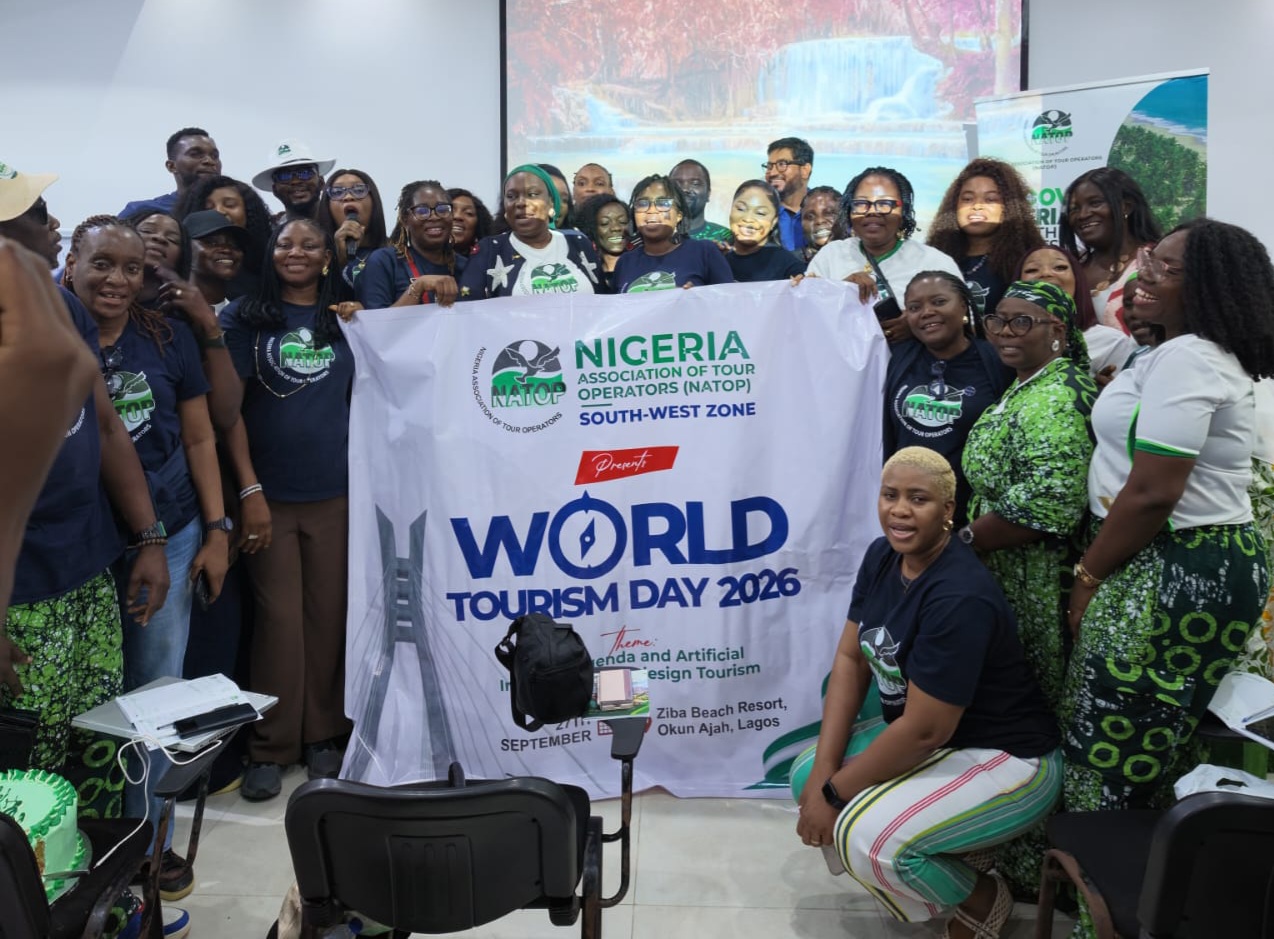
The Nigeria Association of Tour Operators (NATOP) marked the 2026 World Tourism Day with activities which capture capacity building, technology, destination promotion and domestic tourism, and celebration.
In the South West Zone, close to 200 tour operators gathered at Ziba Beach Resort, Lagos, for a special training focused on Artificial Intelligence and its application in tourism, equipping operators with digital tools to improve their businesses and destination marketing.
In Abuja, the FCT and Northern Zone, in collaboration with Naija Adventurers, staged a colourful Tourism Awareness Walk and Hike to the Centre of Nigeria.
The celebration also spread to the South-South Zone, where members marked the day with a destination tour, alongside activities to commemorate with the world tourism day celebrations.
In line with the theme for this year’s WTD celebration: ‘Digital agenda and artificial intelligence to redesign tourism’ the NATOP training on AI and application in tour operation at Ziba Beach Resort Lagos saw a large turnout of the members of the association.
The President of the association, Hajia Bolaji Mustapha explained that the idea for the location and training was to train members on how to do tour business, to know how to promote tourism digitally, using different AI tool and everything so that they will grow their businesses.
She said: “we follow the theme and, you know, blend with the old situation. Let’s do the training so that we attach it to the World Tourism Day with the theme that we have achieved something and also celebrate.”
She said the training will go a long way in helping the tour operators do greater content to digitally tell destination stories using AI, and also using the tool for expression.
Mustapha also explained why the association chose Ziba Beach Resort: “We always attach World Tourism Day to a tourism site. And definitely, if you look at this whole area and this community, that’s why we see that Ziba is a tourism site. We want to explore and of course. The resort newly launched its third phase. So, we will use this opportunity to look at their rooms, look at how we can sell this destination, to showcase it that the resort is actually in Nigeria, not Zanzibar. By using the place, we would kill two birds with one stones.
Facility tour of Ziba Beach Resort
“As tour operators who are willing to tell the good story of our Nigeria, we need to bring ourselves up to the speed, align with the digital revolution. Let everybody go digital. Because we also see the content creators are taking our business, we want to align it with what they do. We are the ones that understand the business and we’ll be able to tell the story better, so that anybody coming to Nigeria will be able to discover Nigeria with the experts.”
Also commenting on the celebration, the NATOP Vice President South West and chairman of the WTD Organizing Committee for the zone, Mrs. Wonuola Olatunde-Lamidi explained why NATOP South West’s usage of the 2026 WTD for training. She said many of the members still have a lot to learn about the tour business, and that some do not understand the foundation of the business, including how to create packages hence the need for the training.
Mrs. Olatunde-Lamidi spoke further: “Many don’t understand the foundation of what it is to create a tour package. And when you have people that are not well-trained in an industry, the industry will not grow. The kind of people that you also have will not have enough earning power to do many things. And because this is an industry that I have been in for 16 years, I run Diamonds and Pearls Travels with my husband. And I’ve seen Diamonds and Pearls Travels metamorphose into a company where people don’t just look at us as travel agents. We have become a Destination Management Company (DMC). We have become a trusted brand. We have become a company that when we talk about a destination, people want to go to that destination because of how we have portrayed the destination. And you may not realize that, as tour operators, you can actually decide where people go. You can make people go to a particular destination by marketing it, by letting them know the benefits of that destination.”
The tour operators had opportunity to tour the resort and unwind during the programme.


