
Headlines
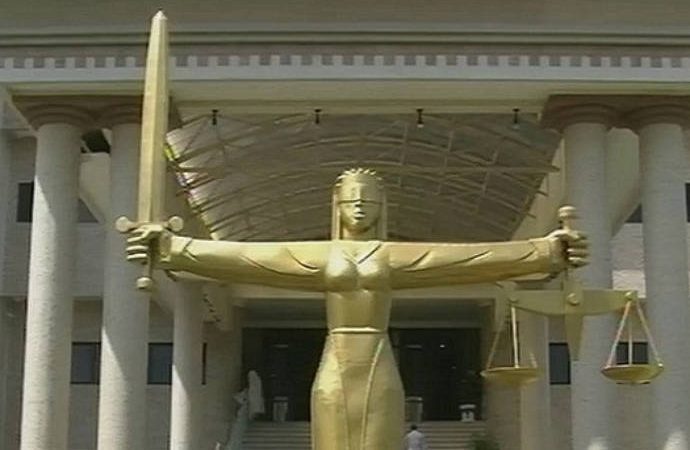
Police Act 2020, Constable Recruitment Illegal, Appeal Court Declares

- /home/rhoncare/pointblank.ng/wp-content/plugins/mvp-social-buttons/mvp-social-buttons.php on line 27
https://pointblank.ng/wp-content/uploads/2020/10/Court.jpg&description=Police Act 2020, Constable Recruitment Illegal, Appeal Court Declares', 'pinterestShare', 'width=750,height=350'); return false;" title="Pin This Post">
- Share
- Tweet /home/rhoncare/pointblank.ng/wp-content/plugins/mvp-social-buttons/mvp-social-buttons.php on line 69
https://pointblank.ng/wp-content/uploads/2020/10/Court.jpg&description=Police Act 2020, Constable Recruitment Illegal, Appeal Court Declares', 'pinterestShare', 'width=750,height=350'); return false;" title="Pin This Post">
The Court of Appeal has declared the Police Act 2020 unconstitutional and void.
The Police Act 2020, which was enacted in September this year, affects the constitutional mandate of the Police Service Commission
The Appeal Court ruled that the provisions of the Act was in conflict with Paragraph 30 Part 1 of the Third Schedule of the 1999 Constitution “which empowers the commission to appoint persons into offices in the Nigeria Police Force except the Office of the Inspector-General of Police.”
The judgment also nullified the recruitment of 10,000 constables carried out by the police authorities last year.
However, the IG, Mohammed Adamu, has appealed the ruling which nullified the earlier order of the Federal High Court, Abuja.
The PSC spokesman, Ikechukwu Ani, in a statement on Wednesday, explained that the details of the Appeal Court judgment was contained in the Certified True Copy received on Tuesday.
The statement was titled, ‘Appeal Court declares Police Act 2020 as it affects PSC mandate null and void.’
The statement explained that the judge further declared that “no Act of the National Assembly or law can take away or curtail such power.”
He further noted that, even if the Nigeria Police carried out the disputed enlistment pursuant to a directive or approval of the President, Major General Muhammadu Buhari (retd.), “the enlistment would remain contrary to the constitution and therefore, unconstitutional and void. Such a directive cannot repair its unconstitutionality and illegality.”
Meanwhile, the Peoples Democratic Party Governors’ Forum has called for a repeal of sections of the Police Act recently given assent by the President, Major General Muhammadu Buhari (retd.), citing constitutional breaches.
This was contained in a communiqué issued after a virtual meeting held by the PDP governors.
The communiqué, which was made available to reporters in Abuja on Wednesday, was signed by the Chairman of the forum, Aminu Tambuwal, who is also the Governor of Sokoto State.
The governors, among other things, implored the President and the National Assembly to repeal Section 4(1) of the Nigeria Police Trust Fund (Establishment) Act, 2019 which “purportedly authorises the President to deduct 0.5% of the total revenue accruing to the Federation Account for the benefit of the Nigeria Police Trust Fund.”
According to the governors, the said deduction is patently unconstitutional.
The communiqué read in part, “The meeting noted the signing of the New Nigeria Police Act, 2020 by Mr President, Commander in Chief.
“While acknowledging the many important innovations in the new law, the forum emphasised the need to make the Nigeria Police Council, which has Mr. President as Chairman and 36 state governors as members, fully operational and the clearing house on all issues bordering on the organisation and administration of the Nigeria Police Force as enshrined in the 1999 Constitution.”
The Punch


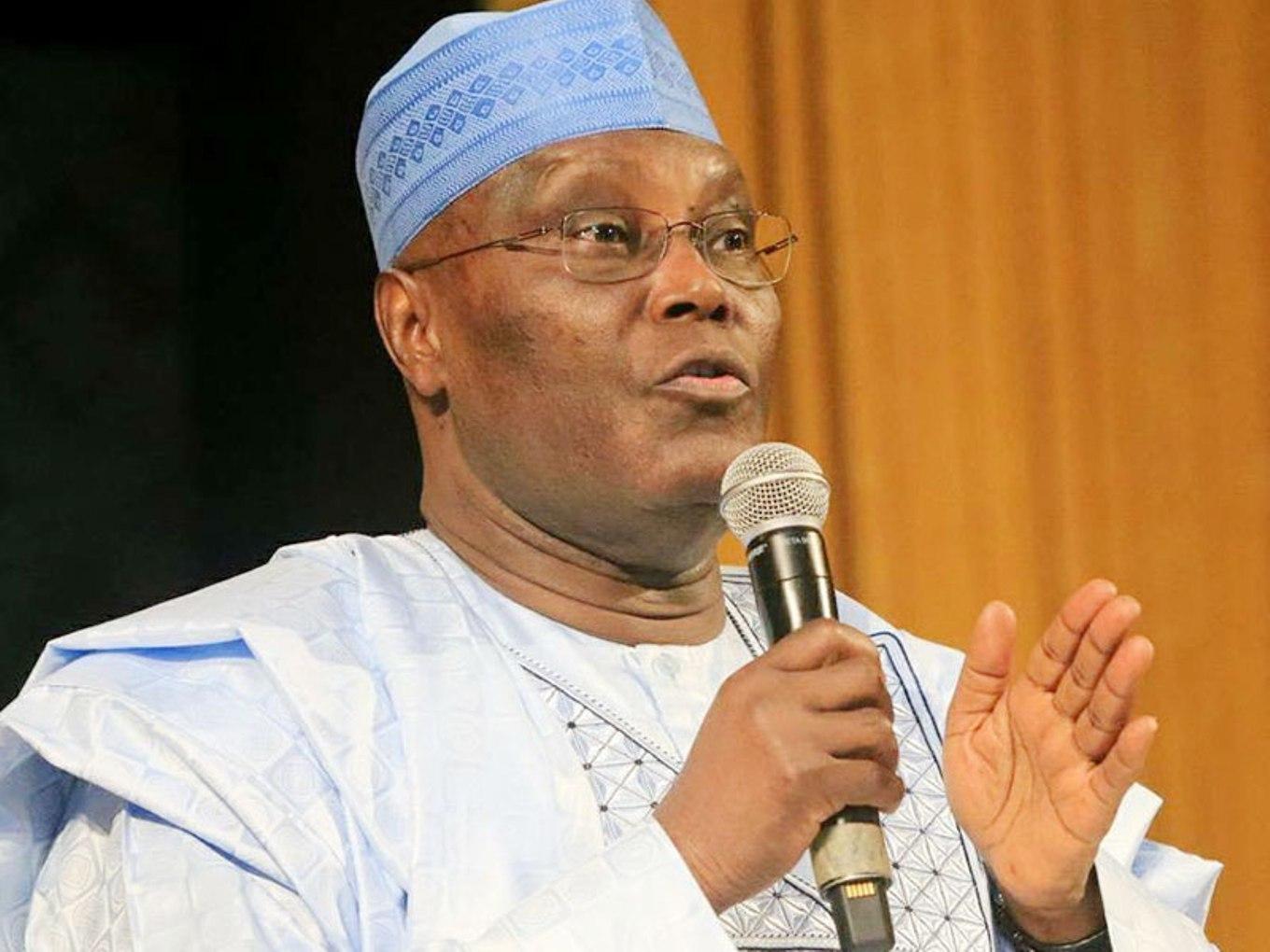
Former Vice President and African Democratic Congress presidential candidate, Atiku Abubakar, has said President Bola Tinubu’s request for approval to borrow $20.52 billion and €1.045 billion vindicates his October 12 warning about a loan plan of up to $20 billion.
Atiku said the President’s failure to identify the specific projects the loans would fund raises serious concerns that borrowed public money could be channelled through the Lagos–Calabar Coastal Highway, now rerouted inland, to political campaigners and favoured contractors.
In a statement issued by Phrank Shaibu, Director of Strategic Communication of the ADC Presidential Campaign Council, Atiku said:
“On October 12, I warned Nigerians that President Tinubu was reportedly preparing to borrow up to $20 billion in connection with the Lagos–Calabar Coastal Highway. I asked him to confirm or deny the plan and publish the accounts. He did neither. Today, he has asked the Senate to approve $20.52 billion and €1.045 billion in external loans. My warning has been vindicated.
“The President has listed broad sectors but has not provided a project by project account of what this enormous borrowing will fund. Nigerians have not been given clear project details, costs, locations or contractors to scrutinise.
“That silence is especially troubling given the highway’s inland rerouting. Nigerians have every right to ask whether it is becoming a pipeline for borrowed money to reach Tinubu’s campaigners and favoured contractors. Barely 12 weeks before an election, how can the President ask lawmakers to saddle Nigerians with more than $20 billion and €1 billion in debt without identifying the projects and their costs? Is this a development plan for Nigerians or a campaign financing scheme dressed up as infrastructure?
“You cannot continue taking frivolous loans on the eve of your departure from office. Let it be on record that one of the first responsibilities I will undertake as President is to scrutinise and investigate every kobo borrowed, especially loans taken in the final year of your tenure. Nigerians will ask questions, and we will find the answers by every lawful means.
“I put local and international lenders on notice: any loan granted to this winding down administration must meet all constitutional, statutory and due process requirements. Upon assumption of office, I will scrutinise every such loan. Any borrowing found to have been obtained without proper authorisation or process will be challenged and will not be allowed to stand.
“The National Assembly must not approve a single dollar until the President publishes every project, contract, cost, contractor, loan term and repayment obligation. No public money should be borrowed in the dark, and no lawmaker should sign a blank cheque against Nigeria’s future.”
Atiku said the burden was on Tinubu to prove that the borrowing would serve the country, not his political interests. He urged lawmakers to publish the proposal and supporting documents and subject them to rigorous scrutiny before any decision.
He added that families already struggling with a cost of living crisis should not be made to carry debts they did not approve. The woman fighting to keep her business alive and the worker spending their income just to feed deserve to know where the money is going, who will benefit and who will pay. At the ballot box, Nigerians will have the chance to reject a government that borrows against their future while taking their sacrifices for granted.
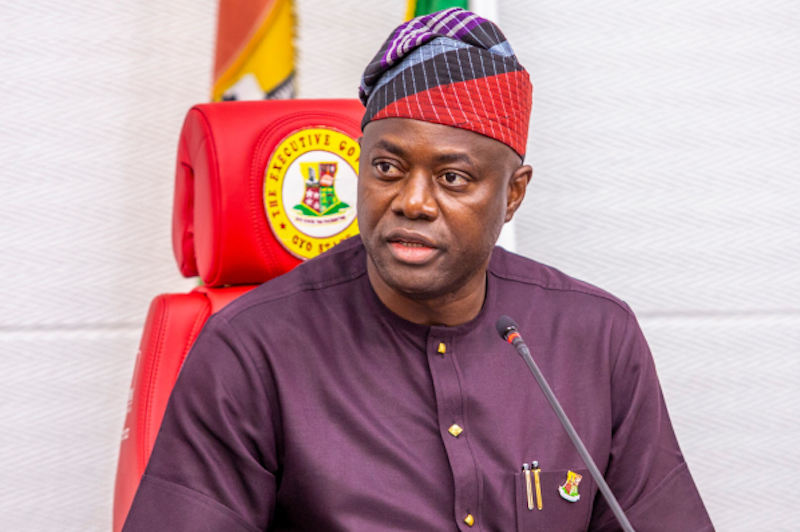
The Allied Peoples Movement (APM) presidential candidate, Seyi Makinde, on Thursday, criticised President Bola Tinubu’s “Emi Lokan” slogan ahead of the 2027 presidential election.
Makinde said Nigerians do not need “turn-by-turn nepotism”, arguing that voters should be free to decide who becomes the country’s next president in 2027.
The Oyo State governor spoke during the APM’s town hall meeting in Akure, Ondo State.
Makinde asked: “How can someone say ‘Eemi lokan’ in a country like Nigeria? You were given the opportunity. If you recall the 1999 presidential election, the South-West voted massively for Baba Olu Falae, but the rest of Nigerians voted for Baba Obasanjo. So, this is not an issue that only the South-West can resolve; it is an issue we must address collectively as Nigerians.
“We do not want ‘turn-by-turn nepotism’, nor do we want a situation where people say, ‘I will vote for projects because it is my turn’. You will not finish those projects, and when it becomes someone else’s turn, they will do the same thing. We will end up with a Nigeria where we cannot get value for the resources belonging to Nigerians.
“The Reset Nigeria agenda is about building a country where infrastructure development supports economic growth and addresses the concerns of young people and women.
“Once we fix our economy, no zone will be left behind, and no demographic group will be left behind.”
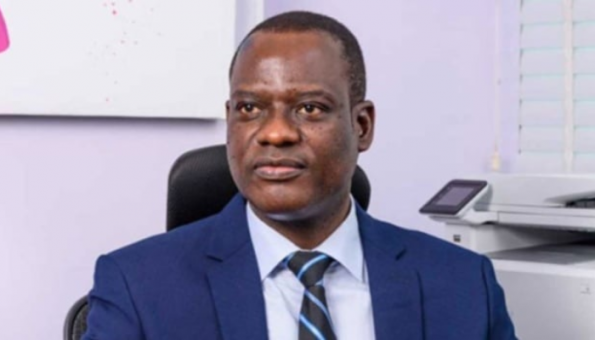
Minister of Finance and Coordinating Minister of the Economy, Taiwo Oyedele, has denied saying the Federal government will introduce a fuel tax when the economy stabilises and income levels improve.
In a post on X on Tuesday, Oyedele said his remarks during an interview with ARISE News was misrepresented, insisting that a “fuel tax is not on the table.”
However, during the interview with Rotus Odiri, ARISE News Business Correspondent, on the sidelines of the 2026 International Monetary Fund and World Bank annual meetings in Bangkok, Thailand, Oyedele said the tax would come when income levels improve enough for Nigerians to accommodate it.
He said taxes account for between 20 and 80 percent of pump prices in some countries, while many African countries impose between six and 10 different taxes on fuel products.
He said introducing fuel tax while petrol was still subsidised would have been counterproductive because government would effectively be paying the tax itself.
According to him, imposing the tax immediately after removal of petrol subsidy would be insensitive to Nigerians.
“The objective should be that instead of trying to suppress prices, which hasn’t worked for us, it hasn’t worked for any country in the world, not one. Instead of trying to suppress prices, think about how to grow income faster than prices rise,” Oyedele said.
“That’s how you bring prosperity and grow the middle class and that is exactly what we are doing as led by Mr. President himself.
“At the appropriate time, when the economy has stabilizes and income level will be able to accommodate it, those taxes will come. Not because we want to impose taxes,” he added.
In his Tuesday post, the minister reiterated that introducing a fuel tax at this time would be insensitive following removal of petrol subsidy, describing reports that government will introduce the levy when the economy stabilises as “fake news.”


