
Metro
Police Arrest Father for Beating Nine Year Old Son to Death in Niger


One Ibrahim Mohammed, a resident of Maikunkele in the Bosso Local Government Area of Niger State, has been arrested by the police for allegedly beating his nine-year-old son to death.
The suspect was arrested by a team of policemen attached to the Paiko Division following a report by one Abubakar Adamu of Yidna village in Paiko.
Northern City News gathered in Minna on Tuesday that the deceased, who was rearing cattle for his father, was allegedly beaten to death for mischief.
It was learnt that the suspect flogged his son with a cane until he died from the continuous beating.
In an interview with our correspondent, Mohammed who was full of regrets over the incident, said he had no intention of killing his son, adding that he was only trying to correct him when tragedy struck.
“My son had not been honest with me on issues; I got angry with him and lost my temper when I was beating him. Unfortunately, he died. I am really sorry for what I did,” he stated.
The state Police Public Relations Officer, Muhammad Abubakar, who confirmed the incident, said the suspect had been charged.
The Punch


Metro
Aare Emmanuelking Hails Akarigbo, Abiodun on 2025 Remo Day, Canvasses Sustained Cultural Progress

The Otun Akile of Remoland and Chief Executive Officer of Adron Group, Sir Aare Adetola Emmanuelking, KOF, has extended formal felicitations to the Akarigbo and Paramount Ruler of Remoland, His Royal Majesty, Oba (Dr.) Babatunde Adewale Ajayi, and all sons and daughters of Remoland on the occasion of the 2nd Remo Day Celebration, described the event as a significant affirmation of Remo heritage, unity, and progress.
In a goodwill message to mark the celebration, Aare Emmanuelking noted that Remo Day reflects the resilience, cultural pride, and collective aspiration of the Remo people, whose unity continues to drive sustainable growth and communal advancement.
He commended His Royal Majesty for his visionary leadership and praised the traditional institution’s stabilising role in promoting peace, cultural continuity, and good governance across Remoland.
Aare Emmanuelking also acknowledged the presence of the Executive Governor of Ogun State at the celebration, describing it as a demonstration of solidarity with the Remo people. He saluted the Governor’s purposeful leadership and commitment to good governance, noting the positive impact of his administration’s development policies across the state.
According to him, Remo Day transcends ceremony, serving as a symbolic homecoming that honours the sacrifices of the forebears while strengthening unity and shared responsibility for development.
He further applauded the contributions of Remo indigenes at home and in the diaspora, whose enterprise and collaboration continue to position Remoland as a centre of economic vitality and social harmony.
“As a proud son of Remoland, I am inspired by the unity and sense of purpose that define our people,” he stated, adding that the celebration should further deepen cohesion and accelerate sustainable development.
On behalf of his family, the Board of Directors, and the Management of Adron Group, he wished His Royal Majesty and all Remo sons and daughters a successful and memorable Remo Day celebration.
He concluded with prayers for the continued peace, prosperity, and development of Remoland and Ogun State, reaffirming his loyalty and commitment to the land and its people.
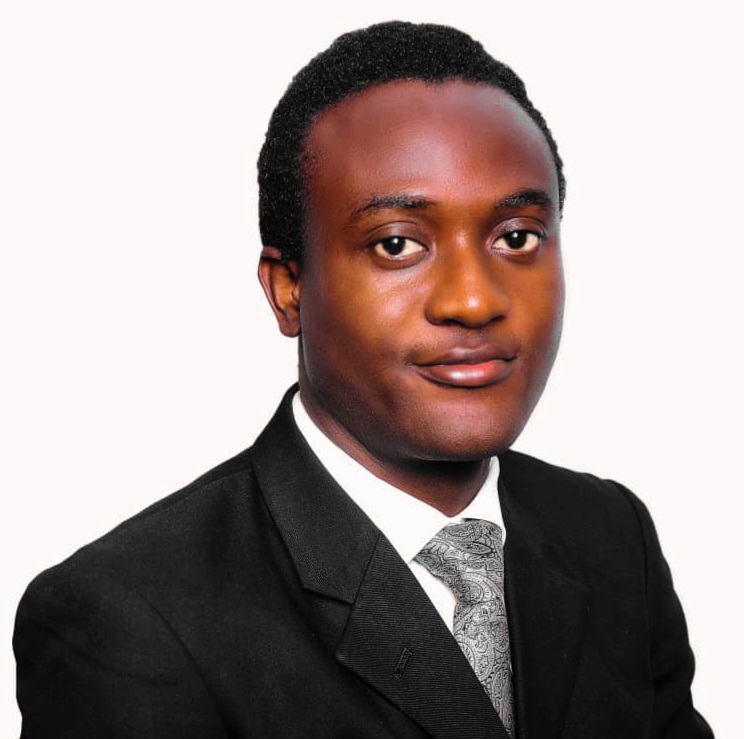
By Tolulope A. Adegoke PhD
“In an age of ceaseless disruption, the wisest pause is to acknowledge the Unchanging Hand—the divine grace that guides our progress, steadies our systems, and writes our story of possibilities with a wisdom no trend can outpace.” – Tolulope A. Adegoke, PhD
We are living through an age of acceleration. Technological advancements, from generative artificial intelligence to biotechnology, are not just evolving; they are fundamentally rewriting the rules of human enterprise on a near-daily basis. Concurrently, the global community faces layered, systemic challenges—climate volatility, geopolitical fragmentation, economic precarity, and a pervasive sense of institutional distrust. This relentless churn of innovation and crisis can foster a worldview dominated by pure mechanistic cause and effect, where outcomes are seen solely as the result of data-driven strategy, relentless hustle, or fortunate access to capital.
Yet, within the complex tapestry of human progress—across personal biographies, corporate histories, and the annals of nations—there persists a recurring, almost whispered, narrative. It speaks of moments that defy straightforward analysis: the serendipitous encounter that alters a career trajectory, the breakthrough insight that arrives after all logical solutions are exhausted, the organizational resilience that emerges from a crisis in ways no risk-management model predicted, or the diplomatic breakthrough that occurs against all odds when conflict seemed inevitable. For millennia, across diverse faiths and philosophies, this dimension of experience has been attributed to a higher guiding force—often termed the Hand of God. It represents the divine interaction where diligent human effort intersects with transcendent grace, producing outcomes that feel orchestrated, purposeful, and imbued with a meaning beyond mere happenstance.
In our contemporary context, recognizing this force is not an act of intellectual retreat. On the contrary, it is an exercise in profound clarity and emotional intelligence. It provides the essential counterbalance to the hubris of absolute human control and the anxiety bred by uncertainty. It compels us to a vital, transformative pause—a sacred interval for introspection on our core values, retrospection on the journey thus far, and a heartfelt posture of gratitude for the grace that navigates our collective voyage through these uncharted waters. This pause is not an empty space; it is the fertile ground from which wiser action, more sustainable leadership, and deeper hope can grow.
For the Individual: Cultivating Purpose in an Age of Digital Determinism
The modern professional landscape is increasingly mediated by algorithms that curate opportunities, assess productivity, and even suggest career paths. Personal worth is often unconsciously tied to metrics of digital engagement and visible output, leading to a quiet epidemic of burnout and existential doubt. In this environment, the most meaningful developments frequently occur outside these digital parameters.
Consider the pattern: a sudden redundancy, initially a devastating blow, becomes the forced catalyst for launching a purpose-driven venture that aligns with a long-held passion. A chance conversation during a delayed flight leads to a mentorship that shapes a leader’s ethical compass for decades. A period of enforced stillness, perhaps due to illness or family need, creates the mental space for a creative or spiritual insight that reorganizes one’s entire life priorities. These are not merely random events; to the perceptive heart, they bear the hallmark of intentional guidance.
The ancient wisdom of Proverbs 19:21 observes, “Many are the plans in a person’s heart, but it is the Lord’s purpose that prevails.” This is not a dismissal of ambition or strategic planning. Rather, it is an invitation to hold our plans with open hands. It suggests that our detailed life maps are subject to benevolent divine cartography that can see beyond our immediate horizon. The practice of pausing to acknowledge this reality does several things: it replaces anxiety with a sense of guided adventure, it converts envy of others’ paths into contentment with one’s own unique journey, and it fosters a humility that makes us lifelong learners. Gratitude, in this personal realm, is the conscious acknowledgment that our skills, opportunities, and even our recoveries from failure are gifts to be stewarded, not just assets we have self-manufactured.
For the Organization: Building Legacy in an Era of Stakeholder Capitalism
The 21st-century corporation operates under a blinding spotlight. Stakeholders—including employees, customers, investors, and communities—now demand authentic purpose, ethical transparency, and demonstrable social and environmental stewardship alongside financial performance. This shift from shareholder primacy to stakeholder capitalism represents a profound change in the rules of engagement.
In this new paradigm, principles often relegated to “corporate social responsibility” documents are now central to long-term viability. Organizations that operate with integrity—prioritizing fair wages, sustainable sourcing, and genuine community partnership—often experience a form of capital that cannot be listed on a balance sheet: the capital of trust. This trust manifests as customer loyalty during a misstep, employee advocacy in competitive talent markets, and investor patience during necessary transitions. While these outcomes can be analyzed through the lens of sociology or economics, many faith-informed leaders perceive the outworking of a timeless principle.
The Psalmist notes, “The Lord’s blessing brings wealth, without painful toil for it” (Proverbs 10:22). This is not a promise of effortless profit, but a profound observation that sustainable abundance is often tied to alignment with divine principles of justice, honesty, and generosity. When a company avoids a lucrative but unethical deal, it may be protected from future scandal. When it invests in employee well-being, it cultivates innovation and dedication that drives organic growth. The guiding hand here is seen in the provision of wisdom for complex decisions, the fostering of a cohesive culture amid diversity, and the unexpected market opportunities that align with a company’s core values. The necessary corporate pause involves leadership teams reflecting not only on key performance indicators but on their foundational ethos. Gratitude is expressed by acknowledging that success is a collaborative endeavor with a moral dimension and by reinvesting prosperity into the common good.
For the Nation and the Global Community: Steering the Ship of State with Moral Navigation
The arena of geopolitics and national governance is perhaps where the illusion of pure human control is most dangerous and most easily dispelled. Leaders wield immense power, yet they are constantly confronted by the limits of that power—facing natural disasters, global economic tides, and the unpredictable currents of human history. The rise and fall of empires, the sudden emergence of peace movements, and the avoidance of global catastrophes often contain elements that baffle historians and political scientists.
Instances where conflict is de-escalated through a last-minute change of heart, where scientific collaboration across rival nations yields a solution to a shared threat like a pandemic, or where a society makes a collective turn toward justice and reconciliation after generations of oppression—these moments carry a weight of significance that suggests more than shrewd political calculus. They hint at a moral fabric to history itself.
The prophet Jeremiah, addressing a nation in turmoil, conveyed this divine perspective: “For I know the plans I have for you… plans to give you hope and a future” (Jeremiah 29:11). This promise, made in a context of exile and despair, underscores a foundational belief: that the ultimate trajectory of a people is held within a providential narrative of hope and redemption. National pauses for thanksgiving, days of reflection, or calls for collective prayer are not merely ceremonial. They are acts of humility that can reorient a society’s focus from fear and division to shared destiny and mutual responsibility. Gratitude on this scale is a powerful antidote to nationalistic arrogance. It reminds a citizenry of its blessings, fosters a spirit of stewardship over its resources, and cultivates a posture of compassion toward other nations and future generations.
Synthesis: Gratitude as the Foundational Posture for a Future of Meaning
Ultimately, to perceive and acknowledge the guiding hand of God is to choose a narrative of profound hope and partnership. It liberates us from the exhausting burden of believing we are the sole authors of our fate. It protects our souls from the corrosive effects of pride in success and despair in failure. This awareness transforms gratitude from a fleeting emotion into a disciplined posture—a foundational lens through which we view our past, engage our present, and anticipate our future.
This posture of gratitude is eminently practical. It makes individuals more resilient and adaptable leaders. It fosters corporate cultures of ethical innovation and long-term thinking. It encourages nations to pursue policies of justice, peace, and environmental care. In a world intoxicated by speed and disruption, the deliberate, heartfelt pause to say “thank you” may be the most strategic and humanizing act available to us. It grounds our frenetic activity in meaning, connects our personal struggles to a larger story of grace, and equips us to build a future that is not only smarter or richer, but wiser and more deeply human. We pause, we recognize, we give thanks—and from that place of humble acknowledgment, we find the clarity and courage to move forward.
When the world moves faster than our understanding, true wisdom is found in the sacred pause: to recognize the Guiding Hand that has written our story of progress, to give thanks for the grace in our journey, and to find courage for the path ahead.
Dr. Tolulope Adeseye Adegoke is by God’s grace a distinguished scholar-practitioner specializing in the intersection of African security, governance, strategic leadership and effective management. His expertise is built on a robust academic foundation—with a PhD, MA, and BA in History and International Studies focused on West African conflicts, terrorism, and regional diplomacy—complemented by high-level professional credentials as a Distinguished Fellow Certified Management Consultant and a Fellow Certified Human Resource Management Professional. He can be reached via: tolulopeadegoke01@gmail.com
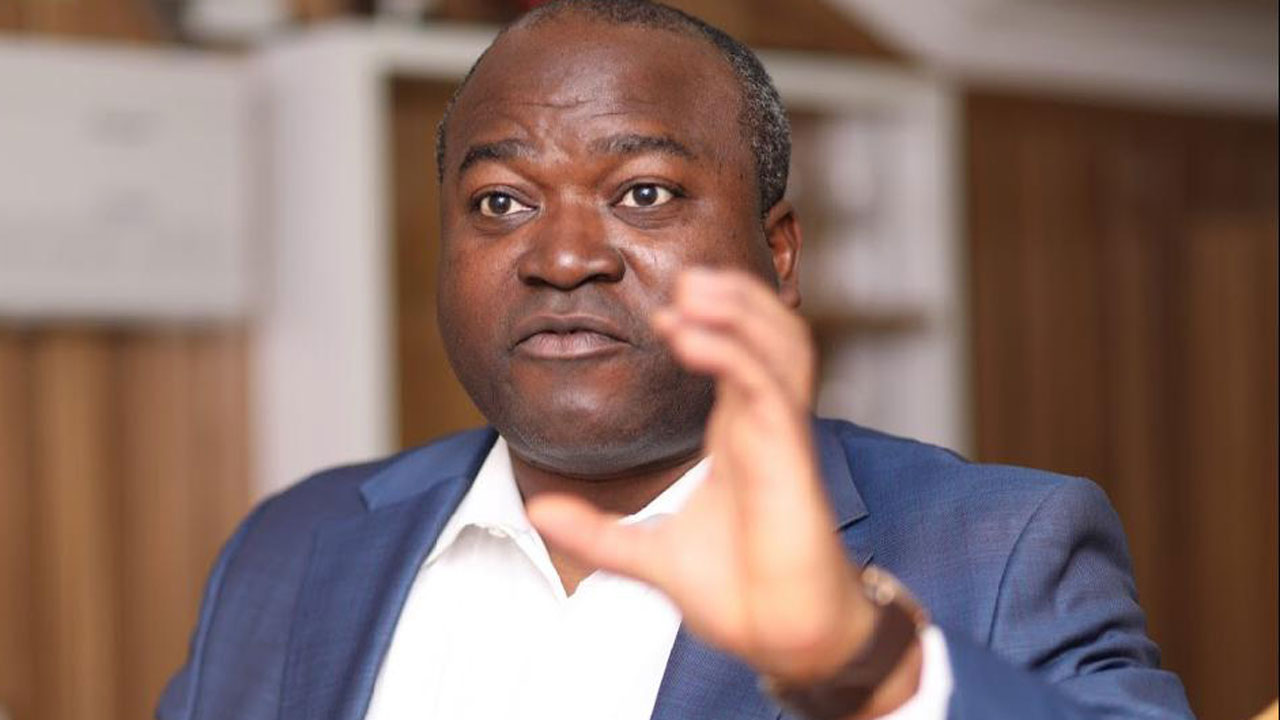
The Executive Secretary/CEO of the Lagos State Security Trust Fund (LSSTF), Dr. Ayo Ogunsan, has extended warm Christmas greetings to Nigerians and Lagosians, calling on citizens to embrace the spirit of peace, unity and shared responsibility that defines the season, while remaining vigilant in the collective effort to safeguard lives and property.
In a Christmas goodwill message released in Lagos on Thursday, Dr. Ogunsan described the season as a time of reflection, gratitude and renewed commitment to building a safer society for all.
He emphasized that security remains a shared duty and urged residents to stay alert as festivities peak across the state and country. “Christmas reminds us of the power of love, sacrifice and collective responsibility,” Dr. Ogunsan said.
“As families gather to celebrate, I encourage all Nigerians, especially Lagos residents, to remain security-conscious, report suspicious activities promptly and cooperate with law enforcement agencies to prevent avoidable threats during this festive period. I also urge that we obey all traffic safety considerations so that we can bring to almost zero all forms of traffic road incidents.”
The LSSTF CEO expressed deep appreciation to the Lagos State Government under the leadership of Gov. Babajide Olusola Sanwo-Olu. He also thanked all the Fund’s strategic partners, corporate organizations, retail donors and individual contributors whose consistent support throughout 2025 has strengthened security operations across Lagos State. He noted that their investments have translated into tangible improvements in logistics, mobility and operational capacity for security agencies. “I wish to sincerely thank Mr. Governor, Gov. Babajide Olusola Sanwo-Olu for his visionary leadership, and all our major partners, corporate supporters and the countless retail donors who gave generously in 2025,” he stated.
“Your trust in the Lagos State Security Trust Fund is not taken for granted. Every contribution has directly enhanced the ability of our security agencies to respond effectively and protect our communities.”
Dr. Ogunsan also commended the dedication and professionalism of security personnel across all agencies who continue to work tirelessly, often at great personal sacrifice, to ensure public safety during the holidays and beyond. “Our gallant officers in the Nigeria Police, Lagos Rapid Response Squad (RRS), Nigerian Armed Forces, Paramilitary agencies, NDLEA, FRSC, LASTMA, LSNA other security agencies including the local security outfits domiciled in Lagos deserve our utmost gratitude,” he said.
“While many are celebrating with their families, they remain on active duty, standing guard to keep our streets, neighbourhoods and public spaces safe. Their courage and commitment are the backbone of our collective security.”
Reaffirming LSSTF’s mandate, Dr. Ogunsan assured Lagos residents that the Fund will continue to mobilize resources, deepen partnerships and support innovative security solutions in line with the vision of the Lagos State Government. He also called for continuous funding support from individuals, groups, and organizations. “As we celebrate the birth of Christ, let us renew our commitment to peace, tolerance and civic duty, your little token can come together to become a pool of resources to strengthen security in Lagos,” he added.
“Security is everyone’s business, and together, through vigilance and cooperation, we can ensure a safe and joyful festive season for all.”
He concluded by wishing Lagosians a peaceful Christmas and a prosperous New Year, expressing optimism that sustained collaboration between government, the private sector and citizens will continue to strengthen security outcomes in the year ahead.


