
Metro
Police Blame Hookup for Ritual Killings, Disappearances of Girls


- /home/rhoncare/pointblank.ng/wp-content/plugins/mvp-social-buttons/mvp-social-buttons.php on line 27
https://pointblank.ng/wp-content/uploads/2023/01/GirlStudent.jpg&description=Police Blame Hookup for Ritual Killings, Disappearances of Girls', 'pinterestShare', 'width=750,height=350'); return false;" title="Pin This Post">
- Share
- Tweet /home/rhoncare/pointblank.ng/wp-content/plugins/mvp-social-buttons/mvp-social-buttons.php on line 69
https://pointblank.ng/wp-content/uploads/2023/01/GirlStudent.jpg&description=Police Blame Hookup for Ritual Killings, Disappearances of Girls', 'pinterestShare', 'width=750,height=350'); return false;" title="Pin This Post">
The Nigerian Police Force has said that most cases of missing young ladies and girls being used for ritual purposes in Nigeria are connected to the prevalent hookup culture sweeping across the country.
The Public Relations Officer, Ogun State Command, Omolola Odutola, who was a special guest on Channels Television’s Morning Brief on Wednesday, to discuss the topic ‘Hookup Culture: Impact on Youth Values and Relationships’, said young girls and ladies within the age range of 20 and 32 fall victim of the menace.
The Hookup culture encourages and accepts casual sexual encounters, such as one-night stands, without necessarily involving emotional bonding or long-term commitment.
The idea of casual, non-romantic sexual encounters has been around since the 1920s.
Some social critics argue that hooking up is a feminist achievement, while others worry that it is a step backwards for healthy, intimate relationships.
The hookup culture can also be gendered, with women being judged by a different standard than men. For example, women who hook up with too many people or go too far in the first hook-up are often judged by terms like “hoe”.
“This particular menace is very serious and I would like a lot of young people to understand the danger in the hookup culture.
“Today, we have lots of reports of missing persons. By the time we start an investigation, not less than 10 young girls and ladies go missing daily.
“In-depth investigations also reveal that those cases are not by accidents. Most of them are connected to hookup channels and apps. They fall victim to strangers who causally invite them to unknown places, and eventually fall victim to being used for ritual purposes,” she said.
She added that most young persons, especially males believe that ritual killings can make them get rich.
‘Most cases of missing girls and ritual killings occurring in Ogun state of recent, I would like to say that it is not new. But as much as possible, the Ogun state commissioner of police has been able to tame these ugly incidents.
It stems from the ugly perspective of young persons who believe that ritual killing could enrich them. We have some of these unscrupulous elements who deceive young people to get human skulls or human body parts, which they use for some kind of concoction to get them rich.
“That is why we are having advocacy and sensitization, to enlighten young persons to make them understand that engaging in ritual killings does not in any way make them rich,” she said.
According to her, the police command is working closely with the Women Affairs Commission of the state to stem the menace in the tide.
“The Ogun State government, particularly the Women Affairs Commission works in tandem with the police command by providing counselling sessions.
“Apart from that, whenever we have cases such as this if per adventure the girls escape the rituals, we also have a proper way of helping them go through the distress of mental health and anxiety they might have felt during the incident.
“The hookup culture is prevalent among young girls between the ages of 20 to about 32 years. The reason they get involved in this menace is because they feel they don’t get enough from their parents, and then the get-rich syndrome,” she said.
A Development expert, Dorothy Njemanze who also joined the conversation from Abuja, urged the Nigerian Police to provide full security and encourage the reporting culture to deal with the crime.
“A lot of the predatory trends that we see have existed in the society all along. But instead of tackling them headlong, we make excuses and try to guilt-trip people. If you stay in your house, harm can happen to you. You go out, harm can happen to you. A lot of healthy marriages in Nigeria happen through hookups. We are expected to meet people irrespective of how it happened, especially when we are adults.
“But my concern is that the predation system extends to children. A lot of children are being lured through the predation system. Every state needs to have a mandatory reporting system so that when suspicious movements are seen, such activities can be reported. And then for law enforcement, when people report things to you, and you are lax and expect people to write petitions and ply certain routes before you can take action, then there is a problem.
“The proactiveness of law enforcement agencies is what we bank on.
Bad people plan very well, to gain the trust of who they want to harm to minimise chances of their victims raising alarm for them to be caught.
“I heard the policewoman talking about people going to parties. And I also read about a lady killed by her pastor in the church. So it could be anybody.
“Whatever the dimension that bad people choose to operate, the law enforcement should be able to ready to swoop in and ensure that there is minimal to no damage done, and then the mandatory reporting culture of the society is one thing that can help to minimise these things.
“As long as we can’t control what adults do among each other, we can minimize such occurrences because the hookup culture affects both men and women, but more among the women. There is more pressure on men to have resources that can make them look like big men. But make sure as much as possible whenever you are going out, somebody knows where you are going,” she said.


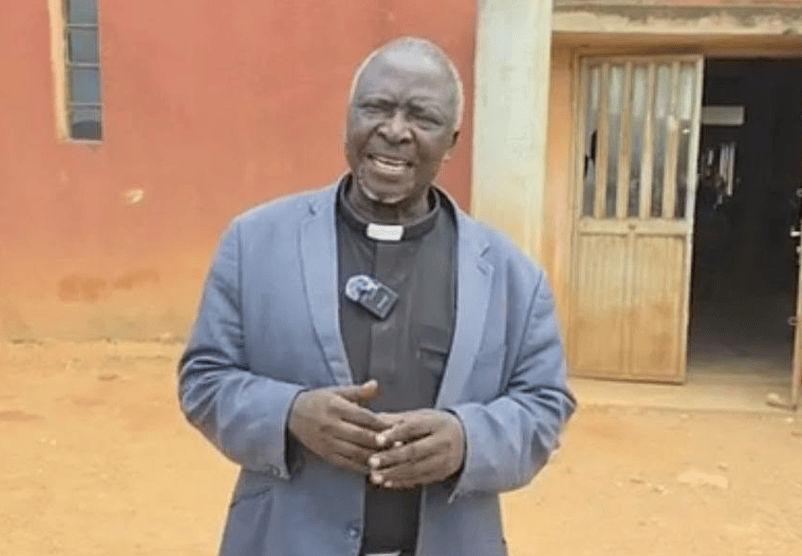
The Regional Chairman of Church of Christ in Nations (COCIN), Barkin Ladi Local Government Area of Plateau State, Rev. Ezekiel Dachomo, has denied reports that he prayed for the re-election of President Bola Tinubu and Vice President Kashim Shettima in the 2027 presidential election.
Dachomo, who is currently in Israel on what he described as his first International Christian Advocacy Tour, said his visit was aimed at drawing the attention of world leaders to the plight of Christians in Plateau.
The cleric made the clarification in a social media post on Monday night following reports that he had prayed for the success of the All Progressives Congress (APC) presidential ticket and expressed support for the Muslim-Muslim ticket.
Dachomo said his earlier post, in which he prayed for Nigeria, had been misconstrued as an endorsement of Tinubu and Shettima ahead of the 2027 election.
According to him, there was nowhere in the post where he prayed for the President and Vice-President to win the election.
“People are trying to frame me, saying I prayed for a Muslim-Muslim ticket. But I did not, and I will never pray for a Muslim-Muslim ticket because Nigeria belongs to both Muslims and Christians,” he said.
Dachomo said his prayers were for the well-being and success of Nigeria and its citizens, irrespective of their religious affiliations.
“I pray for both Muslims and Christians in Nigeria. I pray for Nigeria to succeed. If you truly want to come to God, come with a clean heart,” he added.
The cleric further stated, “I did not pray for President Tinubu and Vice President Shettima to win in 2027. My prayers have always been for Nigeria to succeed.”
Dachomo’s clarification came amid reactions to his ongoing advocacy tour in Israel, where he is seeking international attention to security challenges and what he described as the persecution of Christians in Plateau.
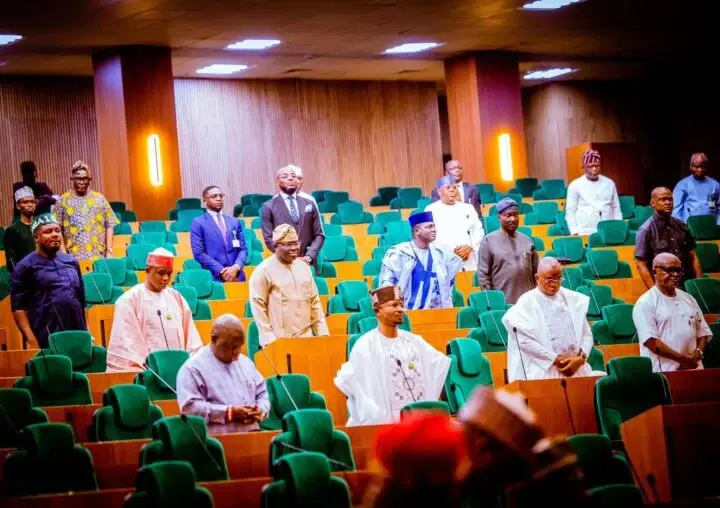
Ahead of the 2027 election, the House of Representatives Committee on Electoral Matters has urged the Independent National Electoral Commission (INEC) to disqualify candidates whose names are not contained in political party registers, as stipulated by the Electoral Act 2026.
In a statement on Tuesday, the Chairman of the committee, Bayo Balogun, drew the commission’s attention to a Supreme Court ruling on Sections 77(5), 77(6) and 77(7) and called for their full enforcement across all political parties.
Balogun, a member of the All Progressives Congress, APC, said that pending legal proceedings concerning the interpretation, constitutionality and enforceability of the sections had been resolved by virtue of the Supreme Court judgment.
The lawmaker recalled that the Supreme Court, on September 24, 2026, restored the provisions after setting aside the Court of Appeal judgment that had declared them unconstitutional.
According to him, the apex court held that the provisions were not inconsistent with the 1999 Constitution.
Balogun explained that Section 77(5) provides that only members whose names are contained in the membership register submitted to INEC are eligible to vote or be voted for at party primaries, congresses and conventions.
He said that Section 77(6) requires political parties to use the register submitted to the electoral umpire for such exercises.
Balogun urged INEC to proceed without further delay to enforce Sections 77(4) to 77(6) in the administration and monitoring of political parties and their electoral activities.
He further urged the commission to audit the membership registers and candidates submitted by political parties to establish whether the names of the candidates are contained in the registers earlier submitted to INEC in compliance with Section 77(5).
“This will be a litmus test for the commission – any culpable political party and candidates should be disqualified.
“Diligent enforcement of the provision would help prevent disputes and reduce the volume of litigation that could arise from alleged irregularities or non-compliance with Sections 77(4) to 77(6) of the Electoral Act,” Balogun said.
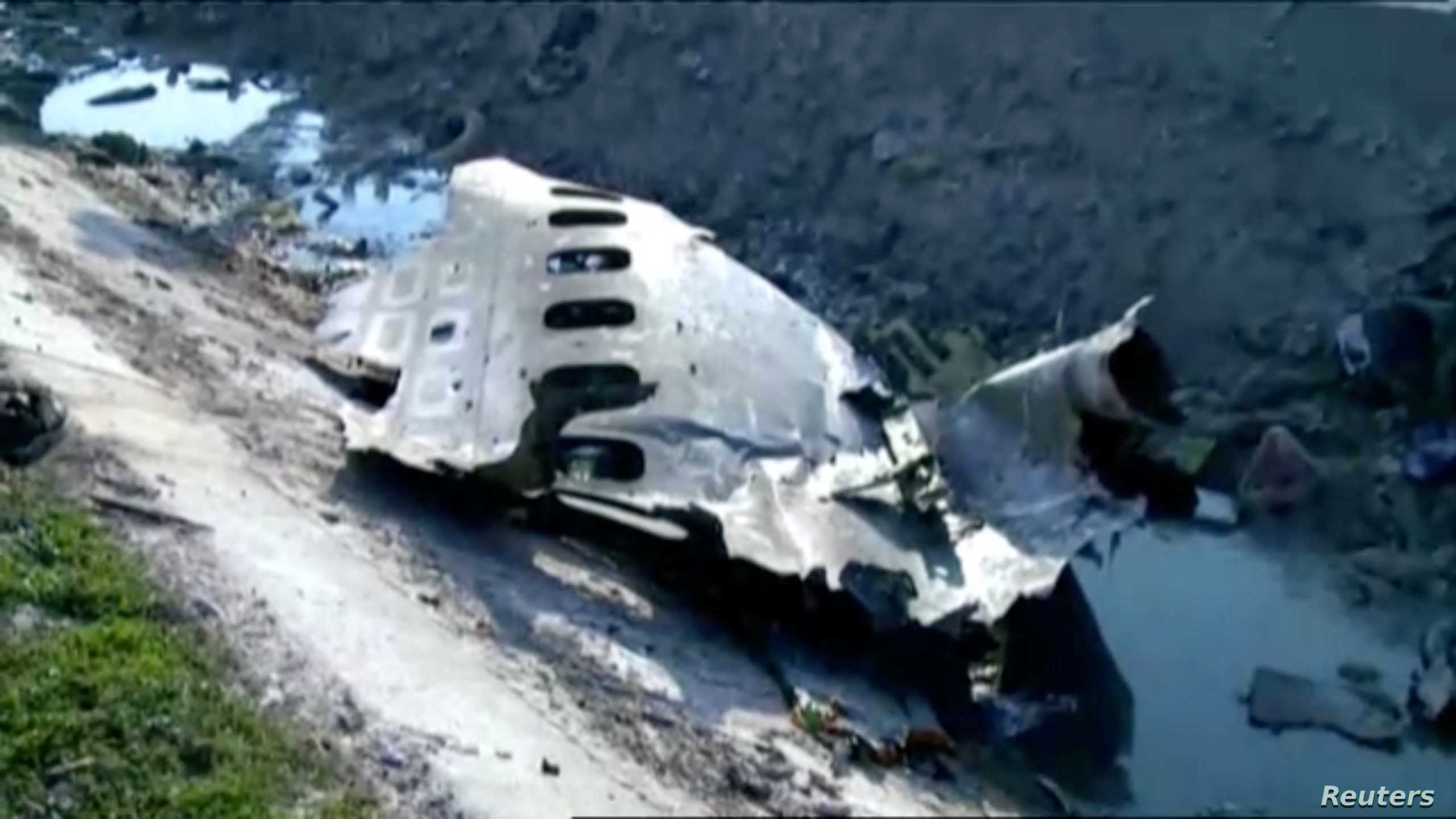
An helicopter crashed into a swamp near Naval Base in Igbokoda, the headquarters of Ilaje Local Government Area of Ondo State, on Monday.
The incident occurred at about 11.00a.m during heavy down pour, throwing the coastal community into panic.
The number of people on board of the helicopter was yet to be officially confirmed, while the condition of possible survivors cannot be confirmed.
Confirming the incident, Maurice Oripenaiye, the Chairman of the local government, told the News Agency of Nigeria (NAN) in a telephone interview that he could not ascertain the number of the victims.
Oripenaye also said he was yet to ascertain the identity of the crashed helicopter and the passengers.
“It happened during the heavy rainfall at about 11.00a.m. I cannot confirm the number of the people on board. I have deployed some youths to the area for rescue purpose,” he told NAN.
Similarly, the Police Command in Ondo State while confirming the crash, said details surrounding the incident were still emerging.
The command in a statement by its spokesperson, Abayomi Jimoh, a deputy superintendent of police, in Akure, said efforts were ongoing to establish the full circumstances surrounding the crash.
“The command urges members of the public, particularly residents of Igbokoda and adjoining communities, to remain calm and refrain from circulating unverified information.
“The public will be duly informed as soon as further credible information becomes available,” it stated.
(NAN)


