
Metro
Police Invite Activist Who Accused Officers of Raping Sex Workers, Say She Won’t be Detained

- /home/rhoncare/pointblank.ng/wp-content/plugins/mvp-social-buttons/mvp-social-buttons.php on line 27
https://pointblank.ng/wp-content/uploads/2019/04/POLICE-IDO1.jpg&description=Police Invite Activist Who Accused Officers of Raping Sex Workers, Say She Won’t be Detained', 'pinterestShare', 'width=750,height=350'); return false;" title="Pin This Post">
- Share
- Tweet /home/rhoncare/pointblank.ng/wp-content/plugins/mvp-social-buttons/mvp-social-buttons.php on line 69
https://pointblank.ng/wp-content/uploads/2019/04/POLICE-IDO1.jpg&description=Police Invite Activist Who Accused Officers of Raping Sex Workers, Say She Won’t be Detained', 'pinterestShare', 'width=750,height=350'); return false;" title="Pin This Post">
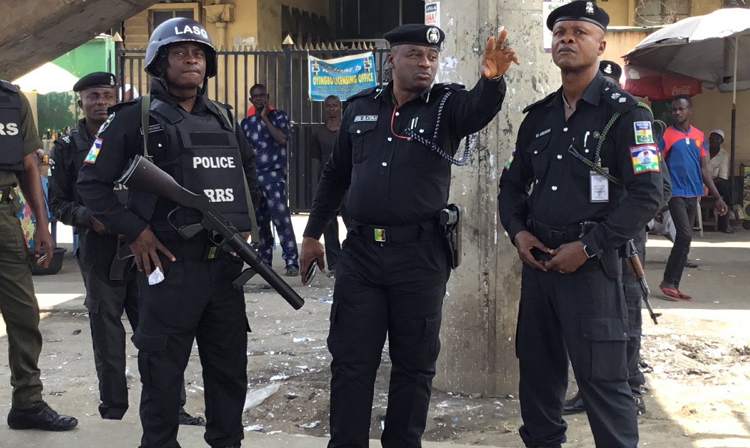
The Police in Abuja have invited a woman for questioning after she accused officers of raping suspected commercial sex workers with sachet water nylons.
Dorothy Njemanze, an Abuja-based women’s rights activist, raised the allegation on social media on Thursday. It came as police and social development authorities intensified their crackdown on alleged sex workers across the federal capital.
Abuja Police Commissioner Bala Ciroma told PREMIUM TIMES the activist was only asked to turn up at the FCT police headquarters to assist detectives with information about officers responsible for the gruesome abuses.
“The allegations are too grievous for our institution to ignore,” the police chief said. “We hope the woman will have useful information that will aid our investigation.”
Mrs Njemanze said she learnt from some of the women arrested and profiled as prostitutes that officers traded the women’s release for sex.
“We learnt that some of the women were raped with sachet water nylons because there were no condoms left,” Mrs Njemanze told PREMIUM TIMES Wednesday evening.
The police invited her because she had put out a video and wrote posts on her social media handles alleging the incident earlier this week.
“I will be honouring the commissioner’s invitation on Thursday (today) morning,” she told PREMIUM TIMES. “We are partners in progress.”
Mr Ciroma said he looked forward to receiving Mrs Njemanze on Thursday, and she will not be detained no matter how the invitation turned out.
Out on a limb
Dozens of women have been arrested at night clubs in major parts of the city within the last two weeks. They were accused of “offences” ranging from prostitution to indecent dressing, despite social media outrage that some of the women might have been hanging out with male acquaintances or even alone.
At least 70 women were arrested in a joint raid by the police and Abuja social workers between April 29 and 29. The arrests were in addition to dozens of women who were taken into custody at Caramelo, a famous gentleman’s club in the posh Utako neighbourhood.
The Nigerian Constitution is silent on commercial sex activities, but there are subsidiary legislation in some local jurisdictions that prohibit such acts. After the purported invasion of Abuja by young women repeatedly made headlines in 2011, there were rumours that Ike Ekweremadu was sponsoring a bill to legalise the commercial sex work in the country. The Enugu senator, who became the deputy senate president in 2015, however, denied the reports at the time.
The police summarily arraigned some of the women at an improvised courtroom, but many were reportedly freed amidst unclear circumstances. Some of those convicted received up to six months’ imprisonment, while a few others were slammed with fines.
Even though the clubs were filled with both sexes, only women were arrested. This has elicited allegations of gender-based violence against women, which could render them even more vulnerable than they had been.
‘No vagina is safe in Abuja’
Mrs Njemanze said she had been gathering evidence about the alleged rape of women with sachet water nylons, but her personal experience sufficed to conclude that officers were capable of committing such acts.
“When I was arrested in 2012, my breast and buttocks were terribly fondled by some of the officers,” Mrs Njemanze said.
She made headlines that year after being arrested for alleged prostitution. She sued the Nigerian government at ECOWAS Court and won. The court determined that her rights were violated because she was arrested only because she was out at night.
“In most cases of prostitution, you will have a man and a woman,” Mrs Njemanze said. “If you arrest only the woman and profile her as a prostitute, then it becomes gender-based violence.”
She said only 10 of about 70 women who were arrested last week were arraigned before a mobile court near the Federal Secretariat in Abuja on Tuesday.
“Police officers freed most of the women after they were given sex and money,” Mrs Njemanze said.
She said she will demand a review of the circumstances under which the most of the women were released without charges — including an interview of all the officers that took part in the arrests and some of the freed detainees.
‘Just plead guilty’
Mrs Njemanze said one of the major concerns she would raise with Mr Ciroma will be about officers’ “unethical practice” of ensnaring suspected prostitutes into admitting their guilt.
“Whenever they arrest women at night clubs, be they strippers or commercial sex workers or whatever, they usually ask them to just plead guilty in their kangaroo court so they could be fined for a small amount rather than sent to jail,” she said.
The officers use the tactics to avoid the responsibility of proving that the women were actually prostitutes as required in criminal proceedings. Only a few of victims of discriminatory police arrests know their fundamental rights as Nigerian citizens, she added.
“I respect the commissioner because he has been proactive against sexual and gender-based violence,” Mrs Njemanze said. “But the officers have failed to emulate his professionalism.”
Premium Times


The FCT Council of the Nigeria Labour Congress (NLC) has declared an indefinite strike across the Federal Capital Territory, directing workers in the public and private sectors to shut down schools, hospitals, government offices and other establishments.
The strike began on Wednesday, October 7, following the expiration of a seven-day ultimatum issued to the FCT Administration (FCTA) over the promotion of teachers.
The labour council said the FCTA failed to satisfactorily address its demands, particularly its call for the removal of the requirement for vacancies before teachers can be promoted.
The dispute centres on the FCTA’s position that teachers can only advance when vacancies are available. The NLC said the policy has contributed to years of career stagnation among teachers and is not applicable to the teaching profession.
In resolutions signed by its Chairman, Comrade Knabayi Adalo, the council argued that FCT teachers are not core civil servants or pool staff and should therefore not be subjected to a vacancy-based promotion system designed for pool officers.
It said teachers recruited by the FCT Universal Basic Education Board, UBEB, and FCT Secondary Education Board, SEB, were employed specifically to teach and should be promoted “as and when due.”
The NLC is also demanding that teachers who became eligible for promotion in 2025 be allowed to sit for their promotion examination before or alongside the 2026 candidates.
Another demand is the withdrawal of redeployment and demotion letters issued to directors who benefited from the Harmonised Retirement Age for Teachers Act, 2022.
The council is further calling for the immediate reinstatement of the dissolved management teams of FCT SEB and FCT UBEB.
The decision to commence the strike was taken at the council’s State Executive Council, SEC, meeting held on October 6, at the NLC FCT Secretariat.
At the meeting, the labour body rejected the FCTA’s response to its ultimatum, describing it as “neither clear, positive, nor genuine.”
According to the SEC, the response did not address the vacancy requirement, which it described as the “root cause of career stagnation”, and was also silent on what the council called the “illegal redeployment of directors.”
“The response of the FCTA is ambiguous and totally unacceptable,” the SEC said.
The council added that it “will no longer tolerate the continued dehumanisation of FCT teachers through obnoxious policies alien to the teaching profession.”
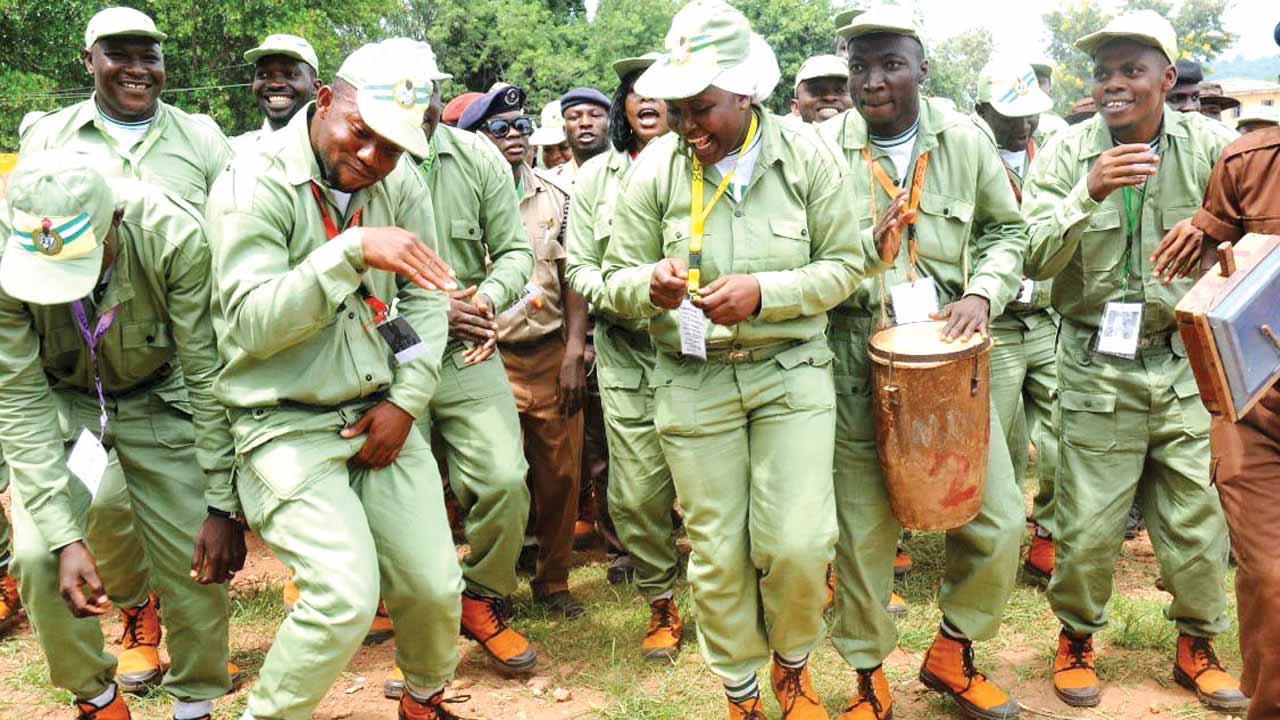
The 20 prospective National Youth Service Corps (NYSC) members and one other abducted along the Owerri-Onitsha Road in Imo State have regained their freedom.
The victims were rescued from the Amakohia-Ubi forest in Owerri West Local Government Area of the state following a coordinated operation involving security agencies.
They have since been taken to the Department of State Services (DSS) Hospital in Owerri, where they are receiving medical attention and undergoing necessary medical checks.
The Director-General of the National Youth Service Corps Brigadier General Olakunle Oluseye Nafiu visited the DSS Clinic in Owerri, where he addressed the rescued victims.
He was in company of the Imo State Commissioner of Police, Director DSS and Brigade Commander 34 artillery Imo State.
Details of the operation, including whether any arrests were made or ransom was paid, have not yet been made public.
However, in a statement issued by the Force Public Relations Officer, Ani Iniedu, the police said, “Efforts are ongoing to apprehend those responsible for the abduction, as the Police and other security agencies sustain coordinated operations towards bringing all culpable persons to justice.”
The victims were abducted on October 1 while travelling from Ibadan, Oyo State, to NYSC orientation camps in Abia and Akwa Ibom states.
The two buses conveying the prospective corps members came under attack near Umunoha in the Mbaitoli Local Government Area of Imo State.
Following the abduction, security agencies launched a coordinated search-and-rescue operation to locate the victims and their abductors.
The Imo State Police Command later said its operatives had located the kidnappers’ camp through drone surveillance but were unable to immediately enter the location because it was reportedly mined with improvised explosive devices (IEDs).
The police subsequently deployed additional operational assets, including bulldozers and armoured personnel carriers, as efforts intensified to reach the victims.
The development also triggered anxiety among the victims’ families after reports that the abductors were demanding ₦50 million for each victim.
Police had earlier confirmed that 10 victims were rescued following the attack, while efforts continued to locate the remaining abductees.
The latest development brings an end to the ordeal of the 20 corps members and the other abducted victim, who have now been reunited with safety and are receiving medical attention in Owerri.
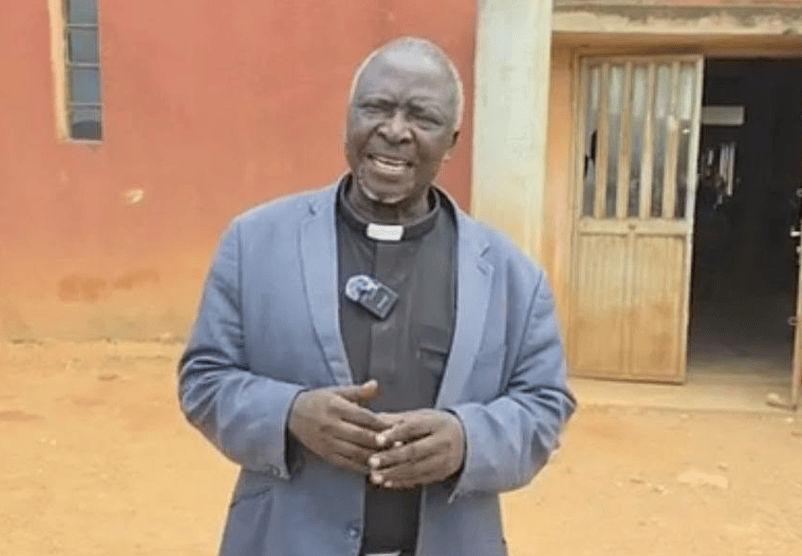
The Regional Chairman of Church of Christ in Nations (COCIN), Barkin Ladi Local Government Area of Plateau State, Rev. Ezekiel Dachomo, has denied reports that he prayed for the re-election of President Bola Tinubu and Vice President Kashim Shettima in the 2027 presidential election.
Dachomo, who is currently in Israel on what he described as his first International Christian Advocacy Tour, said his visit was aimed at drawing the attention of world leaders to the plight of Christians in Plateau.
The cleric made the clarification in a social media post on Monday night following reports that he had prayed for the success of the All Progressives Congress (APC) presidential ticket and expressed support for the Muslim-Muslim ticket.
Dachomo said his earlier post, in which he prayed for Nigeria, had been misconstrued as an endorsement of Tinubu and Shettima ahead of the 2027 election.
According to him, there was nowhere in the post where he prayed for the President and Vice-President to win the election.
“People are trying to frame me, saying I prayed for a Muslim-Muslim ticket. But I did not, and I will never pray for a Muslim-Muslim ticket because Nigeria belongs to both Muslims and Christians,” he said.
Dachomo said his prayers were for the well-being and success of Nigeria and its citizens, irrespective of their religious affiliations.
“I pray for both Muslims and Christians in Nigeria. I pray for Nigeria to succeed. If you truly want to come to God, come with a clean heart,” he added.
The cleric further stated, “I did not pray for President Tinubu and Vice President Shettima to win in 2027. My prayers have always been for Nigeria to succeed.”
Dachomo’s clarification came amid reactions to his ongoing advocacy tour in Israel, where he is seeking international attention to security challenges and what he described as the persecution of Christians in Plateau.


