
Metro
PRIDE: The Plague That Drives, and Entombs the Proud

- /home/rhoncare/pointblank.ng/wp-content/plugins/mvp-social-buttons/mvp-social-buttons.php on line 27
https://pointblank.ng/wp-content/uploads/2025/08/DR.TOLULOPE-A.-ADEGOKE-AMBP-UN__-1-744x600.jpg&description=PRIDE: The Plague That Drives, and Entombs the Proud', 'pinterestShare', 'width=750,height=350'); return false;" title="Pin This Post">
- Share
- Tweet /home/rhoncare/pointblank.ng/wp-content/plugins/mvp-social-buttons/mvp-social-buttons.php on line 69
https://pointblank.ng/wp-content/uploads/2025/08/DR.TOLULOPE-A.-ADEGOKE-AMBP-UN__-1-744x600.jpg&description=PRIDE: The Plague That Drives, and Entombs the Proud', 'pinterestShare', 'width=750,height=350'); return false;" title="Pin This Post">
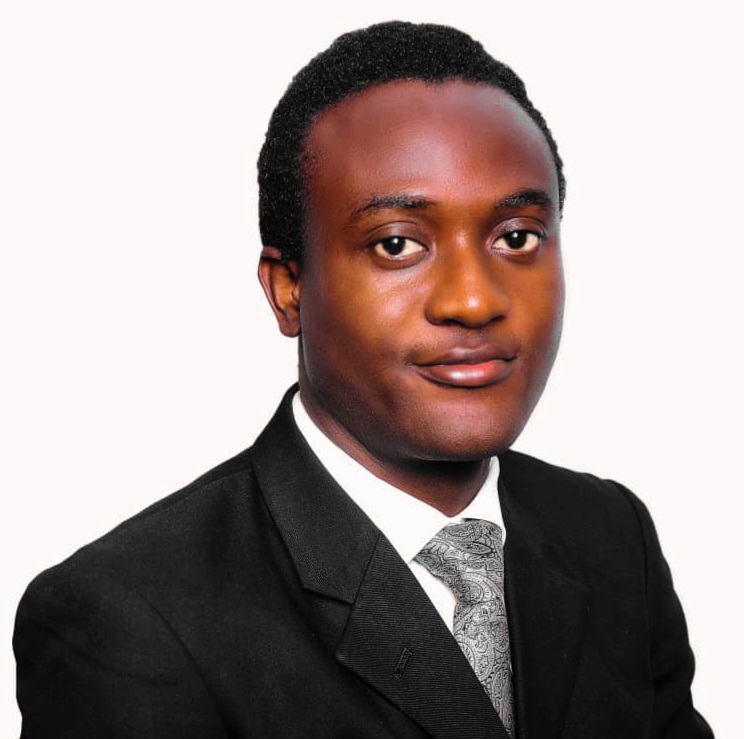
By Tolulope A. Adegoke PhD
Pride is the only fortress that grows weaker as its walls grow taller; for it is built not of stone, but of certitude—and certitude, unlike granite, crumbles under the weight of its own reflection. The humble do not build walls; they build bridges to the very truths that threaten to undo them, knowing that what is undone can be remade, but what is unmoved is already ruins waiting for time to catch up.
An Exposition on the Metamorphosis of Ego, the Architecture of Collapse, and the Antidote of Intellectual Humility
I. Introduction: The Paradox of the Ascending Trajectory
To speak of “Pride” in the contemporary lexicon is often to invoke a benign, even necessary, virtue—the self-esteem required for innovation, the national spirit required for sovereignty, or the corporate confidence required for market dominance. However, the etymological and philosophical roots of Pride (from the Old English prȳde, akin to the Old Norse prúðr, meaning “brave” or “splendid”) harbor a latent volatility. When pride solidifies from a state of graceful confidence into a rigid state of hubris, it ceases to be a virtue and becomes a plague. This is not a moralistic judgment; it is an epidemiological fact of organizational, national, and personal psychology.
This treatise posits that Pride, in its pathogenic form, is the singular most potent inhibitor of evolutionary adaptability. It is the “plague that drives the proud” not toward the pinnacle of success, but toward the precipice of irrelevance. The proud are driven by a compulsive need to validate a static self-image, rather than a dynamic process of becoming. To solve the grand challenges facing Peoples, Corporates, and Nations, we must first diagnose the symptomatology of this plague and administer the rigorous antidote of Intellectual Humility—a framework that embraces fallibility as the engine of resilience.
II. The Phenomenology of the Plague: Diagnosing the Symptoms
Before prescribing a cure, we must map the pathology. The plague of pride manifests not as overt arrogance alone, but often as subtle, systemic dysfunctions across three distinct strata: the Individual, the Collective, and the Institutional.
1. The Narcissism of Small Differences (The Individual Level)
At the personal level, pathological pride creates a “cognitive armor” that repels external data incongruent with the self-concept. This is the “Dunning-Kruger Effect” elevated to a lifestyle. The proud individual suffers from a deficit of meta-cognition—they do not know what they do not know.
· Exemplar: Consider the case of a seasoned CEO who refuses to adopt digital transformation because their legacy success validates their “gut instinct.” They confuse correlation (past success under specific conditions) with causation (their infallible decision-making). The plague drives them to reject junior analysts’ data, not because the data is flawed, but because acknowledging its validity would necessitate a reconstruction of their identity. The result is Blockbuster Video, Kodak, or Sears—mammoths frozen in the amber of their own past triumphs.
2. The Echo Chamber of Consensus (The Corporate Level)
In corporate structures, pride evolves into “Groupthink.” Here, the plague manifests as an institutional allergy to dissenting voices. The drive for cohesion overrides the imperative for veracity. When a corporation becomes proud of its culture to the exclusion of its market reality, it ceases to be a value-creating entity and becomes a value-preserving cult.
· Exemplar: The fall of Enron was not merely a fraud of accounting; it was a fraud of intellect. The corporate pride in being “the smartest guys in the room” created a toxic environment where questioning the viability of the business model was tantamount to treason. They were driven by the pride of complex financial instruments, ignoring the simple reality of cash flow. The plague drove them to fabricate reality because accepting the truth would have been an unbearable admission of mediocrity.
3. The Imperial Overreach (The National Level)
For nations, the plague of pride is manifest as “Strategic Narcissism.” This is the conviction that historical exceptionalism guarantees future dominance. Nations afflicted by this plague view geopolitical shifts not as challenges to adapt to, but as insults to their ordained status. This leads to a fatal misallocation of resources—over-investing in the preservation of outdated paradigms and under-investing in emergent ones.
· Exemplar: The decline of the Spanish Empire in the 17th century serves as a historical archetype. Flooded with New World silver, the Spanish Crown developed an arrogance that devalued domestic manufacturing and intellectual rigor. They were driven by the pride of being the Catholic Defender, ignoring the rising mercantile and scientific powers of Northern Europe. Their pride prevented the structural reforms necessary for solvency, resulting in repeated sovereign defaults. The plague drove them to prioritize image over infrastructure.
III. The Mechanics of the Plague: Why It Drives the Proud
The driving force of this plague is rooted in Cognitive Dissonance and the Sunk Cost Fallacy. The proud are not simply arrogant; they are trapped. Their identity is inextricably linked to their past decisions. To admit a flaw in the present is to retroactively invalidate the self. Therefore, the plague drives them to “double down.”
This mechanism operates through three distinct gears:
1. The Selectivity of Attention: The proud perceive only data that confirms their bias (Confirmation Bias). They view critics not as informants, but as adversaries.
2. The Denigration of the External: To protect the internal self, the proud must devalue the external world. Competitors are dismissed as “lucky” or “unethical.” New technologies are dismissed as “fads.”
3. The Acceleration of Inertia: The proud do not stop; they accelerate into the abyss. Because stopping would require introspection, they increase velocity, mistaking motion for progress.
This dynamic creates a “fatal feedback loop.” The more the external world changes, the more rigid the internal world becomes. The plague drives the proud not toward a destination, but toward a collision course with reality.
IV. The Antidote: Intellectual Humility as Systemic Immunity
If Pride is the plague, Intellectual Humility is the vaccine. Crucially, this is not the absence of confidence; it is the regulation of confidence. It is the meta-cognitive awareness that one’s current map is not the territory. It is the capacity to hold strong convictions weakly—to be decisive in action yet tentative in epistemology.
To solve the challenges across Peoples, Corporates, and Nations, we must operationalize Intellectual Humility through three pillars:
1. The Red Team Imperative (For Corporates and Nations)
Institutional pride is dismantled through structural dissent. Corporations and governments must institutionalize the “Red Team”—a group whose explicit job is to disprove the prevailing hypothesis. This moves critique from the personal realm (accusation) to the procedural realm (analysis).
· Application: The intelligence failures preceding the 2003 Iraq War (WMDs) were exacerbated by a lack of rigorous red-teaming. In contrast, the Cuban Missile Crisis was resolved successfully because President Kennedy actively sought dissenting voices against the aggressive advice of the Joint Chiefs. He humbled his administration’s pride by demanding alternative perspectives, preventing a nuclear catastrophe. For a corporation, this means promoting a “Devil’s Advocate” department that is rewarded for finding flaws in the business model, not for towing the line.
2. The “Pre-Mortem” Strategy (For Peoples and Leadership)
Psychologist Gary Klein introduced the “Pre-Mortem”—a technique where teams imagine that a project has failed spectacularly and work backward to determine the cause. This breaks the plague’s hold because it bypasses the defensive ego.
· Application: Before launching a new national policy or corporate merger, leaders should force the team to write a “history of the future” detailing the catastrophe. This exercise forces the proud to externalize their fears, revealing latent risks that the plague of optimism would otherwise suppress. For individuals, this is the practice of asking, “If I am wrong about this deeply held belief, what evidence would prove it?”
4. The Epistemological Audit (For the Self and Society)
We must audit our knowledge sources. The plague of pride thrives in informational vacuums.
· Application: For Peoples, this means actively consuming media that challenges their political orthodoxy without immediately dismissing it. For nations, it means engaging in diplomatic and scientific exchanges with ideological rivals, not to compromise values, but to understand the rationale of the “other.” Intellectual humility requires the discipline to articulate the opposing argument better than the opposition can articulate it themselves. If you cannot argue against your own position with eloquence, you do not truly understand it.
V. The Strategic Rebranding of Failure
The most potent weapon against the plague is the redefinition of failure. The proud view failure as an identity, an indictment. The humble view failure as data. For Corporates, the “Fail Fast” mantra is often a cliché, but its true depth lies in psychological safety—the assurance that admitting a mistake will not result in retribution. For Nations, this requires a shift from “never apologize” to “intelligent accountability.” A nation that admits a strategic error (e.g., foreign policy missteps) is not weak; it is strategically agile. It disarms the plague by refusing to let the past dictate the future.
VI. The Manifesto of the Empowered Humble
To transcend the plague, we must adopt a new manifesto for the 21st century:
· We reject the tyranny of the “Ego-System” and embrace the “Eco-System” of knowledge, recognizing that intelligence is distributed, not centralized.
· We practice the “Pause.” Before reacting defensively to criticism, we pause to decode the signal from the noise.
· We prioritize “Learning Velocity” over “Status Quo Maintenance.” The speed at which we can unlearn outdated data and relearn new paradigms is the new competitive advantage.
VII. Conclusion: The Ascent of the Humble
Pride, the plague, drives the proud toward isolation and obsolescence. It creates a brittle intelligence that shatters under pressure. Conversely, Intellectual Humility drives the wise toward resilience and relevance. It creates an anti-fragile intelligence that grows stronger with the shocks of new data.
For Peoples, the dissolution of pride allows for the reconstruction of fractured societies through the mutual recognition of shared fallibility. For Corporates, it ensures longevity beyond the tenure of a single visionary. For Nations, it ensures security not through belligerence, but through the soft power of adaptability and the hard power of strategic self-correction.
The proud are driven by a need to be right. The humble are driven by a need to get it right. One is a static pose; the other is a dynamic process. In the volatile, uncertain, complex, and ambiguous (VUCA) world, the only sustainable trajectory is the one that accepts that the map must constantly be redrawn. The plague ends when we realize that we are not the cartographers of certainty, but the humble navigators of an ever-shifting sea. Let us, therefore, choose to be driven not by the arrogance of the known, but by the humility of the seeker.
Dr. Tolulope A. Adegoke, AMBP-UN is a globally recognized scholar-practitioner and thought leader at the nexus of security, governance, and strategic leadership. His mission is dedicated to advancing ethical governance, strategic human capital development, resilient nation building, and global peace. He can be reached via: tolulopeadegoke01@gmail.com, globalstageimpacts@gmail.com


The FCT Council of the Nigeria Labour Congress (NLC) has declared an indefinite strike across the Federal Capital Territory, directing workers in the public and private sectors to shut down schools, hospitals, government offices and other establishments.
The strike began on Wednesday, October 7, following the expiration of a seven-day ultimatum issued to the FCT Administration (FCTA) over the promotion of teachers.
The labour council said the FCTA failed to satisfactorily address its demands, particularly its call for the removal of the requirement for vacancies before teachers can be promoted.
The dispute centres on the FCTA’s position that teachers can only advance when vacancies are available. The NLC said the policy has contributed to years of career stagnation among teachers and is not applicable to the teaching profession.
In resolutions signed by its Chairman, Comrade Knabayi Adalo, the council argued that FCT teachers are not core civil servants or pool staff and should therefore not be subjected to a vacancy-based promotion system designed for pool officers.
It said teachers recruited by the FCT Universal Basic Education Board, UBEB, and FCT Secondary Education Board, SEB, were employed specifically to teach and should be promoted “as and when due.”
The NLC is also demanding that teachers who became eligible for promotion in 2025 be allowed to sit for their promotion examination before or alongside the 2026 candidates.
Another demand is the withdrawal of redeployment and demotion letters issued to directors who benefited from the Harmonised Retirement Age for Teachers Act, 2022.
The council is further calling for the immediate reinstatement of the dissolved management teams of FCT SEB and FCT UBEB.
The decision to commence the strike was taken at the council’s State Executive Council, SEC, meeting held on October 6, at the NLC FCT Secretariat.
At the meeting, the labour body rejected the FCTA’s response to its ultimatum, describing it as “neither clear, positive, nor genuine.”
According to the SEC, the response did not address the vacancy requirement, which it described as the “root cause of career stagnation”, and was also silent on what the council called the “illegal redeployment of directors.”
“The response of the FCTA is ambiguous and totally unacceptable,” the SEC said.
The council added that it “will no longer tolerate the continued dehumanisation of FCT teachers through obnoxious policies alien to the teaching profession.”
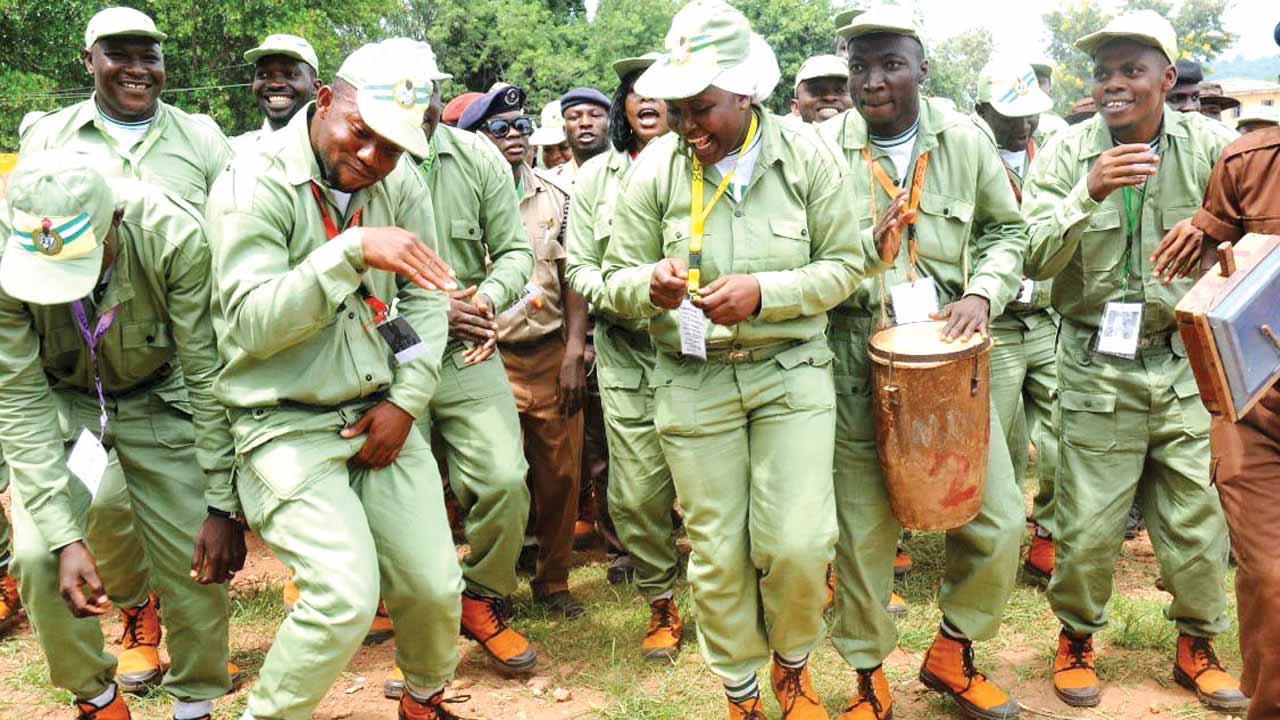
The 20 prospective National Youth Service Corps (NYSC) members and one other abducted along the Owerri-Onitsha Road in Imo State have regained their freedom.
The victims were rescued from the Amakohia-Ubi forest in Owerri West Local Government Area of the state following a coordinated operation involving security agencies.
They have since been taken to the Department of State Services (DSS) Hospital in Owerri, where they are receiving medical attention and undergoing necessary medical checks.
The Director-General of the National Youth Service Corps Brigadier General Olakunle Oluseye Nafiu visited the DSS Clinic in Owerri, where he addressed the rescued victims.
He was in company of the Imo State Commissioner of Police, Director DSS and Brigade Commander 34 artillery Imo State.
Details of the operation, including whether any arrests were made or ransom was paid, have not yet been made public.
However, in a statement issued by the Force Public Relations Officer, Ani Iniedu, the police said, “Efforts are ongoing to apprehend those responsible for the abduction, as the Police and other security agencies sustain coordinated operations towards bringing all culpable persons to justice.”
The victims were abducted on October 1 while travelling from Ibadan, Oyo State, to NYSC orientation camps in Abia and Akwa Ibom states.
The two buses conveying the prospective corps members came under attack near Umunoha in the Mbaitoli Local Government Area of Imo State.
Following the abduction, security agencies launched a coordinated search-and-rescue operation to locate the victims and their abductors.
The Imo State Police Command later said its operatives had located the kidnappers’ camp through drone surveillance but were unable to immediately enter the location because it was reportedly mined with improvised explosive devices (IEDs).
The police subsequently deployed additional operational assets, including bulldozers and armoured personnel carriers, as efforts intensified to reach the victims.
The development also triggered anxiety among the victims’ families after reports that the abductors were demanding ₦50 million for each victim.
Police had earlier confirmed that 10 victims were rescued following the attack, while efforts continued to locate the remaining abductees.
The latest development brings an end to the ordeal of the 20 corps members and the other abducted victim, who have now been reunited with safety and are receiving medical attention in Owerri.
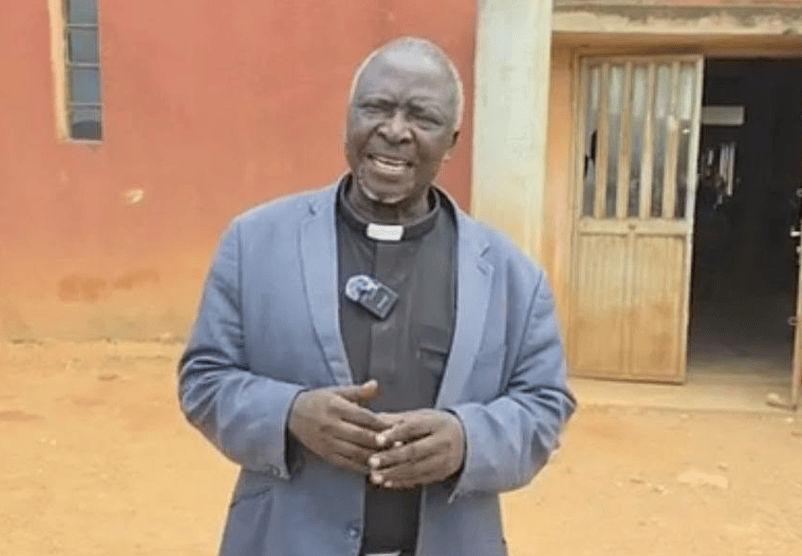
The Regional Chairman of Church of Christ in Nations (COCIN), Barkin Ladi Local Government Area of Plateau State, Rev. Ezekiel Dachomo, has denied reports that he prayed for the re-election of President Bola Tinubu and Vice President Kashim Shettima in the 2027 presidential election.
Dachomo, who is currently in Israel on what he described as his first International Christian Advocacy Tour, said his visit was aimed at drawing the attention of world leaders to the plight of Christians in Plateau.
The cleric made the clarification in a social media post on Monday night following reports that he had prayed for the success of the All Progressives Congress (APC) presidential ticket and expressed support for the Muslim-Muslim ticket.
Dachomo said his earlier post, in which he prayed for Nigeria, had been misconstrued as an endorsement of Tinubu and Shettima ahead of the 2027 election.
According to him, there was nowhere in the post where he prayed for the President and Vice-President to win the election.
“People are trying to frame me, saying I prayed for a Muslim-Muslim ticket. But I did not, and I will never pray for a Muslim-Muslim ticket because Nigeria belongs to both Muslims and Christians,” he said.
Dachomo said his prayers were for the well-being and success of Nigeria and its citizens, irrespective of their religious affiliations.
“I pray for both Muslims and Christians in Nigeria. I pray for Nigeria to succeed. If you truly want to come to God, come with a clean heart,” he added.
The cleric further stated, “I did not pray for President Tinubu and Vice President Shettima to win in 2027. My prayers have always been for Nigeria to succeed.”
Dachomo’s clarification came amid reactions to his ongoing advocacy tour in Israel, where he is seeking international attention to security challenges and what he described as the persecution of Christians in Plateau.


