
Personality in Focus
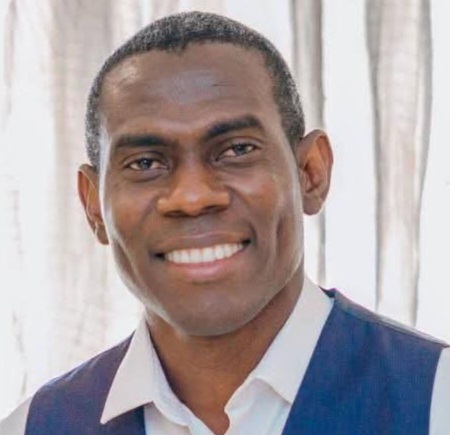
Prof Favour Ayodele (OFA): The Carpenter of a New Nigeria and the 2027 Political Reset Agenda

- /home/rhoncare/pointblank.ng/wp-content/plugins/mvp-social-buttons/mvp-social-buttons.php on line 27
https://pointblank.ng/wp-content/uploads/2026/06/IMG-20260609-WA0068.jpg&description=Prof Favour Ayodele (OFA): The Carpenter of a New Nigeria and the 2027 Political Reset Agenda', 'pinterestShare', 'width=750,height=350'); return false;" title="Pin This Post">
- Share
- Tweet /home/rhoncare/pointblank.ng/wp-content/plugins/mvp-social-buttons/mvp-social-buttons.php on line 69
https://pointblank.ng/wp-content/uploads/2026/06/IMG-20260609-WA0068.jpg&description=Prof Favour Ayodele (OFA): The Carpenter of a New Nigeria and the 2027 Political Reset Agenda', 'pinterestShare', 'width=750,height=350'); return false;" title="Pin This Post">
By Theresa Moses
As Nigeria gradually builds momentum toward the 2027 general elections, the political atmosphere is once again filled with familiar uncertainties; rising public frustration, economic strain, insecurity, and a growing demand for leaders who can move beyond promises into measurable national repair.
In the middle of this unfolding national conversation is Prof. Oluwamuyiwa Favour Ayodele (OFA), popularly known as “The Carpenter”, a presidential aspirant who has declared his intention to run for President of the Federal Republic of Nigeria.
His emergence is not framed as a routine political ambition. Instead, OFA positions himself as a system disruptor: someone who believes Nigeria is not merely in need of policy adjustment, but of structural reconstruction.
In his framing, Nigeria is a nation battling deep institutional fatigue: a struggling power sector, widening inequality, youth unemployment, insecurity, and a trust deficit between citizens and the state. His campaign narrative insists that these issues are not isolated problems, but interconnected failures requiring coordinated national rebuilding.
A POLITICAL IDENTITY BUILT AROUND RECONSTRUCTION
Prof. Oluwamuyiwa Favour Ayodele’s branding as “The Carpenter” is symbolic. It reflects his central argument that Nigeria’s governance system has suffered structural damage over time and must be rebuilt from the foundation rather than patched at the surface.
Rather than positioning himself within traditional political alignments, he presents himself as an alternative voice driven by urgency, reform, and what he describes as a moral responsibility to restore national dignity.
His declaration statement emphasizes accountability, anti-corruption, youth inclusion, and national renewal; framed around the belief that leadership must directly reflect the lived realities of citizens.
WHY SUPPORTERS BELIEVE OFA REPRESENTS A DIFFERENT PATH
Supporters of Prof. Oluwamuyiwa Favour Ayodele’s candidacy argue that his emergence is significant not because he fits into the political establishment, but because he challenges its assumptions. They point to several reasons they believe he offers a credible alternative direction for Nigeria:
1. A Direct Focus on Nigeria’s Core Failure: Power
At the center of his Governance, Electricity and Transformation (GET) agenda is electricity reform. OFA argues that Nigeria’s development stagnation is fundamentally tied to unreliable power supply. Without stable electricity, he insists, industrial growth, education reform, healthcare improvement, and job creation remain structurally constrained.
For supporters, this focus is important because it identifies one of Nigeria’s most persistent national bottlenecks as a central governance priority rather than a secondary concern.
2. Crisis-Responsive Leadership Framing
Prof. Oluwamuyiwa Favour Ayodele’s political messaging is rooted in Nigeria’s lived realities:poverty, insecurity, inflation, unemployment, and declining public trust.
His supporters argue that his appeal lies in consistently connecting governance to everyday survival challenges, rather than abstract political promises. In their view, he frames leadership as an urgent response mechanism to national distress.
3. Anti-Establishment Positioning
A defining feature of his political identity is his outsider stance. He positions himself outside entrenched political networks, arguing that Nigeria’s long-standing governance challenges are partly sustained by recycled leadership structures.
Supporters see this as an advantage in a system where political continuity has often been criticized for limiting innovation, accountability, and reform momentum.
4. Youth and Grassroots Mobilization Strategy
With Nigeria’s population dominated by young people, Prof. Oluwamuyiwa Favour Ayodele’s movement structure; through platforms such as the Carpenter Movement Worldwide and allied civic initiatives, emphasizes youth engagement, participation, and political consciousness.
Supporters argue that this approach is critical in a country where young citizens form the majority but often feel excluded from decision-making processes.
5. Moral and Accountability-Based Leadership Narrative
Prof. Oluwamuyiwa Favour Ayodele consistently frames governance as a moral responsibility. His messaging emphasizes transparency, equality before the law, and leadership accountability.
In a political environment where public trust in institutions has weakened, his supporters argue that moral clarity in leadership is itself a necessary political correction.
THE BROADER NATIONAL CONTEXT
Nigeria today stands at a crossroads defined by economic pressure, insecurity, infrastructure deficits, and rising public dissatisfaction. These realities are shaping a political climate where citizens are increasingly evaluating candidates not only by party affiliation, but by perceived authenticity, clarity of vision, and responsiveness to national realities.
In this environment, Prof. Oluwamuyiwa Favour Ayodele’s emergence reflects a broader shift in political expectations; where movement-driven narratives, rather than traditional party structures, are gaining attention.
A CANDIDACY DEFINED BY DISRUPTION
What distinguishes Prof. Oluwamuyiwa Favour Ayodele’s political identity is not just his promises, but his positioning: as a builder entering a broken system, not to preserve it, but to reconstruct it.
His rhetoric leans heavily on urgency, reform, and national rebirth. Whether this translates into broad electoral success remains uncertain, but his presence adds a new layer to Nigeria’s evolving political conversation.
As 2027 approaches, one reality is already clear: Prof. Favour Ayodele has positioned himself as a candidate determined to disrupt conventional politics and push a narrative of accountability, reform, and national rebirth.
And in a nation searching for direction, challengers often reshape the debate itself.



The West African Examinations Council, WAEC, has appointed Dr Amos Josiah Dangut as its new Registrar and Chief Executive Officer.
Dangut served as Head of the Nigeria National Office from October 2023 until September 2026.
In a statement on Thursday by the Head of Public Affairs, WAEC Headquarters, Accra, Demianus G. Ojijeogu, the Council said Dangut, a Nigerian, will serve a five-year tenure from October 2026 to September 2031. He succeeds Alhaji Pateh Bah of The Gambia.
His appointment was ratified by Council, the international governing board of WAEC, at its 74th Annual Meeting held in Accra, Ghana, in March 2026. He assumed office as the 14th Registrar to Council on October 1, 2026.
Born on October 2, 1967, Dangut holds a Bachelor of Agriculture in Animal Production (1991), Master of Science in Animal Science (1994), Doctor of Philosophy in Animal Science (2017), and Master of Education in Administration and Planning (2020).
He began his career in education in 1994 at St. Louis College, Jos, where he served as a WAEC examiner before joining the Council in 1998.
An astute test developer and administrator, he has served in various capacities, including Assistant Registrar, Test Development Division, Ogba, Lagos; Head of Examinations Security and Deputy Branch Controller, Uyo and Bauchi; Branch Controller, Yola; Controller, Post-Examinations Department; Zonal Coordinator, Ikeja; and Deputy Registrar, Head of National Office.
With over two decades of experience, Dangut is noted for leveraging Information and Communications Technology to improve test development, administration and post-test activities.
As Head of National Office, he championed key innovations including the rollout of Computer-Based WASSCE, serialization of question papers and introduction of a Digital Electronic Marking System. He also oversaw the Digital Certificate Portal, WAEC E-Study Platform, Digital Records Archive, and systems for examination logistics and monitoring of examiners.
During his career, he received commendation from the Nigeria Examinations Committee for his handling of examination matters from 2000 to 2006, and an Award for Meritorious Service from the Ondo State Government during his NYSC year.
He has served on the boards of the Nigerian Educational Research and Development Council, NERDC, Joint Universities Preliminary Examinations Board, JUPEB, Joint Admissions and Matriculation Board, JAMB, and Grange Educational Foundation, and represented WAEC at the Joint Consultative Committee on Education and the National Council on Education.
Dangut has publications in international and national journals and has presented papers at several conferences. He is currently the Regional Representative of the West African Sub-region on the Executive Board of the Association for Educational Assessment in Africa, AEAA.
He is a Fellow of the Science Teachers Association of Nigeria, STAN, and member of the Nigeria Institute of Management, NIM.

The former Director-General of the Nigeria Tourism Development Authority (NTDA), Mr. Folarin Coker, and other tourism stakeholders have called for improved Artificial Intelligence regulations and its transformation for sustainable growth in Nigeria’s tourism and travel sector.
The call was in sequel to the recent technical network glitch involving the Nigeria Centre for Disease Control (NCDC) and the Nigeria International Travel Portal (NITP), which disrupted travel operations and left thousands of inbound and outbound passengers stranded at airports worldwide.
The incident, which reportedly prevented passengers from boarding flights bound for Nigeria, has renewed concerns over the country’s reliance on digital systems and highlighted the need for stronger technological infrastructure, effective regulation and improved AI integration to ensure seamless travel operations and enhance the tourism experience.
Speaking on Villa Square, a special segment of Cre8tive 9Ja, a weekly tourism and culture magazine programme hosted by veteran tourism journalist Frank Meke and Bunmi Bade-Adeniji on Mainland 98.3 FM, Lagos, former Director-General of the Nigeria Tourism Development Authority (NTDA), Folarin Coker, said Nigeria should not confuse digitisation with transformation.
“We should not confuse digitisation with transformation. Putting a broken process online is not reform,” Coker said.
He noted that the country’s ambition should be to make travel easier, improve the productivity of tourism businesses and ensure better management of destinations.
Coker said there was a need to deconstruct the existing system and create an ecosystem in which the necessary structures work effectively before AI is deployed to deepen the passenger experience.
According to him, AI can improve various aspects of travel, including the embassy and visa processes, flight bookings, pricing, arrival experiences, transportation and cultural engagement.
“Artificial Intelligence and technology are being mistaken for true development. It is not about another app or website, but about fixing the things that need to be fixed and setting the standards,” he said.
Also speaking, the Managing Director of Global Links Service, Pastor Chinyere Umeasiegbu, said airline operators were often responsible for flight disruptions.
She urged airline operators to address the recurring issue of flight cancellations, stressing the need for sustainable reforms that do not rely solely on Artificial Intelligence.
Umeasiegbu also called for improved communication between airlines and passengers, advising travellers to take screenshots of messages relating to flight delays and submit them to the appropriate authorities when necessary.
Coker further stated that the government must address fundamental infrastructure challenges, including roads and security, while establishing standards for globally competitive hotel services rather than relying on AI as a substitute for broader development.
“A digitally driven tourism agenda is what most people are using. However, we have a gifted cultural expression that can help amplify our tourism agenda, from music, fashion and food to medical tourism,” he said.
He stressed the need for government to make Nigeria’s tourism experience more accessible by providing the necessary infrastructure and ensuring that tourism products and destinations are easily bookable without technological disruptions.
The Director-General of the National Council for Arts and Culture (NCAC), Obi Asika, disclosed that the council had established a Council for Creative Technology and would soon publish a digital roadmap outlining how Artificial Intelligence could be incorporated into the arts and culture sector.
“We need to enrich Artificial Intelligence with the elements of our culture, our history and our content. We need to do this and put the necessary systems in place because, if we don’t, Artificial Intelligence might not be able to see us,” Asika said.
He explained that the concern was partly linked to the data and content used to train AI systems, noting that African and Black tourism and cultural knowledge needed greater representation.
On the role of AI in food tourism and promoting Nigerian cuisine globally, Chef Shine said the technology could be used to properly document and promote the country’s culinary heritage.
“It is important for us to use AI to document our food properly. AI will not take over our food, nor will AI cook the food,” he said.
“This is the best time to discuss the digital agenda and Artificial Intelligence. We need to use AI to document our food and monetise our cuisine,” he added.
Speaking on the use of AI in promoting Nigeria as a tourism destination, travel and tourism journalist Okorie Uhuru said the technology was already transforming the way destinations and tourism products were marketed.
“The old order of doing things, like packaging a destination tour and marketing tourism, has faded because of Artificial Intelligence. AI has helped us market our tourism to a global audience,” he said.
Uhuru urged tourism stakeholders and individuals to adapt to the technology in order to remain competitive.
“As individuals, you have to make an effort to align with AI to sell your tourism product; otherwise, you will be left behind,” he said.
Professor Wasui Babalola called on the government to develop policies that would help translate technological advancement into economic value.
He said the digital transformation process must retain a human element if it is to contribute meaningfully to the development of Nigeria’s tourism sector.
“The knowledge of the digital process should be given with a human element, and that is when our tourism would improve,” Babalola said.
This piece is contributed by Onyeka Ezike

At 40, Jumoke Azeez has reached a milestone that offers her an opportunity to reflect on a journey defined by creativity, resilience, enterprise and an enduring passion for fashion.
The Ibadan-based fashion entrepreneur and Founder/Creative Director of Zeezdesigns clocks 40 on Friday, marking four decades of life and celebrating a growing entrepreneurial journey in Nigeria’s dynamic fashion industry.
For Jumoke, fashion is more than clothing. It is a means of expressing creativity, individuality, confidence and identity.
Through Zeezdesigns, she has steadily built a contemporary fashion brand offering bespoke tailoring, ready-to-wear fashion, fabrics, accessories and fashion training for both men and women.
The journey:
Building a fashion business requires considerably more than the ability to create beautiful clothes. It requires vision, discipline, consistency, customer understanding and the resilience to navigate the challenges of entrepreneurship.
These qualities have shaped Jumoke’s journey.
From her base in Ibadan, Oyo State, she has continued to develop Zeezdesigns as an expression of her creative vision and entrepreneurial ambition.
Her approach has been to combine contemporary style with quality craftsmanship, creating pieces that enable her customers to express their individual personalities while remaining connected to the evolving Nigerian fashion landscape.
Over time, Zeezdesigns has grown beyond the idea of simply making clothes. It has become a brand through which Jumoke continues to explore creativity, fashion and enterprise.
Building from Ibadan:
One defining feature of Jumoke’s story is the decision to build her fashion enterprise from Ibadan.
Nigeria’s fashion industry is increasingly attracting global attention, with Lagos, Abuja and other major cities serving as important centres of fashion and creative enterprise. Yet entrepreneurs such as Jumoke demonstrate that creativity and commercially viable fashion brands can also emerge from other parts of the country.
For her, Ibadan provides both a home and a market from which to develop her vision.
The city has a long history of entrepreneurship, commerce and culture, and Jumoke’s journey adds another dimension to that story: the emergence of contemporary creative businesses driven by individuals who are combining talent with enterprise.
More than a fashion label:
Zeezdesigns has evolved into more than a clothing label. Its offering spans bespoke clothing, ready-to-wear pieces, fabrics and accessories, while Jumoke has also incorporated fashion training into the brand’s activities.
This reflects an entrepreneurial philosophy that looks beyond the creation of individual garments towards building a sustainable fashion enterprise.
For Jumoke, every design represents an opportunity to translate an idea into something tangible — and every customer interaction provides an opportunity to strengthen the brand.
Her entrepreneurial journey has also received recognition, including the Excellence Enterprise Award, while her work and the Zeezdesigns story have attracted media and public attention.
A milestone, not a destination:
Turning 40 represents an important personal milestone, but for Jumoke it is also a moment to look ahead.
The fashion industry continues to change rapidly. Consumer preferences are evolving, social media is transforming how fashion brands reach customers, and Nigerian designers are increasingly looking beyond traditional markets.
These changes present both opportunities and challenges for entrepreneurs.
Jumoke’s ambition is to continue building Zeezdesigns into a distinctive Nigerian fashion brand while remaining faithful to the creativity, quality and individuality that have shaped its journey.
Her story also reflects a broader reality about entrepreneurship in Nigeria: many successful businesses begin with an individual’s talent and determination and gradually evolve into brands with the potential to create value, inspire others and contribute to the creative economy.
Looking ahead:
As she celebrates her 40th birthday, Jumoke Azeez can look back on the journey with gratitude while keeping her attention firmly on what lies ahead.
Her next chapter will be about deepening the Zeezdesigns brand, expanding its reach, developing new creative possibilities and continuing to build a business that reflects her vision.
At 40, the story of Jumoke Azeez is therefore not simply about reaching a birthday milestone.
It is the story of a woman who has chosen to turn creativity into enterprise, passion into a brand, and a personal vision into a growing fashion business.
And from her base in Ibadan, the journey continues.
ABOUT JUMOKE AZEEZ
Jumoke Azeez is a Nigerian fashion entrepreneur and the Founder and Creative Director of Zeezdesigns, a contemporary fashion brand based in Ibadan, Oyo State.
Born on 25th of September, 1986, Jumoke is a graduate of English at Lead City University, Ibadan, Oyo State
Zeezdesigns specialises in bespoke tailoring, ready-to-wear fashion, fabrics, accessories and fashion training for men and women.
Driven by creativity, elegance and exceptional craftsmanship, Jumoke has built Zeezdesigns around a vision of fashion that celebrates individuality, confidence and contemporary Nigerian style.
Instagram/TikTok: @zeezdesigns23
Location: 1, Irepodun Close, Opposite No 1 Hotel by Ososami Junction, Ring Road, Ibadan, Oyo State, Nigeria
Recognition: Excellence Enterprise Award
Or
JUMOKE AZEEZ AT 40: CELEBRATING FOUR DECADES OF CREATIVITY, STYLE AND ENTREPRENEURSHIP
Ibadan-based fashion entrepreneur and Founder/Creative Director of Zeezdesigns, Jumoke Azeez, clocks 40 on Friday, celebrating a milestone defined by creativity, resilience, enterprise and a passion for fashion.
For Jumoke Azeez, turning 40 is more than a birthday milestone. It is a celebration of a journey shaped by creativity, determination, consistency and an enduring commitment to excellence.
The Ibadan-based fashion entrepreneur is the Founder and Creative Director of Zeezdesigns, a contemporary Nigerian fashion brand offering bespoke tailoring, ready-to-wear fashion, fabrics and accessories for both men and women.
Over the years, Jumoke has steadily developed Zeezdesigns into a platform through which she expresses her creative vision and passion for fashion. Her work reflects a commitment to individuality, elegance and contemporary Nigerian style, with each creation designed to combine aesthetics with quality craftsmanship.
Her entrepreneurial journey has also been characterised by resilience. Building a fashion enterprise requires more than creativity; it demands discipline, customer understanding, business management and the ability to continually evolve with changing tastes and trends.
Through Zeezdesigns, Jumoke has continued to transform creative ideas into distinctive fashion pieces while building a brand that reflects her personality and values.
Her work has earned recognition, including the Excellence Enterprise Award, while her entrepreneurial and creative journey has attracted media and public attention.
At 40, Jumoke is also looking beyond the celebration of an individual milestone. Her journey represents the growing contribution of Nigerian entrepreneurs and creative professionals who are building businesses and brands outside the traditional commercial centres.
Based in Ibadan, Oyo State, Zeezdesigns demonstrates the possibilities that exist for creative entrepreneurs to build distinctive brands from Nigeria’s cities and connect with an increasingly sophisticated fashion market.
For Jumoke, fashion is not simply about clothing. It is a means of expressing personality, confidence and individuality.
As she marks her 40th birthday, she looks forward to the next chapter of her journey with the same creativity, determination and commitment to excellence that have defined the Zeezdesigns story.
Jumoke Azeez at 40 is therefore a celebration not only of a birthday, but of creativity, enterprise, resilience and the continuing evolution of a Nigerian fashion brand.
ABOUT ZEEZDESIGNS:
Zeezdesigns is a contemporary fashion brand based in Ibadan, Oyo State, Nigeria, founded and creatively directed by Jumoke Azeez.
The brand specialises in:
• Bespoke tailoring
• Ready-to-wear fashion
• Fabrics
• Fashion accessories
• Fashion training
Location: 1, Irepodun Close, Opposite No 1 Hotel by Ososami Junction, Ring Road, Ibadan, Oyo State, Nigeria
Instagram/TikTok: @zeezdesigns23
Award: Excellence Enterprise Award


