Business
Q3 2024: UBA Grows Net Interest Income by 149%, PBT up by 20% to N603bn


- /home/rhoncare/pointblank.ng/wp-content/plugins/mvp-social-buttons/mvp-social-buttons.php on line 27
https://pointblank.ng/wp-content/uploads/2024/10/IMG-20241021-WA0055-798x600.jpg&description=Q3 2024: UBA Grows Net Interest Income by 149%, PBT up by 20% to N603bn', 'pinterestShare', 'width=750,height=350'); return false;" title="Pin This Post">
- Share
- Tweet /home/rhoncare/pointblank.ng/wp-content/plugins/mvp-social-buttons/mvp-social-buttons.php on line 69
https://pointblank.ng/wp-content/uploads/2024/10/IMG-20241021-WA0055-798x600.jpg&description=Q3 2024: UBA Grows Net Interest Income by 149%, PBT up by 20% to N603bn', 'pinterestShare', 'width=750,height=350'); return false;" title="Pin This Post">
Riding on its recently released half-year financials, Africa’s Global Bank – United Bank for Africa (UBA) Plc, has announced its unaudited results for the third quarter ended September 30, 2024, where it recorded strong and impressive growth across all its key indicators.
As in the first two quarters of the current fiscal year, the bank’s gross earnings grew significantly by 83.2 per cent to N2.398 trillion up from N1.308 trillion recorded in September last year, while its net Interest income which stood at N443.0 billion at the end of the third quarter in 2023, rose impressively by 149 per cent to N1.103 trillion in the period under consideration.
The bank’s financial report filed with the Nigerian Exchange Limited on Monday also indicated a 20.2 per cent increase in Profit before Tax (PBT) to close at N603.48 billion compared to N502.09billion recorded at the end of the third quarter of 2023, while profit after tax also rose remarkably by 16.9 per cent from N449.26 billion recorded a year earlier to N525.31 billion in the period under review.
As in the preceding two quarters this year, UBA continues to maintain a very strong balance sheet, with Total Assets rising to N31.801 trillion, representing a 54.0 per cent increase over the N20.653 trillion recorded at the end of December 2023, just as the bank benefitted largely from its technology-led initiatives targeted at improving customer experience over the past few years, with Total Deposits rising to N26.50 trillion, representing a 52.7 per cent rise, up from N17.355 trillion at the end of the last financial year.
UBA shareholders’ funds remained very strong at N3.585 trillion up from N2.030 trillion recorded in December 2023, again reflecting a strong capacity for internal capital generation and growth.
Commenting on the result, UBA’s Group Managing Director/CEO, Mr. Oliver Alawuba, expressed pleasure that the Group continues to record strong and sustainable growth in its various revenue streams, building on its strong performance earlier in the year.
“The UBA Group achieved a profit before tax of N603.5 billion and our intermediation business continues to show strong growth with net interest income expanding by 149 per cent YoY to N1.10trillion and NIM closing at 8.03 per cent, which is 17.60 per cent above the 2023 position, despite persisting macroeconomic headwinds, geopolitical tensions, insecurity, inflationary pressure and exchange rate volatilities across our markets,” Alawuba stated.
According to the GMD, the Bank’s performance has been underpinned by consistent strong growth on all core and sustainable banking income lines, as he added that “Our substantial investments in technology are yielding tangible business value. This commitment is instrumental in delivering enhanced customer experiences and optimizing operational efficiency.”
The Bank’s Executive Director, Finance & Risk, Ugo Nwaghodoh, said, “I am delighted at the milestone reached in driving operational efficiency, reflected in cost-to-income ratio normalizing around the 50 per cent range. Shareholders’ funds recorded a 77 per cent growth from N2 trillion at FYE2023 to N3.59 trillion demonstrating the Group’s significant capacity for future growth.
On plans to consolidate its performance for the rest of the 2024 financial year and beyond, Nwaghodoh said, “We remain on track with various strategies to optimize our cost of funds and operating expenses. Furthermore, the Group has finalized plans to shore up its share capital to support its medium to long term aspirations, whilst aligning with the recent regulatory requirement in Nigeria and other jurisdictions.”
On plans to consolidate its performance for the rest of the 2024 financial year and beyond, Nwaghodoh said, “We remain on track with various strategies to optimize our cost of funds and operating expenses. Furthermore, the Group has finalized plans to shore up its share capital to support its medium to long term aspirations, whilst aligning with the recent regulatory requirement in Nigeria and other jurisdictions.”
He explained that UBA remains committed to sustainable growth in its core banking revenue lines and maintaining its strong compliance and risk management culture, even as the Group identifies further opportunities to expand.
United Bank for Africa Plc is a leading Pan-African financial institution, offering banking services to more than forty-five million customers, across 1,000 business offices and customer touch points in 20 African countries. With presence in New York, London, Paris and Dubai, UBA is connecting people and businesses across Africa through retail, commercial and corporate banking, innovative cross-border payments and remittances, trade finance and ancillary banking services.



From manufacturers and distributors to neighbourhood retailers, technology and investment are reshaping the systems that move products across African markets.
When a customer walks into a neighbourhood shop and finds exactly what they need, the transaction may appear simple. But behind that everyday purchase is a complex network of businesses, people and systems working together to make it happen.
Manufacturers produce the goods, distributors move them through supply channels, logistics providers handle transportation, and retailers ensure products reach consumers. Payment systems and financing also play important roles in keeping this commercial ecosystem running.
However, across many African markets, the infrastructure connecting these players remains fragmented, creating challenges that affect how businesses operate and how efficiently products reach consumers.
For small retailers, sourcing products can involve dealing with multiple intermediaries, navigating inefficient distribution networks and managing unpredictable supplies. Limited access to working capital can further complicate inventory management, making it difficult to keep essential products consistently available.
These challenges point to a bigger issue: the future of commerce is not just about selling more products or creating new shopping experiences. It is also about strengthening the infrastructure that makes buying, selling and distribution possible.
Technology is increasingly becoming part of the solution.
Digital platforms can connect retailers with manufacturers and distributors, simplify ordering processes and improve visibility across supply networks. When combined with efficient logistics and access to financing, these innovations can help businesses manage inventory, improve distribution and build stronger commercial relationships.
This is the space in which TradeDepot, a Nigerian technology company, is making its contribution. By using technology to connect small retailers with manufacturers and distributors, the company is helping address some of the structural challenges within traditional retail supply chains.
Its approach reflects a broader opportunity in Africa’s digital transformation: moving beyond solutions that simply improve the customer experience to innovations that strengthen the underlying systems supporting businesses, distribution networks and economic activity.
Investment also plays a critical role in making this transformation possible.
Through Boost Africa, the European Investment Bank (EIB) invested €10 million in Partech Africa Fund, which subsequently backed TradeDepot. The investment demonstrates how development finance and venture capital can support African technology companies working to address fundamental market challenges.
Beyond supporting individual businesses, such investments can contribute to the development of stronger commercial networks, improved infrastructure and innovative solutions that make entire economic value chains more efficient.
Ultimately, a thriving retail sector needs more than shops and customers. It needs reliable supply chains, efficient distribution networks, accessible financing and technology that connects every part of the journey.
Because the future of commerce will not be determined only by what businesses sell, but also by how effectively the systems behind those transactions work.
Boost Africa: From Capital to Impact.
Watch how TradeDepot is bringing commerce closer to communities through technology and the Boost Africa initiative:
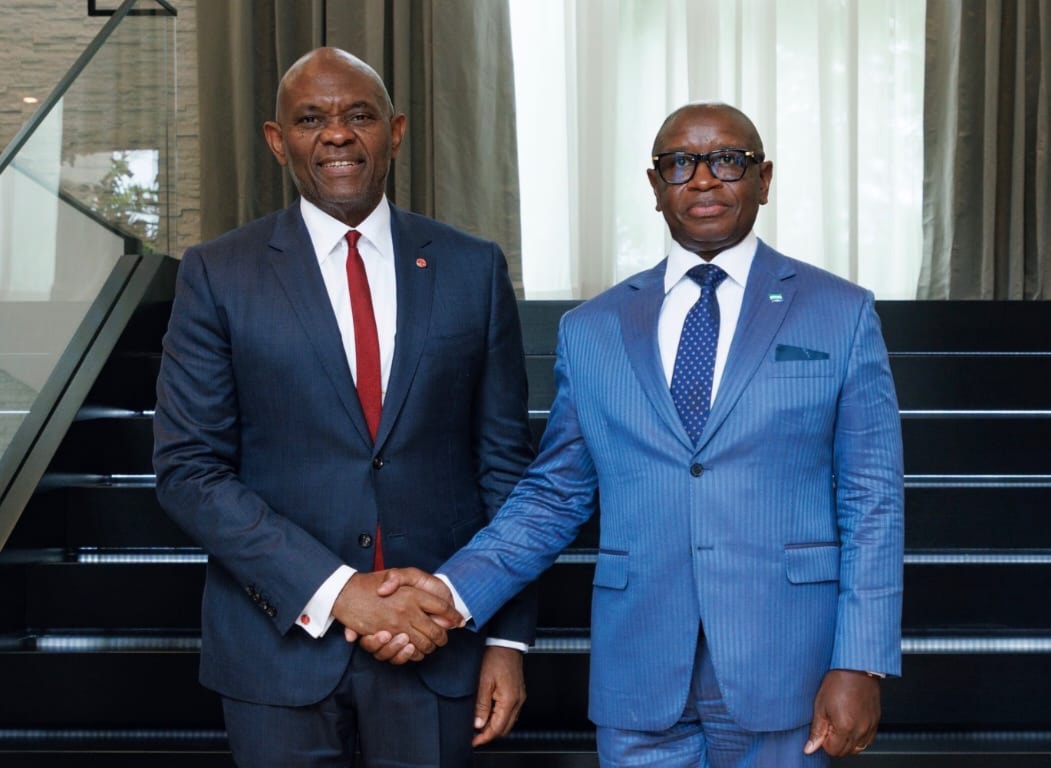
Heirs Holdings, the pan-African investment group founded by African investor and philanthropist Tony O. Elumelu, CFR, will play a leading role at the inaugural West Africa Integration andĥ Investment Summit (WAIIS 2026), taking place November 16–18 in Sierra Leone.
As a Principal Partner of the Summit, the Group is bringing its senior business leadership, investment expertise and extensive operating experience across critical sectors of the African economy to advance the region’s integration and investment agenda.
Mr Elumelu, Group Chairman of Heirs Holdings and a member of the Summit’s Private Sector Advisory Board, is leading private sector mobilisation for the event, convened under the leadership of His Excellency Julius Maada Bio, President of Sierra Leone.
He will be joined by senior executives from across the Group’s portfolio, including Obong Idiong, CEO of Heirs Technologies, who will speak at the Investment Opportunity Session on connecting West Africa’s markets through payments, data and digital networks and Peter Ikenga, CEO of Transcorp Power, who will co-chair the power session alongside Mamadou Sangafowa-Coulibaly, Côte d’Ivoire’s Minister of Mines, Oil and Energy.
The Summit brings together African Heads of State, policymakers, institutional investors, development finance institutions and business leaders to accelerate economic integration and unlock investment opportunities across West Africa.
A longstanding advocate of Africapitalism and a business turnaround expert, Elumelu champions the principle that Africa’s development must be driven by African entrepreneurs and businesses, with long-term private investment creating both economic and social wealth. His leadership at WAIIS reflects a conviction that regional integration must move beyond policy commitments to practical commercial partnerships, cross-border investment and the development of competitive African enterprises.
Heirs Holdings’ prominent role at WAIIS is reinforced by its scale, investment footprint and track record of building businesses across sectors critical to Africa’s economic transformation. As of 31 March 2026, the value of its portfolio companies stood at approximately US$15.08 billion. With investments and operations spanning 24 countries and a workforce of more than 40,000 people across the Group and its portfolio companies, Heirs Holdings is a significant pan-African private-sector investment platform.
For Heirs Holdings, West African integration represents a significant opportunity to expand the region’s economic potential and attractiveness to investors. A more connected region creates larger markets, strengthens intra-regional trade, facilitates the movement of capital, attracts investment, creates jobs, and enables African businesses to achieve greater scale and compete more effectively in the global economy.
As governments, investors and business leaders convene in Sierra Leone, Heirs Holdings reaffirms its commitment to working with public and private sector partners to turn regional integration into a commercial reality that will create lasting economic and social value across the continent.
Heirs Holdings is a leading pan-African investment company. Its investment portfolio spans the energy, power, banking, insurance and financial services, technology, real estate, hospitality and healthcare sectors, operating in twenty-four countries worldwide.
Heirs Holdings is inspired by Africapitalism, the belief that the private sector is the key enabler of economic and social wealth creation in Africa. Driven by this philosophy, Heirs Holdings invests for the long-term, bringing strategic capital, sector expertise, a track record of business success, and operational excellence to its portfolio companies.
Business
From Wholesale Markets to Digital Platforms: How Technology is Transforming Small Business Commerce in Africa
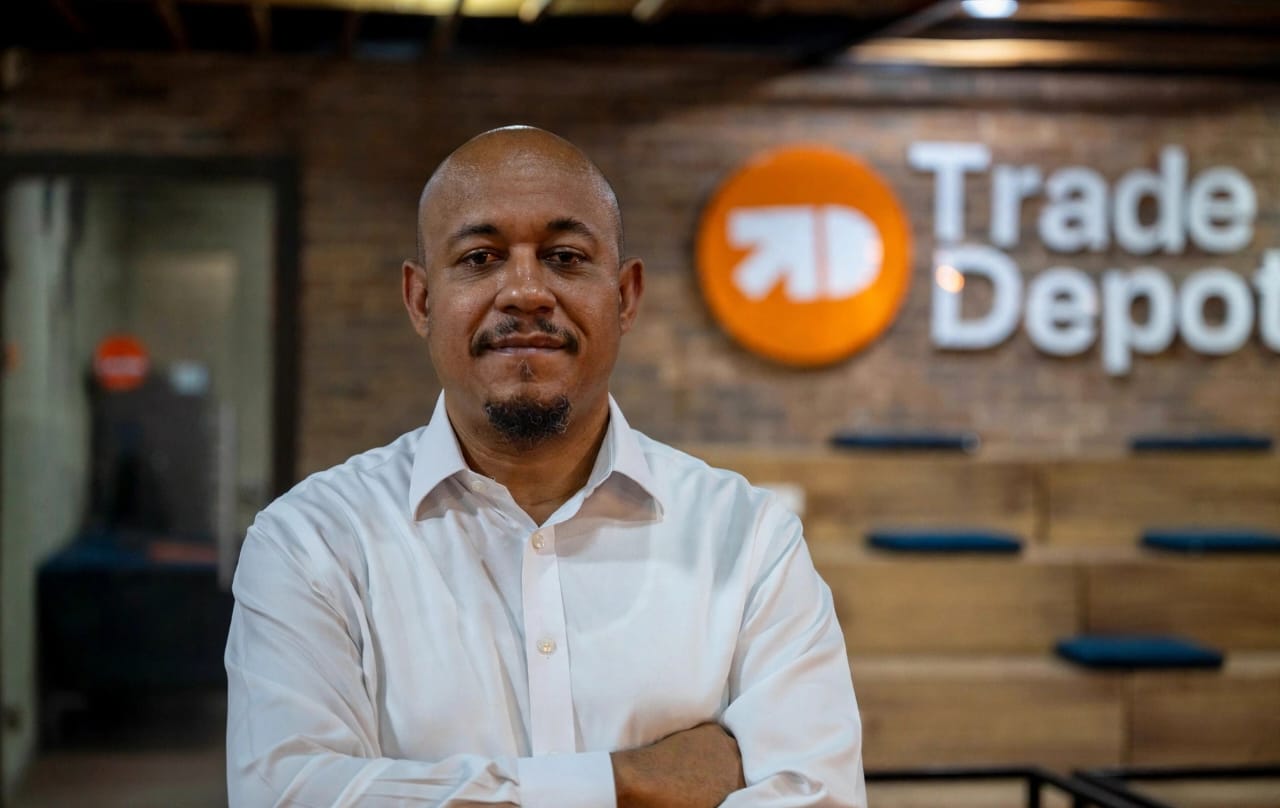
Digital commerce is changing how neighbourhood retailers source products, connect with suppliers and manage their businesses, creating new opportunities for small businesses across Africa.
For millions of small retailers across Africa, keeping a business running involves much more than selling products. Behind every successful neighbourhood shop is a constant effort to find reliable suppliers, compare prices, determine what customers need, manage orders and ensure essential products remain available on the shelves.
Yet, these everyday business activities have traditionally come with significant challenges.
Many small retailers still depend on frequent trips to wholesale markets, multiple intermediaries and fragmented supply arrangements to replenish their stocks. The process can be expensive, time-consuming and unpredictable, taking attention away from customers and limiting opportunities for business growth.
Technology is beginning to change that reality.
Digital commerce platforms are creating new ways for small businesses to discover products, connect directly with suppliers, place orders and manage purchasing more efficiently. With better access to product information and supply channels, retailers can make more informed decisions, reduce sourcing difficulties and respond more effectively to customer demand.
One company working to make this transformation possible is TradeDepot, a Nigerian technology company using digital solutions to connect small retailers with manufacturers and distributors.
Through its technology platform, TradeDepot is helping create more efficient channels for product sourcing and distribution, bringing suppliers and neighbourhood retailers closer together.
The significance of this development extends beyond the convenience of placing orders online. Improved access to products, more efficient purchasing processes and stronger supplier relationships can help small retailers maintain stock availability, serve customers better and build more sustainable businesses.
The transformation also highlights the role of investment in developing Africa’s technology ecosystem.
Through Boost Africa, the European Investment Bank (EIB) invested €10 million in Partech Africa Fund, which subsequently backed TradeDepot. The investment illustrates how development finance and venture capital can support African technology businesses building practical solutions to everyday commercial challenges.
As digital innovation continues to reshape commerce, the benefits are increasingly extending beyond large businesses and established retail chains to the small shops that serve communities every day.
Technology is not just changing how people shop. It is transforming how the businesses serving them source, sell and grow.
Boost Africa: From Capital to Impact.
Watch how TradeDepot is bringing commerce closer to communities through technology and the Boost Africa initiative: