Metro
Residents Benefit As Lagos Partner FirstBank to Boost Healthcare Delivery in Ije-Ododo Community


- /home/rhoncare/pointblank.ng/wp-content/plugins/mvp-social-buttons/mvp-social-buttons.php on line 27
https://pointblank.ng/wp-content/uploads/2023/05/Ribbon-Cutting-e1685434664785-850x600.jpg&description=Residents Benefit As Lagos Partner FirstBank to Boost Healthcare Delivery in Ije-Ododo Community', 'pinterestShare', 'width=750,height=350'); return false;" title="Pin This Post">
- Share
- Tweet /home/rhoncare/pointblank.ng/wp-content/plugins/mvp-social-buttons/mvp-social-buttons.php on line 69
https://pointblank.ng/wp-content/uploads/2023/05/Ribbon-Cutting-e1685434664785-850x600.jpg&description=Residents Benefit As Lagos Partner FirstBank to Boost Healthcare Delivery in Ije-Ododo Community', 'pinterestShare', 'width=750,height=350'); return false;" title="Pin This Post">
In a bid to boost healthcare delivery for thousands of residents, the Lagos State Government has built and unveiled a new Primary Healthcare Centre (PHC) in Ije-Ododo Community, Iba Local Council Development Area (LCDA), under the Ojo Council Area of the state.
The facility, which has been under construction since 2021 in partnership with First Bank of Nigeria Limited, was unveiled in the community in an opening ceremony attended by the Lagos State Governor, Babajide Olusola Sanwo-Olu, representatives of the state government, the state Primary Health Care Board, community leaders, as well as traditional rulers of Iba, Ije-Ododo and Ijagemo, among others.
In his welcome address, the governor, who was represented by Secretary to the State Government (SSG), Mrs. Folashade Sherifat Jaji, said the opening of the health facility under the SSG’s One Community At A Time (OCAAT) initiative, formed part of activities to herald the inauguration of his second term in office on Monday, May 29, 2023.
Maintaining that the attention being paid to the healthcare sector was deliberate to ensure a healthier populace, he said the state government under his watch would deploy more resources to the health sector for easier access to health services, especially in underserved communities.
He enjoined members of the community to take full advantage of the health benefits that will be provided in the facility and charged them to take ownership and protect the assets and the facility at all times.
Speaking, Permanent Secretary, Primary Healthcare Board, Dr. Ibrahim Mustapha, commended First Bank of Nigeria Limited and the contractor for completing the project within the stipulated time frame, but also requested more assistance to make the facility functional by providing equipment and other necessary medical gadgets.
On his part, Chief Executive Officer of FirstBank, Dr. Adesola Adeduntan, who was represented by Mr. Seyi Oyefeso, expressed satisfaction at the successful completion of the project, adding that it was gratifying to know that no fewer than 10,000 residents of Ije-Ododo and neighbouring communities will have access to primary healthcare services in the facility.
He said as a responsible corporate social organisation, the bank’s intervention in the primary healthcare sector aligned with its Corporate Social Responsibility (CSR) approach anchored on citizenship, impact management, strategic education, as well as the health and welfare of the immediate and remote communities of Lagos State and other parts of the country.
In his words: “The completion and opening of the primary healthcare centre is to ensure that Ije-Ododo community will become healthier and wealthier since health is wealth.”
In his goodwill message, the Baale of Ije-Ododo, Dr. Abu Jelili Ododo, who spoke in company of the Oba of Iba and Baale of Ijagemo, applauded Governor Sanwo-Olu for the timely completion of the healthcare centre and appealed for the construction of the Ijegun-Ije-Ododo-Abule-Ado road to link the Badagry Expressway, adding that it was high time the Ije-Ododo Community was provided with a motorable road to ease the sufferings of residents.
Responding to the request for the road, Jaji assured that the Lagos State government under Sanwo-Olu was poised to build the road but that the project suffered some setback due to agitations by some members of the community over the location of the project, adding however, that as soon as the governor settles down for his second tenure, construction work will begin on the road.
Source: FirstBank


Metro
When Diplomacy Becomes Pressure: The Nigeria–South Africa Faceoff and the Case for Fair, Balanced Journalism
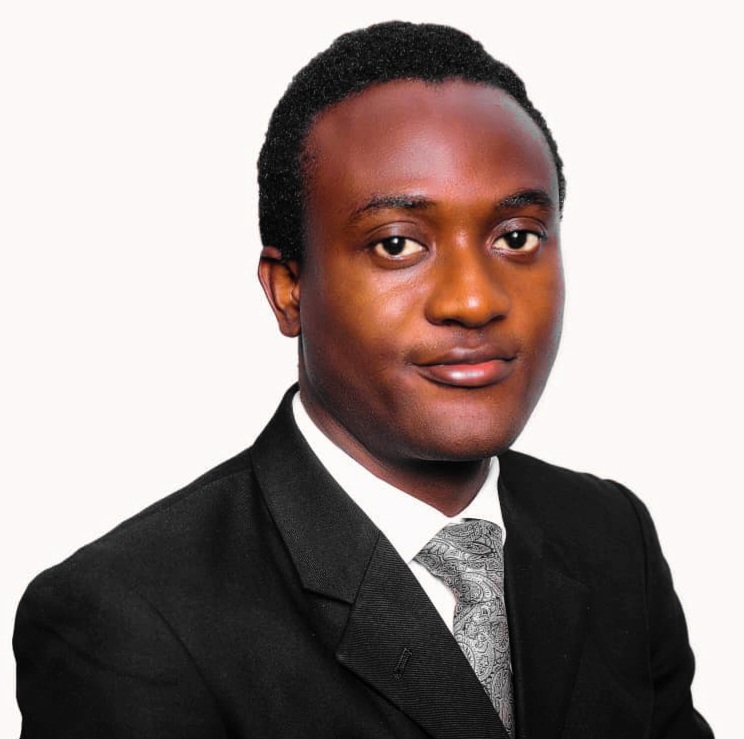
By Tolulope A. Adegoke
“Between two nations that cannot afford to be strangers, every slight is a test—not of strength, but of restraint. Diplomacy becomes pressure only when the quiet channels are abandoned for the loud ones; and journalism fails its calling when it mistakes the noise of a moment for the truth of a relationship. The measure of statesmanship, and of the press that chronicles it, lies not in who wins the exchange, but in who preserves the bond” – Tolulope A. Adegoke, PhD
The diplomatic friction that erupted in November 2026 between Nigeria and South Africa over a ceremonial livestream is, on its surface, a minor procedural dispute. Yet it exposes a deeper pattern: two of Africa’s most consequential nations repeatedly allowing administrative missteps and public emotion to overshadow a relationship that is structurally indispensable to the continent. A fair and balanced reading of the incident—and of the broader tensions beneath it—requires resisting the temptation to assign villain and victim, and instead examining the institutional gaps that permit isolated grievances to escalate into diplomatic incidents.
The Incident Itself: A Dispute Over Optics and Protocol
The immediate trigger was straightforward. Nigeria’s newly appointed High Commissioner to South Africa, Femi Fani-Kayode, presented his letters of credence to President Cyril Ramaphosa on 13 November 2026, alongside fourteen other envoys. Fani-Kayode subsequently alleged on social media that the South African Presidency had deliberately excluded his remarks and the Nigerian delegation from the official livestream of the ceremony, while broadcasting the addresses of the other fourteen diplomats. He framed the omission as a slight to Nigeria’s dignity.
The South African Presidency rejected the allegation categorically. Spokesperson Vincent Magwenya stated that the President has no constitutional or legal authority to interfere in the editorial operations of the South African Broadcasting Corporation, and characterized the episode as a misunderstanding of livestream arrangements rather than deliberate discrimination. The SABC clarified that its editorial coverage was separate from the Presidency’s livestream, and footage of Fani-Kayode’s address was subsequently made available. South Africa’s Department of International Relations and Cooperation then summoned the High Commissioner and issued a demarche, invoking Article 41 of the Vienna Convention on Diplomatic Relations, which requires diplomatic agents to conduct official business through the receiving state’s foreign ministry rather than through public platforms.
Both positions contain elements of legitimacy. A diplomat who believes his country has been publicly slighted has recourse through formal channels; taking to social media before exhausting those channels arguably violates the spirit, if not the letter, of diplomatic protocol. Conversely, a host government that manages a multilateral credential ceremony owes all participating states equal and transparent treatment; even the perception of selective visibility is a failure of protocol management, regardless of intent. The fair conclusion is not that one side lied, but that both sides mishandled a situation that required quiet resolution rather than public escalation.
Beneath the Surface: The Real Pressures
To treat this incident as merely a personality clash would be to miss the structural pressures that made it combustible. Three underlying tensions deserve balanced attention.
First, migration and xenophobia. In mid-2026, anti-immigration protests and attacks targeting foreign nationals and migrant-owned businesses in South Africa prompted Nigeria to organize the voluntary repatriation of nearly 1,500 of its citizens. A Nigerian parliamentary delegation was later formed to engage South African authorities on the safety of Nigerians and to review compliance with prior bilateral agreements. South Africa has pushed back against blanket accusations of xenophobia, with the Presidency arguing that such labels unfairly damage the country’s image and that migration challenges require coordinated continental responses rather than isolated national measures. Both realities coexist: criminal violence against migrants is real and documented, and the vast majority of South Africans are not participants in it. Responsible journalism must report the violence without implying collective guilt, and must report the South African government’s response without dismissing the legitimate fears of migrant communities.
Second, economic asymmetry and mutual dependence. Nigeria and South Africa together account for over a third of Sub-Saharan Africa’s GDP. South African corporations—MTN, MultiChoice, Standard Bank, among others—have deep footprints in Nigeria, while relatively few Nigerian firms have expanded southward at comparable scale, a imbalance that distorts trade statistics and feeds perceptions of unequal benefit. The 11th session of the Bi-National Commission, held in Cape Town, produced commitments to simplify visa processes, including a five-year multiple-entry visa for Nigerian travelers, and to establish an investment and trade council. President Tinubu himself acknowledged that over thirty-four bilateral agreements exist but implementation has lagged, stating bluntly that it is time to “dust off these MOUs and start to implement them”. The gap between signed agreements and lived reality is where public frustration breeds.
Third, competing narratives about crime and contribution. Longstanding claims linking Nigerians to the origins of organized crime in South Africa have been challenged by recent research from the Africa Development Studies Centre, which examines the historical roots of criminal economies in South Africa and disputes the causal narrative. This does not erase the reality of transnational crime, nor should it. But it does underscore the danger of allowing anecdote and prejudice to stand in for evidence. Similarly, the Nigerian professional and entrepreneurial presence in South Africa—doctors, academics, small business owners—rarely features in popular discourse, yet it is as real as the criminal minority that dominates headlines.
Paths Toward a Sustainable Relationship
Viable solutions must operate at three levels: diplomatic, institutional, and civic.
At the diplomatic level, both governments should recommit to the Vienna Convention’s principle that grievances be raised through foreign ministries before public platforms. The Fani-Kayode incident could have been resolved with a single phone call between the Nigerian High Commission and DIRCO. A joint protocol review—agreeing that future multilateral ceremonies guarantee equal visibility for all participating envoys—would convert the dispute into a procedural reform. More ambitiously, the two governments should establish a standing Early Warning Mechanism for migration-related violence, jointly monitored by both foreign ministries and civil society observers, so that incidents are addressed before they escalate into repatriation crises.
At the institutional level, the Bi-National Commission must move from communiqué to implementation. The visa simplification announced in Cape Town is welcome, but its value depends on whether a Nigerian entrepreneur can actually obtain a five-year multiple-entry visa without bureaucratic obstruction. The proposed investment and trade council should publish annual benchmarks: how many Nigerian firms have entered South Africa, how many South African firms have expanded Nigerian operations beyond extractives and telecommunications, how many joint ventures have been registered. Transparency about implementation is the antidote to the cynicism that fuels public anger.
At the civic level, the most durable remedy is people-to-people contact that complicates the stereotypes. The Nigeria-South Africa Youth Dialogue, initiated in 2021, exists precisely for this purpose but has languished. It should be revived with funded exchanges in journalism, academia, and small business. A joint media fellowship program—placing Nigerian journalists in South African newsrooms and vice versa for extended periods—would do more to improve coverage than any government communiqué. Schools in both countries should teach the other’s history not as a footnote but as integral: Nigeria’s material and diplomatic support for the anti-apartheid struggle is a historical fact that South Africans should know, just as Nigerians should understand the internal complexities of post-apartheid South African society.
The Journalist’s Responsibility
Finally, the media itself must bear responsibility. The Nigeria-South Africa relationship generates enough genuine friction without amplification of misunderstandings. Fair and balanced journalism means reporting the Fani-Kayode incident by contacting both DIRCO and the Nigerian High Commission before publication, contextualizing it within the Vienna Convention framework, and resisting headlines that frame every disagreement as a “faceoff.” It means reporting xenophobic violence without implying that South Africa is uniquely bigoted, and reporting South African concerns about migration without endorsing xenophobia. It means giving equal weight to the Bi-National Commission’s quiet work and to the spectacular disputes that generate clicks.
The relationship between Nigeria and South Africa is too important to be left to the mercy of social media posts and diplomatic tempers. Both nations carry the weight of continental leadership. The path forward lies not in pretending grievances do not exist, but in building mechanisms that address them before they become incidents, and in a journalism that informs rather than inflames.
Dr. Tolulope A. Adegoke, AMBP-UN, is a globally recognized scholar-practitioner and thought leader at the nexus of security, governance, and strategic leadership. His mission is dedicated to advancing ethical governance, strategic human capital development, resilient nation-building, and global peace. He bridges the worlds of academic rigor and practical application, contributing to leadership discourse at the highest levels of policy and practice. He can be reached via: tolulopeadegoke01@gmail.com, globalstageimpacts@gmail.com
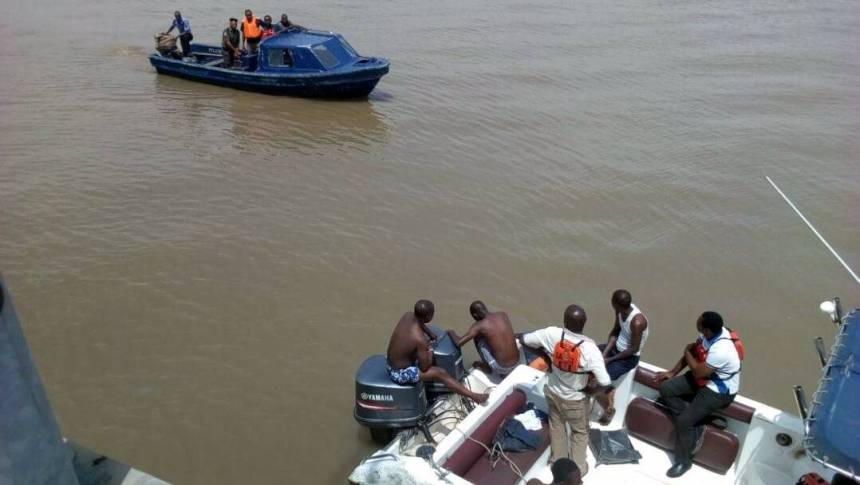
Several people are feared missing after a boat conveying mourners from a burial ceremony in Ukubie community, Southern Ijaw Local Government Area of Bayelsa State, sank on Friday near Oweikorogha community, throwing passengers into the river.
The incident, which has plunged the affected communities into panic and grief, involved a vessel popularly known as a Love Boat.
Reports said that the boat was conveying people who had attended a burial ceremony in Ukubie when it capsized shortly after passing Oweikorogha community.
Information emerging from the area indicated that several passengers were feared missing following the accident, although the exact number of people aboard the vessel and those unaccounted for had yet to be established as of the time of filing this report.
The incident has sparked anxiety among families and residents of Ukubie and Oweikorogha, as efforts continue to establish the fate of those who were travelling on the boat.
Residents and community members have mobilised to assist in the search for passengers who may have survived the accident.
The rescue efforts were said to be ongoing, with residents joining hands to locate those who were thrown into the water when the vessel went down.
However, the number of survivors, if any, had not been officially confirmed at the time of this report.
Families of the passengers were said to be anxiously awaiting information about their loved ones, as the incident cast a pall of mourning over the two communities.
The circumstances surrounding the boat mishap remain unclear, as authorities are yet to issue an official statement explaining what caused the vessel to sink.
It was also not immediately established how many passengers were aboard the boat or whether the vessel encountered mechanical difficulties or other challenges before capsizing.
Southern Ijaw is one of the major riverine local government areas in Bayelsa State, with several communities relying heavily on waterways for transportation because of the limited road network.
Boat transportation remains a major means of movement for residents travelling between riverine settlements, particularly during social gatherings, burial ceremonies and other community activities.
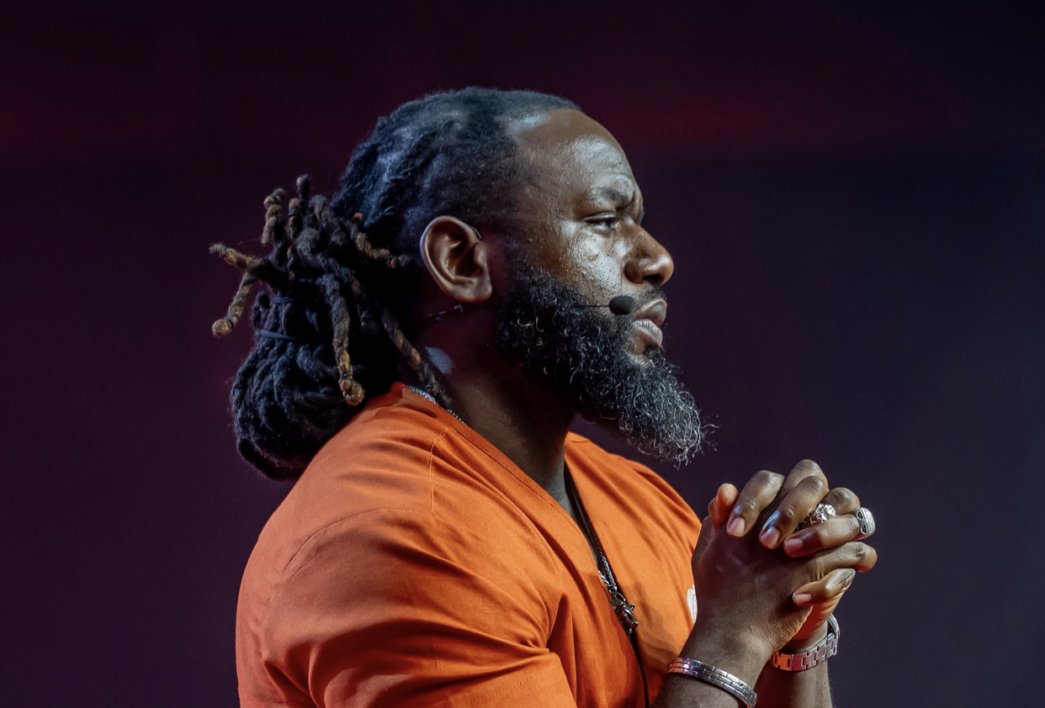
The Lagos State High Court has restrained Jimmy Odukoyafrom parading himself as the senior pastor and spiritual head of the Fountain of Life Church, following a legal challenge by the church’s board of trustees.
Justice O.O. Adewunmi-Oshin issued the order on Wednesday after hearing an application filed by the incorporated trustees of the church, who are seeking to prevent Jimmy from acting in the capacity of senior pastor.
The trustees told the court that Jimmy had ceased to occupy the position following the appointment of a successor by the church’s late founder, Pastor Taiwo Odukoya, who died in 2023.
In their application, the trustees sought an injunction to prevent Jimmy, either personally or through representatives, from interfering in the church’s administration and activities while the legal process continues.
According to reports, part of the order read: “A Pre-emptive Order of Injunction restraining the Respondent, whether acting personally or through any proxies in any alleged capacity as the Senior Pastor of the Church from interfering, disrupting, meddling with and or obstructing the activities, governance and any other business of the Church pending the Applicant’s full compliance with the High Court of Lagos State (Expeditious Disposal of Civil Cases) Practice Directions No. 2 of 2019 on Pre-action Protocol.”
The court also granted the trustees permission to commence the action under the pre-action protocol provided for in the Lagos State High Court’s practice directions.
In his ruling, the judge said: “Leave is hereby granted to the Applicant to commence this action under the Pre-Action Protocol pursuant to Paragraph 4 of the High Court of Lagos State (Expeditious Disposal of Civil Cases) Practice Direction No. 2 of 2019.”
The court proceedings came a day after the church’s board of trustees announced Jimmy’s removal as senior pastor, alleging that his appointment did not reflect the succession arrangements made by his late father.
The board explained that its decision followed a review of the church’s constitution and instructions allegedly documented by Taiwo before his death.
According to the trustees, they recently uncovered a video recording made by the late founder in December 2021, in which he outlined his preferred succession arrangement.
They further claimed that the recording was not made available to the board before Jimmy’s appointment, which they subsequently described as wrongful.