
Personality in Focus
Rivers: Falana faults Tinubu on Suspension of Fubara, Other Elected Officers

- /home/rhoncare/pointblank.ng/wp-content/plugins/mvp-social-buttons/mvp-social-buttons.php on line 27
https://pointblank.ng/wp-content/uploads/2019/04/Femi-Falana.jpg&description=Rivers: Falana faults Tinubu on Suspension of Fubara, Other Elected Officers', 'pinterestShare', 'width=750,height=350'); return false;" title="Pin This Post">
- Share
- Tweet /home/rhoncare/pointblank.ng/wp-content/plugins/mvp-social-buttons/mvp-social-buttons.php on line 69
https://pointblank.ng/wp-content/uploads/2019/04/Femi-Falana.jpg&description=Rivers: Falana faults Tinubu on Suspension of Fubara, Other Elected Officers', 'pinterestShare', 'width=750,height=350'); return false;" title="Pin This Post">
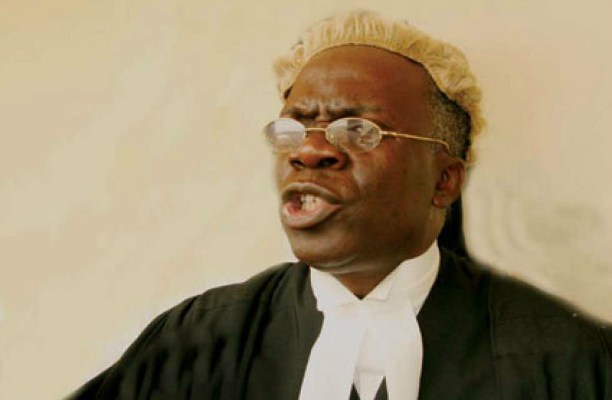
A human rights lawyer, Mr. Femi Falana, has described as illegal the decision of President Bola Tinubu to suspend Governor Siminalayi Fubara, his deputy Ngozi Odu, and all elected members of the Rivers State House of Assembly for a period of six months.
In a statement made available to the media, the senior lawyer said the President’s decision cannot be justified under any of the provisions of the 320 sections of the Constitution of the Federal Republic of Nigeria, 1999, as amended.
While recognizing that Section 305 of the Constitution empowers the President to take extraordinary measures to restore law and order if there is an actual breakdown of public order and public safety in the Federation, Falana argued that the extraordinary measures which may be adopted by the President to restore peace and security do not include the suspension of an elected Governor, an elected Deputy Governor, and the dissolution of other democratic structures.
He, therefore, called on the President to follow the path of constitutionalism without any delay and to proceed to reinstate the suspended Governor Fubara and Deputy Governor Odu and restore all democratic structures in Rivers State.
The learned silk said: “This call is without prejudice to the duty imposed on the President to adopt extraordinary measures to restore law and order in Rivers State under Governor Fubara in strict compliance with the provisions of the 1999 Constitution of the Federal Republic of Nigeria, as amended.”
Below is the full statement
ILLEGALITY OF DISSOLUTION OF ELECTED DEMOCRATIC STRUCTURES IN NIGERIA
The decision of President Bola Tinubu to suspend Governor Siminalayi Fubara, his deputy, Mrs Ngozi Odu, and all elected members of the Rivers State House of Assembly for six months is illegal as it cannot be justified under any of the provisions of the 320 sections of the Constitution of the Federal Republic of Nigeria, 1999 as amended.
No doubt, Section 305 of the Constitution empowers the President to take extraordinary measures to restore law and order if, among other reasons, there is actual breakdown of public order and public safety in the Federation or any part thereof to such extent as to require extraordinary measures to restore peace and security or there is a clear and present danger of an actual breakdown of public order and public safety in the Federation or any part thereof requiring extraordinary measures to avert such danger.
But, the extraordinary measures which may be adopted by the President to restore peace and security in the Federation or in any particular State does not include the suspension of an elected Governor, an elected Deputy Governor and the dissolution of other democratic structures. For the avoidance of doubt, section 45(3) of the Constitution provides that a ‘period of emergency’ means “any period during which there is in force a Proclamation of a state of emergency declared by the President in exercise of the powers conferred on him under section 305 of this Constitution.”
Thus, in accordance with the relevant provisions of the Nigerian Constitution, the office of an elected governor can only become vacant upon death, ill health, resignation, or impeachment. Even where the office of the Governor becomes vacant for any reason whatsoever, the Deputy Governor shall be sworn in as the Governor.
And where the offices of the Governor and Deputy Governor become vacant at the same time, the Speaker of the State House of Assembly shall become an Acting Governor for not more than 3 months. During the 3-month period, a fresh election shall be conducted by the Independent National Electoral Commission for the election of a new governor.
It is pertinent to state that the failure of a House of Assembly to function in Rivers State can not be a justification for the dissolution of democratic structures in any State of the Federation. Indeed, the Constitution had envisaged that a State House of Assembly may not be able to function due to one reason or another. Hence, section 11(4) of the Constitution stipulates as follows:
“At any time when any House of Assembly of a State is unable to perform its functions by reason of the situation prevailing in that State, the National Assembly may make such laws for the peace, order and good government of that State with respect to matters on which a House of Assembly to be necessary or expedient until such time as the House of Assembly is able to resume its functions; and any such laws enacted by the National Assembly pursuant to this section shall have effect as if they were laws enacted by the House of Assembly of the State:
Provided that nothing in this section shall be construed as conferring on the National Assembly power to remove the Governor or the Deputy Governor of the State from office.”
In 2004 and 2006, we condemned the illegal dissolution of democratic structures when President Olusegun Obasanjo imposed emergency rules on Plateau State and Ekiti State, respectively. Regrettably, on both occasions, the Supreme Court refused to determine the constitutional validity of the dissolution of democratic structures on the ground that the suit were procedurally incompetent because they were instituted during the six-month emergency period by the suspended legislators in the name of Plateau State without the authorization of the Sole Administration of the state!
However, in 2013, when a state of emergency was declared in Adamawa, Borno and Yobe States by former Presidents Goodluck Jonathan, we urged him to reject the pressure mounted on by anti democratic forces to remove the elected Governors and dissolve democratic structures in the affected States. President Jonathan followed the path of constitutionalism.

In 2021, the then Attorney-General of the Federation and Minister of Justice, Mr. Abubakar Malami SAN announced the plan of the federal government to declare a state of emergency in Anambra State over insecurity and threat to a complete breakdown of law and order in that part of the Federation We advised President Buhari not to demolish democratic structures even if emergency rule was imposed on the state. President Buhari followed the path of constituionalism.
In the cases of Adegbenro vs. Attorney-General of the Federation (1962) 1 NLR 338 F.R.A. Williams V Dr. M.A. Majekodunmi (1962) 1 NLR 328 the Supreme Court of Nigeria validated the Emergency Powers Act 1961 to justify the dissolution of democratic structures as well as suspension of fundamental human rights in western region. As there is no equivalent of the Emergency Powers Act 1961 under the current constitutional dispensation, the suspension of an elected Governor by an elected President is a constitutional anomaly under the 1999 Constitution.
In Attorney General of the Federation v. Attorney General of Abia State & Ors (2024) LPELR-62576 (SC) filed by the Bola Tinubu administration, the Supreme Court of Nigeria held that the removal of elected chairmen and councilors as well as appointment of sole administrators or caretaker committees by State Governors to run local government councils are illegal and unconstitutional. It follows to reason that the suspension of elected governors and elected members of the House of Assembly by the President is illegal and unconstitutional in every material particular.
To that extent, a serving or retired military officer can not be imposed as a Sole Administrator to govern any state in Nigeria. Similarly, a military officer cannot be appointed by the National Assembly as a Sole Administrator to govern the Nigerian people during a war between Nigeria and another country.
In the Speaker, Bauchi State House of Assembly v Hon Rifkatu Danna (2017) 49 WRN 82 and several other cases, Nigerian Courts have held that the suspension of elected legislators is illegal and unconstitutional. Therefore, the National Assembly should not endorse the illegal suspension of the Rivers State legislators that have not defected from the People’s Democratic Party to the All Progressive Congress. Instead of approving the illegal dissolution of democratic structures in Rivers State, the National Assembly should assist Governor Fubara by invoking its powers under section 11 (4) of the Constitution “to make laws for the peace, order and good government of that State”
Therefore, we are compelled to call on President Bola Tinubu to follow the path of constituionalism without any delay. The President should proceed to reinstate the suspended Governor Fubara and Deputy Governor Odu and restore all democratic structures in Rivers State. This call is without prejudice to the duty imposed on the President to adopt extraordinary measures to restore law and order in Rivers State under Governor Fubara in strict compliance with the provisions of the 1999 Constitution of the Federal Republic of Nigeria, 1999 as amended.
Femi Falana SAN



Canadian poet, essayist and translator Anne Carson has been awarded the 2026 Nobel Prize in Literature for her inventive writing and her engagement with the classical tradition. Her work brings together poetry, criticism, translation and narrative, expanding the forms through which contemporary literature can tell stories.
Born in Toronto in 1950, Carson trained as a classicist and has combined writing with university teaching and translation throughout her career. Her interest in the origins and meanings of words informs both her scholarship and her poetry. Ancient texts provide material for her explorations of desire, grief, identity and human relationships.
Her translations include If Not, Winter (2002), a rendering of Sappho’s surviving poetry that preserves the gaps between fragments. She has also translated plays by Sophocles and Euripides, bringing the language and conflicts of Greek tragedy into contemporary expression.
Carson’s writing gained increasing recognition during the 1990s. “The Glass Essay,” published in Glass, Irony, and God (1995), combines the experience of a relationship’s end with reflections on Emily Brontë, family life and solitude. Its movement between personal narrative and literary interpretation demonstrates her freedom in working across genres.
Autobiography of Red: A Novel in Verse (1998) remains among her most celebrated works. Drawing on fragments by the ancient Greek poet Stesichoros, Carson reimagines the winged red monster Geryon as a young person discovering photography, desire and heartbreak. The book places his experiences at the centre of a story traditionally associated with the exploits of Herakles.
Her later publications continue this experimentation. Float (2016) consists of twenty-two chapbooks that readers can approach in any order. Wrong Norma (2024) brings together varied prose pieces, extending her interest in the possibilities of short, loosely connected forms.
Carson has also collaborated with visual artists, choreographers and theatre and opera directors. These projects carry her writing into performance and establish connections between literature and other arts.
The award recognises a career devoted to close attention to language and continual experimentation with form. Through translation, poetry and collaboration, Carson has made classical literature an active part of contemporary writing.
Souce:Classic Books.
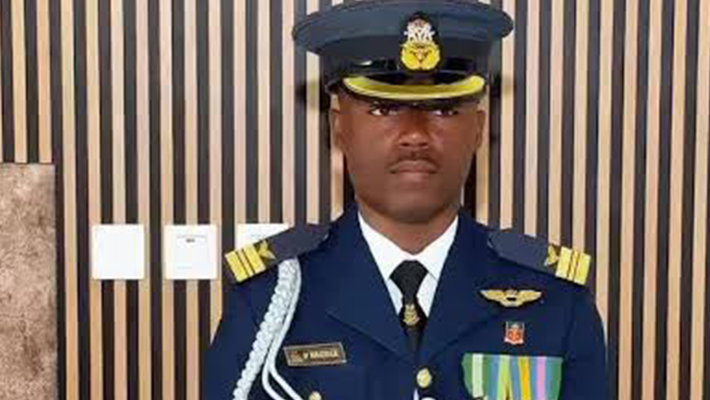
Abia State governor, Alex Otti, and Senator representing Abia North, Orji Uzor Kalu, have expressed sadness over the death of Abia-born Squadron Leader Ahamefule Aham Man-Ugwueje, one of the pilots of the Nigerian Air Force ATR-42 aircraft, NAF 931, which crashed in Igbokoda, Ondo State, on Monday.
Governor Otti, in a statement by his Special Adviser on Media and Publicity, Ferdinand Ekeoma, described Squadron Leader Man-Ugwueje’s death and those of other military personnel aboard the Nigerian Air Force plane as painful and devastating.
“This accident is both painful and devastating, because it has brought untold sorrow and anguish to the victims’ families, their friends and loved ones, the Nigerian Air Force, and the nation at large.”
Governor Otti regretted that Squadron Leader Man-Ugwueje perished in the air disaster barely two weeks after he wedded his beloved wife, Flight Lieutenant Damilola Adekunle, in Abuja, a sad development he said has robbed the couple of the opportunity of spending their lives together as husband and wife.
The governor, on behalf of his family, the government and people of Abia State, commiserated with the families of the victims, the people of Umuahia where Squadron Leader Man-Ugwueje hailed from, the Nigerian Air Force and the Federal Government of Nigeria, and prays for the peaceful repose of their souls in God’s bosom.
In his own message, Senator Kalu commiserated with the Nigerian Air Force over the loss of the Air Force personnel and others in the Ondo plane crash.
The former governor of Abia State, while expressing sadness over the loss, extended his heartfelt sympathy to the Chief of the Air Staff, Air Marshal Sunday Kelvin Aneke, the entire Nigerian Air Force and the families of those who lost their lives in the tragic incident.Describing the incident as painful and heartbreaking, Kalu said the death of personnel who devoted themselves to the service of the country is a huge loss to the Nigerian Air Force and the nation.
“I extend my heartfelt sympathy to the Chief of the Air Staff, Air Marshal Sunday Kelvin Aneke, and the entire Nigerian Air Force over this painful loss.
“My thoughts and prayers are especially with the families who have lost their loved ones. Losing men and women who dedicated themselves to serving and protecting our country is indeed a tragedy for all Nigerians.
“At this difficult moment, I pray that God comforts their families, colleagues and loved ones, and gives them the strength to bear this irreparable loss.
“May the souls of the departed rest in peace,” Kalu said.
He urged the Nigerian Air Force to remain strong in the face of the tragedy, noting that the sacrifices of its personnel in the service of the country would always be remembered.
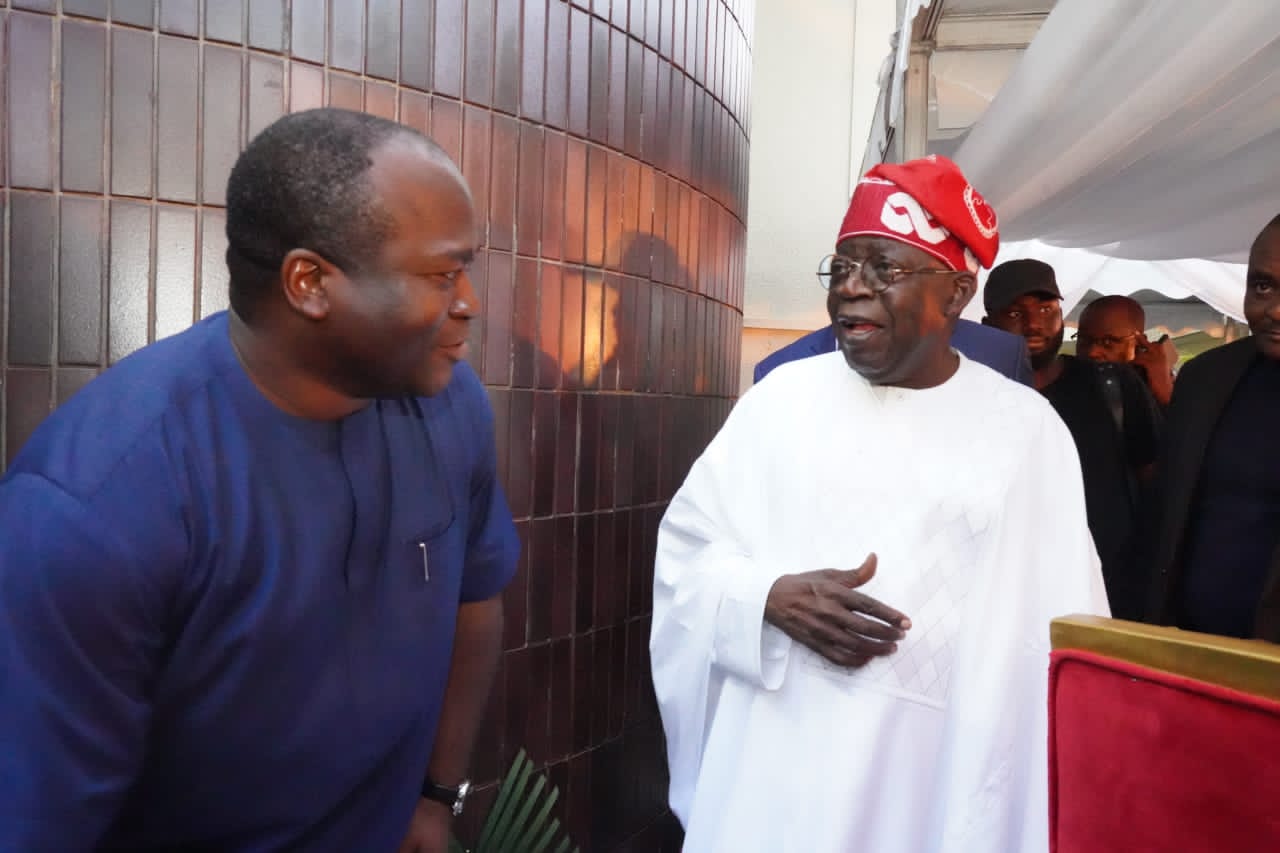
President Bola Tinubu has sent warm greetings to the Executive Secretary/CEO of the Lagos State Security Trust Fund (LSSTF) Dr. Ayodele Ogunsan, on the occasion of his 50th birthday on October 6, 2026.
In a statement released by the Special Adviser to the President (Information and Strategy), Bayo Onanuga, the President indicated acknowledged Dr. Ogunsan’s commitment to institution-building and promoting partnerships among government, the private sector, and other stakeholders to advance security and development.
Tinubu also commended the celebrant for his dedication to serving Lagos State and his contributions toward strengthening the security architecture, public safety, and public confidence through the Lagos State Security Trust Fund.
Before becoming the Executive Secretary/CEO, Dr. Ogunsan served on the Board of Trustees of the LSSTF. He has held other significant responsibilities in the security and community-safety space, including as Chairman of the Police Campaign Against Cultism and Other Vices (POCACOV), Lagos State, and Patron of the Police Community Relations Committee (PCRC).
The President noted that under Dr. Ogunsan’s leadership, the Trust Fund has continued to play an important role in supporting security agencies with critical equipment, infrastructure and other resources necessary to enhance their effectiveness in protecting lives and property.
“As you mark this significant milestone, I urge you to sustain your dedication to the security and progress of Lagos State and Nigeria. I wish you many more years of good health, wisdom and fulfilment, as well as continued success in your service to humanity and our nation,” the President charged.


